by Travel Blogger | Nov 12, 2026 | Sri Lanka |
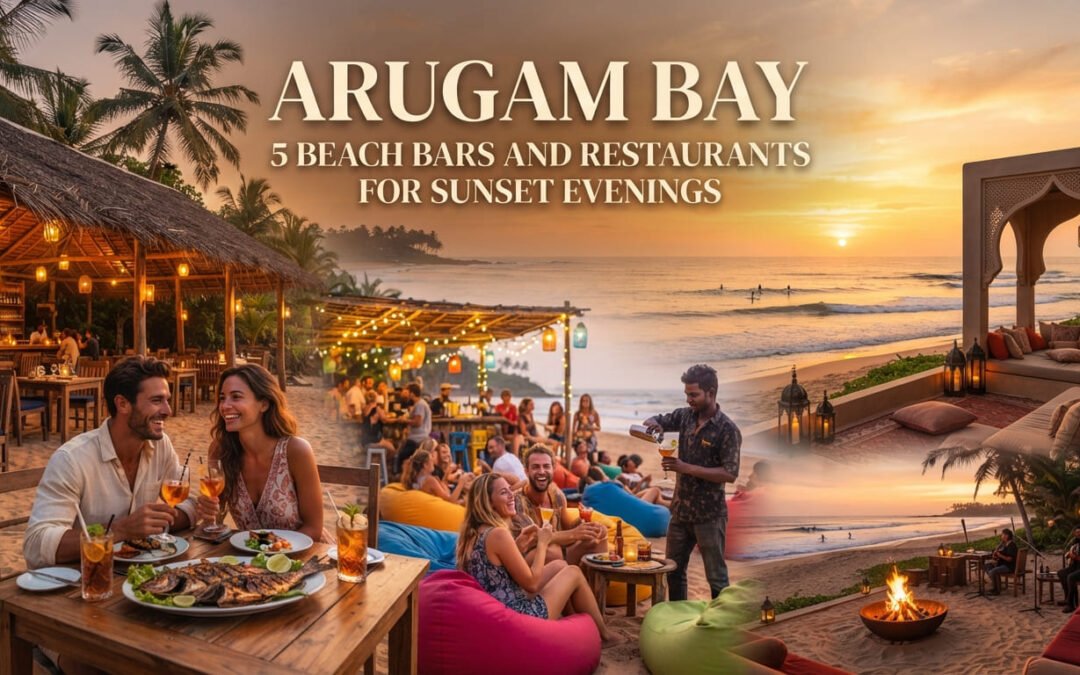
Arugam Bay, on Sri Lanka’s east coast, is famous for surfing, sandy beaches, and a relaxed atmosphere that attracts travellers from around the world. But when the day’s surf sessions end, another side of the destination comes alive. Beachfront restaurants begin serving dinner, bars welcome visitors for sunset drinks, and music creates a social atmosphere that can continue well into the evening.
The dining scene is varied. Some venues are ideal for watching the waves with a refreshing drink, while others offer seafood dinners, cocktails, live music, or lively nights with DJs. Visitors can choose between quiet conversations by the ocean and more energetic evenings with fellow travellers.
Here are five beach bars and restaurants to consider when planning an evening in Arugam Bay. Each offers a different atmosphere, making it easier to choose a venue that matches your mood.
1. The Hangout Arugam Bay: For Sunset Views and Lively Evenings
The Hangout Arugam Bay is a beachfront restaurant and bar that combines casual dining with a social atmosphere. It is a good option for visitors who want to spend an evening beside the ocean without rushing from one venue to another.
The setting is one of its main attractions. Guests can settle into relaxed seating, enjoy the sea views, and watch the changing colours of the sky as the sun sets. Its laid-back environment suits couples, groups of friends, and solo travellers hoping to meet other visitors.
The food offering covers several dining occasions, from breakfast and lighter meals to dinner. Visitors can explore a broad menu with international dishes, seafood, and refreshing drinks. The venue also promotes DJ sessions and live music, making it an option for those who want their evening to continue after dinner.
The atmosphere can change throughout the day. An afternoon visit may feel relaxed and focused on the view, while an event night can be more energetic. If music or a particular event is important to your plans, check the schedule before visiting.
Best for: Sunset views, casual meals, cocktails, and evenings with music and a social crowd.
2. Dewa Restaurant & Cafe: For Food, Cocktails and Entertainment
For visitors who want dinner to be the main part of their evening, Dewa Restaurant & Cafe offers a combination of food, drinks, and entertainment in central Arugam Bay.
The menu includes seafood, Sri Lankan dishes, international favourites, vegetarian options, and desserts. This variety makes it suitable for groups with different preferences. Visitors can enjoy a full meal or stop by for drinks and a more casual evening.
Dewa also promotes cocktails and entertainment, including live music, karaoke, and open-mic sessions. These activities give the venue a different character from a quiet restaurant where guests simply eat and leave. Depending on the evening’s programme, it can be a place to enjoy dinner before joining the social atmosphere.
Its central location on Panama Road is convenient for travellers staying around the main town. After spending the day surfing or exploring the coast, visitors can make it a straightforward evening stop without needing to organise a complicated journey.
If you prefer a quieter dinner, check whether an event is scheduled for your chosen night. For groups or special occasions, contacting the restaurant in advance is sensible.
Best for: Groups of friends, varied food choices, cocktails, and evenings featuring entertainment.
3. Café One Love: For Barefoot Beach Dining and Music
Café One Love is an option for travellers drawn to the informal beach-bar atmosphere associated with Arugam Bay. Its beachfront setting and social style make it suitable for an evening that begins with sunset and continues over food, drinks, and music.
The experience is relaxed rather than formal. Visitors can enjoy the coastal surroundings, spend time with friends, and watch the beach become quieter as daylight fades. For many travellers, this kind of setting is part of the appeal of visiting a surf town: there is no need for elaborate plans or a dressy night out.
The food selection includes a mix of local and international options, with seafood and other casual meals among the choices. Drinks and music add to the venue’s social character. It can be a useful choice when a group wants somewhere that combines dinner with the possibility of staying longer.
As with other popular beach venues, the atmosphere depends on the time of day and the events taking place. Sunset may be relaxed, while later hours can become busier. Visitors should check current opening times and event arrangements, particularly outside the main travel season.
Best for: Beachside dining, casual drinks, music, and a relaxed social atmosphere.
4. New Folly: For a Relaxed Drink Beside the Sea
New Folly offers a beach-bar experience for visitors who want to enjoy the coast at a slower pace. Its location close to the sand and its relaxed atmosphere make it a good choice for spending time outdoors rather than sitting in a formal indoor restaurant.
The menu combines Sri Lankan-inspired beach food with international favourites. Options include seafood, rice and curry, roti, burgers, tacos, and other casual dishes. This variety allows visitors to choose anything from a light meal to a more substantial dinner.
The bar serves drinks including cocktails, local beer, fresh juice, and king coconut. For travellers who prefer a refreshing drink while watching the sea, the setting is an important part of the experience. It can also suit groups who want to order several dishes and share them while spending an unhurried evening together.
New Folly’s appeal is its straightforward beachside character. It does not require a special occasion; visitors can simply arrive after a day outdoors and enjoy the atmosphere. However, the beach environment means conditions can change with the weather, and seating availability may vary during busy periods.
Check the current menu and prices before ordering, particularly if you are planning a larger seafood meal.
Best for: Casual beach dinners, sunset drinks, and travellers who prefer an easy-going atmosphere.
5. The Blue Bar at The Blue Wave: For Lagoon Views and a Quieter Evening
For a different setting, The Blue Bar at The Blue Wave offers a place to enjoy drinks and relax while looking out towards the lagoon. Unlike venues focused primarily on the main beachfront, its appeal includes the scenery around the water and a more lounge-style environment.
The bar provides a setting for afternoon refreshments and evening drinks. Guests can enjoy the breeze, take in the view, and spend time talking without necessarily joining a lively party. It is also promoted as a place for afternoon tea and features a sports-bar atmosphere, with opportunities to watch games or play snooker.
This makes it a useful alternative for travellers who want variety during their stay. After an energetic day surfing or exploring the area, a comfortable seat and a drink may be more appealing than a crowded dance floor. It can also work well for small groups looking for somewhere to meet before dinner.
The lagoon-side scenery offers a different perspective on Arugam Bay’s natural surroundings. However, the exact sunset view depends on the position of the sun and the weather, so visitors should not assume every visit will offer the same colours or conditions.
Confirm current opening hours and available services before making the bar a fixed part of your evening plans.
Best for: Relaxed drinks, lagoon scenery, afternoon tea, and a quieter alternative to the beach-party scene.
Choosing Between Them
Each venue offers a different kind of evening in Arugam Bay. The Hangout is worth considering for beachfront dining with music and social energy. Dewa combines a broad menu with organised entertainment, while Café One Love suits visitors looking for an informal beach-bar atmosphere.
New Folly is a good option for casual food and drinks close to the sand. The Blue Bar offers a different setting for those who prefer lagoon views and a more relaxed lounge atmosphere.
Think about what you want from the evening. If your priority is watching the sunset, arrive before the light begins to fade and ask for suitable outdoor seating. If you want music or entertainment, check the schedule rather than assuming every night will have the same programme. For a quieter meal, choose a venue and time that suit your preference.
Visiting and Booking Notes
Arugam Bay’s hospitality scene is seasonal, and some venues may adjust their opening hours or services outside the main tourist and surfing season. Check current details before travelling, especially if you are visiting during the quieter months.
Sunset seating can be popular, so arrive early if you want to choose your spot. Review the menu and prices before ordering, and confirm event details directly with the venue. If you plan to enjoy drinks, arrange a safe way back to your accommodation and follow local guidance around the sea, particularly after dark.
Conclusion
Arugam Bay’s evenings are about more than nightlife. They combine ocean views, casual food, refreshing drinks, music, and the easy-going social atmosphere of a coastal surf town.
From The Hangout’s beachfront setting and Dewa’s entertainment to Café One Love’s social beach vibe, New Folly’s relaxed dining, and The Blue Bar’s lagoon outlook, there are options for different moods. Choose a venue that matches your plans, check the latest details before heading out, and give yourself time to enjoy the coast as the day turns into evening.
by Travel Blogger | Nov 12, 2026 | Sri Lanka |
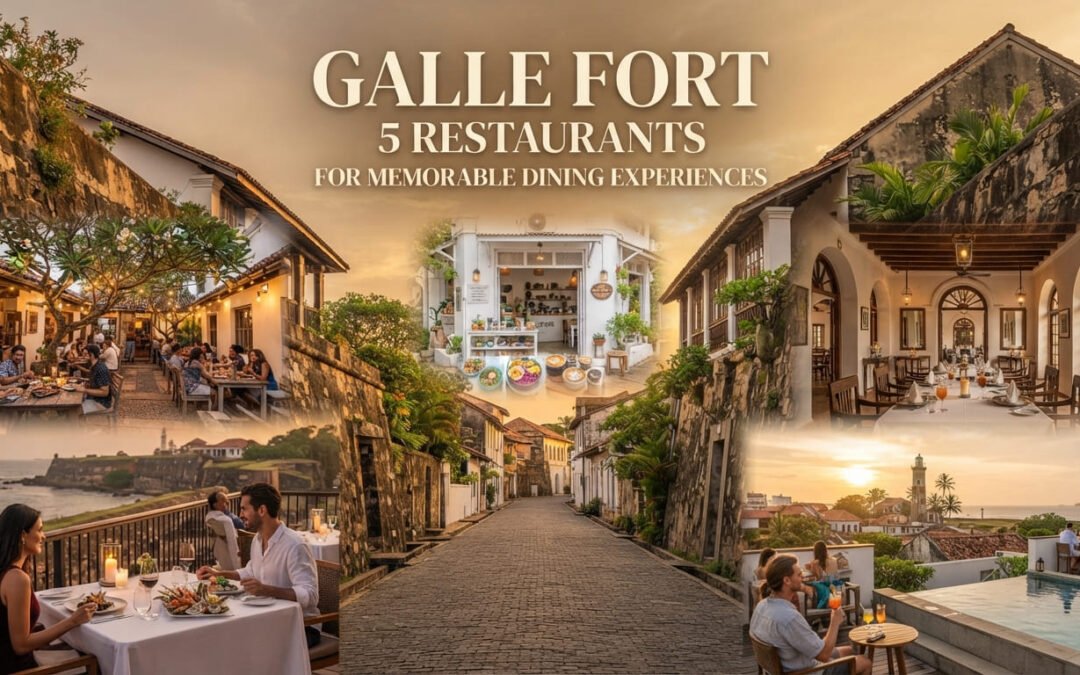
Galle Fort is one of Sri Lanka’s most distinctive places to enjoy a meal. Behind its historic ramparts, narrow streets lead to restored colonial buildings, courtyard cafés, stylish restaurants, and inviting spaces for long lunches or relaxed dinners. The setting is part of the experience: a meal here can follow a walk past old Dutch-era architecture, a visit to a small boutique shop, or an afternoon watching the Indian Ocean from the fort walls.
The food scene offers plenty of variety. Visitors can explore Japanese-inspired seafood, Middle Eastern dishes, contemporary dining, and familiar café favourites alongside Sri Lankan flavours. Some restaurants are suited to special occasions, while others are better for a casual lunch, coffee, or an unhurried meal between sightseeing stops.
Here are five restaurants in and around Galle Fort worth considering for different dining moods and occasions.
1. The Tuna & The Crab: For Japanese-Inspired Seafood
For diners who want seafood to be the centre of their meal, The Tuna & The Crab is a distinctive option within the historic Dutch Hospital Shopping Precinct. The restaurant combines Japanese culinary influences with Sri Lankan seafood, creating a menu that puts tuna, crab, and other ocean ingredients in the spotlight.
Sushi and sashimi are important parts of the experience, making this a place to consider if you enjoy seafood served with a focus on freshness and presentation. Crab dishes are another major attraction, with preparations such as pepper crab and garlic-and-chilli crab associated with the restaurant. Depending on the menu available during your visit, there may also be set meals and other seafood options to explore.
The setting adds to the occasion. The Dutch Hospital precinct is a restored historic complex with restaurants and shops, so the visit can easily become part of a longer afternoon or evening in the Fort. After walking through the surrounding streets, diners can settle in for a more focused meal rather than grabbing something quickly between attractions.
This is a restaurant to consider for a date night, a special meal, or a food-focused visit to Galle. However, it is positioned more as a premium dining experience than a budget stop. Check the current menu and prices before ordering, particularly if you plan to choose crab by weight or select several dishes to share. Seafood availability and preparation options can also vary.
Best for: Seafood enthusiasts, sushi and sashimi lovers, and travellers planning a special dining experience.
2. The Fort Printers Restaurant: For Heritage Dining
Dining at The Fort Printers brings together food and the architectural character that makes Galle Fort special. The boutique hotel occupies a restored historic building on Pedlar Street, and its restaurant offers an opportunity to enjoy a meal in a setting shaped by the Fort’s heritage.
The atmosphere is a major part of the appeal. Rather than a busy, open-fronted restaurant, the property has a more intimate character, with heritage details and courtyard spaces that suit a slower meal. It can be a lovely setting for couples, small groups, or travellers who want to pause during a day of exploring the Fort.
The food combines Sri Lankan influences with broader international inspiration. Seafood and local ingredients are relevant features of the dining experience, while the menu may include dishes suited to diners looking for something more contemporary than a traditional rice-and-curry meal. The exact selection changes, so checking the current menu is the best way to decide whether it suits your preferences.
The restaurant can work for lunch as well as dinner, depending on current service arrangements. A daytime visit offers the chance to enjoy the historic surroundings before returning to the Fort’s shops and landmarks. An evening meal can feel more special, particularly for visitors celebrating an occasion or staying nearby.
Because this is a hotel restaurant in a popular heritage destination, it is sensible to check prices and make a reservation for a planned dinner. Visitors who are not staying at the hotel should also confirm restaurant access and service times before arriving.
Best for: Couples, heritage lovers, and visitors seeking a refined meal in a historic setting.
3. Church Street Social: For Contemporary Dining and Drinks
Church Street Social is an option for travellers looking for a relaxed but polished restaurant experience in Galle Fort. Its combination of dining and drinks makes it suitable for a longer evening, whether you want to meet friends, enjoy a meal after sightseeing, or take time over a drink before dinner.
The atmosphere is part of the appeal. The restaurant sits within the Fort’s historic streets, where old architecture and contemporary hospitality exist side by side. Compared with a quick café stop, this is the kind of venue where visitors may prefer to sit down, order several courses, and let the evening unfold at a comfortable pace.
The menu brings together international influences and dishes that appeal to a broad range of diners. Seafood and other contemporary restaurant choices are part of the offering, while the drinks selection makes it worth considering for guests who want more than food alone. Menus can change, so it is best to check what is currently available rather than planning a visit around a particular dish.
Church Street Social can suit couples, groups of friends, and visitors looking for an evening venue with a social atmosphere. It may also be a useful option when different members of a group want a comfortable restaurant with food and drinks in the same place.
As with other popular restaurants inside the Fort, prices may be higher than at simple local eateries outside the historic centre. Consider checking the menu before booking, especially if you are planning a group dinner. If you want a particular seating arrangement or are visiting during a busy holiday period, arranging a table in advance is sensible.
Best for: Friends, couples, and diners who want contemporary food with drinks in a social setting.
4. Pedlar’s Inn Café: For a Casual Meal or Coffee Break
Not every meal in Galle Fort needs to be a formal dining experience. Pedlar’s Inn Café is a familiar stop for visitors who want a relaxed place to eat, enjoy a drink, or take a break while exploring the historic streets.
Located on Pedlar Street, the café is well placed for a pause between sightseeing and shopping. Its setting reflects the character of the Fort, while the menu offers a mix of café-style food and more substantial meal options. This flexibility makes it useful for travellers who want somewhere to sit down without committing to a long dinner.
Depending on the current menu, visitors may find Sri Lankan dishes alongside international café favourites. That range can be convenient for groups with different preferences, particularly when one person wants a local meal while another prefers something familiar. Coffee and other refreshments also make it a suitable stop during the warmer hours of the day.
The café’s casual approach works well for breakfast, lunch, or a mid-afternoon break, subject to current opening hours and menu service. After a meal, visitors can continue walking through the Fort’s lanes, visit nearby shops, or head towards the ramparts for ocean views.
Pedlar’s Inn is a useful choice when atmosphere and convenience matter more than an elaborate dining occasion. It is still worth checking current prices and the menu before visiting, as options and service arrangements can change. During busy periods, allowing extra time for a table can make the experience more relaxed.
Best for: Casual lunches, coffee breaks, independent travellers, and visitors who want to eat between sightseeing stops.
5. Chambers Restaurant: For Middle Eastern Flavours
For a change from seafood and conventional café menus, Chambers Restaurant offers Middle Eastern-inspired dining inside Galle Fort. Its focus makes it a useful option for travellers who want to explore a different range of flavours during their stay.
Middle Eastern meals often lend themselves to sharing, and dishes such as hummus, bread, mezze, and grilled options can make dining with friends or family more interactive. Rather than everyone ordering an entirely separate meal, a group can choose several dishes to place in the centre of the table and sample together. The current menu should be checked to confirm the available choices and any dietary requirements.
The restaurant’s setting within the Fort adds another layer to the experience. A meal here can fit naturally into an evening of exploring the historic streets, visiting small shops, or enjoying the atmosphere after the heat of the day has eased. It also offers an alternative for visitors who have already tried several Sri Lankan or seafood-focused restaurants.
Chambers can be suitable for couples as well as small groups. If you are travelling with people who have different dietary needs, it is a good idea to contact the restaurant in advance and ask about current ingredients and preparation methods. Diners who require halal food should confirm the restaurant’s current arrangements directly rather than relying on assumptions.
As with any restaurant in a heritage tourism area, prices and opening times can change. Checking the current menu and reserving for a busy evening will help you plan with confidence.
Best for: Groups who enjoy sharing dishes, diners looking for Middle Eastern flavours, and visitors wanting variety beyond seafood.
Booking Notes
Galle Fort is a popular destination, and restaurants can become busy during weekends, holidays, and peak travel periods. For a planned dinner or special occasion, check availability and reserve ahead where possible.
Review the current menu and prices before visiting, particularly at premium seafood restaurants. Ask about dietary requirements in advance, and confirm opening hours if you are planning an early lunch or late dinner. Menus, drinks, service times, and reservation policies may change, so current details are more reliable than older recommendations.
Conclusion
Galle Fort offers more than historic streets and ocean views; it also provides a varied dining scene within a compact, walkable destination. From Japanese-inspired seafood at The Tuna & The Crab to heritage dining at The Fort Printers, social evenings at Church Street Social, casual café stops at Pedlar’s Inn, and Middle Eastern flavours at Chambers, there are options for different tastes and occasions.
The most memorable meal will depend on what you value: a distinctive menu, a historic atmosphere, a relaxed coffee stop, or an evening spent over food and drinks. Plan around your preferred experience, check current details before you go, and leave time to enjoy the Fort itself before or after your meal.
by Travel Blogger | Nov 11, 2026 | Sri Lanka |
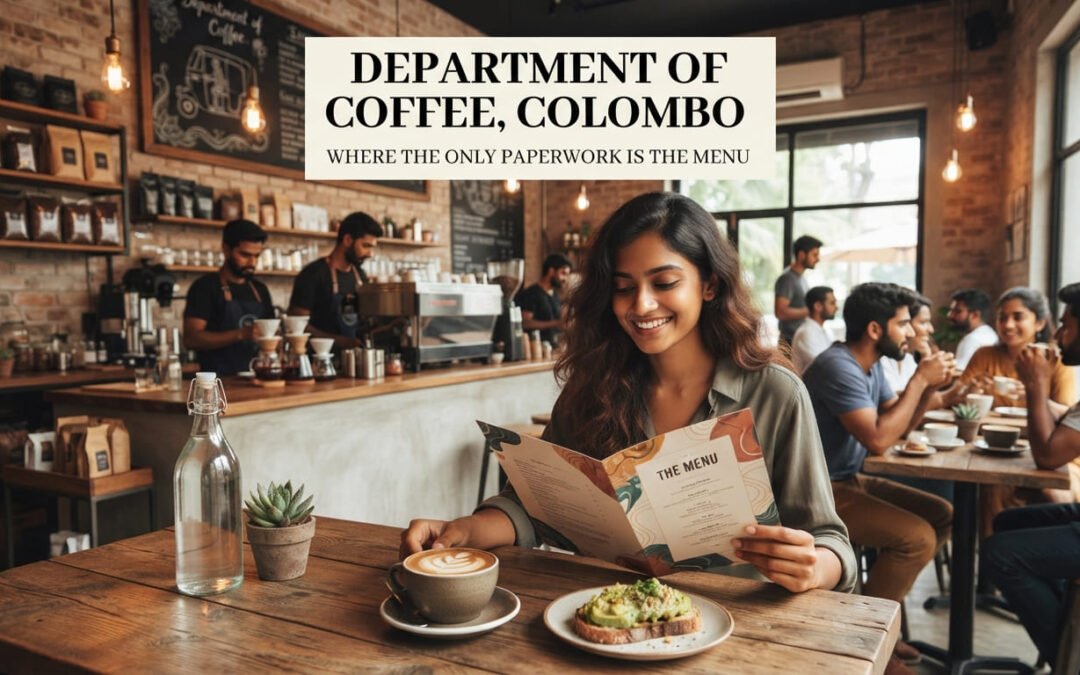
I’ll be honest, the name worried me. Department of Coffee sounds like somewhere you take a number, queue for forty minutes and discover you’ve brought the wrong form. I arrived half expecting a stamp. What I found instead was the smell of freshly ground beans reaching me on the pavement, a room full of people who looked happily unhurried, and a barista who greeted me like I was a regular I’d somehow forgotten to be.
The café sits in Colombo 7, on Philip Gunawardena Mawatha, close to Independence Square. That’s Cinnamon Gardens, the leafy part of the city where the streets are wide, the trees are old and the traffic seems to have taken a deep breath. It’s an easy place to slip into between a morning of sightseeing and an afternoon of doing nothing at all, and the neighbourhood itself is worth the stroll if you’ve got the energy.
Inside, the space is relaxed and generous. There’s a lot of seating, which matters more than people admit, because a café with nowhere to land is just a queue with ambitions. On the Saturday I went it was pleasantly busy, a mix of friends catching up, solo diners with books and one very focused person at a laptop who clearly had a deadline and a flat white. Nobody rushed anybody. The light was soft, the mood was easy, and the whole room hummed along at the volume of good conversation.
Now, the coffee. This is a specialty coffee shop, and you can tell from the menu, which is wide in the way that makes a coffee person’s eyes light up. There are espresso-based drinks for the classic order, but there are also proper brewing methods on offer, including Kalita Wave, V60, Aeropress and syphon, along with cold brew and a range of iced drinks. If you’ve ever wondered why the same bean can taste like three different things, this is a lovely place to find out. I tried a filter brew and then, because curiosity is cheap, a second one made a different way. The difference was surprising and I’m still thinking about it.
A quick word on how to order, because a long menu can freeze even confident people. If you’re new to specialty coffee, start with a brew method you’ve never tried and ask the barista what’s pouring that day. If you like milk, the espresso drinks do the job beautifully. If it’s a scorcher outside, which in Colombo it often is, the cold brew and iced drinks are a calmer way to cool down than ducking into the nearest air conditioner. Whatever you pick, take a minute to smell it before the first sip. It sounds fussy, and it works.
The beans have a story too. Coffee once flourished across Sri Lanka’s hills, peaking around 1870 before leaf rust swept through the plantations and tea took over. Department of Coffee began in 2021 with the backing of J M Robertson & Co, a Sri Lankan specialty roaster, and showcases Sri Lankan grown specialty coffee, including the Lakparakum line. Drinking a cup here feels like being handed a small chapter of an old story, with the ending still being written. That’s a lot of history for a flat white, and it somehow doesn’t weigh the drink down.
If you’re not a coffee person, you won’t be stranded. There’s a brunch and all-day menu that has a reputation for being very good, and I’d suggest arriving hungry and not repeating my mistake of ordering too little. The sort of food here suits long, lazy mornings, the kind you stretch into lunch because nobody has anywhere better to be. Pair it with something from the brew list and you’ve got the makings of a perfect Colombo morning.
It’s also a good café for different kinds of company. I’d bring a friend for a Saturday brunch when the place buzzes, a book for a quiet weekday morning, or a visiting relative who insists that Sri Lanka means tea and tea only. Watching them take a first sip of a well-made filter coffee, with that slightly suspicious look turning into surprise, is one of my small joys. Nobody has ever left that conversation unchanged.
I do have a soft spot for places that get the small things right, and this one does. Even the bathrooms have coffee-themed mirrors, which made me grin on the way back to my table. It’s a tiny detail, but it tells you the people behind the place enjoy what they do, and that cheerful attention carries through to the service. The staff are quick with a recommendation, patient with questions and, in my experience, happy to talk about what’s in your cup if you show an interest.
There’s no accommodation here, of course, but it makes an excellent base for a day in the city. Fuel up in the morning, then walk to Independence Square and the memorial hall that stands there, with its grand columns and the feeling that you’re standing somewhere significant. From there, Viharamahadevi Park and the museum district are a short ride away, and Cinnamon Gardens has plenty of other cafés if you want to turn your day into a gentle tasting tour. If you’re looking for somewhere to sleep, the hotels and guesthouses around Colombo 7 are quiet and well placed, so you can walk to breakfast without a car.
Department of Coffee has grown since that first opening. There’s more than one branch around Colombo, a site in Kandy and even an outlet overseas in Muscat, which says something about how far a good idea travels. The Colombo 7 café is where I’d start, because it has that comfortable, neighbourhood feel that smaller places sometimes lose when they expand. It still feels like somewhere you could turn up on a Tuesday and be treated well.
Getting there from Katunayake is simple. The expressway runs from the airport towards Colombo, so an airport taxi or a ride-hailing app will get you into the city in a reasonable time outside peak hours, and then it’s a short hop on to Colombo 7. If you prefer public transport, buses run from the airport area to Colombo Fort, and a tuk-tuk from there will take you the rest of the way. I’d suggest dropping your bags at your hotel first and treating the café as your first proper stop. It’s a very civilised way to begin a visit.
I stayed longer than planned, which is the best compliment I can pay a café. The cup I started with was gone, a second one had arrived, and the table next to me had turned over twice. On the way out I looked back at the little sign and thought about the name again. It’s a joke, I’m fairly sure, and a good one. If this is what a government department feels like, I’d happily file my paperwork here every morning.
by Travel Blogger | Nov 11, 2026 | Sri Lanka |
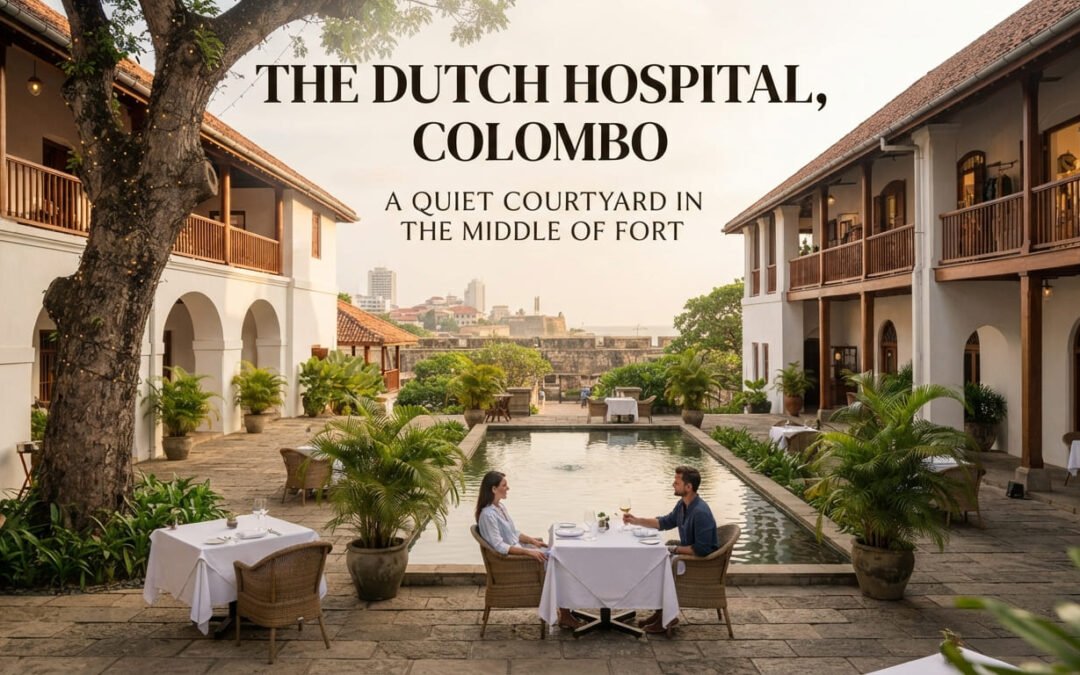
The first thing that changes is the noise. You’ve been dodging tuk-tuks and briefcase-carrying office workers on the Fort pavements, with horns going off like a brass band that never rehearsed, and then you step under an arched entrance and it all drops away. Someone’s cutlery clinks in the distance. A fan turns. The ground under your feet goes from pavement to old stone and I remember actually slowing down, the way you do when you walk into a library.
This is the Dutch Hospital Shopping Precinct, and it sits in the middle of Colombo Fort, just across from the World Trade Centre towers, which makes for a pretty good architectural argument. Glass and steel on one side, thick walls and tiled roofs on the other. The Dutch hospital is considered the oldest building in the Fort area, with the earliest record of it dating to 1681. It was built to look after the officers and staff of the Dutch East India Company, so if you’re keen on the idea that every old building has a story, this one has several before it even gets to the shopping.
After the Dutch era it went through a long run of other jobs. It housed the apothecaries at one point and later served as the Fort police station through the 1980s and into the 1990s, which strikes me as an odd career for a hospital building, though I suppose both involve a lot of corridors and people in a hurry. It was restored and reopened as a shopping and dining precinct in 2011, and the restoration was done with enough care that the old bones are still the main attraction.
There’s a nice footnote to the history. Paintings of the hospital’s front and rear views were done in 1771 by a Dutch artist, and they’ve survived, so you can compare the elevations with what you’re standing in. I find that oddly moving. A colonial hospital was important enough to be painted, and the painting outlived the empire that ordered it.
The layout is easy to read once you’re inside. Five wings frame two large rectangular courtyards, and deep verandahs run around the edges so you can drift from shop to restaurant without feeling like you’ve been funnelled through a mall. Look up at the tiled roofs and down at the old floors. Then look at the walls, because the thickness of them tells you more about the Dutch approach to building in a hot, humid port town than any information board could.
I’d come for the wandering, but I stayed for the shops. There are handicraft outlets with batik, carved wood, brass and ceramics, and clothing and jewellery boutiques that lean towards the stylish end of local design. Spa Ceylon is the one I always end up in, mostly because the smell of the balms and oils follows you down the corridor and talks you into it. It’s a good place to buy gifts, and also a good place to realise you’ve forgotten exactly who you were buying for.
Then there’s the eating and drinking. When I last visited, the lineup included Ministry of Crab, which is famous for exactly what the name promises, along with a cafe doing pizza, pasta and burgers for people who want something simple, and a couple of bars where the Taphouse is probably the best known. Menus and tenants do change over the years, so check what’s open before you commit to a plan. My own favourite way to use the place is to find a table outside at the end of the afternoon, when the courtyard light turns warm and the sea breeze starts to find its way in from the west.
If you want a bit of culture with your lunch, keep an eye out for anything happening in the courtyards. Art exhibitions, small performances and the occasional street musician turn up now and then, and they make the place feel like somewhere people actually use instead of a preserved set piece. It’s never been properly crowded when I’ve been, which is a rare gift in the middle of Colombo.
A few practical notes from my own visits. Go in the late afternoon if you can, because the heat has eased and the courtyards are at their best. Wear shoes you don’t mind walking in, as the stone floors are uneven in places. Give yourself a couple of hours without a rigid plan, because the pleasure of the place is wandering into a shop you didn’t mean to enter. And if you’re travelling with someone who’s not into shopping, the courtyards are a fine place to leave them with a cold drink and a book.
Fort itself is worth an extra hour either side. The old lighthouse clock tower, the Cargills and Millers buildings and the streets around Chatham Street all sit within an easy walk, and the harbour is close enough that you can smell it on a still day. Walk to the Galle Face Green afterwards if your feet allow it, and watch the kite sellers and the evening crowds settle in.
For somewhere to stay, you’ve got a couple of good options. The Fort and the Galle Face stretch have large hotels with sea views, which is handy if you want to walk to the precinct and back without a car. If you prefer something quieter, look at the leafy streets of Colombo 7, where boutique guesthouses and small hotels hide behind big trees and tall gates, and it’s only a short ride in. Either way, you’ll be well placed for the rest of the city.
Getting there from Katunayake is a smooth run compared with most journeys in this country. The expressway links the airport to Colombo, so an airport taxi or a pre-arranged driver will take you to the Fort in a reasonable stretch of time, outside the worst of the rush hour. Ride-hailing apps work in the same way and can be easier at the end of a long flight. If you’re travelling light and feeling patient, buses run from the airport area towards Colombo, and you can also combine a bus with a train on the coastal and main lines into Colombo Fort station, which sits within walking distance of the precinct. Whichever you choose, don’t be shy about asking your driver for the Dutch Hospital by name. Everyone knows it.
I left the way I came in, back through the arch, and the noise came rushing back almost as if it had been waiting for me. I stood on the pavement for a moment, a little reluctant, with a bag from Spa Ceylon in one hand. Three centuries and a bit of Colombo had just passed under my feet, and it had been a very nice way to spend an afternoon.
by Travel Blogger | Nov 11, 2026 | Sri Lanka |
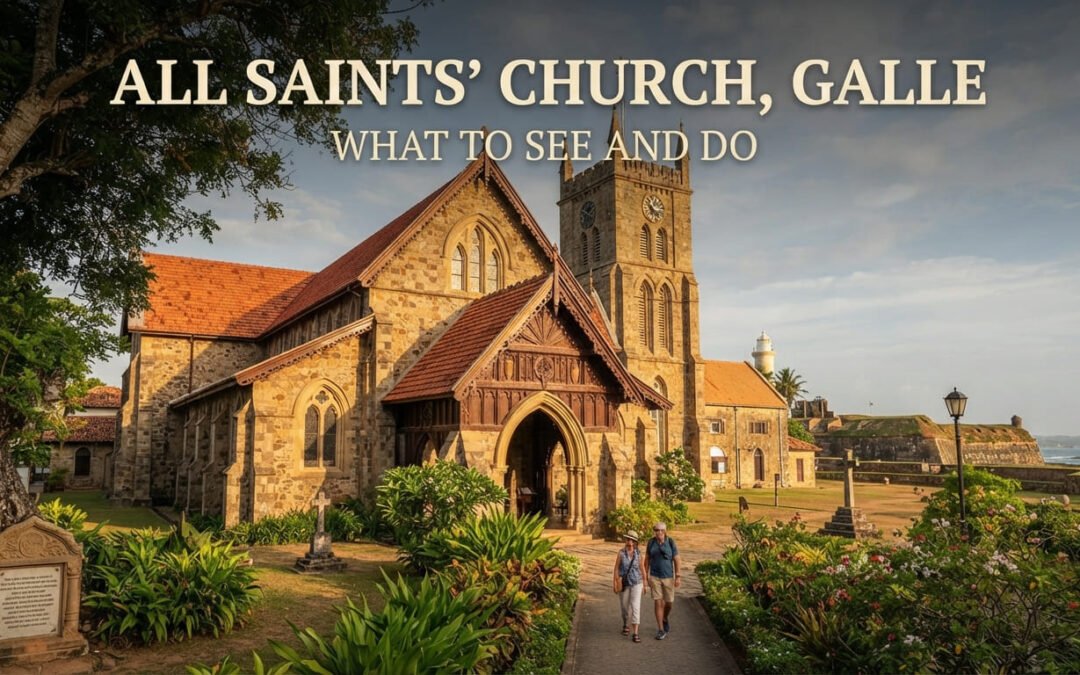
All Saints’ Church is an Anglican church inside Galle Fort, on the south coast of Sri Lanka. It stands on Church Street and belongs to the Church of Ceylon. Visitors come to see a fine example of Victorian Gothic design inside a UNESCO World Heritage Site, and to learn about the British period in Galle.
The idea for the church came from James Chapman, the first Bishop of Colombo. Before it opened, the Anglican congregation held its services in the nearby Dutch church. Building work began in 1868, and Bishop Claughton consecrated the church on 21 February 1871. Its first vicar was Rev. Dr George Justus Schrader. The church is still active today, so it is both a historic building and a working place of worship.
The Church from Church Street
The church faces south and stands on Church Street, one of the main lanes in the fort. Its tall walls, pointed arches and small turret make it easy to spot among the lower buildings around it. A slow walk around the outside shows the stonework from several angles. The thick walls were built to cope with the salt air and heat of the coast. Early morning and late afternoon are good times to visit, when the fort is cooler and the streets are quieter. The front of the church is the best place to start, as it shows the main arches and the turret clearly.
The Old Courthouse Site
The church was built on the site of an old courthouse, and an engraving outside records this. A council meeting in December 1862 decided that Galle needed a church for the British garrison, and the courthouse land was chosen. Local tradition says the gallows once stood where the altar is now, although visitors should treat this as a story rather than a proven fact. The engraving is worth finding before going inside. It shows how the use of the same ground changed over the years. A few minutes spent there sets the scene for the rest of the visit and links the church to its past.
Gothic Design for a Warm Climate
The builders followed the Gothic style of the 13th century but adjusted it for the tropics. The church has a basilican plan, with a tall central space and lower sides. Visitors can look closely at the repeated arches, the turret and the high openings that let air and light into the building. Many guides describe it as one of the most beautiful Anglican churches in Sri Lanka. Standing back on the street gives the best sense of its height and shape. The design is a good example of how British builders adapted European styles to local weather.
The Tall Interior
The first thing most visitors notice inside is the height of the roof. The walls are plain and white, and the fittings are simple, which gives the church a calm and uncluttered feel. A cool breeze often moves through the building, so it is a pleasant place to rest from the heat outside. Visitors can walk slowly down the main aisle to take in the proportions of the space. The quiet is part of the experience, so voices are best kept low. Taking a few minutes to stand still and look up at the roof is a simple way to enjoy the stillness.
The Stained Glass Windows
The church is known for its stained glass. The windows add colour to the pale interior, and the light changes as the sun moves across the sky. The glass has been well kept, and the work is delicate. Visitors can walk along the sides of the church and look at each window up close, rather than viewing them all from the entrance. A visit in bright daylight brings out the colours best. The windows also make good subjects for photographs, as long as other worshippers are not disturbed. The glass also shows the care that went into the fittings of the church during the 19th century.
Iron Door Handles and Latches
Small details also tell the story of the building. The iron door handles and latches are about nine inches long, and they have lasted for well over a century in the salty sea air of the fort. They are easy to miss, but they show how solidly the church was made. Visitors who stop at the doors on the way in or out can see how the metal has aged. It is a short stop, and a good reminder that the church was built to last. The handles are a small example of the craft that went into the whole building.
Joining a Service
All Saints’ is an active parish, and it holds regular services. Visitors who wish to attend can check the church website for current times. Those who come at other hours should remember that the building is a place of worship first and an attraction second. Modest clothing is expected, and photography should be done quietly. Visiting during a service gives a different view of the church from a quiet midday walk, because it shows the building doing the job it was made for.
The Dutch Reformed Church
The Dutch Reformed Church, also called the Groote Kerk, stands only a short distance from All Saints’. It dates from the 18th century, and it is where the Anglican congregation of Galle worshipped before its own church opened. Visitors can see the simple interior and the old gravestones set into the floor. Seeing the two churches in one visit makes the change from Dutch to British rule easier to understand. The plain Dutch building also makes a useful contrast with the taller Gothic lines of All Saints’. The Dutch building is one of the oldest churches in the fort, which shows how long the town has been settled.
St Mary’s Cathedral
St Mary’s Cathedral, the Roman Catholic cathedral of Galle, is also on Church Street. It is only a short walk from All Saints’ and fits easily into the same visit. Together with the Dutch church and All Saints’, it gives the street a mix of Christian traditions within a very small area. Visitors can compare the style of each building and see how the fort has served different communities over time. Each building has its own history, and the walk between them takes only a few minutes. Both buildings are close enough to be seen on foot without any trouble.
The Ramparts and Fort Walk
The fort walls give a different view of the church. From the ramparts, the roof and turret of All Saints’ rise above the other buildings, which shows how the church sits within the street pattern of the fort. Visitors can continue along the walls towards the Galle Lighthouse and then visit the Maritime Museum to learn about the shipping history of the area. Many people time the walk for the end of the day, when the sun is lower and the sea breeze cools the stone. The walk along the top of the walls is flat and easy, and it suits a slow pace with several stops to look back at the town.
All Saints’ Church is small, but it gives a clear picture of the British chapter in the long history of Galle.
by Travel Blogger | Nov 9, 2026 | Sri Lanka |
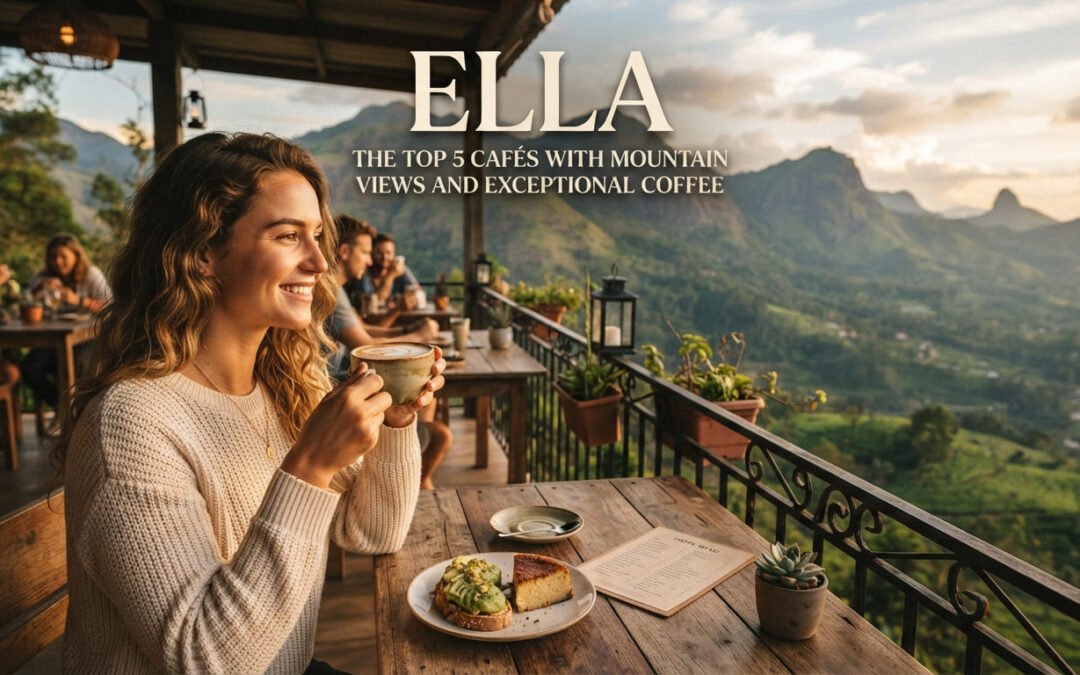
Ella is known for its misty hills, tea-covered slopes and walking trails, but the town’s café culture is also part of its appeal. After an early hike or a slow morning in the hill country, a good café offers somewhere to rest, enjoy a proper cup of coffee and watch the landscape change with the weather. Some places are designed around speciality coffee, while others combine scenic seating with generous breakfasts, Sri Lankan favourites and international comfort food.
The five cafés below offer different reasons to stop. The views, menus and atmosphere vary, so consider what matters most: the quality of the coffee, a satisfying brunch, a relaxed setting or a view worth lingering over.
1. Kiri Kōpi
Kiri Kōpi brings a speciality-coffee approach to Ella, with a setting designed for travellers who want to slow down rather than grab a drink and leave. Its Ella location combines outdoor mountain views with relaxed seating, including sandy-floor seating and bean bags. This gives the café a casual, unhurried feel suited to the hill town.
Coffee is the main attraction. The café focuses on speciality beans, with origins that can include Sri Lanka and overseas producers, and the selection may rotate. For visitors who usually order a standard cappuccino or latte, this is an opportunity to ask the barista about the beans, flavour notes and brewing style. Asking what is being served that day is a useful way to discover something new.
The café also offers local-fusion brunch, bringing familiar flavours into a modern café format. Pairing a meal with carefully prepared coffee makes this a good option for a late breakfast or relaxed lunch break.
The appeal is the combination of coffee, informal seating and an outdoor outlook. Ella’s weather can shift quickly, and mist sometimes hides the hills, but that is part of the character of the region. Kiri Kōpi is a strong choice for coffee lovers who value the drink itself as much as the setting.
2. Ceylon Kahawa by Roseland
Ceylon Kahawa by Roseland offers a focused introduction to Sri Lankan coffee. The café celebrates beans sourced, roasted and packaged by Roseland Coffee Roasters, with an emphasis on traceability from origin to cup. In a country internationally associated with tea, a venue dedicated to local coffee gives visitors a different perspective on Sri Lanka’s beverage culture.
The experience is particularly suited to people who like to understand what they are drinking. Rather than choosing only by size or milk preference, guests can ask about the coffee’s origin, roast and preparation. The team’s focus on Ceylon coffee makes the café a useful stop for travellers interested in local producers and the work that happens before a cup reaches the table. Roasted coffee is also available to purchase, offering a practical souvenir for anyone who wants to recreate part of the experience at home.
The café is set among Ella’s green hills, with mountain scenery contributing to the relaxed atmosphere. It works well as a morning stop before sightseeing or a restorative break after walking.
Ceylon Kahawa is not primarily about an extensive brunch menu or a busy social scene. Its strength is its clear identity: celebrating Sri Lankan coffee and presenting it with care. Choose it if you want to explore local coffee, speak with the people preparing it and take home beans that connect your trip with the island’s growing coffee culture.
3. Café Chill
Café Chill is one of Ella’s best-known places to eat, and its appeal extends beyond coffee. The multi-level venue has a lively, tropical character, with wooden details, plants and open seating that suit the town’s relaxed traveller atmosphere. Its upper areas offer a different perspective over the surrounding streets and hills, although the experience is more about the café’s energy and setting than a secluded mountain viewpoint.
The menu is broad, spanning Sri Lankan dishes and international café favourites. Depending on the time of day, visitors can come for breakfast, coffee and pastries, or stay for a substantial lunch or dinner. The variety is useful for groups whose members want different things, whether that means a familiar Western-style meal, a local dish or something to share. Fresh juices and other cold drinks are also suitable after a walk in the warm weather.
Coffee remains part of the offer, but Café Chill is not a specialist coffee bar in the same sense as a dedicated roastery. It is better understood as an all-day café and restaurant where drinks, food and atmosphere work together.
Café Chill suits visitors looking for a lively, versatile stop with plenty of food choices. It can handle breakfast, a casual meal or an evening out. Travellers who enjoy a sociable scene may prefer the busier hours, while those seeking a quieter coffee break may find an earlier visit more suitable.
4. Dream Café Ella
Dream Café Ella combines a central location with rooftop seating and broad views over the town and surrounding landscape. The elevated setting is part of its appeal: guests can sit above the street, take in the mountain backdrop and watch the rhythm of Ella pass below. For travellers who want a café that can also serve as a lunch or dinner destination, it offers more than a quick coffee stop.
The menu brings together Sri Lankan food and international dishes, with options such as pasta, sandwiches, burgers and other café-style meals. Homemade desserts, ice cream, fruit drinks and coffee provide reasons to visit outside the main meal times. This variety can be helpful after a day of hiking, when some visitors want a filling local meal and others prefer a lighter bite or a sweet treat.
Dream Café’s rooftop atmosphere can suit couples, families and groups of friends. The elevated setting creates a pleasant place to pause between excursions, enjoy a drink or settle in for a meal.
Choose Dream Café when you want scenery and a flexible menu in one place. It is a practical option for a leisurely meal, a coffee break between excursions or an evening when you would rather stay in the centre of town than travel elsewhere.
5. Wild Café Ella
Wild Café Ella offers a cosy, jungle-inspired atmosphere in the heart of the town. Its design and use of greenery give it a relaxed feel, while the menu focuses on Sri Lankan food with a modern café-style approach. For visitors interested in trying local dishes in an informal setting, it provides an alternative to cafés that concentrate mainly on Western brunch menus.
Traditional hoppers, rice and curry, kottu and other familiar favourites feature in its food offering, alongside comfort-food options. The range makes it suitable for a substantial lunch after walking or a relaxed dinner. Its colourful, informal setting makes it a comfortable choice for solo travellers, couples and small groups.
The café’s location on Main Street makes it convenient to reach while exploring Ella. Its seating offers views of the surrounding town and greenery, giving diners a sense of place without requiring a trip to a remote viewpoint. The atmosphere is informal and welcoming.
Wild Café is a good choice for visitors who want local flavours in a relaxed café environment. If your priority is a carefully sourced single-origin coffee, a specialist venue may be a better first stop; if you want to pair a drink with Sri Lankan comfort food, Wild Café offers a broader experience.
How to Choose Your Ella Café
Each café serves a slightly different purpose. Kiri Kōpi is the pick for speciality coffee and an unhurried outdoor setting. Ceylon Kahawa by Roseland is ideal for learning more about Sri Lankan coffee and buying beans to take home. Café Chill suits visitors looking for a lively all-day menu, while Dream Café Ella combines rooftop seating with a broad range of meals and desserts. Wild Café is worth considering for traditional Sri Lankan food in a relaxed café setting.
For the best experience, time your visit around what you want to do. An early coffee can be a welcome start before a hike, while a late breakfast or brunch may suit a slower day. If mountain views are important, choose outdoor seating when available and remember that mist and rain are normal parts of Ella’s hill-country climate. Check current menu items, opening hours and seating before making a special trip.
Ella’s cafés are more than convenient places to eat between attractions. They offer different ways to experience the town: through a cup of locally sourced coffee, a plate of hoppers, a rooftop view or a long conversation after a walk. Choose the place that matches your pace and enjoy a slower side of Sri Lanka’s hill country.