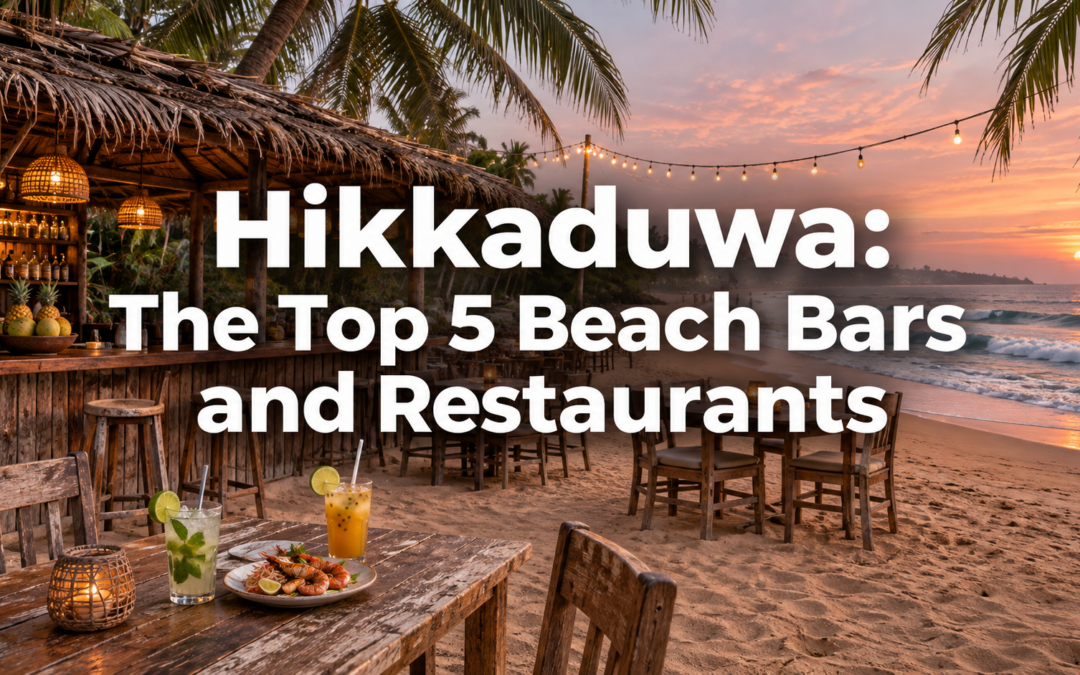
Hikkaduwa has grown from a quiet fishing village into one of the south coast’s busiest beach towns, a two-mile stretch of sand drawing surfers, backpackers, and a growing digital nomad crowd in roughly equal measure. What separates its food and drink scene from the more subdued register of Unawatuna further south is energy, a strip that runs consistently louder and later, live music and DJ sets a genuine fixture rather than an occasional addition. The sheer density of options along the beach road can be overwhelming on a first walk through, and narrowing that field down to the names that consistently deliver is the point of this list. The five places below cover that range, from health-conscious daytime cafés to the beach’s most committed late-night venues.
Sea Salt Society
Sea Salt Society has positioned itself as Hikkaduwa’s premier beachfront restaurant and bar, a higher-end menu and considered setting that sits a clear step above the strip’s more casual beach-shack competition. The food leans into proper seafood platters and grilled meats rather than a broad, try-everything menu, and the cocktail programme is developed enough to support a genuine evening out rather than functioning as an afterthought to the kitchen.
Live music on selected evenings adds a further layer to the venue’s appeal, and the gorgeous ocean views from the beachfront tables make Sea Salt Society a natural choice for a date night or a special dinner during a Hikkaduwa stay. It runs on the pricier end of the town’s dining scene, but reviewers consistently judge it worth the premium for the combination of setting, service, and food quality, staff who are attentive without hovering and a kitchen that treats even a simple grilled fish with genuine care. Book ahead for weekend evenings, when tables fill quickly.
Top Secret
Top Secret operates as both a popular beach restaurant and guesthouse, and its defining feature is the transformation it undergoes through the course of an evening, a straightforward beach restaurant by day shifting into a genuine bar-discotheque once dinner service winds down. The menu covers a wide range, Sri Lankan curry and devilled dishes alongside seafood, spaghetti, and salads, giving it a broader appeal than the more specialised kitchens elsewhere on this list.
The setting itself carries a quirky, unmistakably beach-specific character, hammocks and cushions scattered through the space creating a chill, unhurried atmosphere during the day that gives way to a livelier crowd as the night progresses. This dual identity makes Top Secret a strong choice for a group wanting to settle into one place for the whole evening rather than moving between venues, starting with dinner and staying on as the atmosphere shifts around them, the same table serving a plate of devilled prawns at eight and a round of drinks on the dance floor by eleven.
Funky De Bar
Funky De Bar has built a loyal local following as a mixed Sri Lankan and international kitchen with a genuinely strong happy hour and regular live music, the kind of venue that draws as many long-staying residents and locals as first-time visitors. The seafood here is consistently fresh, and the pizza menu, an unexpected strength for a beach bar, draws specific praise from reviewers who found it considerably better than the average tourist-strip offering.
The atmosphere leans lively rather than intimate, a mix of locals and travellers sharing the same tables and the same happy hour deals, giving Funky De Bar a more genuinely local character than some of the more polished, purely tourist-facing venues along the strip. It suits a traveller wanting an energetic evening with a real cross-section of Hikkaduwa’s community, rather than a quiet, secluded dinner, and the live music schedule is worth checking ahead if a specific evening’s atmosphere matters to your plans.
SaltyBeer
SaltyBeer has built its identity around the specific aesthetic and menu that will be instantly familiar to anyone who has spent time in Bali or a similar surf-and-wellness beach town, proper Western-style coffee, granola and smoothie bowls, and a hipster-cool, health-conscious atmosphere that stands apart from the more traditional beach-shack restaurants elsewhere on this list. It has become one of the most talked-about spots in Hikkaduwa specifically through social media, the kind of café travellers seek out because they have already seen it online before arriving.
The strong cappuccino draws particular praise, a genuine rarity in a country where Ceylon tea usually dominates the hot drinks menu, and SaltyBeer functions best as a daytime stop, breakfast or a working coffee session, rather than an evening destination. It suits the same digital nomad and long-stay crowd that Hideaway Café serves in Unawatuna, travellers wanting a reliable, health-conscious base for the working hours of the day, and a genuinely comfortable place to sit with a laptop for a couple of hours without feeling rushed.
Surf Control Rooftop Lounge
Surf Control Rooftop Lounge offers Hikkaduwa’s clearest elevated vantage point, a second-level position on Galle Road giving genuinely stunning ocean views over the beach and the water beyond, a different register from the ground-level beachfront restaurants that dominate the rest of this list. The grilled menu pairs well with the setting, food and drink handled competently enough to support a full evening rather than a single drink stop.
The rooftop positioning gives Surf Control a natural advantage at sunset, when the elevated view over the coastline comes into its own, and the venue works well as either an early-evening stop before moving on elsewhere or a full dinner destination in its own right. It is the closest thing Hikkaduwa has to the rooftop bar category that has become such a fixture of Colombo’s nightlife scene, translated into a considerably more relaxed, beach-town register, with a menu and pricing that stay firmly grounded rather than chasing the capital’s premium rates.
Getting the Evening Right
A Hikkaduwa day works well starting with coffee and a smoothie bowl at SaltyBeer, an afternoon spent on the beach, and an evening that builds toward whichever register suits the night, a considered dinner at Sea Salt Society, a rooftop sunset at Surf Control, or a full night settling into Top Secret or Funky De Bar as the crowd and the music pick up. Few visitors need all five in one day; the strip rewards returning across a longer stay rather than covering everything at once, and the town’s compact size means moving between any two of these venues rarely takes more than a short walk or a quick tuk-tuk ride.
Booking Notes
Hikkaduwa’s peak season runs November through April, and weekend evenings at Sea Salt Society and Surf Control fill quickly during this window, worth a same-day reservation by early afternoon rather than a walk-in. Most venues accept both cash and card, a notable convenience compared with smaller towns further along the coast. Prices span a wide range, from budget-friendly local kitchens to Sea Salt Society’s genuine premium pricing, and it is worth deciding in advance which end of that range a given evening calls for rather than assuming uniform pricing across the strip. Outside peak season the beach road quiets down considerably, and several of the livelier venues scale back their live music schedules accordingly.
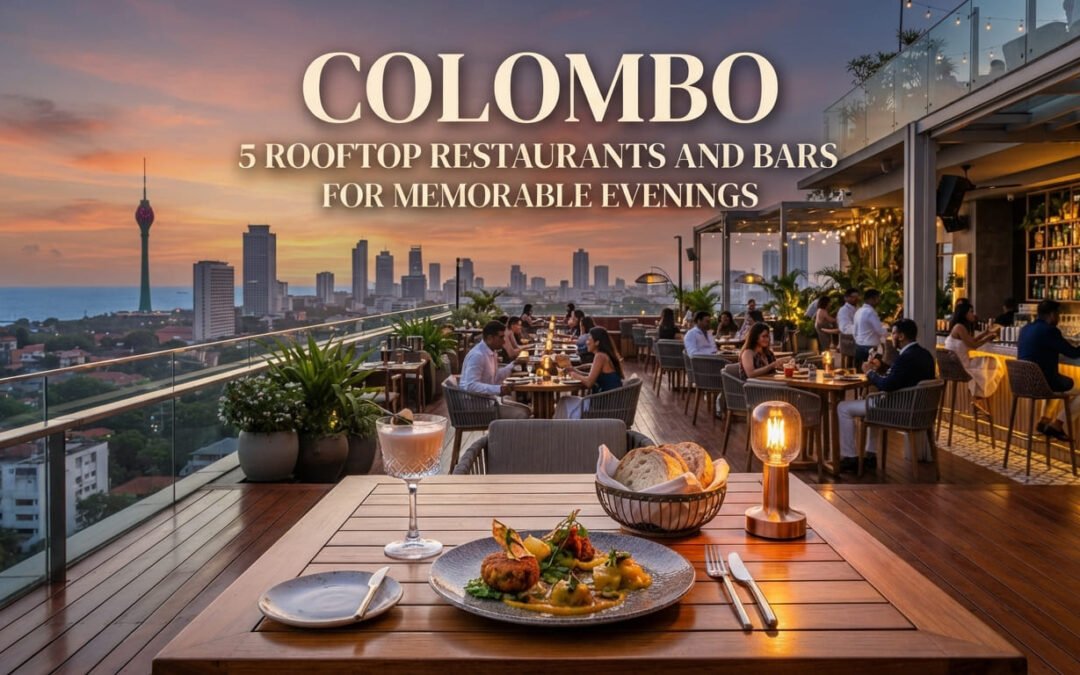
Colombo’s rooftop dining scene offers a different way to experience Sri Lanka’s commercial capital. From above the busy streets, the city opens into a mix of ocean views, modern towers, historic districts and glowing lights. A rooftop venue can turn a simple dinner or drink into an occasion, whether you arrive just before sunset, meet friends after work or plan a special evening while travelling around the island.
The choices vary considerably. Some rooftops focus on cocktails and small plates, while others offer a fuller restaurant menu or a hotel-lounge experience. Views, music, menus and dress expectations can differ, too. These five venues offer distinct ways to enjoy Colombo from above, with an emphasis on the setting as much as the food and drinks.
1. ON14 Rooftop Lounge & Bar
Located at Radisson Hotel Colombo, ON14 combines a rooftop bar with a casual dining atmosphere and views towards the Indian Ocean and the city. Its position alongside the hotel’s rooftop infinity pool gives the venue a resort-like feel, even though it sits within the busy coastal city. For visitors staying in Colombo, it can be an easy choice for a sunset drink without travelling far from the main hotel districts.
The outlook is a major part of the experience. On a clear evening, the sea and the changing sky provide a striking backdrop, while the city gradually lights up below. Arriving before sunset gives guests time to settle in and see the view shift from daylight to evening. The rooftop setting is also well suited to a relaxed catch-up with friends or a low-key date.
The menu includes drinks alongside food options intended for sharing or enjoying as part of a casual meal. Guests can look for cocktails and other bar favourites, with dishes that suit an evening spent lingering rather than rushing through dinner.
ON14 works best for travellers who want a recognisable hotel setting, open views and the flexibility to stop by for a drink or stay for food. A reservation may be useful at peak times, particularly if you are visiting with a group.
2. Ward7 Rooftop Resto-Bar
Ward7, at Jetwing Colombo Seven on Ward Place, offers a polished rooftop experience with wide views over the city. Its design combines indoor seating with an outdoor area, allowing guests to choose between a sheltered table and a more open-air setting. The illuminated infinity pool adds to the elevated atmosphere and makes the rooftop feel like a destination in its own right.
The venue’s character suits an evening that begins with a drink and continues into dinner. Its menu takes a cosmopolitan approach, reflecting the range of flavours found in Colombo, while the bar gives guests the option of cocktails and other beverages. It is the kind of place where the skyline becomes part of the occasion, whether you are meeting a colleague, celebrating a birthday or simply taking a break from sightseeing.
One of Ward7’s advantages is that it feels more like a complete hotel dining venue than a small bar perched above the street. Guests can settle in for a longer visit, and the indoor-outdoor layout is helpful when the weather is uncertain.
Ward7 is worth considering for visitors who prefer a contemporary, hotel-based rooftop with food as well as drinks. If you are planning a celebration or visiting with a group, check the current menu and booking arrangements in advance.
3. Sky Yard at MaRadha Colombo
Sky Yard at MaRadha Colombo has a breezy rooftop-lounge feel, with views across the ocean and the developing Port City area. The venue sits beside the hotel’s rooftop pool, making it a natural choice for guests who want to combine a drink with a relaxed coastal outlook. Its atmosphere is more casual than a formal fine-dining restaurant, which can make it appealing for an easy evening out.
The setting works particularly well around sunset. The open sky, sea breeze and changing colours of the horizon create a natural focus, while the city’s movement continues below. The combination offers a change of pace from the traffic and busy streets at ground level.
Sky Yard’s food and drink offering includes cocktails and other beverages alongside tapas-style dishes. This approach suits groups who prefer to order a few plates to share rather than commit to a long, formal meal. It also allows guests to combine drinks and light bites before heading elsewhere for dinner, or to stay and make an evening of it.
The combination of a poolside rooftop, ocean views and a relaxed menu gives Sky Yard a versatile appeal. It can work for couples, friends or hotel guests who simply want to unwind. Booking ahead is sensible if you would particularly like to enjoy the view during a busy evening.
4. Vistas Bar at NH Collection Colombo
Vistas Bar, at NH Collection Colombo, is known for its elevated outlook across the city and coastline. The rooftop setting gives it a sophisticated feel, while the panoramic view makes it an appealing stop for visitors who want to see Colombo from a different perspective. It suits sunset drinks, date nights and occasions when the setting matters almost as much as the menu.
The bar focuses on cocktails and other drinks, with food options that can complement a relaxed evening. The height, the breeze and the changing view as the sun sets over the city all contribute to the experience. After dark, Colombo’s lights create a more urban scene, offering a different atmosphere from the colours of the sunset.
Vistas is a useful choice for travellers who want a rooftop bar within a full-service hotel. It can be paired with dinner elsewhere in the city or become the main destination for the evening. If you are celebrating something special, check whether the venue has any current packages or booking requirements.
Vistas is best for visitors who enjoy cocktails, city views and a polished lounge atmosphere. It is worth checking current operating hours and any dress guidance before setting out.
5. Virticle by Jetwing
Virticle by Jetwing brings a high-rise dining experience to Union Place, with its location on the 30th floor of Access Tower II giving guests a broad view across Colombo. The height is central to its appeal: the city’s buildings, roads and coastline become part of the backdrop, creating a sense of occasion that suits a special dinner or a celebratory drink.
The food offering draws on Sri Lankan flavours and ingredients while presenting them in a contemporary style. This gives the venue a point of difference from rooftop bars that concentrate mainly on drinks and familiar international dishes. The menu may feature local ingredients and flavour combinations in modern preparations, offering visitors a chance to experience Sri Lankan cuisine in a distinctly urban setting.
The bar is another important part of the experience, with signature cocktails and a selection of beverages. For guests who want to make an evening of it, the combination of food, drinks and skyline views means there is little need to move between venues. It can be particularly suitable for birthdays, anniversaries or a memorable final evening in Colombo before travelling elsewhere in Sri Lanka.
If you have a preferred table or are visiting for a special occasion, reserve in advance and mention your request. A high-floor view is a major attraction, but table placement and visibility can depend on the layout and availability on the night.
Planning Your Rooftop Evening
For a memorable rooftop experience, timing makes a difference. Arriving 30 to 60 minutes before sunset gives you the chance to see Colombo in daylight, watch the sky change and enjoy the city after dark. Sunset times vary through the year, and clouds or rain can affect the view, so it is worth checking the forecast and keeping expectations flexible.
Consider what matters most to you. ON14 offers a hotel rooftop with a poolside setting; Ward7 combines skyline views with a polished restobar atmosphere; Sky Yard is a relaxed option for ocean views and sharing plates; Vistas is suited to cocktails in an elevated lounge; and Virticle focuses on contemporary dining high above the city. None is automatically the best for every visitor—the right choice depends on your budget, the occasion and whether you prioritise food, drinks, views or atmosphere.
Before heading out, check current opening hours, menus, reservation requirements and any dress guidance directly with the venue. Prices and promotions can change, and a special event may affect access or seating. If you are visiting with a group, ask about minimum spends or set menus in advance rather than assuming every table follows the same arrangements.
Colombo’s rooftops are not just places to look at the skyline; they offer different ways to enjoy the city’s hospitality scene. Whether you choose a casual drink beside an infinity pool or a carefully planned dinner above the streets, the combination of food, conversation and a changing view can make an ordinary evening feel memorable.
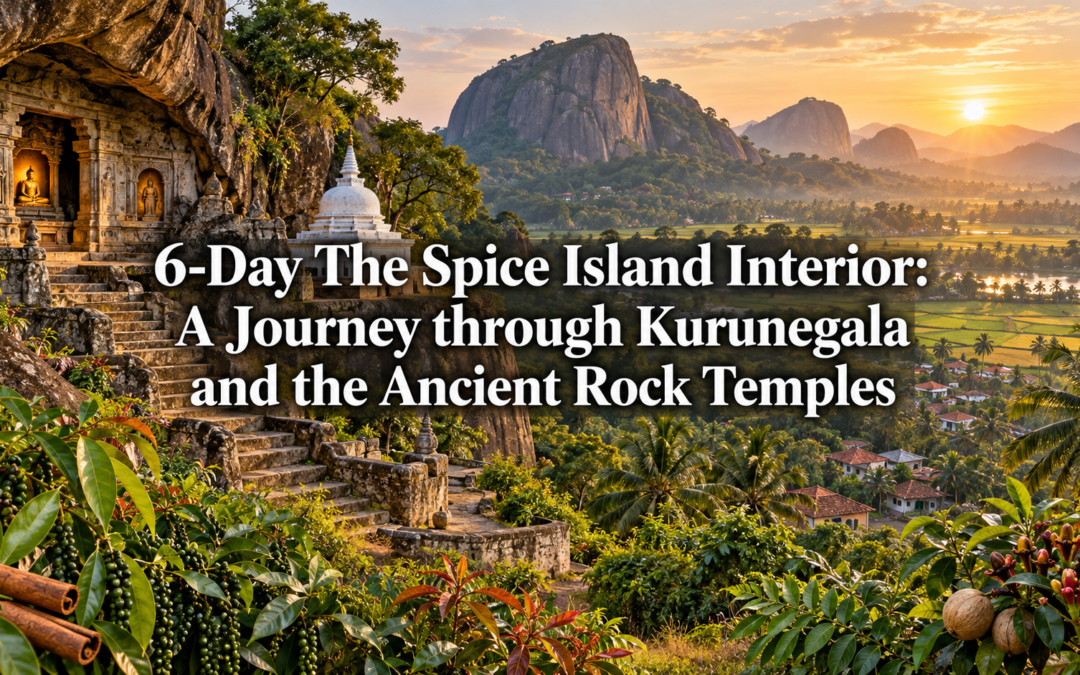
The cultural triangle of Sri Lanka, that well-mapped triangle of Anuradhapura, Polonnaruwa, and Kandy, absorbs the vast majority of visitors who come looking for the island’s ancient history. It deserves that attention. But there is a parallel history, quieter and less organised for consumption, sitting in the landscape of the North Western Province just beyond the cultural triangle’s western edge. Rock temples that rival Dambulla in atmosphere. A royal capital whose ruins sit beneath a working town without fanfare. Forest monasteries built by monks who wanted distance from the world and achieved it so completely that the world largely forgot they were there.
Kurunegala and the ancient sites around it offer six days of cultural travel that covers terrain most itineraries never reach. The crowds are absent. The entrance queues do not exist. What is there instead is the particular quality of a historical landscape that has not yet been curated into a product, where the ruins sit in their original relationship with the surrounding villages and the monks who maintain the temples do so because it is their vocation rather than their tourism role.
Day 1 – Kurunegala and the Rock Above the Town
Kurunegala sits about ninety kilometres north of Colombo, close enough for a comfortable morning drive, far enough that the city feels genuinely left behind by the time you arrive. The town is the administrative capital of the North Western Province and a busy commercial centre, its streets full of the ordinary business of a mid-sized Sri Lankan town. But above it, rising from the flat plain with an abruptness that the eye keeps returning to, is the Ethagala Rock, a massive granite outcrop crowned with a large Buddha statue that is visible from most of the town and from the road for several kilometres in every direction.
Climb the rock in the late afternoon when the heat has eased. The path is well-maintained and takes about twenty minutes. From the top, the surrounding plain spreads out in every direction, the tank system that still irrigates the agricultural land around the town visible as a series of glinting surfaces in the evening light. The ancient name of Kurunegala was Hastisaila, the elephant rock, and the granite formations around the town base do bear a passing resemblance to various animals if you approach them with sufficient goodwill.
The town was a royal capital of the Kurunegala Kingdom in the late 13th and early 14th centuries, and the ruins of that period, though not extensively excavated, sit in and around the modern town in a state of comfortable integration with daily life. The old tank, the Kurunegala Wewa, still irrigates the surrounding fields and still reflects the rock above it in the early morning, as it has done for seven hundred years.
For accommodation, Kurunegala Rest House is a government-run property with a good location near the tank and basic but clean rooms at budget prices. For mid-range comfort, Rohansha Hotel in the town centre is reliable and well-positioned for exploring the surrounding sites.
Days 2 and 3 – Ridi Vihara and the Silver Temple
The Ridi Vihara, about thirty kilometres south-west of Kurunegala, is one of those temple complexes that rewards the traveller who arrives without expectation and leaves without hurrying. Its name means Silver Temple, a reference to the silver ore discovered on the site during the reign of King Dutugamunu in the 2nd century BC, ore that was used to fund the construction of the Ruvanvelisaya Dagoba in Anuradhapura. The site has been continuously occupied and expanded ever since, the result being a layered complex of caves, image houses, and courtyards that spans more than two thousand years of Sri Lankan religious art.
The lower cave temple contains some of the finest Dutch-period decorative tiles in Sri Lanka, blue and white Delft tiles brought as offerings by the Dutch East India Company in the 17th century and set into the interior walls with a pragmatic generosity that somehow works perfectly alongside the older Sri Lankan painting tradition surrounding them. The recumbent Buddha in the main cave is a large and beautiful figure, and the painting behind it, depicting scenes from the life of the Buddha in the Kandyan style, is well-preserved and worth extended attention.
The upper temple complex, reached by a steep path above the main cave, contains older structures and a more austere atmosphere. The views from up here across the surrounding agricultural landscape, low hills covered in rubber and coconut with the occasional tank reflecting the sky, have the quality of a landscape that has not changed significantly in its essentials for several centuries.
On the second day, move to the nearby village tank circuit. The agricultural landscape around Ridi Vihara is threaded with small irrigation tanks and the paddy fields they serve, and driving the back roads between them in the early morning, when the mist is still in the low ground and the egrets are feeding in the shallows, is one of those experiences that requires no particular destination to justify it.
For accommodation near Ridi Vihara, small guesthouses in the village of Ridigama offer basic rooms and home cooking. The Kandy House, about an hour’s drive toward Kandy, provides a more luxurious option for travellers who want a heritage property as a base for day trips.
Day 4 – Arankele and the Forest Monastery
The Arankele forest hermitage sits in the jungle north of Kurunegala, at the end of a road that narrows steadily as it approaches the site and arrives finally at a clearing where the forest takes over completely. It was established in the 6th century AD as a monastery for monks following the forest-dwelling tradition of Theravada Buddhism, a tradition that prioritised meditation and withdrawal over the communal life of the larger temple complexes.
The ruins at Arankele are not ruins in the conventional sense. They are the remains of a community that organised itself around the practice of meditation in the most literal way possible. The meditation platforms, long stone pathways raised slightly above the forest floor and running in straight lines between the trees, were designed for walking meditation, the monk moving back and forth along the path for hours at a time. The double platforms at the ends of some pathways are where monks sat facing each other for communal practice. The stone toilet facilities are precisely where you would expect them to be if you were designing a community around the elimination of distraction.
What makes Arankele extraordinary is the degree to which the forest has been allowed to continue its relationship with the ruins. Trees grow through the meditation platforms. Roots have lifted and cracked the stone pathways. The jungle presses in on every side with a gentle and persistent insistence that will eventually, over centuries, reclaim the site entirely. Walking through it on a quiet morning, with the sound of the forest and the occasional distant bell from a monk’s quarters somewhere deeper in the trees, is one of the more genuinely meditative experiences available to the non-meditating traveller in Sri Lanka.
Day 5 – The Village Temples and the Agricultural Interior
The North Western Province interior between Kurunegala and the coast is one of the least visited landscapes in Sri Lanka and one of the most honest. The villages here are agricultural communities organised around their tanks and their temple, following a seasonal rhythm that has not changed significantly in its essentials for centuries. The temples in these villages are not tourist sites. They are working religious institutions, maintained by the community and used daily, and the welcome they extend to respectful visitors is genuine rather than commercial.
Spend the day driving the interior roads between Kurunegala and Maho, stopping at village temples as you encounter them. The painted interiors of the smaller village temples are often more immediate and more emotionally direct than the refined artistry of the larger royal complexes. The artists who worked in these temples were painting for their own communities, telling stories that everyone in the village already knew, and the familiarity of that relationship gives the work a quality that formal religious art sometimes lacks.
The Tantrimale ancient site, near Nochchiyagama north of Kurunegala, is worth including on this day if your routing allows. An ancient rock temple with a large natural Buddha image carved into the granite face, it sits in a landscape that feels genuinely remote despite being relatively accessible, and the walk through the surrounding scrub forest to reach the main image has a quality of approach that the more accessible sites cannot replicate.
Day 6 – The Return Through the Coconut Triangle
The drive back to Colombo from Kurunegala passes through the coconut triangle, the broad swathe of North Western Province lowlands where coconut cultivation has dominated the landscape and the economy for over a century. The estates here are large and old, the trees tall and widely spaced, the ground beneath them kept clear in the traditional manner.
Stop at Dambadeniya on the way south, a small town that was briefly the royal capital of Sri Lanka in the 13th century when the Polonnaruwa kingdom collapsed under South Indian invasion. The ruins of the Dambadeniya palace complex and the Vijayasundarama temple, which once housed the Tooth Relic during the capital’s period of significance, sit above the town on a rocky hill with views across the coconut estates in every direction. The site receives very few visitors and the caretaker, if present, will usually offer an informal tour of considerable depth and enthusiasm.
The final stretch into Colombo from the north passes through Negombo and the coastal plain, the city appearing gradually through the suburban sprawl that extends further from the centre each year. After six days in the quiet interior, the re-entry into the capital has the quality it always has after a good journey. The city feels both familiar and slightly strange, and the strangeness is the measure of how far you actually went.
Where to Stay
In Kurunegala, Kurunegala Rest House handles budget accommodation well with good tank views, while Rohansha Hotel is the reliable mid-range choice. Near Ridi Vihara, village guesthouses in Ridigama offer basic and genuine accommodation, with The Kandy House providing a more luxurious heritage option within day-trip distance. For travellers who prefer a single comfortable base throughout, Kurunegala is centrally positioned for all sites on this route and the daily drives are manageable.
Island Hopping: Exploring the Contrasting Charms of Antigua and Barbuda
1. Introduction: Two Jewels, One Journey – The Allure of Antigua and Barbuda
Nestled in the heart of the Leeward Islands, the nation of Antigua and Barbuda presents a captivating proposition: a “twin-island paradise” offering not one, but “two uniquely distinct experiences” within a single Caribbean escape.1 Imagine stepping from a world steeped in maritime history and vibrant coastal energy onto shores defined by profound tranquility and raw, untouched nature. This journey invites travelers to explore the multifaceted soul of the Caribbean, swapping snow for sunshine 2 and discovering a destination where turquoise waters lap against 365 pristine beaches 2, and where vibrant culture meets unparalleled serenity.
Antigua, the larger and more developed of the twins, pulses with the echoes of its colonial past. Its corrugated coastline shelters countless coves and bustling harbours that have welcomed sailors for centuries.4 It’s an island famed for having a beach for every day of the year 1, a claim that hints at its generous shores and well-established tourist appeal. Here, historical grandeur mixes with a lively Caribbean spirit. In contrast lies Barbuda, Antigua’s “smaller sister island,” a mere whisper across the waves.1 Known as the “ultimate celebrity hideaway” 1, Barbuda offers a different kind of allure – one defined by its legendary pink sand beaches, the breathtaking spectacle of one of the world’s largest Frigate Bird Sanctuaries, and an atmosphere of quietude that feels increasingly rare in the modern Caribbean.1 It is flatter, wilder, and intentionally less developed, promising an escape into nature’s embrace.4
The true magic, however, lies in combining these contrasting personalities. An island-hopping adventure between Antigua and Barbuda unlocks a depth and diversity of experience that neither island can offer alone.1 It’s a chance to immerse oneself in the rich tapestry of Caribbean life – from the historical echoes and sailing spirit of Antigua to the untamed, natural heart of Barbuda. This article serves as a guide to that journey, exploring the unique character of each island, the practicalities of navigating between them, and the unforgettable experiences that await those who choose to explore both jewels in this Caribbean crown.
2. Antigua: History, Harbours, and Hundreds of Beaches
Antigua stands as a testament to the enduring allure of the Caribbean, blending historical depth with sun-drenched leisure. Its unique geography and rich past have shaped an island that caters to history buffs, beach lovers, and sailing enthusiasts alike.
2.1 Geography and First Impressions
As the largest of the English-speaking Leeward Islands 1, Antigua encompasses 108 square miles of undulating terrain, a characteristic derived from its origins as a coral island rather than a volcanic one.1 This geological distinction blesses it with powder-white sand beaches along its entire coast.7 Its “corrugated coasts” naturally form “hundreds of perfect little coves” and deep, sheltered bays, features that have historically made it a safe haven for mariners, from Admiral Nelson’s fleet to buccaneers and modern-day yachties.4
Upon arrival, visitors encounter an island with a “distinct English accent” 4, a legacy of its colonial past. This influence is palpable in the bustling capital of St. John’s, the salty glamour of English Harbour, and the numerous historical forts dotting the landscape.4 Yet, Antigua remains quintessentially Caribbean. Candy-colored villages add splashes of vibrancy, a certain “rum-infused mellowness” pervades the air, and the genuine warmth of the locals, quick to offer a wide smile, makes visitors feel instantly welcome.4 It’s this blend of familiar colonial structure and infectious island spirit that defines Antigua’s unique character.
2.2 Echoes of the Past: Nelson’s Dockyard and English Harbour
No exploration of Antigua is complete without delving into its rich maritime history, most vividly embodied by Nelson’s Dockyard in English Harbour.3 Recognized as a UNESCO World Heritage Site 1, this remarkably preserved complex stands as the world’s only remaining example of a Georgian naval dockyard.1 Built starting in 1725, it served as England’s most crucial naval outpost in the Caribbean during the age of sail.1
Visiting the Dockyard today feels “like walking through history”.2 Painstakingly restored 18th and 19th-century buildings line the harbour, their original purposes signposted – from the Sawpit Shed to the Copper and Lumber Store.1 Structures like the Admiral’s Inn, the Sailmaker’s Loft, and the intriguing Mystery Pillars offer glimpses into the past.8 The former Naval Officer’s House now hosts a museum detailing the area’s history.1 The Dockyard is far from a static relic; it remains an active marina bustling with modern amenities, including shops, hotels, restaurants, and marine businesses, all housed within the historic architecture.2 Sleek yachts tied to the old stone quayside create a striking juxtaposition of past and present.8
Nelson’s Dockyard is intrinsically linked to the broader area of English Harbour 2, renowned as one of the Caribbean’s safest anchorages due to its naturally sheltered bay.10 The surrounding hillsides are dotted with historic forts and lookouts, accessible via hiking trails.9 Notable among these are the Blockhouse Ruins, offering panoramic vistas of the Atlantic, Indian Creek, and even the island of Montserrat on clear days 8, and the world-famous Shirley Heights Lookout, a must-visit for its stunning views, particularly at sunset.7
This maritime heritage is rooted in a broader colonial history that began with Christopher Columbus’s arrival in 1493 and solidified with Antigua and Barbuda becoming an English Colony in 1667.7 Sugar was the economic engine, leading to the establishment of over 150 plantations and the brutal importation of African slaves.1 The legacy of this era is visible across the island landscape in the form of nearly one hundred stone sugar mill towers, poignant reminders of the past.1 Some sites, like Betty’s Hope, founded in the 1650s, have seen their twin mills restored, offering a tangible connection to this defining period of Antiguan history.1
2.3 A Beach for Every Day
Antigua’s most famous boast is its claim of 365 beaches – “one for every day of the year”.1 This isn’t mere marketing hyperbole; the island’s indented coastline genuinely offers an astonishing variety of sandy stretches, from bustling bays to hidden coves.4 Crucially, all beaches on the island are public property and freely accessible, ensuring everyone can enjoy the pristine sands and turquoise waters.7 While some resorts occupy prime beachfront locations, potentially making access seem exclusive, the right to public access remains.7
The sheer number means there’s a beach to suit every mood and preference:
Dickenson Bay: Often cited as one of the best areas to stay, Dickenson Bay offers a lively atmosphere with resorts like Siboney Beach Club.7 It features numerous bars, restaurants, watersports providers, and beach chair rentals. It can get busy, particularly when cruise ships are in port, but retains a fun vibe, complete with a floating Tiki bar accessible by waving a flag from shore.7
Runaway Bay: Located near Dickenson Bay, this beach offers a similar stretch of sand but generally attracts fewer crowds, providing a slightly quieter alternative.7
Pigeon Point Beach: Situated near English Harbour, this beach is popular, especially on Sundays, known for its calm waters ideal for families, a distinct local vibe, and picturesque views of yachts anchored nearby.7
Darkwood Beach: Frequently recommended 2 and considered among the finest beaches on the west coast 11, known for its natural beauty.
Valley Church Beach: A public beach conveniently located near Jolly Harbour, offering some welcome shade and calm waters.7
Carlisle Bay, Hermitage Bay, Galley Bay: These bays host beautiful resorts 7 but their stunning beaches remain accessible to the public, often offering powder-white sand and relative tranquility.7
Jabberwock Beach: Known for being consistently windy, making it less ideal for sunbathing but excellent for avoiding crowds.11
Secret Beaches: For the adventurous, the possibility exists to discover truly secluded spots. Not all beaches are accessible by road, making exploration by jet ski or boat a rewarding endeavor. Rendezvous Beach is highlighted as a prime example – challenging to reach (requiring a 4WD or a hike) but offering the ultimate prize: a piece of paradise potentially all to oneself.7
2.4 The Soul of Sailing
Antigua’s identity is inextricably linked to the sea, establishing it as a world-renowned sailing haven.10 Its geography, with numerous sheltered bays providing safe anchorage 4, and its history, centered around the strategic naval base at English Harbour 1, have cultivated a deep-rooted sailing culture. The island offers “unforgettable sailing experiences,” set against the backdrop of stunning beaches and golden Caribbean sunsets.2
This passion culminates in major international events that draw sailors from across the globe. The prestigious Antigua Sailing Week, held annually in April, is one of the Caribbean’s largest regattas, attracting over 1,500 participants for high-speed competition.1 Also in April, the Antigua Classic Yacht Regatta showcases the elegance and beauty of traditional craft built of wood and steel, a spectacle focused more on aesthetics than pure speed.1
Beyond these marquee events, opportunities abound for visitors to engage with the island’s sailing spirit. Sailing excursions cater to all skill levels, from novice to expert, offering chances to explore the coastline and nearby islands.2 Aspiring sailors can even learn the ropes with local instructors.7 Yacht charters are readily available for those seeking independent exploration 14, and simply relaxing at a viewpoint overlooking English Harbour, watching the graceful dance of yachts, is an experience in itself.8
2.5 Beyond the Beaches: Activities and Exploration
While beaches and sailing are cornerstones of the Antiguan experience, the island offers a diverse array of activities catering to nearly every interest, supported by a well-established tourism infrastructure.
Watersports enthusiasts find a playground here. Snorkeling opportunities are plentiful, whether exploring vibrant coral reefs 3 or encountering gentle giants at the famous Stingray City Antigua.2 Operators like Sea Cat Discoveries offer boat tours specifically designed for underwater exploration.2 Scuba diving is also popular, with outfits like Indigo Divers and Antigua Scuba School providing instruction and guided dives for all levels.2 Kayaking through serene waters, perhaps exploring the mangroves of the North Sound Marine Park 10, is offered by companies like Triflexcursion.2 Numerous boat tours, from Adventure Antigua’s coastal explorations 2 to Wadadli Cats’ trips to deserted islands 2, provide different perspectives on the island’s beauty. For thrill-seekers, jet skiing is available at popular beaches.7
On land, adventure continues. Hiking trails wind through scenic areas like Wallings Nature Reserve 10 and the hills surrounding historic forts.9 Triflexcursion also customizes hiking tours.2 For a different kind of ride, Sweet Wadadli Jungle Rides offers unique Go Kart tours 2, while BestoEPV provides E-Bike tours for easier exploration.2 For a bird’s-eye view, CalvinAir Helicopter Tours showcase the stunning Caribbean landscape from above.2
Historical and cultural exploration centers around the capital, St. John’s.4 Visitors can wander its streets, visit the imposing Cathedral Church of St. John the Divine 1, and browse the stalls at the public market, taking in the vibrant displays of fresh produce, fish, and local arts and crafts.10 The Antigua and Barbuda Museum houses fascinating artifacts, from ancient Arawak stone pendants to the cricket bat of island hero Sir Vivian Richards.1 Redcliffe Quay offers a charming shopping experience within historic buildings that once served as a slave-trading yard and later housed merchants.1 Beyond the capital, exploring the ruins of forts like Fort James 7 and seeking out the numerous sugar mill towers provides a tangible link to the island’s past.1
Wildlife encounters are highlighted by the interactive experience at Stingray City.2 Nature hikes might also yield sightings of local fauna, such as the mongoose.10
For socializing and nightlife, the Sunday sunset party at Shirley Heights Lookout is legendary. Offering panoramic views over English and Falmouth Harbours, it features live steel pan and reggae bands, flowing rum punch, and an unforgettable atmosphere.7 Various other nightlife options exist across the island.2
The sheer breadth and depth of these offerings – the numerous named tour operators 2, the UNESCO designation for Nelson’s Dockyard 1, the global renown of Sailing Week 1, and the extensive range of accommodation 12 – clearly indicate a highly developed and mature tourism product. This maturity translates into convenience and choice for travelers. A wide array of tours, amenities, and readily accessible attractions are available. However, this established infrastructure may also mean encountering more fellow travelers, especially during peak season 17, potentially diminishing the sense of raw, off-the-beaten-path discovery that might be found elsewhere.
3. Barbuda: The Wild Heart of the Caribbean
A short journey from Antigua transports the traveler to a world transformed. Barbuda, the nation’s smaller, quieter sibling, offers an escape into profound tranquility and untamed natural beauty, a stark yet complementary contrast to Antigua’s historical bustle.
3.1 Geography and Untamed Beauty
Located just 27 miles northeast of Antigua 1 (sometimes cited as 30 miles north 6), Barbuda covers a modest 62 square miles.5 Its geography immediately sets it apart: unlike Antigua’s rolling hills, Barbuda is remarkably flat, with its highest point reaching only 125 feet above sea level.6 This low-lying landscape contributes to its vulnerability but also its unique coastal ecosystems. With a small population of around 1,500 residents 19, the island retains a character often described as “one of the few unspoiled islands left in the Caribbean”.21 Life here moves at a slower pace, defined by tranquility, a laid-back lifestyle, and an intimate connection with nature.2
3.2 Nature’s Masterpiece: Pink Sands and Pristine Shores
Barbuda’s coastline is legendary, primarily for its breathtaking stretches of pink sand. While Antigua boasts 365 beaches, Barbuda counters with quality and unique character over sheer quantity. The most famous feature is the expansive “11-mile stretch of pink sand beach” 1 – though estimates vary, sometimes reaching 17 miles.6 This remarkable coloration derives from the crushed fragments of coral and tiny rose-hued shells mingling with the white sand.6 The intensity of the pink hue can fluctuate, often appearing most vibrant after ocean swells have deposited fresh shells onto the shore.23
Several specific beaches stand out:
Princess Diana Beach: Perhaps the most iconic, this sublime southwest-facing beach was formerly known as Coco Point Beach.5 It was renamed in honor of the late Princess of Wales, who cherished vacationing in Barbuda’s serene beauty.2 While it is home to some ultra-exclusive resorts and ongoing developments, the beach itself remains public, often appearing blissfully footprint-free, lapped by crystal-clear waters.4
11 Mile Beach / 17 Mile Beach: This epic expanse forms most of Barbuda’s western shore, separating the Atlantic Ocean from the vital Codrington Lagoon.23 Its sheer size and largely undeveloped nature mean visitors can walk for hours and potentially have vast stretches entirely to themselves, offering an unparalleled sense of solitude.23
Pink Sand Beach: Located on the southern shore, between Spanish Point and Palmetto Point, this is often the first beach visitors encounter, as the ferry jetty is situated here.23 It offers another opportunity to witness the unique pink sands and is noted as a good spot for snorkeling.23
These beaches are perfect sanctuaries for swimming, sunbathing, beachcombing, or simply soaking in the profound peace of this unique island.6
3.3 Avian Wonders: The Frigate Bird Sanctuary
Beyond the beaches, Barbuda’s crowning natural jewel is the Frigate Bird Sanctuary, nestled within the mangroves of the Codrington Lagoon National Park.4 This vital habitat supports the largest colony of Magnificent Frigatebirds (Fregata magnificens) in the entire Western Hemisphere.1 Population estimates vary, with figures ranging from over 5,000 individual frigate birds 5 to 2,500 nesting pairs 20, and potentially even higher numbers pre-Hurricane Irma.20 The sanctuary is a birdwatcher’s paradise, hosting an estimated 100,000 birds across 170 different species in total 23, including pelicans, terns, gulls, and the endangered West Indian whistling tree duck.24
The star attractions, the Magnificent Frigatebirds, are truly captivating. These large seabirds boast impressive wingspans (reported between 4-5 feet 5 up to 7.5 feet 19) and are nicknamed ‘Man o’ War’ birds for their aerial prowess and tendency to harass other birds for food.5 They spend most of their lives airborne, as they cannot walk or swim effectively.1 The males are particularly striking during the mating season (September to April, peaking around December 6), when they inflate their vibrant red throat pouches like crimson balloons in dramatic courtship displays.5 Females, identifiable by their white breasts, are larger and undertake the lengthy task of feeding their downy white chicks.19
Visiting the sanctuary is a unique experience, accessible only by licensed boat or sea taxi departing from the Codrington jetty with a knowledgeable local guide.2 Tours typically last around 90 minutes.24 Costs are often bundled into day tour packages (around US$164 total 6), or can be arranged independently (around US$50 per boat plus a US$5 per person park fee 20). Reservations are highly recommended, especially during peak season.24 While the prime time to witness the males’ flamboyant displays is during the mating season 20, observing the females tending to their fluffy chicks offers a different but equally rewarding spectacle at other times of the year.20
3.4 Exploring the Interior: Caves and History
Barbuda’s flat terrain hides geological and historical secrets within its interior, particularly its network of caves.4
Two Foot Bay National Park: Situated on the rugged northeastern coast, this park encompasses coastal scrub forest, dramatic cliffs overlooking the Atlantic, and several caves.4 The most notable cave here is Indian Cave, which is relatively accessible and contains fascinating Amerindian petroglyphs, offering a direct link to the island’s pre-Columbian inhabitants.4 The area itself is stunning, featuring a perfect white sand beach juxtaposed with the cave entrances.22
Darby Sink Cave: This is not a traditional cave but a massive collapsed sinkhole, measuring over 300 feet wide and plunging 70 feet deep.4 Its unique microclimate supports dense, verdant vegetation – tall palm trees, lush ferns, and hanging lianas – resembling a miniature rainforest.4 Impressive stalagmites, some up to 8 feet high, have formed under the undercut overhangs.5 Due to its location and terrain, visiting Darby Sink Cave requires the assistance of a local guide.5
Other Caves: The island holds other cave systems, such as Bryant Cave 1, with some being so well-hidden that local knowledge is essential for locating them.4
Beyond the caves, historical remnants dot the landscape. The Martello Tower, standing near the ferry harbour and River Beach, is considered Barbuda’s most significant colonial structure.4 This 56-foot high circular mini-fort was constructed by the British in the early 19th century to guard the island’s main anchorage.4 It offers commanding views over the surrounding area.9 Further afield, Spanish Point, an uninhabited peninsula, is believed by archaeologists to have been the site of a major Arawak settlement, hinting at a deeper indigenous history yet to be fully uncovered.4
3.5 The Sound of Silence: Barbuda’s Tranquil Atmosphere
Perhaps Barbuda’s most defining characteristic is its profound sense of peace and tranquility.1 It stands in stark contrast to the more developed energy of Antigua.6 This quietude has earned it a reputation as an “ultimate celebrity hideaway” 1, a place where visitors can truly disconnect and immerse themselves in nature. It’s an island where encounters with other tourists can be infrequent 1, and the dominant sounds are often the calls of birds and the gentle lapping of waves.
The atmosphere is shaped by its relatively undeveloped state.11 Activities naturally gravitate towards appreciating the environment: bird watching at the sanctuary, exploring the mysterious caves, snorkeling in the clear turquoise waters, fishing, kayaking, or simply relaxing on the vast, empty beaches.1 During the nesting season (roughly June to November), careful turtle watching is another possibility.1
However, this cherished tranquility exists within a complex context. The “undeveloped” charm that draws visitors is intertwined with the island’s ongoing recovery from the catastrophic Hurricane Irma in 2017.27 The storm caused widespread devastation, destroying or damaging 95% of structures 27 and significantly altering ecosystems like the Codrington Lagoon.20 While the island is welcoming tourists again 28 and tourism is seen as vital for national economic recovery 29, the path forward is not simple. Visible signs of Irma’s impact may still linger for visitors to see 11, with some residents facing slow rebuilding processes and concerns about inadequate disaster preparedness infrastructure remaining even years later.27 Simultaneously, there is a push towards new tourism developments, including luxury resorts 4 and a controversial new airport.27 This creates an underlying tension between large-scale projects and the desire among many Barbudans to preserve their unique low-impact lifestyle and traditional systems like communal land ownership. Travelers visiting Barbuda today encounter an island of breathtaking natural beauty and deep serenity, but also one navigating the complexities of recovery, resilience, and the pressures of development. Understanding this context adds a layer of depth to the visitor experience, encouraging mindful travel that respects both the fragile environment and the local community navigating its future.
4. Bridging the Waters: Getting Between Antigua and Barbuda
Traveling between the twin islands is an integral part of the island-hopping experience. Fortunately, reliable ferry and air services connect Antigua and Barbuda, offering different balances of speed, cost, and experience.
4.1 The Barbuda Express Ferry Experience
The primary sea link is provided by the Barbuda Express ferry service.21
The Vessel: The service utilizes an innovative, wave-piercing catamaran, specifically designed to provide passenger comfort even at high speeds and in varying weather conditions.30
Journey Time & Schedule: The crossing typically takes approximately 90 minutes.20 Ferries operate frequently, running 6 or 7 days a week, although schedules can vary, so checking the current timetable is essential.21 Departures from Antigua are from the ferry dock in St. John’s Harbour, located at the bottom of High Street or the end of Long Street.21
Cost & Booking: As of late 2023, the standard adult fare was EC$270 (approximately US$100) for a round trip, or EC$150 (US$55) one way. Fares for children are lower.31 Payment can be made by credit card (Visa, MasterCard, AMEX, Discover accepted), though transactions are processed in Eastern Caribbean Dollars (XCD).31 It’s wise to inquire about any applicable sea departure taxes.30 Due to popularity, especially during peak times, reservations are strongly recommended.21 Bookings can be made online, via phone, WhatsApp, or email.21 Arriving at the dock about an hour before sailing time is advised.21
The Experience: While the catamaran is designed for stability, the open water crossing can sometimes be rough, described by some travelers as potentially “grueling”.11 However, it offers a scenic sea journey. Barbuda Express also offers comprehensive day tour packages which include the return ferry trip, taxi transport on Barbuda, guided visits to the Frigate Bird Sanctuary and caves like Two Foot Bay, time on the pink sand beach, and a catered lunch.22
Practicalities: Baggage allowance is typically limited to two pieces per paying passenger plus a personal handbag, with surcharges applying for excess luggage.21
4.2 Taking to the Skies: Flights to Barbuda
For a much faster transfer, air travel is an option.
Providers & Airports: Scheduled flights and charter services connect Antigua’s V.C. Bird International Airport (ANU) with Barbuda’s Codrington Airport (BBQ).32 SVG Air is one known operator 20, and LIAT 20 may also offer services.32 Charter flights provide maximum flexibility but come at a higher cost.25Travelers should always verify current airline operators and schedules.
Journey Time & Frequency: The flight itself is remarkably short, taking only about 15 to 20 minutes from takeoff to landing.1 Flight frequency appears to be significantly lower than the daily ferry service, with some routes operating only on specific days of the week.32
Cost: Air travel is generally the more expensive option. While some sources cite potential one-way fares starting around US$87 32, the price range can vary considerably, potentially reaching over US$350 depending on the carrier and time of booking.32 Round trips would likely exceed US$175.
The Experience: Flying offers the significant advantages of speed and avoiding potential sea sickness. It also provides stunning aerial views of the islands and surrounding turquoise waters.
4.3 Table: Transport Options Comparison
To help travelers choose the best option for their needs, here is a comparison:
Feature
Ferry (Barbuda Express)
Air Travel
Provider(s)
Barbuda Express
SVG Air, Charters (Verify current)
Journey Time
~90 minutes
~15-20 minutes
Approx. Cost (RT)
~US$100
~US$175+ (Highly variable)
Frequency
Daily (Check schedule)
Less Frequent (Check schedule)
Departure (Antigua)
St. John’s Harbour
V.C. Bird Int’l Airport (ANU)
Arrival (Barbuda)
River Landing Jetty
Codrington Airport (BBQ)
Pros
More economical, Day tour packages available
Very fast, Comfortable flight, Aerial views
Cons
Longer journey, Can be rough seas
More expensive, Less frequent schedule
Booking
Recommended
Required
5. Where to Stay: Island Comforts from Resorts to Retreats
Accommodation choices across Antigua and Barbuda mirror the distinct personalities of the islands themselves, ranging from luxurious full-service resorts to intimate guesthouses and eco-conscious retreats.
5.1 Antigua’s Accommodation Landscape
Reflecting its status as a mature and popular tourist destination, Antigua offers a vast spectrum of lodging options catering to diverse tastes and budgets.
Luxury Resorts and Hotels: The island boasts numerous high-end properties known for exceptional service and amenities. Standouts include the ultra-exclusive Jumby Bay Island – Oetker Collection on its own private island 16, the elegant The Inn at English Harbour steeped in history 12, the expansive Blue Waters Resort & Spa in Soldier’s Bay 12, the sophisticated Carlisle Bay7, the secluded Hermitage Bay7, the renowned Sandals Grande Antigua (all-inclusive, adults-only) 12, the established Curtain Bluff in Old Road 12, and the romantic Galley Bay Resort & Spa (all-inclusive, adults-only).7 These often feature multiple restaurants, lavish spas, private plunge pools, and stunning beachfront locations.2
All-Inclusive Resorts: Antigua is well-known for its all-inclusive offerings, providing convenience and value. Popular choices include Jolly Beach Antigua16, The Verandah Antigua (adults-only) 16, Cocobay Resort (adults-only, caters to couples) 16, COCOS Hotel (adults-only, caters to couples) 16, and the beachfront Keyonna Beach Resort (adults-only, boutique style).12
Boutique Hotels and Clubs: For a more intimate resort experience, options like Siboney Beach Club on Dickenson Bay offer a charming alternative to larger properties.7 The historic Admiral’s Inn & Gunpowder Suites provides unique lodging within Nelson’s Dockyard itself.8
Guesthouses, Inns, and Apartments: Travelers seeking more budget-friendly or independent stays can find numerous guesthouses and inns scattered across the island. Examples include Eko Cozy Guest House, The Ocean Inn, Ellen Bay Inn, CoCo Rose Guesthouse, Arca Villa and B&B, Paige Pond Country Inn, and Vine Cottages (adults-only).34 Aparthotels like Antigua Village Beach Resort and Dickenson Bay Cottages offer self-catering facilities.35
Villas: Renting a private villa is another popular option, providing space and privacy. Tamarind Hills Resort & Villas16 and properties like Villa Amazing16 represent this category, with many independent villas also available for rent across the island.
5.2 Barbuda’s Lodging: Intimate and Eco-Conscious
In stark contrast to Antigua’s abundance, accommodation options on Barbuda are significantly more limited, currently totaling around 73 rooms across the island.20 This scarcity reflects its less developed character and commitment to preserving its natural environment.
Boutique Luxury: The standout property is the Barbuda Belle Luxury Beach Hotel. This family-run, eco-friendly hotel offers just seven private, beach-facing bungalows, providing an intimate and exclusive experience overlooking the Codrington Lagoon. It features a highly-regarded seafood restaurant showcasing local cuisine.12
Guesthouses and Cottages: More typical of Barbudan lodging are simpler guesthouses and cottages, offering a closer connection to the local community and environment. Examples include Palm Tree Guest House, Low Pond Cottages Barbuda, and Barbuda Cottages.12 These options are likely to be more rustic, providing basic comforts and an authentic island feel.
Glamping: The mention of Frangipani Glamping12 suggests the availability of unique, nature-focused accommodation styles, allowing guests to immerse themselves in the island’s tranquility with a touch of comfort.
Future Developments: It’s worth noting that Barbuda’s accommodation landscape may be evolving. References to “ultra-exclusive resorts and housing developments under construction” near Princess Diana Beach 4 point towards potential future high-end options, aligning with the post-Irma development discussions.27
The divergence in accommodation styles between the two islands is striking. Antigua’s extensive inventory caters to a broad market, including mass tourism and the luxury segment, emphasizing convenience, amenities, and choice. Barbuda’s limited, smaller-scale options necessitate a different approach from travelers – one that embraces simplicity, independence, and perhaps a greater degree of integration with the local environment. While properties like Barbuda Belle signal a move towards higher-end offerings, the current landscape remains predominantly low-key and intimate. This disparity means travelers must adjust their expectations accordingly. Securing accommodation in Barbuda requires planning further in advance due to the limited inventory.20 Ultimately, the choice of where to stay significantly shapes the island-hopping experience, contrasting the potential for bustling resort life in Antigua with the quiet immersion offered by Barbuda.
6. Tastes of the Twin Islands: Culinary Adventures
Exploring the culinary landscape of Antigua and Barbuda offers a delicious journey into the heart of the islands’ culture and history, blending local ingredients, African heritage, colonial influences, and broader Caribbean flavors.
6.1 Antigua & Barbuda’s Signature Dishes
The twin islands share a rich culinary tradition, with several dishes considered essential tasting experiences:
National Dish: The cornerstone of Antiguan and Barbudan cuisine is Fungee and Pepperpot. Fungee (pronounced ‘foon-jee’) is a smooth, satisfying cornmeal dish, often incorporating okra, similar in texture to polenta.36 It’s traditionally paired with Pepperpot, a rich and hearty stew, often spicy, made with various greens like spinach, okra, eggplant, and typically featuring salted meat or other proteins.36
Seafood Bounty: Given their island nature, seafood is paramount. Conch, a large sea snail, is prepared in myriad ways – crispy conch fritters (a popular snack or appetizer), hearty conch chowder, refreshing conch salad or ceviche, and flavorful conch curries.36Lobster, particularly succulent specimens sourced from Barbuda’s waters, is a celebrated delicacy, often enjoyed simply grilled or as part of beachside lunches.6Saltfish (salted cod) is a historical staple, stemming from the days before refrigeration. It’s rehydrated and often sauteed with peppers, onions, and tomatoes, forming the basis of the traditional breakfast dish “Saltfish and Chop-Up”.10
Local Specialties:Ducana is a unique sweet potato and coconut dumpling, subtly spiced with ginger and nutmeg, often sweetened with sugar and raisins, wrapped in a banana leaf and boiled. Its sweetness provides a perfect counterpoint to savory dishes like stewed saltfish.10Goat Water (or Mannish Water) is a deeply flavorful, spiced goat meat stew, slow-cooked with bones and aromatic spices like cinnamon and clove. Sometimes dumplings, yams, or potatoes are added. Considered an aphrodisiac by some, it’s a hearty dish often enjoyed for breakfast.36Roti, an influence from Indo-Caribbean cuisine, is ubiquitous – a flatbread wrapped around fillings like curried chicken, beef, pork, seafood, or vegetables, making for a satisfying meal or snack.36Jerk Chicken, though originating in Jamaica, is immensely popular, featuring chicken marinated in a signature blend of spices (including allspice and Scotch bonnet peppers) and slow-cooked for tender, flavorful results.36Chop-Up is a common side dish made from mashing local vegetables like eggplant, pumpkin, okra, and spinach-like callaloo, often served alongside saltfish.36
Snacks, Sides & Sweets:Johnny Cakes, simple yet satisfying fried or baked cornmeal breads, are perfect alongside saltfish or ham, especially for breakfast.36 The Antigua Black Pineapple is lauded as possibly the sweetest pineapple in the world, less acidic and with a tender core, best enjoyed fresh and chilled.10Tamarind Balls offer a delightful sweet-and-sour tang, made from tamarind pulp mixed with sugar.36 Other local confectioneries include Sugar Cake, Fudge, and Peanut Brittle.37Antiguan Butter Bread is a beloved staple – a soft, rich loaf perfect on its own or with cheese.36Macaroni Pie, a baked macaroni and cheese enriched with evaporated milk and spices, is a comfort food essential, especially for Sunday dinners and celebrations.37 For dessert, Antiguan Bread Pudding, influenced by British traditions but infused with island spices like cinnamon, nutmeg, and ginger, is a rich treat.39
6.2 Dining Experiences
The islands offer a range of dining settings. Humble roadside stalls and casual local eateries provide authentic tastes of traditional dishes like jerk chicken, conch, and goat water.36 Lively beach bars serve up casual fare and potent Rum Punch.7 At the higher end, upscale restaurants, often located within resorts like Curtain Bluff or Barbuda Belle, offer more refined dining experiences, frequently highlighting fresh seafood and local ingredients.12 A particularly memorable Barbudan experience involves enjoying a fresh lobster lunch served right on the beach, often included as part of organized day tours.6
The nation is actively promoting its culinary scene, with a focus on local ingredients.40 The introduction of the annual “Antigua and Barbuda Culinary Month” (set for May starting in 2025), encompassing events like Restaurant Week and local food festivals, signals a strategic effort to establish the twin islands as a notable “culinary hotspot in the Caribbean”.41
This rich culinary tapestry serves as a direct link to the islands’ identity. Dishes like the national Fungee and Pepperpot 36, the reliance on historical staples like saltfish 36, and the celebration of local resources like Barbuda lobster 6 tell stories of heritage, environment, and resourcefulness. The blend of African roots, colonial legacies, and pan-Caribbean influences creates a unique flavor profile. Engaging with this cuisine, from sampling street food to savoring resort dining, offers travelers a tangible and delicious way to connect with the culture of Antigua and Barbuda. Seeking out these local specialties beyond the familiar international fare provides a pathway to deeper cultural immersion.
7. Essential Travel Toolkit: Planning Your Trip
A successful island-hopping adventure requires practical planning. Understanding the best time to visit, currency matters, packing essentials, and local customs will ensure a smooth and enjoyable journey through Antigua and Barbuda.
7.1 When to Go: Seasons and Sunshine
Antigua and Barbuda boast a hot, tropical climate year-round, characterized by warm temperatures consistently hovering in the mid-70s to upper-80s Fahrenheit (mid-20s to low-30s Celsius).15 Refreshing trade winds often moderate the heat 15, and the islands are generally considered drier and less humid than many other Caribbean destinations.13 Seasonal variations are subtle due to proximity to the equator.13
Peak Season (Dry Season): Mid-December to Mid-April. This period aligns with winter and early spring in the Northern Hemisphere and is the most popular time to visit.17 It offers the coolest and driest weather, with average daily maximums around 28.5°C (83°F) and minimal rainfall.15 Sunshine hours are plentiful.15 Because it’s the high season, expect larger crowds and higher prices; booking flights and accommodation well in advance is crucial.13 Visiting in late November or early December catches the islands refreshed and lush after the rains but before the main rush.13 Christmas and New Year are particularly popular escape times.18 Major events include Antigua Sailing Week in late April.13
Shoulder Season: May to June. This period offers a sweet spot between the peak and low seasons.17 Temperatures rise slightly into the mid-80s°F (around 30°C) 15, and while rainfall increases, it typically manifests as short, heavy showers rather than prolonged wetness.13 This time often presents attractive pricing and better availability compared to peak season.13 Stronger winds in June make it ideal for windsurfing and kitesurfing.15
Low Season (Wet Season): July to November. These are the warmest months, with highs potentially reaching 88°F (31°C) and increased humidity.18 This period sees the highest average rainfall, peaking in September and October.15 However, rain often comes in brief, intense bursts, usually in the afternoon, and rarely lasts all day, meaning plenty of sunshine is still typical.17 This is the official Atlantic hurricane season (June 1st to November 30th); while the direct risk of a major hurricane hitting is statistically small, tropical storms are possible.13 The main advantages of traveling during this time are the lowest prices and fewest crowds.13 Antigua’s vibrant Carnival celebration takes place in late July/early August.15 It’s also turtle nesting season (June-November), offering chances for respectful observation.13
7.2 Money Matters
Official Currency: The legal tender is the Eastern Caribbean Dollar (XCD).42 The XCD is used across several Eastern Caribbean nations and is managed by the Eastern Caribbean Central Bank.42 It has a fixed exchange rate pegged to the US Dollar (US$1 = EC$2.70).
US Dollar Acceptance:US Dollars (USD) are widely accepted throughout Antigua and Barbuda, especially in tourist areas, hotels, and larger restaurants.43 However, be aware that change will likely be given in XCD.
Cash and Cards: It’s advisable to carry some XCD cash for smaller purchases, local markets, taxis, and vendors who may not accept cards.45Major credit cards (Visa, MasterCard, etc.) are widely accepted at hotels, resorts, larger shops, and restaurants.45ATMs are available in St. John’s and other main towns, dispensing XCD.45 When using foreign cards at ATMs or for purchases, it’s generally recommended to choose to be charged in the local currency (XCD) rather than your home currency to avoid potentially unfavorable dynamic currency conversion rates.44
Currency Declaration: Travelers entering Antigua and Barbuda must declare if they are carrying currency exceeding the equivalent of US$10,000.43
7.3 Packing Essentials
Packing for Antigua and Barbuda focuses on light, comfortable clothing suitable for warm weather and beach activities.
Clothing: Pack lightweight, breathable fabrics like cotton and linen.46 Essentials include t-shirts, tank tops, shorts, sundresses, swimwear, and beach cover-ups.46 A light jacket, sweater, or cardigan is useful for cooler evenings or air-conditioned interiors.46 If planning visits to upscale restaurants or events, include slightly more formal attire.48Crucially, avoid packing any camouflage-patterned clothing, as wearing it is illegal for civilians.49
Footwear: Sandals, flip-flops, and water shoes are essential.47 If planning hikes or significant walking, bring comfortable athletic shoes or hiking boots.48 Include dressier shoes if needed for evenings out.46
Sun Protection: This is non-negotiable. Pack high-SPF sunscreen (reef-safe recommended 46), after-sun lotion or aloe vera gel, high-quality sunglasses with UV protection, and a wide-brimmed hat.46
Health & Toiletries: Bring all necessary prescription medications in their original packaging, along with copies of prescriptions.45 A basic first-aid kit with pain relievers, antiseptic wipes, and bandages is wise.46 Include insect repellent, especially for evenings 8, and motion sickness remedies if prone to sea or air sickness.48 Pack standard personal hygiene items.47
Documents: Ensure your passport is valid for at least 180 days beyond your planned departure date.51 Bring copies of flight and accommodation confirmations 47, travel insurance policy details 47, and your driver’s license or International Driving Permit if you intend to rent a car.47
Electronics: Don’t forget your smartphone, camera (with extra memory card), and all necessary chargers.47 A portable power bank is useful for day trips.46 Antigua and Barbuda primarily use Type G (UK-style) electrical outlets, although some places might also have Type A or B (North American style). A universal power adapter is recommended to be safe.46 Consider bringing an AUX cable for playing music on boat trips.48
Gear: A daypack or beach bag is essential for carrying daily necessities.47 Pack a beach towel (though hotels often provide them).47 A reusable water bottle helps stay hydrated and reduces plastic waste.46 Snorkeling gear can be brought or rented locally.47 A small, waterproof bag is useful for boat trips or beach days.50 Especially during the wetter season, a compact travel umbrella or lightweight raincoat can be handy for unexpected showers.46
Luggage: If participating in yacht charters or taking small inter-island flights, soft-sided luggage (duffel bags) is strongly preferred as it’s easier to stow.48
7.4 Island Etiquette and Safety
Navigating local customs and prioritizing safety ensures a respectful and trouble-free visit.
Greetings & Politeness: Antiguans and Barbudans value courtesy. Offering a simple, friendly greeting like “Good morning,” “Good afternoon,” or “Good evening” when entering shops or interacting with locals is customary and appreciated.45 Using “please” and “thank you” goes a long way.52
Dress Code: While resort wear is acceptable within hotels and on beaches, locals tend to dress more conservatively in public areas, towns, and villages.49 It’s considered disrespectful to wear revealing clothing or swimwear away from the beach or pool.52 Modest attire (covering shoulders and knees) is required when visiting religious sites like churches.45 Remember, camouflage clothing is prohibited for civilians.49
Social Customs: Hospitality is a hallmark of the culture.52 If invited into someone’s home, bringing a small token of appreciation (like wine or chocolates) is a polite gesture.52 Respect personal space and privacy.53 Always ask for permission before taking photographs of people.45
Tipping: While not strictly mandatory, tipping is customary for good service in restaurants, for taxi drivers, and tour guides. A tip of 10-15% is generally appropriate if a service charge has not already been added to the bill.45
LGBTQ+ Travelers: It’s important to be aware that local attitudes towards the LGBTQ+ community remain conservative throughout much of the Caribbean. Public displays of affection are generally uncommon and discretion is advised.49
General Safety: Antigua and Barbuda are generally considered safe destinations for tourists, but standard precautions should always be taken.45 Be aware of your surroundings, especially at night, on beaches, or in isolated locations.51 Avoid walking alone in poorly lit areas; stick to well-traveled routes and reputable venues.51 Do not display flashy jewelry or large amounts of cash.51 Petty theft, like bag snatching or pickpocketing, can occur, particularly in crowded areas, so keep belongings secure.45
Transportation Safety: Use only clearly marked, licensed taxis and agree on the fare before starting your journey to avoid potential disputes.51 Unlicensed operators have been known to extort passengers.51 If driving, remember that traffic drives on the left.43 Road conditions can vary from average to poor, with potential hazards like potholes, wandering animals, and drivers stopping suddenly without warning.51 Exercise extreme caution whether driving, riding as a passenger, or crossing roads on foot.51 The legal driving age is 18.43
Water Safety: Be mindful of jet ski and boat traffic when swimming.51 Avoid entering the water above waist height if you have consumed alcohol.51 Note that the tourism industry’s regulation can be uneven, and safety inspections for equipment might not be common.51
Health Precautions: Medical facilities in Antigua and Barbuda may not meet the standards found in North America or Europe.51 Critically, there is no hyperbaric chamber on the islands, meaning divers requiring treatment for decompression sickness must be medically evacuated.51 Ensure your health insurance plan provides comprehensive overseas coverage, including medical evacuation, which is strongly recommended.51 Be aware that most healthcare providers require cash payment upfront; Medicare/Medicaid do not apply overseas.51 Bring adequate supplies of any necessary prescription medications in their original packaging, along with your doctor’s prescription, and verify their legality in Antigua and Barbuda beforehand.45 Ensure you are up-to-date on routine vaccinations recommended by health authorities like the CDC.51
7.5 Table: Practical Travel Tips Summary
Category
Key Points
Best Time
Dec-Apr: Peak, dry, cool, book early. May-Jun: Shoulder, warmer, good value. Jul-Nov: Low, wettest, cheapest.
Currency
Eastern Caribbean Dollar (XCD). USD widely accepted. Carry some XCD cash. Cards used in larger places.
Getting Around
Drive on the LEFT. Roads vary. Use marked taxis (agree fare first). Ferry/Flights between islands.
Safety
Generally safe. Use common sense. Be aware of surroundings (esp. at night). Secure valuables. Avoid camo.
Etiquette
Polite greetings vital. Dress modestly off-beach/resorts. Ask before photos. Tip 10-15% for good service.
Health
Insurance with medevac essential. Facilities may be basic. Bring prescriptions. No hyperbaric chamber.
8. Two Islands, One Trip: Contrasts and Complements
The true reward of an Antiguan and Barbudan island-hopping journey lies in experiencing the dynamic interplay between these two distinct Caribbean personalities. Visiting both allows for a richer, more layered understanding of the nation’s culture, history, and natural environment than either island could provide alone.1
8.1 Analyzing the Appeal
Antigua and Barbuda cater to different traveler desires, yet complement each other beautifully.
Antigua’s Allure: Its strengths lie in its accessibility, variety, and historical depth. The island offers a tangible connection to a significant maritime past through Nelson’s Dockyard, numerous forts, and the legacy of sugar plantations.1 Its world-class sailing culture draws enthusiasts globally.1 The sheer number of beaches guarantees diverse coastal experiences, backed by a wide array of watersports and land-based activities.2 A highly developed tourist infrastructure provides abundant choices in accommodation, dining, and nightlife, offering convenience and catering to those seeking a lively, social, and activity-filled vacation.10
Barbuda’s Charm: Its appeal is rooted in its raw, unspoiled natural beauty and profound sense of peace. The legendary pink sand beaches offer unparalleled beauty and seclusion.5 The Frigate Bird Sanctuary provides a world-class wildlife spectacle.24 Exploring its caves reveals geological wonders and echoes of indigenous history.4 Barbuda promises tranquility, an escape from crowds, and an immersion in nature.1 It attracts nature lovers, birdwatchers, those seeking solitude, and travelers desiring a more authentic, ‘off-the-grid’ Caribbean experience.1
8.2 The Synergy of the Duo
Combining these two islands creates a powerful synergy, offering a holistic Caribbean narrative. The historical context, developed infrastructure, and sheer variety found in Antigua provide a grounding and stimulating start or end point. It satisfies the desire for exploration, activity, and social interaction. Barbuda then offers the counterpoint: an opportunity to decompress, connect with nature on a profound level, and experience a quieter, perhaps more traditional, rhythm of island life.
A potential itinerary might begin with several days exploring Antigua’s historical sites like Nelson’s Dockyard 8, enjoying its diverse beaches 7, perhaps taking a sailing trip 2, and experiencing the sunset views from Shirley Heights.10 Then, a short ferry ride or flight transports the traveler to Barbuda’s contrasting world.30 Days there could be spent marveling at the Frigate Birds 24, walking the seemingly endless pink sands 6, exploring the Two Foot Bay caves 22, and simply absorbing the pervasive tranquility.5
The relative ease of travel between the islands – a 90-minute ferry or a 15-20 minute flight 30 – makes this dual experience highly achievable. The journey itself becomes part of the adventure, a tangible transition between two captivating but different worlds.
8.3 Table: Antigua vs. Barbuda Comparison
Feature
Antigua
Barbuda
Vibe
Developed, Historical, Lively, Social
Undeveloped, Tranquil, Natural, Secluded
Landscape
Rolling hills, Numerous coves & bays, 365 white/golden sand beaches
Flat, Expansive pink/white sand beaches, Large lagoon, Caves
9. Conclusion: An Unforgettable Island-Hopping Tale
The journey through Antigua and Barbuda is more than just a vacation; it’s an exploration of contrasts, a discovery of two distinct souls united under one flag. From the historical resonance of Nelson’s Dockyard and the sun-kissed energy of Antigua’s myriad shores to the breathtaking, raw beauty of Barbuda’s pink sands and the awesome spectacle of its Frigate Bird colony, this twin-island nation truly offers “two uniquely distinct experiences”.1
Antigua provides the historical anchor, the vibrant social scene, and an abundance of activities that cater to every whim. Barbuda offers the counterpoint – a sanctuary of peace, a testament to nature’s artistry, and a reminder of the profound beauty found in simplicity and quietude. To visit one without the other is to see only half the picture. The magic lies in the combination, in the transition from bustling harbours to silent shores, from exploring centuries-old forts to navigating mangrove channels teeming with wildlife.
The relative ease of hopping between these two worlds makes the adventure not just compelling, but achievable. It invites travelers to embrace the diversity, to appreciate both the curated experiences of a well-loved destination and the wilder charms of an island finding its path amidst nature’s power and modern pressures. An island-hopping journey between Antigua and Barbuda is an opportunity to craft an unforgettable Caribbean tale, rich in history, blessed by nature, and defined by the captivating rhythm of the tides connecting these two remarkable jewels. It is an invitation to discover the multifaceted heart of the Caribbean, one island, then the next.
Antigua and Barbuda, a twin-island nation in the heart of the Caribbean, offer a tropical paradise like no other. Known for their pristine beaches, vibrant culture, and year-round warm weather, these islands have something for everyone. Whether you’re seeking adventure, relaxation, or cultural exploration, Antigua and Barbuda are the perfect destination for a memorable vacation. Let’s take a closer look at why this tropical escape is ideal for everyone.
The Islands’ Rich History and Culture
Antigua and Barbuda have a rich history that dates back to the early Arawak and Carib tribes. Later, European colonization brought significant changes to the islands, influencing their culture, architecture, and way of life. Today, visitors can explore historic sites like Nelson’s Dockyard, a UNESCO World Heritage site, which provides insight into the islands’ colonial past. The dockyard is named after Admiral Horatio Nelson, who used Antigua as a strategic naval base in the 18th century. Walking through this restored site offers a glimpse of the islands’ history and maritime heritage.
The islands also celebrate their African heritage through vibrant festivals and cultural events, with Antigua Carnival being a major highlight. This 10-day event showcases music, dance, and colorful costumes, offering visitors a chance to immerse themselves in the local culture.
Beach Lovers’ Paradise
With 365 beaches—one for every day of the year—Antigua is a beach lover’s dream. Whether you’re looking for a secluded cove, a lively beach scene, or family-friendly shores, there’s a beach to match every mood. Dickenson Bay, one of the most famous beaches, is perfect for water sports, sunbathing, and enjoying beachside restaurants and bars. For those seeking a quieter experience, Half Moon Bay offers soft pink sands and calm waters ideal for relaxation and snorkeling.
Barbuda, Antigua’s sister island, is equally captivating with its untouched beaches. Princess Diana Beach, named after the late Princess of Wales, who frequented the island, is a must-visit for its tranquil atmosphere and breathtaking beauty.
Adventure Awaits: Outdoor Activities for Everyone
Antigua and Barbuda offer more than just relaxation—these islands are a playground for adventure enthusiasts. If you’re a fan of water sports, Antigua’s calm waters are perfect for sailing, kayaking, and paddleboarding. The island also has some of the best snorkeling and diving spots in the Caribbean, with colorful coral reefs and an abundance of marine life. Cades Reef is a popular spot for divers, offering the chance to explore underwater gardens teeming with fish, turtles, and rays.
For those who prefer land-based activities, the islands offer great hiking opportunities. The Shirley Heights Lookout is a popular trail that rewards hikers with panoramic views of the island and the surrounding sea. For a unique adventure, head to Barbuda’s Frigate Bird Sanctuary, home to one of the largest colonies of frigate birds in the world. A boat tour through the mangroves offers a close-up view of these magnificent birds in their natural habitat.
Luxurious Accommodations for Every Traveler
Whether you’re traveling on a budget or seeking a luxurious getaway, Antigua and Barbuda offer accommodations to suit every preference. From all-inclusive resorts to charming boutique hotels, there’s something for every type of traveler.
Jumby Bay Island, a private island resort off the coast of Antigua, offers the ultimate luxury experience with world-class amenities, gourmet dining, and private beaches. For a more budget-friendly option, The Verandah Resort & Spa provides a relaxed atmosphere with spacious suites and easy access to the beach. Many of the island’s resorts and hotels offer packages that include meals, activities, and spa services, ensuring a stress-free vacation for every guest.
Culinary Delights: Savor the Flavors of the Caribbean
Antigua and Barbuda’s culinary scene is a reflection of the islands’ diverse cultural heritage. From casual beachside shacks to fine dining restaurants, the islands offer a range of dining experiences that highlight the flavors of the Caribbean.
Local dishes often feature fresh seafood, tropical fruits, and spices. Fungee and pepperpot, Antigua’s national dish, is a hearty stew made with cornmeal, vegetables, and salted meat. Another must-try is conch fritters, a popular appetizer made with the tender meat of the conch shell. For dessert, indulge in black pineapple, a sweet, juicy fruit unique to the island. Dining in Antigua and Barbuda is not just about the food—it’s an opportunity to enjoy the laid-back, island atmosphere with breathtaking views of the Caribbean Sea.
Family-Friendly Fun for All Ages
Antigua and Barbuda are perfect destinations for families, offering a wide range of activities that cater to travelers of all ages. Many resorts provide kid-friendly amenities, including pools, playgrounds, and organized activities. Families can enjoy beach days, snorkeling, and boat tours, or visit Stingray City, where children and adults alike can swim with gentle stingrays in shallow waters.
The islands also have several attractions designed with children in mind, such as the Antigua Rainforest Canopy Tour, which features zip-lining through the lush forest. The Museum of Antigua and Barbuda offers an educational experience, showcasing the islands’ history through exhibits that are engaging for both kids and adults.
Getting Around and Planning Your Visit
Getting to Antigua and Barbuda is relatively easy, with direct flights from major cities in the U.S., Canada, and Europe. V.C. Bird International Airport in Antigua is the main gateway to the islands. Once on the islands, getting around is easy with options such as rental cars, taxis, and buses.
The best time to visit is from December to April, when the weather is at its best, and there’s less rainfall. However, the islands’ tropical climate makes them a year-round destination. Whether you’re planning a romantic getaway, a family vacation, or a solo adventure, Antigua and Barbuda offer endless possibilities for fun and relaxation.
Here’s a list of must-do experiences when visiting this stunning Caribbean destination:
1. Explore Nelson’s Dockyard National Park
A UNESCO World Heritage site, Nelson’s Dockyard in Antigua is a beautifully restored Georgian-era marina with deep historical significance. Visitors can stroll through the colonial buildings, learn about the island’s maritime history at the museum, and enjoy views of English Harbour. The dockyard is also a hub for yachts and sailing enthusiasts, making it a fascinating stop for those interested in nautical history and current sailing culture.
2. Relax on Antigua’s 365 Beaches
Antigua boasts 365 beaches, offering a different beach experience for every day of the year. Whether you’re looking for lively beaches with water sports or secluded spots for quiet relaxation, there’s something for everyone. Popular beaches include:
Dickenson Bay: Ideal for water sports, sunbathing, and beachfront dining.
Half Moon Bay: A quieter beach with pink-hued sands and excellent snorkeling opportunities.
Pigeon Point Beach: Family-friendly, with calm waters perfect for swimming.
3. Visit Barbuda’s Pink Sand Beach
For a more untouched, serene experience, take a ferry or small plane to Barbuda, where you can relax on its famous Pink Sand Beach. The sand gets its soft pink hue from crushed coral, making this a truly unique beach destination. It’s perfect for a peaceful day of sunbathing, beachcombing, or simply soaking in the natural beauty.
4. Snorkeling and Diving at Cades Reef
The crystal-clear waters around Antigua are perfect for exploring marine life, and Cades Reef is one of the top spots for snorkeling and diving. The reef is home to a diverse array of fish, coral, and even turtles. Whether you’re an experienced diver or a first-time snorkeler, this underwater paradise is a must-see.
5. Take a Hike to Shirley Heights
For breathtaking views of the island, take a hike up to Shirley Heights Lookout, a former military lookout point. The panoramic views of English Harbour and the surrounding sea are unbeatable. On Sunday evenings, the spot comes alive with a lively barbecue party, complete with local music, food, and rum punch—a perfect way to experience local culture.
6. Visit the Frigate Bird Sanctuary in Barbuda
Nature lovers should not miss the Frigate Bird Sanctuary, located in Barbuda’s Codrington Lagoon. This sanctuary is one of the largest nesting grounds for frigate birds in the world. A boat tour will get you up close to these magnificent birds, recognizable by their red throat pouches. The experience offers a serene connection with nature, perfect for birdwatchers and eco-tourists.
7. Explore the Antigua Rainforest
For an adventurous escape, head to the Antigua Rainforest for a thrilling canopy tour. Zip-line through the lush treetops, walk along suspension bridges, and experience the island’s diverse flora and fauna. The rainforest offers a unique perspective of Antigua’s natural beauty and is perfect for both thrill-seekers and nature lovers.
8. Discover Stingray City
Stingray City in Antigua is a fantastic place to interact with marine life in a safe and enjoyable environment. Here, you can swim with gentle southern stingrays in their natural habitat. It’s a unique experience suitable for all ages, offering close encounters with these fascinating creatures in shallow, calm waters.
9. Learn About Antigua’s History at the Museum of Antigua and Barbuda
Located in St. John’s, Antigua’s capital, the Museum of Antigua and Barbuda offers insights into the islands’ rich history, from the indigenous Arawak people to British colonial rule. The museum houses artifacts, exhibits, and information that explore the cultural and historical evolution of the islands, providing visitors with a deeper understanding of the nation’s past.
10. Enjoy a Sailing Adventure
Antigua is renowned for its sailing culture, and there’s no better way to experience the island than by boat. Whether you join a catamaran cruise around the island or charter a yacht, the views from the sea are spectacular. The island also hosts the prestigious Antigua Sailing Week, an annual event attracting sailors from all over the world, making it a great time to visit if you’re a sailing enthusiast.
11. Shop at St. John’s Saturday Market
For a more local experience, head to the capital city of St. John’s on a Saturday to explore the vibrant Saturday Market. The market is filled with stalls selling local produce, crafts, spices, and souvenirs. It’s a fantastic way to immerse yourself in local culture, pick up handmade goods, and enjoy some authentic Caribbean flavors.
12. Visit Devil’s Bridge
One of Antigua’s most famous natural landmarks, Devil’s Bridge is a natural limestone arch located on the east coast of the island. The area offers stunning views of the Atlantic Ocean as waves crash against the rock formations. The site also has historical significance, as it is believed that enslaved people once leapt to their deaths here, giving the area a somber but important place in Antigua’s history.
13. Take a Sunset Cruise
Cap off your day in paradise with a sunset cruise around the island. Many operators offer relaxing cruises where you can enjoy cocktails and watch the sun dip below the horizon. It’s the perfect way to unwind after a day of exploring, providing stunning views and a tranquil ambiance.
14. Enjoy Local Cuisine at a Beachside Restaurant
No trip to Antigua and Barbuda is complete without sampling the local cuisine. Many beachfront restaurants serve dishes that highlight the flavors of the Caribbean, including fresh seafood, jerk chicken, and local specialties like fungi and pepperpot. Try out spots like Catherine’s Café in English Harbour or a cozy beach bar along Dickenson Bay for a true taste of the islands.
15. Experience the Antigua Carnival
If you’re visiting during the summer months, don’t miss the lively Antigua Carnival. This 10-day event takes place at the end of July and into August, featuring parades, music, dancing, and vibrant costumes. It’s a true celebration of Antiguan culture and heritage, offering visitors a chance to immerse themselves in the island’s festive spirit.
Antigua and Barbuda are the epitome of a tropical escape. From their pristine beaches and adventure-filled activities to their rich cultural experiences and luxurious accommodations, these islands truly have something for everyone. Whether you’re seeking relaxation or excitement, Antigua and Barbuda are waiting to offer you the trip of a lifetime.
Affiliate Disclosure
This post contains affiliate links, which means that if you click on one of the product links and make a purchase, I will receive a small commission at NO cost to you. Which helps me support the blog to make quality content and recommend products for you.
There’s something truly magical about spending a night under the stars, surrounded by the natural beauty of the great outdoors. And there are few places in the world more awe-inspiring than Glacier National Park in Montana, where the rugged peaks of the Rocky Mountains meet the icy blue glaciers and crystal clear lakes of the northern wilderness.
I had been dreaming of camping in Glacier National Park for years, and finally, I decided to make it a reality. I gathered a group of friends, packed up our tents and sleeping bags, and set out for a weekend of adventure and exploration in one of America’s most beautiful national parks.
Our first stop was the Apgar Campground, located on the shores of Lake McDonald, one of the park’s most iconic features. We set up camp in a quiet corner of the campground, surrounded by towering trees and the peaceful sound of the nearby lake.
As the sun began to set, we built a campfire and settled in for an evening of storytelling and stargazing. The night sky above Glacier National Park is unlike anything I’ve ever seen before – the Milky Way stretching out above us, with countless stars twinkling like diamonds in the sky.
As we sat around the fire, roasting marshmallows and sipping hot cocoa, we felt a sense of connection to the natural world that’s hard to describe. It’s easy to forget how small and insignificant we are in the grand scheme of things, but spending a night under the stars in Glacier National Park is a humbling and awe-inspiring reminder of just how vast and beautiful our planet can be.
The next day, we set out to explore some of the park’s most iconic sights. We hiked along the Highline Trail, which winds through some of the park’s most dramatic mountain landscapes, with jaw-dropping views of glaciers, valleys, and waterfalls at every turn.
We also took a boat tour of Lake McDonald, which gave us a chance to see the park from a different perspective. From the water, we were able to appreciate the scale and grandeur of the mountains, as well as the stunning beauty of the lake itself.
But perhaps the most memorable part of our trip was simply spending time in nature, away from the distractions and stresses of modern life. We hiked through alpine meadows filled with wildflowers, watched as herds of elk grazed in the distance, and listened to the sound of rushing rivers and cascading waterfalls.
As the sun began to set on our last night in Glacier National Park, we returned to our campsite for one final evening under the stars. We built another campfire, shared stories of our adventures, and watched as the sky slowly turned from pink to purple to black.
As I crawled into my tent that night, listening to the sounds of the forest around me, I felt a sense of gratitude and contentment that was hard to put into words. Camping in Glacier National Park was more than just a vacation – it was a chance to connect with something deeper and more meaningful than our everyday lives.
I left Glacier National Park with a renewed appreciation for the beauty and power of the natural world. It’s easy to get caught up in the hustle and bustle of modern life, but spending a night under the stars in Glacier National Park is a reminder of what truly matters – the beauty of the natural world, the bonds of friendship and community, and the simple joy of being alive.