by Travel Blogger | Nov 13, 2026 | Sri Lanka |
The woman selling roasted cashews at the lighthouse gate had a handwritten sign propped against her basket. It said, in careful capitals, NEXT STOP ANTARCTICA. She grinned when she saw me reading it, shook a paper cone of nuts in my direction and said it was only partly a joke. I bought the cashews. It seemed rude not to, given that she’d just delivered the best caption of my trip, and I hadn’t even reached the tower yet.
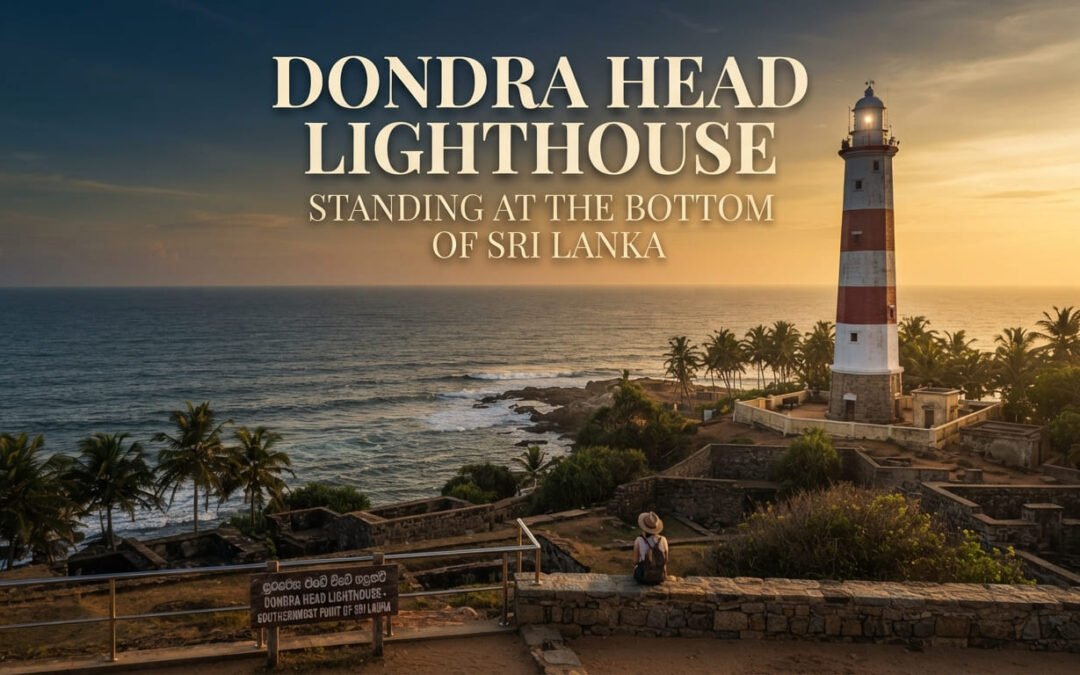
Dondra Head sits at the very bottom of Sri Lanka, just outside the small town of Dondra, a few minutes beyond Matara on the south coast. It’s the island’s southernmost point, and the lighthouse stands right on it, a tall white tower rising above a ragged line of rock, coconut palms and surf. From the road you catch glimpses of it between trees and tin roofs, and then the lane bends and there it is, far bigger than you expected, glowing against the sky like it was freshly painted that morning.
The British built it in the late nineteenth century to guide ships rounding the southern tip, and it’s still the tallest lighthouse in Sri Lanka. I’m not usually a lighthouse person. I like them well enough in photographs. But standing at the foot of this one, with the tower stretching up and the sea thumping at the rocks, I started to understand the appeal. It’s a building with a single, serious job, and it looks proud of it.
Access to the tower itself has changed over the years, and it’s run by the port authorities, so I’d ask locally before you set your heart on climbing it. When I visited, the grounds were open, and that was plenty. A broad lawn sweeps around the base, edged by low walls and old trees, and the whole place has the calm of somewhere that’s been watching the horizon for well over a century. Schoolchildren on an outing posed in rows for photographs. A man in a sarong napped under a tree with his hat over his face. A pair of crows inspected my bag with professional interest.
The real treat is the view out to sea. There’s nothing in front of you but water, deep blue near the horizon and a scuffed, impatient green where it meets the rocks. On a clear day, the sky seems to curve down over it. I spent a good while just leaning on the wall, watching the swell roll in from the Indian Ocean without anything to slow it down. The rocks below take the full force, and the spray lifts in sudden white bursts. It’s loud, and it’s hypnotic, and I’d happily have stayed longer if the cashews hadn’t run out.
Dondra is more than a lighthouse, and it’s worth wandering the town. Not far away is Devinuwara, a temple complex whose name means City of the Gods. The old shrine here has been a place of devotion for a very long time, and the surrounding area is busy with pilgrims, flower sellers and the steady thrum of daily worship. I’m not a pilgrim, but I’m a good wanderer, and I enjoyed drifting through the courtyards, taking in the carved details and the scent of incense and frangipani. Dress modestly, remove your shoes where asked, and move at the pace of everyone else, which is to say unhurried.
The fishing life here is easy to love. Along the shore you’ll see boats pulled up on the sand, nets heaped in tangled piles and men mending them with a patience I can only dream of. Sometimes there’s a catch laid out on tarpaulin, silver and gleaming, and a quick, cheerful negotiation going on over it. If you have a camera, ask before pointing it at anyone. A smile and a gesture usually does the job, and more than once it earned me a wave and a shouted comment I didn’t understand but was happy to receive.
Dondra works best as part of a longer day along the coast, because the surrounding area is full of things to do. Matara is close, with its old fort, its Dutch-era ramparts and the little Parey Dewa temple sitting on a tiny islet connected by a causeway. Polhena has a gentle, sheltered bit of water that’s good for a swim or a snorkel when the sea is calm, with a reef just offshore that keeps the waves tame. And if you’d like a lazy afternoon of sunsets and good food, Mirissa and Weligama are both a short ride in the other direction.
Where you stay depends on what kind of trip you’re having. Matara is the practical choice, with a choice of guesthouses and small hotels, and it puts you close to the lighthouse and the town’s sights. Polhena is quieter and more beachy, with a relaxed, village feel and homestays run by families who’ll feed you far more than you ordered. Weligama and Mirissa lean towards surf and sundowners, with boutique villas, stylish guesthouses and cafés in every direction. I’d recommend basing yourself in one of these and doing Dondra as a half-day outing, because there isn’t much accommodation right at the point itself.
Getting there from Katunayake Airport is straightforward, if long. The simplest option is a pre-arranged taxi or private driver, who’ll take the airport expressway, join the Southern Expressway and carry on to the Matara end. From there, it’s a short run along the coast road to Dondra. If you’d rather travel by train, head from the airport to Colombo Fort by taxi or bus, then take the coastal line to Matara, with the sea sliding past your window for much of the way. Buses run from Colombo to Matara all day too. Whichever you choose, finish with a tuk-tuk from Matara to the lighthouse, which is quick and cheerful, and gives you the added bonus of a driver who probably knows where to find the best king coconut on the way. And if you’d rather not do the whole journey straight after a long flight, a first night in Negombo takes the sting out of it.
I stayed until the light started to soften, and the whitewashed tower turned from bright white to warm gold. The cashew lady had packed up by then, but I thought about her sign on the drive back. There’s something strangely comforting about standing at the end of an island, with nothing south of you but open water and a lot of sky. I’d come for a lighthouse. I left feeling as if I’d stood at the edge of something, and had been allowed to take a few photos of it.
by Travel Blogger | Nov 13, 2026 | Sri Lanka |
The train to Badulla runs out of track, and somehow you feel it before it happens. For hours the line has been climbing and twisting through tea country, past Nanu Oya, Haputale, Bandarawela and Ella, with every carriage window turning into a postcard. Then the hills soften, the pace drops, and the whole train seems to exhale. Badulla is the end of the line. I stepped onto the platform with a stiff back and a head full of green, and I had the odd, pleasant feeling of not needing to ask anyone whether this was my stop.
Badulla is the capital of Uva Province, and it isn’t a town that’s trying to impress you. It’s a working place, with a busy market, a bus station that never quite goes quiet and a clock-tower rhythm of school uniforms at four o’clock. That’s exactly its charm. After the polished hill-country stops further up the line, there’s something refreshing about a town that simply gets on with its day and lets you watch. I found myself wandering with no real plan, which is the best way to meet it.
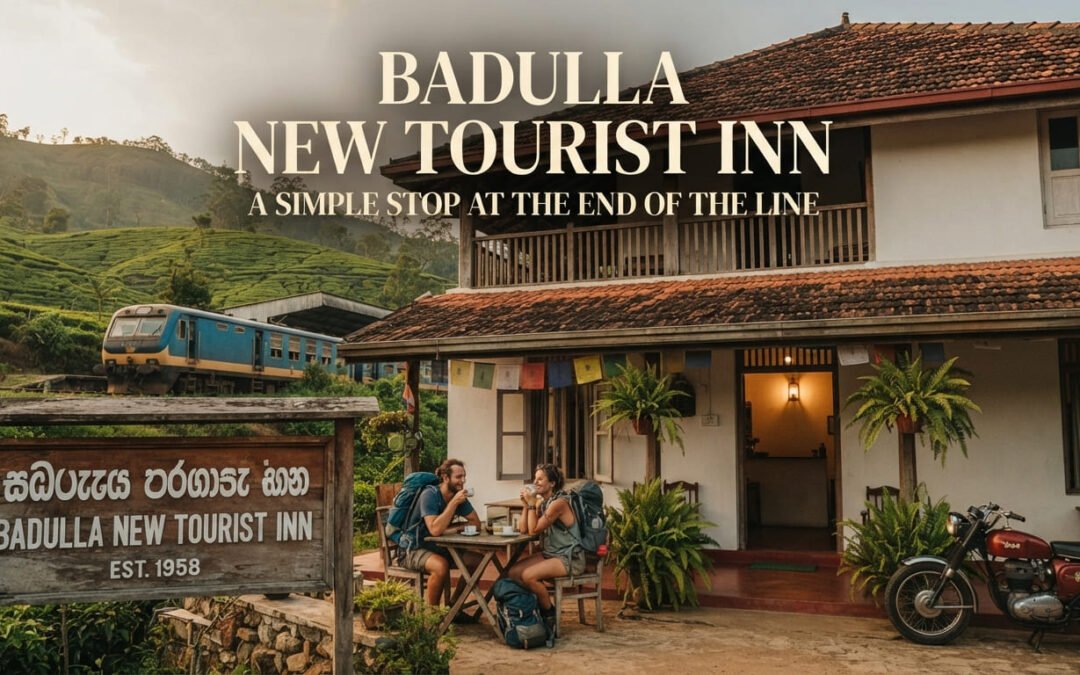
The Badulla New Tourist Inn sits on Mahiyangana Road, the road that carries on out of town towards Dunhinda Falls, and it’s a short tuk-tuk ride from the station. It’s an unfussy sort of place, and I mean that as a compliment. There are rooms, some with air conditioning and some without, along with a handful of separate cottages, so you can choose between the convenience of a room and the extra breathing space of a cottage. I’d lean towards the cottage if you like your mornings quiet and your own front step.
The inn has its own restaurant, serving local dishes, and a bar, which turned out to be a very good combination after a long day on foot. There’s a particular kind of satisfaction in sitting down to a proper plate of rice and curry when your legs are tired and you’ve earned it. The food is simple and familiar rather than fancy, and the evening felt easy and unhurried. Nobody was in a rush to move me along, and I wasn’t in a rush to go.
The main event on this side of town is Dunhinda Falls, and the inn’s position makes it easy to reach. The falls drop roughly sixty metres into a misty gorge, and they’re one of the most celebrated waterfalls in the country. The walk starts from Dunhinda Junction, a few kilometres out of town, and follows a footpath through shady greenery, passing a smaller cascade called Kuda Dunhinda along the way. The final stretch is a cheerful scramble of steps and stalls, and then the path opens up and the whole thing thunders into view. Go early if you can, because the light is softer and the crowds are thinner. Resist the urge to swim, too. The water at the base is far stronger than it looks.
Back in town, a few of Badulla’s sights are close enough to enjoy on foot. Muthiyangana Raja Maha Vihara sits right in the middle of things, a temple with a long and well-loved history, and the nearby Kataragama Devale adds a different flavour of devotion, with drums, flowers and a steady stream of worshippers. St Mark’s Church gives the town a quietly colonial note, and a little further out, the Dhowa temple and the old wooden bridge at Bogoda reward anyone who has half a day and a willing driver. None of it feels staged. People are simply living with their history, and you’re welcome to look.
Mornings are the best time to get your bearings. The town wakes early, with shutters rattling up, buses coughing into life and the smell of fresh bread and strong tea drifting down the street. I made a habit of stepping out before the heat arrived, walking a little way along Mahiyangana Road and watching the day assemble itself. School children in white, women with umbrellas against the sun, a man pushing a cart stacked high with bananas. It costs nothing, takes no planning and tells you more about a place than any guidebook. If you only do one thing in Badulla besides the falls, I’d make it this.
The countryside around Badulla is a pleasure in itself. Tea plantations roll away in every direction, and the road out of town is lined with small stalls selling fruit, spices and sweet things wrapped in paper. I took an afternoon to drift out along the hillsides, stopping whenever something caught my eye, which was often. Badulla also makes a handy base if you’d like to reach nearby Ella, Haputale or Nuwara Eliya without joining the busiest crowds. You can see the hills at their best, then come back to a quieter evening.
Where you stay in Badulla is part of how you experience it. The town’s guesthouses and inns are mostly small, family-sized affairs, and the Badulla New Tourist Inn fits that mould, offering a plain, comfortable base for exploring the area on your own terms. I wasn’t looking for luxury, and I didn’t miss it. What I wanted was a bed, a hot meal, a view of green hills and somewhere to start the next morning, and I got all four. If you’d like to book, the inn can be reached by phone on +94 55 222 3423.
Getting there from Katunayake Airport is a proper journey, so give it a full day. The easiest option is a private driver or pre-arranged taxi, who’ll take you up through the hill country by road, with views that make the length of the drive feel earned. If you’d rather go by rail, take a taxi or bus from the airport to Colombo Fort, then board a train for Badulla and enjoy one of the loveliest rides in Sri Lanka. Long-distance buses also run to Badulla from Colombo, and you can finish with a short tuk-tuk to the inn. If a straight shot after a flight sounds like too much, break it up with a night in Negombo near the airport, or a stop in Kandy or Ella on the way.
I left on a grey, damp morning, with the hills half hidden in cloud and the smell of woodsmoke in the air. Badulla didn’t ask me to love it, and that’s probably why I did. If you want somewhere honest, with waterfalls, temples and tea country on the doorstep, this is a very good place to pause at the end of the line.
by Travel Blogger | Nov 13, 2026 | Sri Lanka |
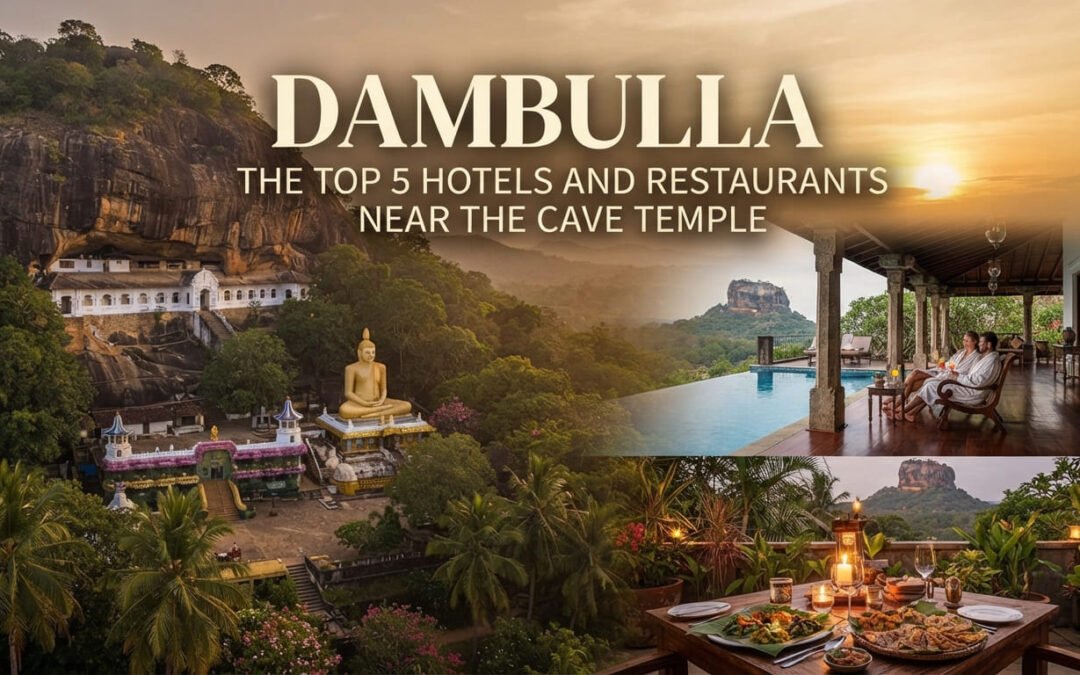
Dambulla sits at the geographic centre of the cultural triangle, a small market town whose hotel and restaurant scene exists largely to serve travellers passing through on the Kandy-Sigiriya road and visiting the famous cave temple complex on the rock above the town, its five painted caves among the best preserved examples of Buddhist mural art anywhere on the island. Unlike Sigiriya and Habarana further north, Dambulla’s accommodation runs a genuinely wide spread, from lakeside luxury resorts to simple family-run kitchens serving the kind of unfussy local food that keeps travellers fuelled between sites. The town itself is busy and workmanlike rather than scenic, a genuine local market centre rather than a destination built for tourism, which makes the quality of individual hotels and restaurants matter considerably more than the surrounding streets. The five places below cover that range, three hotels and two restaurants, each suited to a different kind of stopover.
Jetwing Lake
Jetwing Lake has built the strongest reputation of any luxury property in the immediate Dambulla area, a lakeside resort drawing consistently high praise for its setting, service, and breakfast quality. The property’s position on the water gives guests genuine resort-level views without needing to travel out to Sigiriya or Habarana for the same lake-facing luxury, and the pool and spa offer proper recovery time after a morning spent climbing the cave temple’s steps in the heat, a genuine comfort once the mid-afternoon temperature in this part of the dry zone begins to climb.
This makes Jetwing Lake the right choice for a traveller wanting the single most comfortable, highest-standard stay in Dambulla itself, a property that functions equally well as an overnight stop on a longer cultural triangle circuit or as a base for a few relaxed days exploring the surrounding sites at a slower pace, the lake views from the better rooms making even a short stay feel considerably more restful than a standard roadside hotel.
Rangiri Dambulla Resort
Rangiri Dambulla Resort has built a strong reputation among travellers specifically for its proximity to the Dambulla Cave Temple, a popular choice for couples wanting to explore the site in comfort without a long transfer each morning. The property’s pool and well-maintained grounds give it a genuine resort feel despite sitting at a more accessible mid-range price point than Jetwing Lake, and its close distance to the temple steps genuinely shortens the time between waking up and starting the climb.
This makes Rangiri Dambulla Resort a sensible choice for a traveller wanting proper hotel comfort within easy striking distance of the cave temple steps, without the premium pricing of the area’s top luxury lakeside properties, a dependable base for a one or two night stop on the wider cultural triangle route, particularly useful for a traveller wanting to be on-site for an early morning climb before the heat sets in.
Sigiriana Resort by Thilanka
Sigiriana Resort by Thilanka has earned its reputation as one of the best hotels in the area specifically for couples, a property that balances comfort and romance with genuine value for money. Guests consistently highlight the pool setting and the attentive, personal service as standout features, a combination that has made it a popular choice for honeymooners and anniversary trips passing through the cultural triangle, staff frequently singled out for small, thoughtful touches rather than simply following a standard checklist.
This makes Sigiriana Resort the right choice for a couple wanting a romantic, well-run mid-range stay near Dambulla, a property that punches above its price point on atmosphere and service without reaching for the premium pricing of the area’s largest luxury resorts, the kind of hotel repeat guests describe as delivering more than its rate would suggest.
Sundaras Restaurant and Pool Bar
Sundaras Restaurant and Pool Bar has established itself as Dambulla’s standout dining destination, an extensive menu spanning local Sri Lankan cuisine and international flavours, served in a genuinely pleasant poolside setting that makes it worth a visit even for travellers staying elsewhere in town. The warm welcome extended to guests is a detail that comes up repeatedly in reviews, alongside consistent praise for the breadth and quality of the menu, a kitchen capable of handling both a simple local lunch and a more ambitious evening order equally well.
This makes Sundaras the right stop for a traveller wanting a proper sit-down meal with a resort-quality setting but without committing to an overnight stay at the attached property, a relaxing poolside lunch or dinner that breaks up a long day of sightseeing between Dambulla, Sigiriya, and the wider cultural triangle, the pool bar setting making it an easy place to linger longer than originally planned.
Golden Rainbow Restaurant
Golden Rainbow Restaurant rounds out this list as the clearest local, unpretentious option among the five, an Asian and healthy-focused menu served in a straightforward setting that has earned the restaurant some of the most consistently positive reviews in Dambulla. The restaurant’s focus on fresh, simple cooking, with vegetables and rice dishes handled particularly well, makes it a reliable choice for a traveller wanting a genuinely good meal without the resort pricing that comes with the hotel restaurants elsewhere on this list, the kind of place that locals rely on as much as visitors passing through.
This makes Golden Rainbow Restaurant the right choice for a budget-conscious traveller or anyone wanting a quick, honest, reasonably priced meal on the way between the cave temple and the next stop on the cultural triangle circuit, proof that Dambulla’s best food is not confined to its hotel dining rooms, and a welcome change of pace after several meals at larger, more formal hotel restaurants.
Choosing Between Them
Jetwing Lake suits a traveller wanting the single most comfortable, resort-level stay in Dambulla itself. Rangiri Dambulla Resort suits a couple wanting proper hotel comfort within easy reach of the cave temple. Sigiriana Resort by Thilanka suits a couple prioritising romance and value over scale. Sundaras Restaurant and Pool Bar suits anyone wanting a proper sit-down meal in a resort-quality setting without an overnight stay. Golden Rainbow Restaurant suits a budget-conscious traveller wanting an honest, reliable local meal, and between the five, Dambulla’s otherwise unremarkable streets reveal a genuinely solid range of hospitality once you know where to look.
Booking Notes
Dambulla’s best months run January through April, avoiding the heaviest rains that can affect the exposed climb to the cave temple. Visit the Dambulla Cave Temple in the early morning to avoid both the heat and the crowds that build through the middle of the day, and most hotels on this list can arrange an early breakfast or packed meal to accommodate that schedule, a simple adjustment that meaningfully improves the experience of the climb itself. Carry cash for smaller restaurants, as card acceptance outside the main hotels remains inconsistent. Dambulla’s central position makes it a sensible one or two night stop for travellers moving between Kandy, Sigiriya, and the wider cultural triangle rather than a standalone destination in its own right, and its hotels tend to be noticeably better value than equivalent properties closer to Sigiriya itself, a detail worth considering for a longer cultural triangle trip on a tighter budget.
by The curious traveller | Nov 13, 2026 | Sri Lanka |
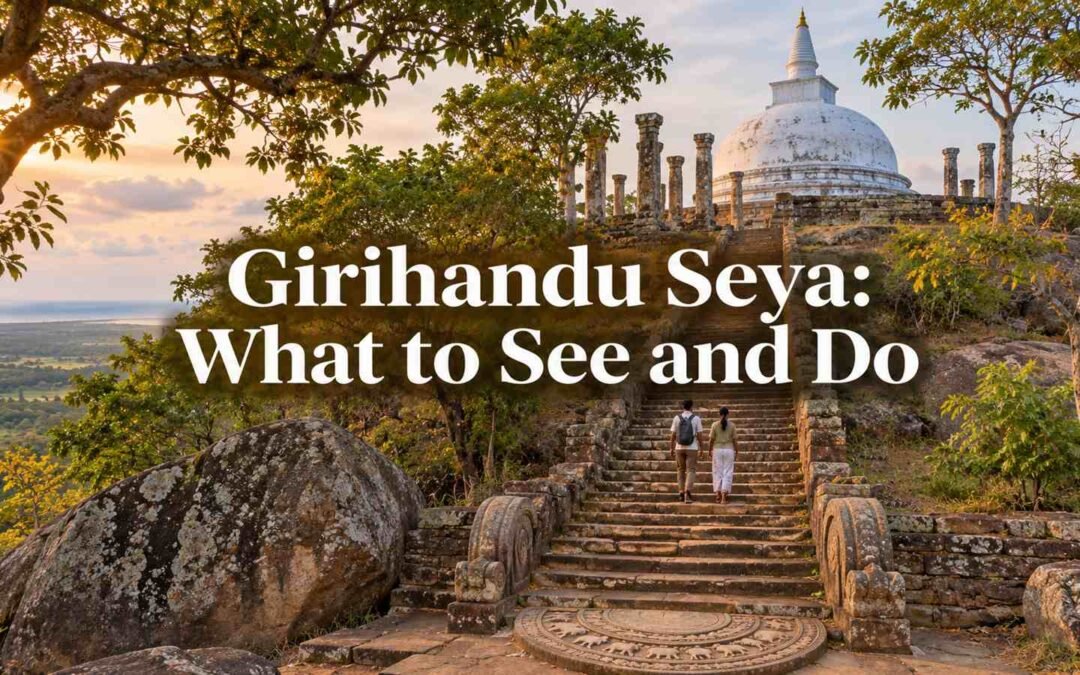
Girihandu Seya is an ancient Buddhist temple at Thiriyaya, on the north-east coast of Sri Lanka, in the Trincomalee District. It lies about 45 kilometres north of Trincomalee town, along the road to Pulmoddai. Tradition says it is the first stupa in Sri Lanka, and that it was built by laymen rather than monks. The builders were two merchants, Trapusa and Bhallika, who are remembered as the first disciples of the Buddha.
The site sits on a rocky rise close to the sea and is also known as Nithupathpana Vihara. Its stupa was first built small and was later enlarged, and a round stone building now surrounds it. Pilgrims come for the religious story, and history lovers come for the old stonework. The visit is easy to fit into a day trip from Trincomalee.
The First Stupa
The stupa is the reason most people come. A stupa is a dome-shaped monument that holds relics, and this one is said to be the first built on the island. Scholars note that no earlier stupas are recorded in Sri Lanka. The dome was small at first and was enlarged in the 8th century. Today it stands at the centre of the site, and visitors can walk around it clockwise, as worshippers do. The calm of the place is easy to notice, especially before other visitors arrive. Information boards or local guides can add detail about its age.
The Story of the Two Merchants
The story begins in India. According to Buddhist texts, two merchant brothers offered food to the Buddha soon after his enlightenment. In return, he gave them strands of his hair as relics. The brothers then sailed to Sri Lanka, and tradition says they enshrined part of the hair here and built a small stupa over it. Their names appear in several spellings, including Tapassu and Bhalluka. Knowing the tale gives the site its meaning, so it helps to read about it before the visit. The tale also shows how early Buddhism travelled by sea, long before roads linked the island’s regions.
The Hilltop Setting
Girihandu Seya sits on a rocky rise, and its name points to the hill setting. The raised ground gives a wide view over the surrounding land, and the sea lies not far away. This position makes sense for a shrine linked to sea traders, since it can be seen from the coast. Visitors should wear sturdy shoes, as the ground near the stupa is rocky in places. Early morning and late afternoon are the best times to go, when the heat is lower and the light is softer. The open sky above the dome also makes it a fine place for photographs from a respectful distance.
The Vatadage
A vatadage is a round, roofed building built around a stupa. Girihandu Seya has an almost complete example. Rings of stone pillars circle the stupa, and these once held up a roof. The pillars are the best way to see how the site looked in the past. Visitors can walk between the rings and look at the carved stonework. A vatadage like this is a rare sight, which makes the site useful for anyone who wants to understand early Buddhist architecture in Sri Lanka. The circular layout is easiest to appreciate from a spot just inside the outer ring.
The Thiriyaya Rock Inscription
A rock inscription near the path to the stupa records the story of the site. It is written in Sanskrit and names the two merchants who are said to have built the first stupa. Experts date it to around the 7th century. The script is different from many other old inscriptions on the island, which makes it of special interest to scholars. Even visitors who cannot read it can stop and look at the carved lines, which show how much care went into recording the founding of the shrine. Plan to spend a few minutes here, since it is one of the oldest written links to the shrine.
The Name Nithupathpana
The temple has an older name, Nithupathpana Vihara. One explanation links it to a Pali phrase meaning a rock visited by traders, which fits the merchant story well. The site was lost to the jungle for a long time. Surveyors found the ruins again in the early 20th century, and the archaeology department later restored them. The restoration is why visitors can now see the stupa and the pillars in good shape. It is worth looking for any notices on site that explain what was repaired. The old name also appears in Sri Lankan records of important Buddhist shrines.
Pallava Links and Old Finds
Researchers have found signs that the site was linked to the Pallava kingdom of South India. An object in Pallava style from the 8th century was found at the temple. This supports the idea that sea traders and travellers once passed through this coast. The finds point to a busy trading past, and they add another layer to the religious story. Visitors with an interest in archaeology can look for displays or guides that explain what was discovered here. The mix of local and South Indian influence is part of what makes Thiriyaya different from inland temples.
Worship and Temple Etiquette
Girihandu Seya is still a living place of worship. Visitors should dress modestly, with shoulders and knees covered, and remove shoes and hats before entering the sacred area. White clothing is common among pilgrims, though it is not required. Voices should stay low, and photographs should be taken with care. Worshippers bring flowers and light lamps, and visitors can watch quietly from the side. Poya days bring larger crowds, so a weekday visit suits those who prefer a quieter atmosphere. A calm, patient attitude goes a long way here.
The Thiriyaya Village and Tank
The village of Thiriyaya lies close to the temple and gives a glimpse of everyday life in the area. A legend links King Vasabha with the building of the nearby Thiriyaya tank, an old reservoir used for farming. Local tradition also says that several early kings honoured the stupa. A short walk or drive around the village shows how the temple still shapes the area. Visitors should treat the village politely, as it is a home rather than a tourist stop. Farming and fishing still shape daily life in this part of the district.
Beaches and Sights Along the Coast
The drive from Trincomalee passes through coastal country, and the trip can be combined with other stops. Nilaveli, a long beach north of Trincomalee, is a short drive from this part of the coast. Pigeon Island National Park lies off Nilaveli and is known for snorkelling. In Trincomalee itself, the Koneswaram temple stands on a cliff above the sea. A full day can include the stupa in the morning and a beach in the afternoon. Starting early leaves time for all three without rushing the temple visit. Travellers should also check road and weather conditions before setting out, as the coast road can be affected by heavy rain.
Girihandu Seya is a small site, but it carries one of the oldest stories in Sri Lankan Buddhism.
by The curious traveller | Nov 13, 2026 | Sri Lanka |
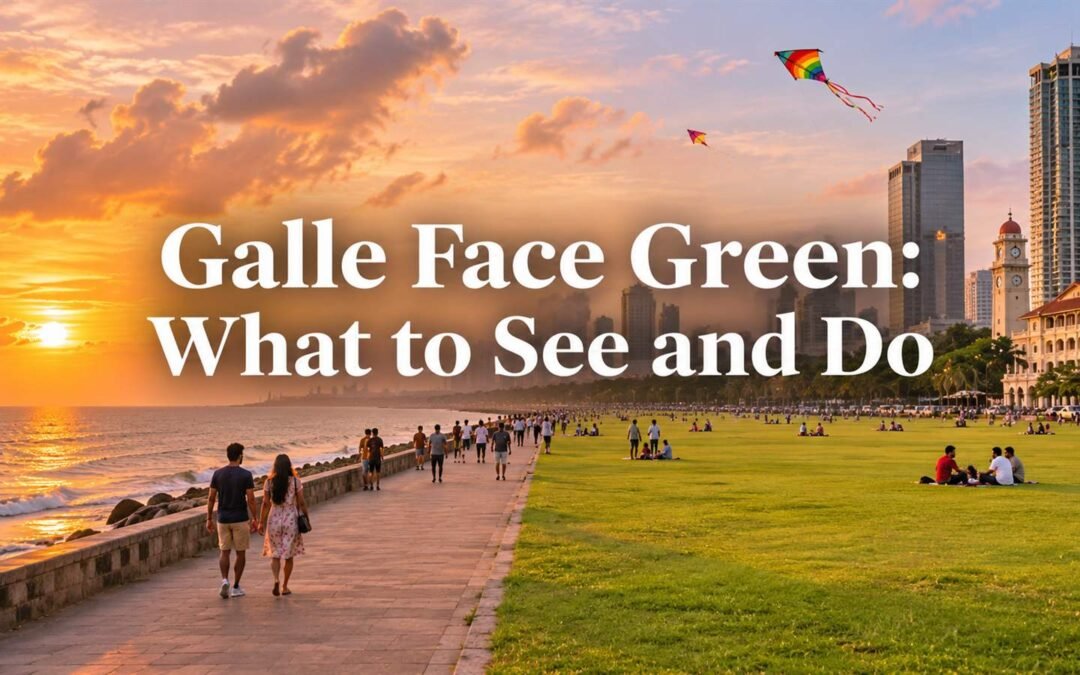
Galle Face Green is an ocean-side park in the centre of Colombo, Sri Lanka. It runs along the coast for about half a kilometre, with the Indian Ocean on one side and a busy road lined with hotels and offices on the other. The green was laid out in 1859, during British rule, as a place where residents could walk and take the sea air. Over the years it has also been used for horse racing, cricket, golf and public gatherings.
Today it is the city’s best-known open space, and people of all ages come here to walk, play and eat. A full evening can be spent on the promenade without going anywhere else. The sections below follow a rough walking order from the northern end to the southern end.
The Seafront Promenade
The promenade is the main feature of the Green. A wide paved path runs along the sea wall, with grass on the inland side and open water on the other. Visitors can walk the full length in about ten minutes, though most take much longer because there is plenty to stop for. Benches and low walls line the path, so there is always somewhere to sit. The sea here is often rough, and swimming is not advised because of the waves and currents. A walk in the late afternoon is the most comfortable, once the midday heat has eased and a breeze comes in from the water.
Watching the Sunset
Sunset is the busiest time on the Green, and for good reason. The park faces west, so the sun drops straight into the Indian Ocean, often turning the sky orange and pink. Crowds gather along the sea wall from about five in the evening, and the mood is relaxed and cheerful. Photographers spread out along the grass to catch the light, while others simply sit and watch. On clear days the horizon stays bright for some time after the sun goes down. Arriving early gives visitors time to find a good spot. During the monsoon months clouds can hide the sun, but the sky is still worth watching.
Kite Flying
Kite flying is one of the best-known activities on the Green. The steady sea breeze keeps kites in the air for hours, and the open lawn leaves plenty of room to run and launch them. Sellers set up along the edge of the grass with kites in many shapes and colours, from simple diamonds to long-tailed designs. Children and adults both take part, and a sky full of kites is part of the scene. Late afternoon is the best time, when the wind is strongest and the heat is lower. Visitors who prefer to watch can sit on the grass and enjoy the show overhead.
Street Food Stalls
Food stalls along the edge of the Green are a big part of any evening visit. The best-known snack is isso wade, a crisp lentil fritter topped with a whole prawn, usually served with a spicy sauce. Other stalls sell fried snacks, boiled corn, cut fruit and ice cream. Many people buy something and eat it on the grass or the sea wall. The stalls open in the afternoon and are busiest after sunset, especially at weekends. Visitors with sensitive stomachs may want to choose stalls that look busy and cook the food fresh in front of them.
Ships and the Port City View
Looking north from the Green, visitors can see Colombo Port City, a large area of land reclaimed from the sea beside the Fort district. Cargo ships can often be seen on the horizon, close to the busy port of Colombo. Their lights make an interesting sight after dark. The northern end of the Green is the best place for these views, because it looks straight along the new coastline. A camera with a zoom lens can pick out more detail, although the view is good enough with the eye alone. Clear mornings and evenings give the sharpest views.
Families, Games and Local Life
The Green is where Colombo spends its free time, and watching local life is an activity in itself. Families spread out picnic mats, children play cricket and football on the grass, and groups of friends gather as the evening cools. Weekends and public holidays are the busiest, and the mood is lively and friendly. Visitors can walk through the crowds, join a cricket game if invited, or sit and watch. The Green has been a social space since the colonial period, when residents came here to walk and meet each other. Weekday evenings are quieter for those who want more room.
Galle Face Hotel
The Galle Face Hotel stands at the southern end of the Green and opened in 1864. It is one of the city’s best-known colonial-era buildings, with a white front and a long terrace facing the sea. Visitors do not need to be guests to enjoy it. The terrace and seafront lawn are open for drinks and meals, and afternoon tea is a popular choice. Sitting there at sunset offers a calmer view of the same sea. The hotel is also a handy landmark for finding the southern end of the Green.
Old Parliament and the Fort District
At the northern end of the Green, visitors are close to the Fort district, the old centre of Colombo. The Old Parliament building stands on the seafront and now houses the Presidential Secretariat. Its white columns can be seen from the road, though the building is best admired from outside. Further into Fort, the restored Dutch Hospital precinct has shops, cafes and restaurants inside a building from the Dutch period. The walk from the Green to the precinct takes about twenty minutes. A visit here works well as a short historical stop before settling in for the evening by the sea.
Evening Walks After Dark
The Green stays lively well after the sun has gone down. The stalls remain lit, the hotels along the road glow, and the lights of passing ships appear on the water. The air is cooler than in the daytime, which makes this the most comfortable time for a long walk along the sea wall. Visitors should keep their belongings close in the crowds, as in any busy public place. Going with a friend or a small group makes the evening easier. Late evening is quieter, and the sound of the waves becomes easier to hear.
A Place for Public Events
The Green has long been used for large gatherings. Concerts, festivals and national celebrations have all taken place on its wide lawn, which suits big crowds. In April 2022 the northern end became the site of a large, long-running protest camp that drew people from across the country and became part of recent national history. Visitors who check local news before going will know whether an event is under way, since some can affect access to parts of the park. On ordinary days the whole promenade is open to walk.
Galle Face Green suits a short stroll or a full evening, and the sea is always the main attraction.
by Travel Blogger | Nov 12, 2026 | Sri Lanka |
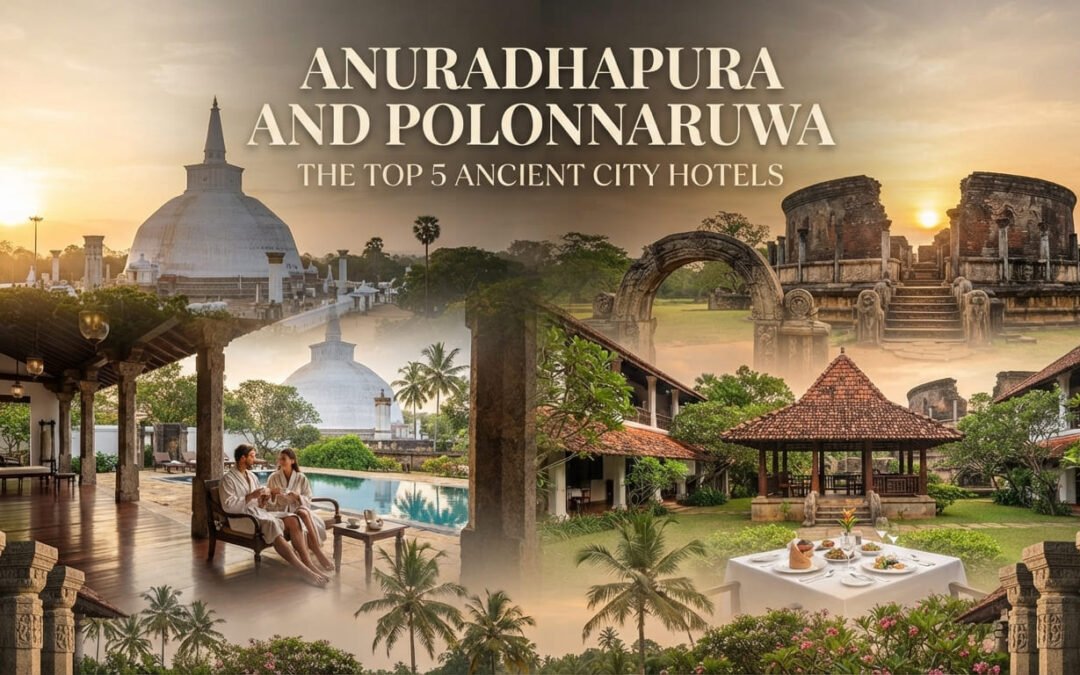
Sri Lanka’s two ancient capitals sit far enough apart, and far enough from the rest of the cultural triangle circuit, that most visitors treat them as brief stops rather than destinations worth a considered stay. The hotel stock reflects that history directly, a handful of genuinely excellent lakefront and heritage properties surrounded by simpler guesthouses built for a one-night archaeological pit stop. Both cities reward a slower visit than the standard itinerary allows, and the right choice of hotel can make the difference between a rushed tick-box stop and a genuinely restful base for exploring ruins that took centuries to build. Anuradhapura’s sites are considerably more spread out than Polonnaruwa’s compact ruins, a difference worth factoring into how much time you allow at each. The five properties below cover both cities, from a converted chena estate near Anuradhapura to the lakeside hotels that have become Polonnaruwa’s most recommended stays.
Ulagalla by Uga Escapes
Ulagalla occupies a converted chena cultivation estate on the outskirts of Anuradhapura, its architecture drawing deliberately on the vernacular building traditions of the surrounding dry zone region rather than imposing a generic resort template onto the landscape. The property’s villas, several with private pools, are spread across extensive grounds that include a working rice paddy and a lake, giving guests a genuine sense of rural dry zone life alongside resort-level comfort, elephants occasionally visible crossing the estate’s outer fields at dusk.
This makes Ulagalla the right choice for a traveller wanting the most architecturally considered, design-forward stay near Anuradhapura, a property that treats the surrounding agricultural landscape as a central part of the experience rather than simply a view from the room. The restaurant draws on the estate’s own produce where possible, and the pool and spa offer a genuine recovery option after a day spent walking the sacred city’s considerable distances, the private villa pools in particular a welcome relief after hours in the dry zone heat.
EKHO Lake House
EKHO Lake House has established itself as the clear top choice in Polonnaruwa, a boutique lakefront hotel blending colonial charm with a genuinely luxurious finish, guests consistently praising the spacious, lake-view rooms and the restaurant’s views stretching almost directly over the water. The colonial-style architecture gives the property a considered, elegant character distinct from the more functional hotel stock found elsewhere in Polonnaruwa town, and the lakeside terrace in the early evening, as the light softens over the water, is reason enough on its own to choose this property over the alternatives nearby.
The breakfast draws specific praise, a proper Sri Lankan spread rather than a token buffet, and the warmth of the welcome from reception staff is a detail repeat guests mention consistently. This makes EKHO Lake House the right choice for a traveller wanting the single best combination of setting, comfort, and service in Polonnaruwa, worth the modest premium over the town’s more budget-oriented guesthouses, particularly for a couple wanting a restful base after a full day cycling the ancient city’s ruins.
Deer Park Hotel
Deer Park Hotel sits on the Elahera-Giritale road overlooking the Giritale reservoir, a relaxing property with great rooms, particularly the lake-view category, and service that guests consistently describe as very good and well maintained. The hotel’s position outside the town centre gives it a quieter, more resort-like atmosphere than properties directly in Polonnaruwa, useful for a traveller wanting genuine rest between archaeological site visits rather than a purely functional overnight stop, the reservoir view from the better rooms making an early morning coffee on the balcony a genuine highlight of the stay.
This makes Deer Park Hotel a strong choice for a traveller wanting a reliable, comfortable lakeside stay without the boutique pricing of EKHO Lake House, a dependable option for a family or group exploring both Polonnaruwa and the nearby Minneriya and Kaudulla national parks, the hotel’s grounds themselves occasionally visited by the deer that give the property its name.
Giritale Hotel
Giritale Hotel offers a genuinely budget-friendly option within the same lakeside area as Deer Park Hotel and EKHO Lake House, guests describing a great experience with good rooms and food despite the considerably lower price point. The location along the Giritale reservoir gives even the hotel’s more modest rooms a pleasant outlook, and its position makes it a sensible base for both the Polonnaruwa ruins and the wider national park circuit, close enough to Minneriya that an early safari departure remains entirely practical.
This makes Giritale Hotel the right choice for a budget-conscious traveller wanting lakeside positioning without the premium pricing of the area’s boutique properties, a dependable, no-frills base for a short cultural triangle stopover, the kind of hotel that does the fundamentals well without charging for amenities most guests never use.
Diyakawa Boutique Hotel
Diyakawa Boutique Hotel rounds out this list as a well-regarded option near Anuradhapura’s archaeological sites, a charming small hotel with large, well-appointed rooms, spotless housekeeping, and reliably fast wifi, a combination that has made it a consistently recommended first choice among recent visitors to the sacred city. The property’s proximity to the main archaeological sites makes it a practical base for an early start before the heat of the day builds, a genuine advantage once the sacred city’s largely unshaded paths begin to warm under the mid-morning sun.
This makes Diyakawa Boutique Hotel the right choice for a traveller wanting a comfortable, well-run boutique stay close to Anuradhapura’s sacred city without the larger scale or resort pricing of Ulagalla, a dependable, central option for a shorter visit focused primarily on the ruins themselves.
Choosing Between Them
Ulagalla suits a traveller wanting the most architecturally considered, design-forward stay near Anuradhapura. EKHO Lake House suits anyone wanting Polonnaruwa’s single best combination of setting, comfort, and service. Deer Park Hotel suits a family or group wanting a reliable, comfortable lakeside stay near Polonnaruwa and the national parks. Giritale Hotel suits a budget-conscious traveller wanting lakeside positioning at a lower price point. Diyakawa Boutique Hotel suits a traveller wanting a comfortable, central base close to Anuradhapura’s sacred city, and together the five cover both ancient capitals across every reasonable price point.
Booking Notes
Both cities see their best weather between January and April, avoiding the heaviest rains of the north-east monsoon. Guides for both ancient cities are best arranged the evening before through your accommodation, since the sites are large enough that a knowledgeable guide meaningfully changes what you take away from the visit, turning a scattered collection of brick and stone ruins into a coherent story of the kingdoms that built them. Entrance tickets for both Anuradhapura and Polonnaruwa can often be purchased as part of a combined cultural triangle pass, offering savings over individual site fees. Carry cash, as ATM access outside the main town centres in both areas remains limited. Bicycle hire is available at several properties in Polonnaruwa, a pleasant and practical way to cover the compact ruins rather than relying on a vehicle for every short distance, and most hotels listed here can arrange this directly at check-in with little advance notice required.