by Travel Blogger | Nov 9, 2026 | Sri Lanka |
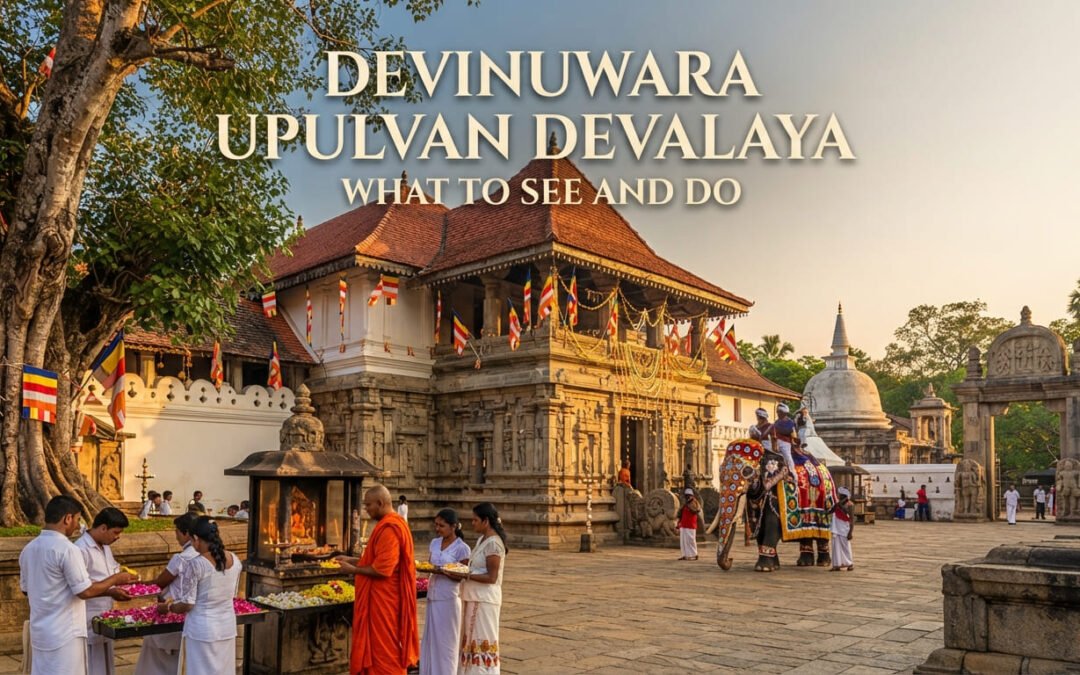
Devinuwara Upulvan Devalaya is a Vishnu shrine in the coastal town of Devinuwara, also called Dondra, at the southern tip of Sri Lanka. The town lies a few kilometres from Matara, and its name means City of the Gods. The shrine is dedicated to Upulvan, a deity that Sri Lankan Buddhists regard as a guardian of the island and of the Buddhist faith. Over time, Upulvan became closely linked with the god Vishnu, and the shrine is now widely known as a Vishnu temple.
Devinuwara was once a busy port and an important religious centre, with a large temple complex that drew pilgrims and traders. That complex was destroyed in the late 16th century, and the present shrine is a later rebuilding. It still draws worshippers from across the island, and it makes an easy stop for anyone exploring the south coast.
The Main Shrine
The main shrine is the heart of any visit. The building is painted blue, the colour linked with Vishnu, and it stands as the centre of the town’s religious life. Worshippers come here to make offerings and say prayers, so the area can be lively. Visitors should dress modestly, with shoulders and knees covered, and take off their shoes before entering the temple grounds. Light colours are a sensible choice in the heat. Early morning is usually the calmest time, before the larger groups of devotees arrive, and it gives the best chance to look around without rushing. Quiet moments at the entrance are also a good time to notice the details of the building.
The Story of Upulvan
Upulvan is an old Sri Lankan deity, and his name is linked to the colour of the blue lotus. Buddhist tradition holds that he was given the task of protecting the island and the Buddha’s teachings. Around the end of the 15th century, he came to be identified with Vishnu, and images of him were placed beside images of the Buddha in temples across the country. This blending of beliefs explains why the shrine matters to both Buddhists and Hindus. A little background makes the visit much easier to follow, and it explains why the name Upulvan is still heard alongside Vishnu.
Devinuwara Raja Maha Viharaya
A Buddhist temple, the Devinuwara Raja Maha Viharaya, stands in the same area and has long been tied to the shrine. Old records treat the two as parts of one religious site. Visitors can see a modern Buddha statue and walk through the quiet temple grounds. The Vihara is a good place to slow down after the busier shrine. Seeing both gives a clearer picture of how Buddhist and Hindu traditions have shared this place for centuries, and it shows how closely the two faiths are woven together in the south.
The Ancient Ruins
Parts of the older temple complex survive as ruins around the town. Three ancient structures are often named in historical accounts: Othpilima Geya, Sitipilima Geya and Galatharumulapaya. An old stone arch is also part of the site. These remains hint at how large the complex once was before it was destroyed. Visitors who enjoy history should allow extra time to walk among them. Comfortable shoes help, since the ground can be uneven, and a visit earlier in the day avoids the strongest sun. The ruins also show that Devinuwara was far more than a single shrine, and that it once held a place among the great religious sites of the south.
The Legend of the Drifting Log
A well known story explains how the image of Upulvan reached Devinuwara. According to tradition, a log drifted to the shore, and an image of the deity was made from it. The image was then carried to Devinuwara in a grand procession. The tale links the shrine to the sea, which fits the town’s long history as a port. Details change from one telling to the next, so locals are a good source for their own versions of the story. Hearing it on the spot adds meaning to the walk through the grounds. It is a short story, but it stays with many visitors long after the trip.
The Esala Festival
The yearly Devinuwara Esala Perahera is the biggest event at the shrine. It is held in July and August, with ceremonies over several days and a fair in the town. Drummers, dancers, flag bearers and elephants take part in the procession. The perahera is said to go back to the reign of King Parakramabahu, and the old sun and moon flag is carried near the front. Visitors planning to attend should expect large crowds and book their stay well in advance. Arriving early in the evening helps in finding a good place to watch.
Poya Days and Daily Worship
Outside the festival season, the shrine stays busy. Devotees arrive throughout the year, and numbers rise on poya days, which fall on each full moon. Visitors can watch worshippers bring flowers and offerings, and listen for the drums that often mark rituals. Watching quietly from the side is the polite way to take part. Poya days are rewarding but crowded, so those who prefer more space may choose an ordinary weekday. Photographs should be taken with care, and it is best to ask before pointing a camera at worshippers.
Dondra Head Lighthouse
The Dondra Head Lighthouse stands on the headland a short distance from the shrine. It was built in the 19th century and marks the southernmost point of Sri Lanka. The tall stone tower is easy to spot from the surrounding coast and makes a good photograph. Late afternoon is a pleasant time to visit, when the light softens and the air cools. Most visitors pair the lighthouse with the shrine in a single trip, which keeps the day simple and the walking short. The surrounding grounds are open and breezy, with sea views in several directions.
The Southern Headland
The headland around the lighthouse is worth a slow walk. Waves break against the rocks, and the open ocean stretches out in front. This is the southern tip of the island, and visitors often stop here simply to look out at the sea. The wind can be strong, so a light jacket and a hat are useful. The area is also a quiet contrast to the crowds at the shrine. Keep a safe distance from the water’s edge, since the rocks can be slippery and the waves are powerful.
Matara Town Nearby
Matara is only a few kilometres away and adds more to see. The Star Fort is a Dutch-era fort named for its star-shaped plan, and its thick walls are easy to walk around. The Parey Dewa temple sits on a small island just off the shore and is reached by a footbridge. Both are easy to visit in the same day as Devinuwara. Matara also has a wide choice of places to eat, so it works well as a stop for lunch before heading back along the coast. The fort and the island temple together show the Dutch and Buddhist sides of the town’s past.
Devinuwara is a small town, but the shrine, the ruins and the lighthouse fill a half day with plenty to see.
by Travel Blogger | Nov 8, 2026 | Sri Lanka |
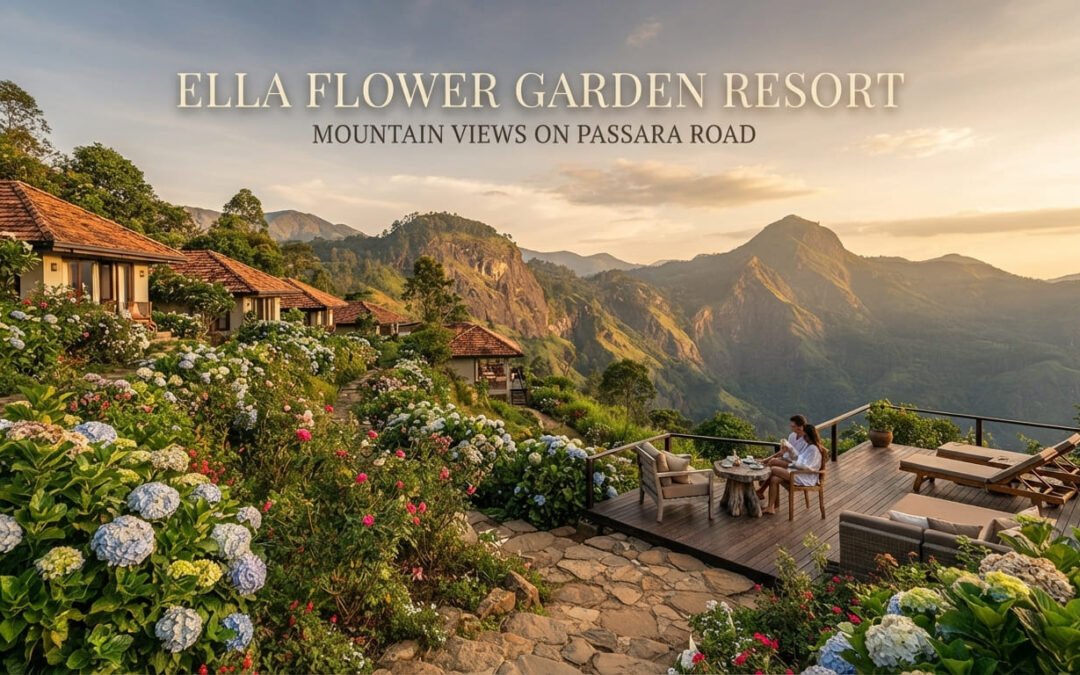
The rooms at Ella Flower Garden Resort come with spacious private balconies, and the view from them is the main reason many guests choose the hotel. The resort stands on Passara Road, at the 3rd Mile Post in Ella, a small town in Sri Lanka’s hill country. From the balconies, guests look out over green hills, valleys and tea country, with the peaks around Ella in the distance. Some rooms face Ella Rock, and guests have called that view extraordinary.
The location is close to the centre of Ella. Ella Town, with its cafés, shops and restaurants, is within walking distance, so guests can head out for a meal or a coffee on foot. The Nine Arches Bridge, one of the best-known sights in Sri Lanka, is also a short walk away. Little Adam’s Peak, a popular and easy hike, is close as well. Tuk-tuk safaris start near the resort, which makes it simple to book a ride around the area.
The resort offers several room types. These include double, twin and triple rooms, family rooms, chalets and a Deluxe Suite, so couples, friends and families can all find a fit. Rooms have a seating area, a writing table and an attached bathroom with a hair dryer. An iron and ironing board are provided, and the beds are made up with fresh sheets. Free WiFi is available in the public areas. Guests often mention how clean the rooms are, and how well the housekeeping team looks after them.
The name of the resort comes from its gardens, and the flowers are easy to enjoy from the grounds. The setting is green and calm, and the air in the hills is cooler than on the coast. Mornings in the hills can be misty, and early risers get the quietest part of the day. Guests who like to sit outside have plenty of quiet corners, and the balconies work well for a book or a cup of tea.
Meals are served in the on-site restaurant, which offers Sri Lankan and international dishes. Breakfast is a buffet, and the choice is wide. It includes American, Asian, Continental, Italian and full English options, along with halal, vegetarian and vegan dishes. That range suits guests with different tastes and diets. In the evening, the bar and lounge give guests a place to relax with a drink after a day of walking. Guests have described the food as delicious, and many say it is a good way to start or end a day of sightseeing.
The resort has more to offer than a room and a view. A spa and wellness centre is available for guests who want to rest after a long hike, and evening entertainment is also offered. Cycling and hiking are both popular here, and the staff can suggest routes. The team can also help with transport and local activities, which saves time for guests who prefer not to plan every detail. Parking is free for guests who arrive by car.
Staff are a strong point of the resort. Guests regularly describe the team as warm, courteous and helpful, and several have named individual staff members in their praise. Some guests have returned for a third stay, which says a lot about how welcome they feel. Questions about the area, trains or tours are answered with patience and a smile.
Ella gives visitors plenty to do. The Nine Arches Bridge is a tall stone railway bridge set among the trees, and trains cross it several times a day. Many visitors go to watch a train pass, so it helps to ask the front desk for train times. Little Adam’s Peak offers wide views over the Ella Gap and the tea fields, and the climb is gentle enough for most people. Ella Rock is a longer hike, and an early start is best. Ravana Falls, beside the main road south of town, is a wide waterfall that is easy to reach, and the Ravana Cave is nearby. The hills around Ella are also covered in tea plantations, and some tea factories welcome visitors for a short tour and a tasting. Cycling through the villages is another good way to see the countryside at a slower pace.
A day at the resort can follow an easy pattern. Breakfast comes first, with a coffee on the balcony while the light moves over the hills. After that, guests can walk to Little Adam’s Peak in the morning, when the air is cool and the views are clear. Lunch is easy to find in Ella Town, and the afternoon can go to the Nine Arches Bridge or a tea factory. Back at the resort, a rest, a visit to the spa or a quiet hour in the garden fits well before dinner. The evening ends at the restaurant or the bar, with the hills dark beyond the balcony.
A few simple tips help with planning. The hill country is cooler than the coast, so a light jacket is useful, especially in the evening and early morning. Comfortable shoes with a good grip are needed for the hikes, and a light rain jacket is handy, as showers can come at many times of the year. Early starts give the clearest views and the smallest crowds at the main sights, and the front desk can help with timings.
The journey from Katunayake Airport (CMB) to Ella is a long one, so many travellers plan a full day for it. A private taxi or a hired car with a driver is the most direct option, and the hotel staff can help arrange transport. The scenic option is the train. Travellers can go from the airport area to Colombo, then take a train from Colombo Fort or from Kandy towards Ella. The line climbs through the hills and tea country, and it is one of the most popular rail journeys in Sri Lanka. Seats on the best trains fill early, so booking ahead is wise. Buses also run to Ella from Colombo and other towns, and a tuk-tuk can cover the last stretch from the station to the resort.
Check-in starts at 2 pm, and check-out is at 11 am. The reception can help with late arrivals, as check-in stays open until the evening. Pets are not allowed on the property.
The resort suits several kinds of traveller. Couples get a private balcony and a quiet setting. Families can book a family room or a chalet, and the walkable location keeps days simple. Friends travelling together can choose triple rooms or a few rooms side by side. Walkers and cyclists will find the trails and tracks of Ella close at hand, and travellers who want to relax can use the spa and the gardens.
With its balconies, its gardens and its place on the road to the Nine Arches Bridge, Ella Flower Garden Resort makes a comfortable base for a few days in the hills. It suits travellers who want good views, a friendly team and easy access to the best of Ella.
by Travel Blogger | Nov 8, 2026 | Sri Lanka |
Bentota is one of Sri Lanka’s most established coastal resort destinations, known for its long sandy beach, tropical gardens and the meeting of the Bentota River with the Indian Ocean. What makes the area particularly appealing is the variety of experiences available within a relatively small stretch of coastline. A day can begin with breakfast overlooking the water, continue with a boat ride through mangroves and end with a seafood dinner or a relaxing treatment at a hotel spa.
The resorts in and around Bentota offer different interpretations of a luxury escape. Some are known for distinctive architecture and extensive facilities, while others focus on privacy, thoughtful dining or a closer connection with nature. Here are five properties to consider when planning a stay centred on wellness, good food and the waterside setting.
1. Cinnamon Bentota Beach – Signature Selection
Set on a narrow strip of land between the Indian Ocean and the Bentota River, Cinnamon Bentota Beach has one of the area’s most distinctive locations. Its design is closely associated with architect Geoffrey Bawa, and the open spaces, tropical gardens and framed views create a strong connection with the surrounding landscape. It is an interesting choice for travellers who appreciate architecture as much as beachfront comfort.
Accommodation ranges from well-appointed rooms to themed suites inspired by Sri Lankan culture, nature and craft. Room categories offer different outlooks, including garden, pool, river and ocean views. Some rooms provide direct pool access, while selected suites offer more generous living space and balconies. Guests should check the precise room description when booking, particularly if a river or ocean view is important.
Dining is a major part of the resort experience. Its restaurants and bars offer a mix of buffet dining, seafood and international and local flavours. Guests can choose a relaxed meal or make an evening more special with a private dining arrangement, subject to advance booking and availability. The resort’s position between river and sea gives some dining spaces an attractive waterside setting.
Kurundu Wellness & Spa brings treatments inspired by Sri Lankan traditions into the resort experience. It offers a place to slow down after a day in the sun, while the gym and swimming facilities provide alternatives for guests who prefer to stay active. Families can also make use of the children’s facilities and organised activities.
The river setting opens up further possibilities. Guests can ask the resort about mangrove boat rides, water sports and excursions around Bentota. A guided boat trip is a good way to experience the area beyond the beach, with mangroves, birdlife and the changing character of the river forming part of the journey.
Cinnamon Bentota Beach is well suited to couples, families and design-conscious travellers who want a full-service resort with a strong sense of place. Its combination of architecture, spa facilities, dining and access to both river and ocean makes it one of the most versatile stays in the area.
2. Taj Bentota Resort & Spa
Taj Bentota Resort & Spa occupies an elevated coastal position overlooking the Indian Ocean. Its beachfront setting, landscaped grounds and broad views give it the feel of a traditional luxury resort. The property is a good option for visitors who want a comfortable base for beach relaxation while keeping restaurants, spa treatments and resort facilities close at hand.
The rooms and suites are designed to make the most of the coastal surroundings, with categories offering different views and levels of space. Some look towards the sea, while others face the gardens or resort grounds. For a special stay, it is worth comparing the available suite categories and confirming the view directly with the hotel.
Food is an important part of the experience. The resort offers several dining venues, including The Palms and specialist options such as the Oriental Pavilion. Seafood is a natural feature of a coastal destination, and guests can look for fish and shellfish dishes alongside international and regional choices. Menus change, so asking about the day’s seafood selection is a sensible way to make the most of a visit.
The J Wellness Circle provides a dedicated space for spa and wellness experiences. Treatments inspired by traditional approaches can be paired with time at the swimming pool or a quiet afternoon in the resort gardens. Guests interested in a specific treatment should check the current menu and book ahead, particularly during busy holiday periods.
Bentota’s river activities are within reach of the resort. A boat safari can take visitors through sections of the river and mangrove-lined waterways, where the scenery differs considerably from the open beach. Water sports are also available in the wider area, depending on weather and operating conditions. The hotel can advise on suitable local operators and arrangements.
Taj Bentota is a strong choice for travellers who value a classic luxury-hotel atmosphere, varied dining and a dedicated spa. It works well for couples seeking a restful break as well as families who want resort facilities and easy access to the beach.
3. Jetwing Saman Villas
For a more intimate and secluded experience, Jetwing Saman Villas offers an adults-only retreat in Aturuwella, within the wider Bentota coastal area. Set on a rocky headland above the Indian Ocean, the property has a distinctive position that creates dramatic sea views and a sense of privacy. Rather than the scale of a large resort, its appeal lies in quiet surroundings, attentive hospitality and an atmosphere designed for relaxation.
The villas and suites are spacious, with ocean-facing outlooks and private outdoor areas in selected categories. Some accommodation options include private plunge pools, giving guests additional privacy. The design makes use of the natural setting, allowing the ocean to remain a central feature of the stay. It is worth checking the exact suite category before booking, as layouts and facilities differ.
Dining is presented as an experience rather than simply a meal service. Guests can enjoy food in the main restaurant or choose from more intimate settings around the property, including open-air and ocean-facing spaces. The menu combines local and international influences, and the hotel can discuss arrangements for a special dinner. For couples celebrating an anniversary or honeymoon, this flexibility can make the evening feel more personal.
The infinity pool is one of the property’s defining features, with views across the coastline. A spa and wellness treatments add to the relaxed atmosphere, making it easy to spend much of the day within the property. The adults-only policy also makes it particularly suitable for couples and guests seeking a peaceful break.
Although the hotel is positioned for privacy, visitors can still explore the wider Bentota area. River safaris, local excursions and visits to nearby gardens can be arranged, allowing guests to combine a quiet hotel stay with a little exploration. The property is not in the centre of Bentota town, so guests should plan transport if they want to visit restaurants or attractions elsewhere.
Jetwing Saman Villas is best for couples and adults who prioritise privacy, ocean views and a refined boutique atmosphere. It is less about a busy programme of activities and more about having the space to enjoy the setting.
4. Thaala Bentota
Thaala Bentota offers a contemporary beachfront resort experience with a design influenced by tropical architecture. Its location on Bentota Beach makes it convenient for guests who want to spend time by the sea while enjoying the facilities of a full-service hotel. The atmosphere is relaxed, with gardens, pool areas and open spaces that suit both short breaks and longer coastal holidays.
The accommodation includes modern rooms and suites, with different layouts and views. Guests can choose according to their preferred outlook and space requirements. Those who want to spend time outdoors may wish to look for a room with a balcony or terrace, while families should check room occupancy and bedding arrangements before confirming a booking.
Dining is spread across several venues, including Breeze Restaurant, The Loft and Chatters Bar. This gives guests a choice between main meals, drinks and more casual moments throughout the day. The menus combine local and international options, while special dining arrangements may be available for guests celebrating an occasion. For a coastal stay, it is worth asking about seafood dishes and any seasonal menus.
The hotel’s spa provides an opportunity to unwind after time at the beach, while its swimming pools offer a quieter alternative to the ocean. Guests can also use Bentota as a base for activities such as river safaris and water sports. The river is a short distance from the beachfront area, and local operators offer boat trips through mangrove sections and open waterways.
Thaala is a practical choice for couples and families who want a comfortable beachfront hotel with dining and wellness facilities. Compared with a secluded boutique property, it offers a more conventional resort environment, which may suit travellers who like having several services in one place.
5. Pullman Bentota Resort & Spa
Located in the Aluthgama–Bentota coastal area, Pullman Bentota Resort & Spa offers a large resort experience between the Bentota River and the Indian Ocean. Its position gives guests access to both beach relaxation and river-based activities, while the scale of the property provides a range of facilities for couples, families and groups.
The resort offers spacious accommodation in several categories, with options designed for different types of travellers. Guests should compare room views, layouts and family facilities before booking. For a longer stay, the additional space and on-site amenities can be useful, particularly for visitors who prefer not to leave the property for every meal or activity.
Dining is one of the resort’s central features, with several restaurants and bars offering international cuisine and seafood. Café Bem is an all-day dining option, while other venues provide different settings for meals and drinks. The variety makes it possible to enjoy a casual lunch, a family dinner or an evening drink without travelling into town. Guests interested in a particular cuisine or seafood dish should check the current menus, as restaurant concepts and operating schedules can change.
The spa and wellness facilities provide a place to relax, and the resort also offers recreational options that may include water-based activities. The nearby river is a natural attraction for visitors interested in a boat safari or mangrove scenery. These excursions are generally arranged through local operators or hotel assistance, and guests should confirm the route, duration and safety arrangements before departure.
Pullman is best suited to travellers who enjoy a lively, full-service resort with plenty of facilities and dining choices. Its larger scale may appeal to families and groups, while couples can also make use of the spa, restaurants and coastal setting.
Planning a Relaxing Bentota Stay
Each of these five properties offers a different version of a luxury coastal escape. Cinnamon Bentota Beach stands out for its Geoffrey Bawa design and position between river and ocean. Taj Bentota combines a traditional luxury-resort atmosphere with specialist dining and spa facilities. Jetwing Saman Villas is the most intimate choice for adults seeking privacy and dramatic ocean views. Thaala Bentota offers a contemporary beachfront stay with convenient dining and wellness facilities, while Pullman Bentota provides a larger resort experience with a broad range of services.
When choosing, think about the balance you want between beach time, spa treatments, fine dining and excursions. A river safari is different from a beach or water-sports outing: it is generally a slower journey through waterways and mangroves, with opportunities to observe the local environment. Ask the hotel about trusted operators, departure points, trip length and weather conditions. For spa treatments and special dining experiences, reserve in advance and confirm current prices and availability.
Bentota is particularly rewarding when you allow time to enjoy both sides of its landscape. The ocean offers long beach days, while the river provides a quieter view of the region’s natural life. With the right hotel, a stay can combine restorative treatments, memorable meals and simple moments beside the water.
by Travel Blogger | Nov 8, 2026 | Sri Lanka |
Big Game Camp Yala is a tented safari camp on the edge of Yala National Park in southern Sri Lanka. It sits about 20 minutes by road from the Katagamuwa park entrance, in a patch of bush forest just behind the Nimalawa sanctuary. The camp is run by Eco Team, and it is one of three Big Game camps, with the others at Udawalawe and Wilpattu. Guests sleep in tents, but the tents come with proper beds and private bathrooms, so the stay feels more like a lodge than a campsite.
Yala is the second largest national park in Sri Lanka, covering almost 1,000 square kilometres in the south-east of the island. It was made a wildlife sanctuary in 1900, which makes it one of the oldest protected areas in the country. The park is best known for its leopards, but it is also home to elephants, sloth bears, crocodiles and a long list of birds. Staying just outside the boundary means guests start the day close to the action instead of driving in from a town.
The camp stands in a mini nature reserve of its own, with forest all around. A path through the trees leads towards Nimalawa Lake, and wildlife passes through the grounds from time to time. The camp says elephants and leopards have appeared near the tents on rare occasions, so guests are asked to follow the camp rules and listen to the briefing from the manager when they arrive. This closeness to the wild is the main reason people choose the camp.
Eco Team has run tented camps in Sri Lanka since 1998, and it is one of the best-known tented camp operators in the country. The Big Game camps are its simpler, more relaxed option, designed for guests who want a safari without too many extras. Travellers who want larger tents and a more upmarket stay can look at the Mahoora camp next door, which is under the same ownership.
Each tent has its own bedroom area and an en-suite bathroom with a shower. The beds have comfortable mattresses and pillows, and drinking water is provided. Tents are spacious and suit two to four people, which works for couples, friends and small families. There are also shared areas, including a dining tent and a lounge tent, where guests can sit down between safaris. Wi-Fi is available in the public areas of the camp.
Meals are served at the camp, with breakfast, lunch and dinner on offer. Dinner is often a barbecue around the campfire, and guests have also described a candlelit dinner the night before a morning safari. The kitchen can cater for halal, vegetarian, vegan, gluten-free and dairy-free diets, so it helps to mention any needs when booking. After dinner, the campfire is a good place to compare notes with other guests and plan the next day.
The main activity is the morning safari in Yala National Park. The camp uses the rarely used Katagamuwa entrance, which means fewer vehicles and a shorter drive than at the busiest gates. A morning safari starts early, with the jeep leaving the camp at about 5:30 am so that guests reach the main areas of the park first. The drive from the camp to the ticket office is also part of the experience, because it passes through forest on the park border. Guides and naturalists have spotted leopards and sloth bears along this stretch.
Inside the park, visitors travel by jeep with an experienced driver along sandy tracks, scrubland, lakes and open plains. Leopards are the main attraction, but there is plenty to see besides them. Elephants gather near waterholes, and birds such as peacocks, storks and eagles are easy to spot. Early mornings are the best time, when animals are most active and the light is soft. Safaris can be arranged through the camp, and a shared safari package is also available for guests who prefer to split the jeep with others.
A typical stay follows a simple rhythm. Guests arrive in the afternoon, settle into the tent and join the manager for the camp briefing. Dinner is early, and most people go to bed soon after, because the morning safari starts before sunrise. After the safari there is time for breakfast, a rest, and an afternoon of reading, birdwatching or a walk. A longer stay leaves time for more than one safari, and a second night also helps guests recover from the early start.
Guests who like to explore on foot can ask about a bush walk with a guide. Reviewers mention guides who know the area well and who take care to respect the wildlife, which adds to the experience. A walk around the camp’s forest shows smaller details that are missed from a jeep, including tracks, trees, birds and insects. These walks are also a gentle way to spend the afternoon, once the heat of midday has passed and before the evening meal.
Eco Team says its camps are run with respect for nature and wildlife, and guest reviews often mention staff and guides who care about the animals as much as the sightings. In practice this means keeping noise low, keeping a safe distance from animals and following the park rules. Guests help by not feeding wildlife and by taking rubbish with them. These simple habits keep the area quiet, which is one reason animals continue to pass through the forest around the camp.
The sacred city of Kataragama is a short drive from the camp, and it is one of the most important pilgrimage places in Sri Lanka, visited by Buddhists, Hindus and Muslims. Many travellers add a visit to the temple area to their trip, as it gives a cultural side to what is mostly a wildlife stay. Leaving the camp for a few hours also gives the tents time to cool before the evening.
The Big Game name also covers two sister camps, which makes it easy to build a longer wildlife trip. Big Game Udawalawe stands on the eastern border of Udawalawe National Park, overlooking a lake, and the park is known for its elephants. Big Game Wilpattu sits near the southern boundary of Wilpattu, the largest national park in Sri Lanka, next to a lake and surrounded by bush forest. Some travel plans link all three camps in one journey, with a safari at each park.
The camp is about 260 km from Colombo and about 310 km from Bandaranaike International Airport at Katunayake, so most guests arrive by road. Check-in starts at 12:30, and airport transfers can be arranged with the camp. Many travellers join Yala with other stops in the south, such as Tissamaharama, Galle and Udawalawe. Because the days start very early, an arrival the afternoon before the first safari works best.
by Travel Blogger | Nov 8, 2026 | Sri Lanka |
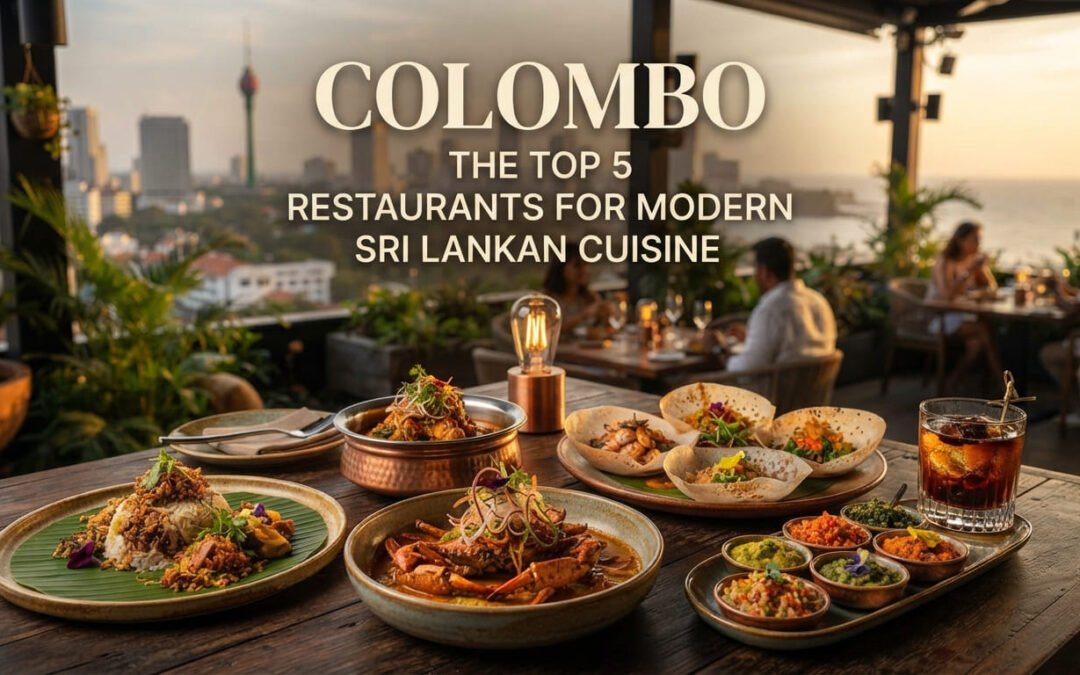
Colombo’s dining scene has moved well beyond the hotel buffet and the lunchtime rice and curry packet. A growing number of kitchens now treat Sri Lankan food as something to refine as well as preserve. Chefs cook over live fire, rework hoppers and kottu, and build menus around lagoon prawns, mud crab and regional recipes from Jaffna and the north.
This guide covers five restaurants that take a modern approach to the island’s cooking, from a garden grill in Colombo 5 to a sunset terrace on Galle Face. They are spread across Havelock Town, Galle Face, Fort, Colombo 7 and Kensington Gardens, so each can anchor a different evening. Prices and spice levels vary a great deal, and the notes below flag both. Details were checked at the time of writing, but menus and hours change, so confirm before you go.
1. GINI: Live Fire in a Garden Setting
GINI is a family-owned outdoor kitchen at 8 Havelock Place in Colombo 5, on a quiet residential street. The name comes from the Sinhala word for fire, and the cooking follows it: plates are finished over live flames in a garden dining space of about 70 seats. There is indoor seating as well, which is worth requesting when you book, since Colombo rain can arrive without much warning.
The menu is short and built around seafood bought daily from local fishermen. Dishes that come up often in diners’ accounts include oysters with pineapple achcharu and caviar, grilled lagoon prawns in a Jaffna curry sauce with fried moringa, and an oven-roasted cauliflower steak that gives vegetarians a proper main course. A nine-course tasting menu is also offered, and the cocktail list leans on local fruit and arrack.
GINI suits couples, celebration dinners and anyone who wants the most polished meal on this list. It opens only from Wednesday to Sunday, between 6.30pm and 10.30pm, and the short menu means items can sell out. Oysters in particular have been unavailable on some nights, so ask when you reserve. Some reviewers also say the non-alcoholic drinks list is not offered by default, so ask for it.
2. Kaema Sutra: Hoppers and Sunset Cocktails at Shangri-La
Kaema Sutra is on the fourth floor of Shangri-La Colombo, facing the Indian Ocean along Galle Face. Chef Dharshan Munidasa launched it in 2014 with actress Jacqueline Fernandez at Independence Arcade, and it moved into the hotel in 2017. It has indoor seating and an open-air terrace, and the terrace is the reason to arrive around sunset.
The menu is built for sharing. The restaurant is known for oversized nine-inch hoppers, including a black hopper made with squid ink, alongside pol roti, several styles of kottu and curries cooked to order. Slow-cooked pork spare rib curry sits next to river prawn curry.
Kaema Sutra describes itself as a restaurant and bar, and the mood is social rather than hushed. It suits groups, first-time visitors and anyone who wants cocktails with the meal. It serves evenings only, from 5pm to midnight on Sunday to Thursday and until 2am on Friday and Saturday. Hotel pricing applies, and some seafood dishes are charged per piece or by weight, so ask before ordering crab or large prawns.
3. Ceylon Curry Club: Curry and a Hopper Cart in the Dutch Hospital
Ceylon Curry Club occupies units 2 and 3 in the Dutch Hospital Shopping Precinct in Fort, a restored colonial complex. Inside are polished timber, soft lighting and local handicrafts. It began as a delivery service and opened its dine-in restaurant in 2021, and a cup of cinnamon and honey tea arrives while you read the menu.
Starters include manioc cutlets, prawn wadey and hot butter calamari. Mains include kochchi chicken skewers hung on a wooden stand with godamba roti, mutton kottu and a Ceylon beef Wellington. The hopper cart makes plain, egg, milk, prawn and chicken hoppers to order at the table. On weekdays a set lunch called Curry in a Hurry pairs a prawn, chicken or pork curry with rice, dhal, brinjal moju, vade, a mocktail and a dessert.
Delivery menus list lunch plates at roughly LKR 1,000 to 1,450, and cocktails have been listed at LKR 1,100 to 1,400. Dine-in prices may differ. The restaurant suits office lunches and sightseers working through Fort. Rice portions are large, and a few diners report occasional inconsistency in temperature or texture. Lunch runs from 11am to 3.30pm and dinner from 6pm to 10.30pm.
4. Kolamba Kade: Jaffna Home Cooking on Ward Place
Kolamba Kade is a small restaurant at 32 Ward Place in Colombo 7 that opened in 2025. Its cooking leans towards Jaffna home food and the kade tradition of roadside eateries: freshly baked breads, hoppers, string hoppers, pittu, four kinds of sambol, and desserts such as sticky toffee pudding and pol pani.
The breads are the draw. Ghee paratha and onion paratha come with chicken, mutton or prawn curry. Diners also mention babath, a tripe curry, along with slow-cooked dry beef and mud crab served with kade bread for mopping up the oil. Kottu comes in several forms, though reviews rate it below the curries.
This is the most affordable restaurant here, with egg roti recently listed at about LKR 300. It suits solo diners, couples and anyone who wants home-style flavours without ceremony. Seating is limited, and the owners were reported to be upgrading the space earlier this year. Evening service runs from about 5pm to 10.30pm, but some listings also show weekend mornings, so check before a breakfast visit. Carry cash in case cards are not accepted.
5. Culture Colombo: Family Style in a Converted House
Culture Colombo is at 25 Kensington Gardens in Colombo 4, in an old house converted into a restaurant with several themed dining rooms. It describes its approach as household tradition with a modern twist, which shows mainly in presentation and its emphasis on seasonal produce and fresh seafood.
It is the most traditional restaurant in this guide, and the menu reads like a well-organised family table: rice and curry, lamprais, crab curry, Jaffna prawn curry, mutton curry, hoppers and bamboo biriyani. Desserts include curd and treacle, watalappam and coffee pudding. Diners report that the pineapple and beetroot curries carry more heat than average, so ask for milder versions if needed.
Culture Colombo suits families and groups, and listings note child-friendly service, parking and card payments. Lunch and dinner are served daily on most listings, from 12pm to 3.30pm and 6.30pm to 10.30pm, though the restaurant’s own contact page notes that hours may differ.
6. Choosing Between Them
For a special evening, GINI offers the most refined cooking and the quietest setting, provided you reserve ahead and plan around its Wednesday to Sunday schedule. Kaema Sutra is the better choice for sunset, cocktails and a livelier room.
Ceylon Curry Club works best in the middle of the day, particularly if you are exploring Fort, and the hopper cart gives groups something to share. Kolamba Kade is where to go for the lowest bill and the strongest sense of home cooking. Culture Colombo is the safest option for families and for readers who want a full rice and curry spread in a calm, seated setting.
7. Booking Notes
Reserve GINI through its online booking page, and expect to book several days ahead for weekends. Ceylon Curry Club advises reservations, and Culture Colombo accepts them by email. Kolamba Kade is small, so arrive early or telephone first. Kaema Sutra is easiest to reach through the hotel.
Poya days matter for planning. Alcohol sales are banned islandwide on full moon holidays, and the remaining ones in 2026 fall on 24 November and 23 December. Cocktail-led venues such as Kaema Sutra and GINI are affected most, so check what they will serve.
Fort and Galle Face are close enough to link Ceylon Curry Club and Kaema Sutra in one day. For the others, ride-hailing apps are the practical choice. Colombo has rain in most months, so ask about covered seating at GINI and the terrace at Kaema Sutra. Cards are accepted at GINI, Ceylon Curry Club and Culture Colombo according to their listings, and bills may include service charge and taxes.
8. Conclusion
Colombo rewards diners who treat each meal as a different view of the same cuisine. A fire-cooked prawn at GINI, a squid ink hopper above Galle Face, a paratha on Ward Place and a family-style table in Kensington Gardens each show another side of how Sri Lankans eat now. Book the two seafood-led evenings ahead, keep a casual lunch free for Fort, and leave room in the plan for the breads.
by Travel Blogger | Nov 8, 2026 | Sri Lanka |
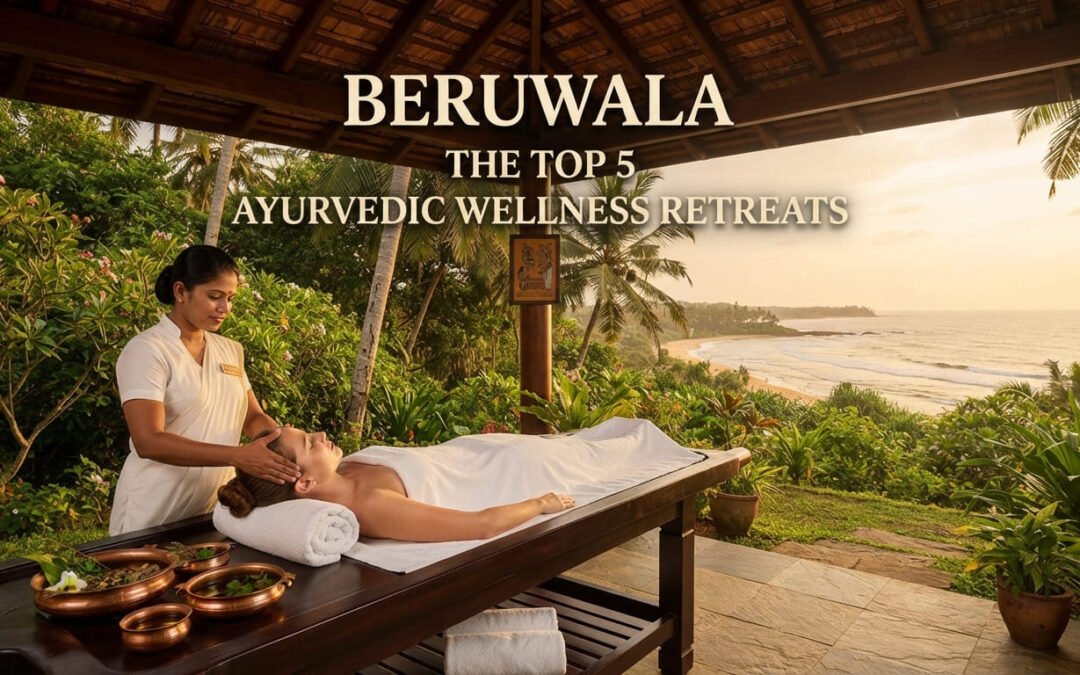
Beruwala is a west coast town about 58 km south of Colombo, and it has become one of Sri Lanka’s main bases for Ayurveda. The attraction is a treatment programme that starts with a doctor, followed by oil therapies, herbal food and quiet days by the sea. Most retreats here are on or near the beach, and the Colombo airport is roughly 80 to 100 km away, depending on the source.
The choice depends on how long you can stay and how clinical you want the experience to be. This guide covers five places, from a 12 room health resort to a large beach hotel with a wellness centre that takes day guests. Two guides checked suggest a stay of 7 to 14 nights for noticeable benefits, with 14 to 21 nights for classical Panchakarma, while 3 to 5 nights works as a short reset. Prices below come from published listings in euros and dollars, so confirm rates and conditions before booking.
1. Barberyn Reef Ayurveda Resort: The Structured Classic
Barberyn Reef has 75 rooms in six types, on a sea front sheltered by a reef that forms a natural swimming lagoon. The pool sits beside the ocean. Rooms have wooden furniture, mosquito nets, fans and a terrace or balcony, and only a few have air conditioning. An initial and follow-up consultation with an Ayurveda physician are included, and a physician is on hand at mealtimes to advise on food.
Treatment is mandatory for the whole stay and is charged separately, at EUR 100 a day in the summer season and EUR 110 in winter. Full-board room rates run from about EUR 100 a night for a single in a standard room to EUR 235 a night for a premier beachfront double. Yoga, lectures, food demonstrations and weekly excursions are included. Food is vegetarian Ayurvedic, with buffet breakfast and lunch and a set dinner.
It suits first-time guests who want a clear programme and a doctor-led approach. Promotions require a stay of at least a week, and a 40 percent advance confirms the booking. The rooms are simple, so travellers who want air conditioning in every room should check before choosing.
2. Heritance Ayurveda Maha Gedara: Bawa Architecture and Adult Calm
Heritance Ayurveda is a beachfront, adults-only resort designed by Geoffrey Bawa, with open courtyards, natural materials and gardens. It has 64 rooms: 36 Deluxe, 16 Classic, 5 Corner Luxury rooms with Jacuzzis and 7 suites. A free consultation is included, and guests are assessed on arrival to plan their treatments.
Programmes cover rejuvenation, stress relief, mindfulness, women’s health, skin health, weight management and smoke and alcohol detox. Up to four treatments a day are offered, including Shirodhara, and guests can choose how intensive the schedule is. Meals are tailored to body type, with buffet and à la carte specials, and yoga and guided meditation run daily. One guide lists packages from about USD 200 a night.
It suits couples and solo travellers who want a design-led setting alongside treatment. The resort’s own page publishes no prices or minimum stay, and reviewers mention stays of one to three weeks, so ask for a written quote. Cancellation is free up to seven days before arrival under the general policy, but this varies by season and offer.
3. Silent Garden Ayurveda Health Resort: Small and Doctor-Led
Silent Garden has 12 rooms in traditional Sinhalese style, with wood elements, a terrace or balcony, air conditioning and Wi-Fi. The beach is about a 10 minute walk away. The setting is quiet and away from the main strip, and the pool has massage jets. The airport is about 95 minutes by road, and a round-trip transfer is listed at EUR 133 per vehicle.
A doctor sees guests at the start, weekly and at the end of the stay, and treatments run about two hours a day. Listed programmes include a 7 night Regeneration stay from USD 616, a 13 night Panchakarma from USD 1,241 and a 13 night slimming programme from USD 1,328, priced per person in a double room with full board. Yoga is offered five times a week, and acupuncture is available for about EUR 20 per 30 minutes.
It suits people who value a small property and personal attention. Reviewers rate it highly, with 4.8 out of 5 from 39 verified guests on one platform. Some note the remote location, limited English among some staff and a repetitive breakfast, and one mentions building work during their stay.
4. Cinnamon Mantra Ayurveda Villa: Four Rooms and a Longer Programme
Cinnamon Mantra is an adults-only villa with only four rooms, each with a small kitchen. It is described as quiet and away from the tourist strip, about 60 km south of Colombo. A doctor is available around the clock, and the first consultation sets the dosha and treatment plan. Free translation is offered during consultations.
The centre has five treatment rooms, and guests receive four to five treatments a day, including herbal baths, steam baths, Shirodhara, massages and reflexology. The main offer is a 14 night Classic Ayurveda Therapy stay with full board, listed from USD 985 on one platform. Meals follow dosha principles, using organic and local ingredients, and yoga runs four times a week, with a weekly meditation session at an island temple reached by boat.
It suits couples and friends who want a private, long stay. No pool is mentioned, and a transfer costs EUR 63 per person for the round trip, so factor both into the budget. With so few rooms, availability can be limited.
5. The Eden Beruwala: A Short Stay or Day Treatment
The Eden is a 158 room beach resort in Kaluwanmodara that markets itself as a family retreat rather than a dedicated Ayurveda centre. Its Ayuwasa Wellness Center opens daily from 8am to 6pm and takes non-resident guests, with 30 percent off treatments priced above USD 30 in a current offer. Treatments include Abhyanga massages, herbal bundle therapy and Kati Basti for the lower back.
A doctor gives a short consultation on arrival to confirm suitable therapies, and doctor-led programmes cover sinus relief, glycaemic wellness and metabolic support over several days. Breakfast is included with rooms, and there are separate adult and children’s pools.
It suits families and anyone testing Ayurveda before committing to a long stay. Session lengths and prices are not published, treatments carry a 10 percent service charge and taxes, and cancellations under three hours before the session cost 50 percent.
6. Choosing Between Them
For a first structured stay, Barberyn Reef offers the clearest programme and daily doctor input. Heritance Ayurveda suits adults who want the Bawa setting and a customised plan. Silent Garden fits travellers who want a small property and a doctor who stays involved across seven or thirteen nights.
Cinnamon Mantra works for a private, longer stay with several treatments a day. The Eden is the practical choice for a short trip or for families where only one person wants treatment.
7. Booking Notes
One guide puts the west coast season at roughly November or December to March or April, and another recommends November to April. Barberyn Reef lists separate summer and winter rates, with summer running from 15 April to 30 November. Prices are mostly quoted in euros or dollars, and some are per person in a double room.
Ask who conducts the opening consultation, whether the doctor checks in daily and whether treatments will change if your health history requires it. Pregnant travellers and anyone with chronic conditions or regular medication should speak to their own doctor first. Check that travel insurance covers health treatments.
Airport transfers are charged at several of these places, so confirm them when booking. Expect deposits, as at Barberyn Reef, where 40 percent confirms a booking.
8. Conclusion
Beruwala suits travellers who want Ayurveda in a coastal setting with a doctor at the centre of the plan. A reef lagoon at Barberyn, a Bawa courtyard at Heritance, a quiet garden at Silent Garden, a four room villa at Cinnamon Mantra and a day treatment at The Eden cover different budgets and time frames. Decide how many nights you have first, then choose the setting.