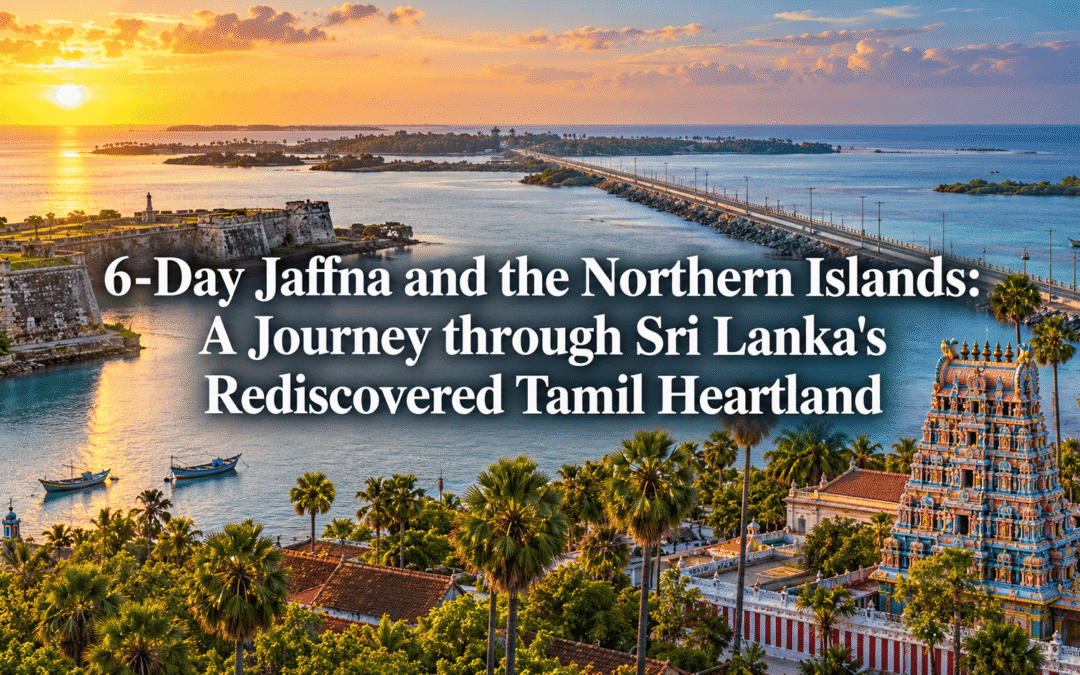
Mannar Island: Flamingos, Baobab Trees, and a Slice of Africa in Sri Lanka

Mannar Island: Flamingos, Baobab Trees, and a Slice of Africa in Sri Lanka

If Sri Lanka were a necklace, Mannar Island would be the strange, beautiful pendant hanging quietly at the edge—unexpected, enchanting, and shimmering with stories that few travelers know. While most visitors circle around the island’s more familiar south and central regions, Mannar waits in the northwest, sunburnt and wind-swept, with a personality unlike anywhere else in the country.

I came here chasing flamingos—literally. A blurry photo online of pink birds standing on one leg in a silver lagoon set off the wanderlust, and within weeks, I found myself rolling across the causeway from the mainland, watching the landscape shift into a wild blend of scrub forest, dune-like patches, and salt-crusted lagoons. What I discovered on Mannar Island was more than a birdwatching paradise. It felt like stepping into a secret pocket of Sri Lanka—part Indian Ocean, part African savannah, and entirely magical.

This is the story of that journey.

Getting to Mannar from Katunayake Airport

Landing at Katunayake Bandaranaike International Airport, I could already feel the humidity clinging to my skin like an eager welcome. Mannar is far—northwestern edge of the map far—but the journey itself becomes part of the charm.

Transport options from the airport:

• Private vehicle:

Hiring a vehicle is the most straightforward route. The drive takes you along a changing tapestry—Negombo’s fishing villages, Puttalam’s salt flats, the wide-open vistas near Wilpattu, and finally the long, quiet approach into the Mannar district. Windows down, hair flying, music on… this was my choice, and I never regretted it.

• Train:

If you’re looking for a slow, scenic immersion, you can catch a train from Colombo Fort to Mannar. It’s a long but atmospheric ride—fields, forests, and glimpses of village life blur past your window. From the airport, you can easily transfer to Colombo Fort by taxi or bus.

• Bus:

For budget travelers, long-distance buses run from Colombo to Mannar. They take a while, but the sense of real Sri Lankan road life—the vendors, the chatter, the motion—is unbeatable.

Whichever option you choose, lean into the journey. Mannar is a far-flung gem, and reaching it feels like approaching the end of a treasure map.

First Impressions: A Landscape Painted by Sun and Wind

Mannar doesn’t try to charm you. It simply is—a land of honesty, rawness, and beauty shaped by centuries of wind. The air is dry, the sky is enormous, and the land stretches flat as if someone ironed the horizon.

On my first afternoon, as I cycled (yes, I rented a bicycle—it’s the best way to explore last-mile attractions here), I could feel the reddish dust rising with every pedal. Somewhere in the distance, I could hear the sea, restless and constant. It was the kind of place where silence has its own sound.

What to See and What to Do in Mannar Island

1. Go Flamingo Spotting at Vankalai Sanctuary

Nothing prepares you for the moment you first see them—the flamingos.

Standing like elegant pink question marks in the distance, they move with slow, deliberate grace. Some lift their wings, and suddenly the lagoon blushes brighter.

I stood there for a long time, watching them feed, watching them rest, watching them simply be. Bring binoculars if you can; the sanctuary is huge, and the birds often stay deeper in the wetlands.

Other birds join the show too—pelicans, terns, plovers, herons. Mannar is a birder’s dream, even if you’re not a birder.

2. Visit the Baobab Trees—A Slice of Africa

Imagine an ancient tree that looks like it has swallowed the sky. That’s the Baobab of Mannar.

Introduced centuries ago, possibly by African traders or Arab sailors, these baobabs are giants with swollen trunks and gnarled limbs reaching out like something from a fantasy novel. Standing under one makes you feel tiny, and honestly, a bit spellbound.

I sat under the shade of one, pressing my back against its bark, feeling its coolness against the heat. I could almost sense the stories trapped inside.

3. Explore Mannar Fort

Built by the Portuguese, expanded by the Dutch, and then claimed by the British, Mannar Fort is an echo chamber of colonial footsteps.

The fort’s thick walls guard the memories of battles, trade, and empire, and today they guard nothing but wind, birds, and silence. There’s something poetic about that.

I walked along the ramparts as the sun set, turning the lagoon into molten gold. It felt like standing inside a time capsule.

4. See the Adam’s Bridge (Rama’s Bridge) Viewpoint

At the far edge of Mannar sits the mythic chain of limestone shoals stretching towards India.

The stories say it was built by Hanuman’s army in the Ramayana. Geologists say otherwise. But standing at the viewing point, staring at the shallow sea that seems to hold its breath, it’s easy to believe in myths.

The wind here is fierce—hold onto your hat.

5. Visit the Doric Bungalow (The Doric House)

Perched on a lonely coastal cliff, this old colonial residence looks like it was dropped here from a novel. Weather-beaten, partly in ruins, and overlooking the wild sea, the Doric House is hauntingly beautiful.

When I visited, waves thundered below, and the wind carried the ghost of the British governor who once lived here. Bring a camera. Bring imagination.

6. Cycle Across the Causeway

This is not just a crossing—it’s an experience.

The causeway links Mannar Island to the mainland across a lagoon where fishermen’s boats float like forgotten toys. Birds skim across the water’s surface, and the breeze pushes against your face like a playful companion.

I cycled it at sunrise. The sky blazed orange, and the world felt wide and welcoming.

7. Meet the Wild Donkeys

Yes—wild donkeys roam Mannar freely.

They munch on shrubs, wander through sandy paths, and occasionally stare at you with the judgmental curiosity only donkeys possess. I loved them instantly.

Where to Stay in Mannar

Mannar offers a mix of small hotels, simple guesthouses, and cozy lodges. Most places embrace the local atmosphere—airy rooms, palm-shaded gardens, warm local meals, and the constant hum of the wind.

Look for accommodations close to:

  • Mannar Town (easy access to food and transport
  • Talaimannar (near Adam’s Bridge and the beach)
  • Vankalai Sanctuary (great for early birdwatching trips)

I stayed in a family-run guesthouse where the mornings smelled like fresh coconut roti and the nights sounded like crickets and distant waves. Hospitality here is heartfelt and grounding.

What to Eat

Mannar’s food is simple, spicy, and utterly satisfying.

Try:

  • Crab curry (the region is famous for lagoon crab)
  • Fried or grilled fish from the day’s catch
  • Palmyrah toddy (if you’re adventurous)
  • Palmyrah jaggery and sweets
  • Kool, a northern mixed seafood broth thickened with palmyrah flour

One evening, as I ate crab curry at a tiny eatery, a fisherman told me stories about sailing towards Adam’s Bridge at dawn, when the sea glows like a candle flame. Mannar is full of storytellers.

Why Mannar Stays With You

There are places you visit, and places you feel. Mannar is firmly the latter.

Maybe it’s the flamingos that paint the lagoons pink.

Maybe it’s the baobab trees that whisper ancient stories.

Maybe it’s the wind that never stops moving, as if the island is always breathing.

Or maybe it’s the sense of being somewhere untouched by hurry, unchanged by time.

On my last morning, I walked out to the beach near Talaimannar. The sand was cool under my feet, the waves gentle, the sky bright but soft. A donkey stood nearby, its tail flicking lazily. A flock of birds burst into the air as if saying goodbye.

Mannar teaches you to slow down, to pay attention, to listen.

And long after you leave, its quiet magic follows you—like a pink feather caught in your backpack, reminding you that somewhere far away, flamingos are dancing in the Sri Lankan sun.

If you crave a destination that’s different, raw, soulful, and delightfully under-explored, Mannar Island is waiting for you.

Where Kings Once Sat: A Visit to Nissanka Malla’s Palace in Sri Lanka

Where Kings Once Sat: A Visit to Nissanka Malla’s Palace in Sri Lanka

Polonnaruwa, Sri Lanka’s Ancient Cultural Triangle

Nobody warned me about the heat. Not the weather-app kind, but the particular dry ferocity of Polonnaruwa at ten in the morning, when the sun is already pressing down on ancient stone and the air smells faintly of dust and something almost sweet, like dried grass and old wood. I’d cycled in from town, slightly lost, slightly sweaty, and then I turned a corner and the ruined columns of Nissanka Malla’s Palace were just there, rising out of the scrub in the middle of everything, quiet and enormous. A city that was once the beating heart of a great South Asian civilisation, and is now one of Sri Lanka’s most extraordinary UNESCO World Heritage Sites.

I hadn’t planned for the place to affect me quite so much. I’d seen photos, read a couple of guidebook entries, and assumed I knew what to expect: a few crumbled columns, some interpretive signage, maybe a queue of tourists with selfie sticks. What I found instead was something genuinely moving. And I’ll tell you exactly how to find it, what to do when you get there, and where to rest your head after a day spent wandering among the remnants of a lost kingdom.

The King Behind the Ruins

Before you arrive, it helps to know a little about the man whose name the palace carries. King Nissanka Malla ruled Polonnaruwa from 1187 to 1196. He was, by all accounts, a complicated figure. Ambitious, deeply religious, extravagant with the royal treasury, and obsessed with leaving his mark on the landscape. He came to power after a rather dramatic series of events involving rivals, succession struggles, and a throne claimed with considerable boldness. He then declared that only a Buddhist had the right to rule the island, a proclamation that secured his political footing and shaped Sri Lankan governance for generations.

He was also a builder. He commissioned the Rankoth Vihara, the largest stupa in Polonnaruwa and fourth largest in all of Sri Lanka. He built the intricate Nissanka Latha Mandapaya, a recitation hall unlike anything else on the island. He refurbished the famous Dambulla cave temples, gilding Buddha statues and recording the expense in stone inscriptions. And then there was his palace. He poured money into it, perhaps too much. By the time his reign ended, the kingdom’s finances were strained almost to breaking point. Less than a hundred years after his death, Polonnaruwa was abandoned entirely.

Standing in what remains of his palace, knowing all that, adds a strange poignancy to the visit. Greatness and overreach in the same set of stones.

What to See at the Palace Complex

The palace itself is set just behind the Archaeological Museum, near the western edge of the ancient city, positioned beautifully beside the vast Parakrama Samudra reservoir. The ruins have, as Lonely Planet rather honestly puts it, almost been reclaimed by the earth. But that’s part of the magic. You’re not visiting a sterile reconstruction. You’re visiting a place that nature has been slowly, patiently consuming for centuries.

The main palace structure once featured eight granite pillars shaped like lotus stems, supporting what would have been a substantial two-storey building. Not much remains standing now, but the footprint is clear, and if you close your eyes for a moment and block out the sound of other visitors’ footsteps, it’s possible to imagine the courtiers, the guards, the soft rustle of ceremony.

The real highlight of the complex, though, is the Council Chamber. This pillared hall is where Nissanka Malla’s advisors and nobles would have gathered, and it’s remarkable for a delightfully specific reason: inscribed into each of the 48 columns is the name and rank of the official who sat before it. It’s essentially an ancient seating plan, carved in stone. You can work out exactly where the ministers sat, where the generals positioned themselves, and crucially, where the king’s own throne was placed. There’s something almost domestic about it.

Don’t skip the royal bathing pool at the south of the complex either. It’s a stepped tank fed from the nearby Topa Wewa reservoir, and its neat geometry makes it one of the more photogenic spots in the whole site. Early morning light on that water is something else.

What to Do Beyond the Palace

I’d strongly suggest arriving at the Archaeological Museum before you do anything else. It’s right next to the palace complex and it completely changes the experience of visiting the ruins. There are detailed maps, scale models of the entire ancient city, and artefacts that help you visualise what these crumbled structures once looked like. Going to the ruins without visiting the museum first feels a bit like reading the last chapter of a novel without the rest of the book.

Once you’ve oriented yourself, the best way to explore the wider ancient city is by bicycle. You can hire one near the bus stop in town, and the whole archaeological zone is laid out along a manageable one-way road. It takes around four to five hours at a relaxed pace, which is exactly the right pace for a place like this. Wear shoes that slip on and off easily. Several of the sacred sites require you to remove footwear before entering, and if you’re visiting at midday, the sun-warmed stone can be surprisingly punishing on bare feet. Pack socks.

The Sacred Quadrangle, a short cycle from the palace, is absolutely worth your time. It’s the most densely packed collection of ruins in the entire city, including the extraordinarily well-preserved Vatadage, a circular relic house with some of the finest moonstonework in the country, and the Gal Potha, a massive stone slab bearing inscriptions describing Nissanka Malla’s own account of his reign. He was, evidently, not the modest type. The Gal Vihara, further north, shouldn’t be missed either. Four enormous Buddha figures carved directly into a single granite face, with a reclining Buddha stretching nearly fifteen metres. It’s a genuinely impressive piece of ancient sculpture, and the serenity of the spot is palpable.

If wildlife is your thing, Polonnaruwa also happens to sit near Minneriya National Park, famous for one of Asia’s most spectacular elephant gatherings. Hundreds of elephants converge around the Minneriya tank during the dry season, typically between June and September. Even outside that window, the park is a reliable spot for elephants, leopards, and an extraordinary variety of birds. The national park is roughly a twenty-minute drive from the ancient city.

Where to Stay

If you want to stay right in the thick of it, EKHO Lake House is your best bet. It sits in a genuinely enviable position next to the palace complex and the Topa Wewa lake, and if you’re lucky enough to get a lake-view room, you might just wake up to an elephant wandering past the waterline. That’s not a metaphor. That’s a real thing that happens. The property is renovated, well-run, and the kind of place where the setting does most of the work for you.

For something a touch more indulgent, Cinnamon Lodge in Habarana is about an hour from Polonnaruwa and positions itself as a proper base for exploring the wider Cultural Triangle. It’s set around a large lake, the grounds are lovely and sprawling, there’s a spa, a pool, and the buffet is decent enough, though I’d always recommend wandering the ten minutes into town for something more local and interesting at dinner.

Habarana, in fact, makes an excellent hub if you’re planning a multi-day sweep of the region. From there, Sigiriya Rock Fortress is about twenty-five minutes by taxi, the Dambulla Cave Temples are thirty minutes, and Polonnaruwa is an easy hour on the bus. It’s a good base that doesn’t lock you into one site.

Getting There from Katunayake Airport

Bandaranaike International Airport at Katunayake is your point of entry into Sri Lanka, and getting from there to Polonnaruwa requires a bit of planning. The distance is roughly 200 kilometres, but roads here have a character of their own, so allow more time than the map suggests.

By Private Taxi or Hired Car (Recommended)

The most straightforward option, especially if you’ve just landed and have luggage, is a private taxi or pre-arranged car. There’s an official airport taxi counter in the arrivals hall, which is the safest and most transparent option. The drive to Polonnaruwa takes roughly three to three and a half hours depending on traffic. It’s a solid road journey, the landscape shifts from coastal lowlands to dry scrub forest as you head inland, and it’s not unpleasant. Many drivers are happy to stop at Dambulla Cave Temples on the way, which makes for a brilliant breaking-in-to-Sri-Lanka kind of afternoon.

By Train

If you’re happy to take your time and want the full Sri Lankan experience, the train is a wonderful option. You’ll need to take the airport express bus (the 187-E03 service) from outside the arrivals building to Colombo’s Fort Railway Station, a journey of about fifty minutes on the expressway. From Fort Station, there’s a daily train to Polonnaruwa, taking roughly five and a half to six hours. It’s slow, yes, but the views of the countryside are genuinely beautiful, and there’s something deeply satisfying about arriving by rail into the ancient cities region. Book a reserved seat if you can, especially on weekends.

By Bus

The budget option is the bus, and it works well enough if you don’t mind a bit of adventure. From the Katunayake bus terminal, which is a short tuk-tuk ride from the airport arrivals, you can take a bus towards Kurunegala, then connect to a service heading to Polonnaruwa. The total journey can take anywhere from five to seven hours depending on connections and how crowded things get. AC intercity coaches from Colombo’s Pettah bus terminal offer a faster, more comfortable version of the same route and take around four hours. It’s worth knowing that bus timetables in Sri Lanka are not always easy to find online, so build in some flexibility.

A Few Things Worth Knowing Before You Go

The ancient city opens from around 7:30am to 6pm daily. Get there early. Not just to beat the midday heat, though that’s reason enough given Polonnaruwa sits firmly in Sri Lanka’s dry zone, but because the ruins at dawn have a quality that simply doesn’t survive the arrival of tour groups. The low light hits the stone differently in the morning, and there are moments when you’ll have an entire temple to yourself.

Dress modestly. The site includes active religious monuments, and visitors are expected to cover shoulders and knees. Carry water. There are no restaurants inside the archaeological park, though there are food and drink stalls near the Sacred Quadrangle where you can grab something cold. The best months to visit are May through October, when rainfall is minimal and the weather is manageable.

Why It’s Worth It

Sri Lanka is full of places that will surprise you. But Polonnaruwa, and Nissanka Malla’s Palace in particular, surprised me in a way I didn’t anticipate. It’s not the most spectacular ruin you’ll ever see. It won’t leave you breathless in the way that Angkor or Machu Picchu might. But there’s an intimacy to it, a human scale, that makes it oddly affecting. Those named columns in the Council Chamber. The worn stone steps of the bathing pool. The granite lotus pillars standing in the open air.

A king spent his kingdom’s fortune building this. He recorded his deeds in stone, declared himself the lamp by which the whole world was illuminated, and ruled for nine years before the whole enterprise began its long unravelling. Eight hundred years later, you can stand where his ministers sat, look out over the same reservoir that filled this city with life, and feel the full weight of impermanence in your bones.

That’s not a bad afternoon’s work for a place with no entry queue and no gift shop in sight.

Riverston and the Mini World’s End: The Misty Highlands Tourists Miss

Riverston and the Mini World’s End: The Misty Highlands Tourists Miss

Sri Lanka has a talent for hiding its best secrets in plain sight. While most travelers chase the familiar names—Ella, Nuwara Eliya, Horton Plains—there’s a quieter highland escape that slips under the radar. I found it after a winding drive into the Knuckles Mountain Range, where clouds drift like lost thoughts and the air smells of wet grass and pine.

This is Riverston. And at its edge lies Mini World’s End, a cliff that doesn’t shout for attention but delivers one of the most humbling views I’ve seen on the island.

If you’ve ever wanted to feel like you accidentally wandered into a dream, this is the place.

The Road In: When the Journey Starts Slowing You Down

The climb toward Riverston is gradual, then suddenly steep. Villages thin out. Houses sit farther apart. The temperature drops without warning, and you instinctively reach for a jacket you didn’t think you’d need in Sri Lanka.

Mist rolls in and out like it’s undecided about staying. The road snakes through forests and open grasslands, revealing occasional glimpses of valleys far below. By the time I arrived, my phone had stopped being useful—and honestly, so had my sense of urgency.

Riverston doesn’t rush you. It gently insists that you stop.

First Impressions: A Highland That Breathes

Riverston sits high within the Knuckles Conservation Area, and it feels different from Sri Lanka’s more manicured hill towns. There are no grand colonial hotels or bustling promenades. Instead, you get wide skies, quiet trails, and an atmosphere that feels almost untouched.

The wind carries the scent of eucalyptus and damp earth. Birds cut through the fog like moving shadows. And everywhere you look, the landscape feels soft—rounded hills, mossy rocks, gentle slopes disappearing into mist.

This is not a place to conquer. It’s a place to observe.

Mini World’s End: A View That Appears and Vanishes

The walk to Mini World’s End is short, but the anticipation stretches it. The path winds through grassland, often wrapped in fog so thick it feels theatrical. Then, suddenly, the mist parts.

And there it is.

A sheer drop into a valley so deep and green it looks unreal. Waterfalls streak the far cliffs like silver threads. Forests fold into each other, layer after layer, fading into blue-gray distance.

Unlike Horton Plains’ famous viewpoint, Mini World’s End feels personal. No crowds. No noise. Just you, the wind, and a view that might disappear at any moment if the clouds decide to reclaim it.

I stood there longer than planned, waiting for the mist to return—half-hoping it would, just so I could watch the reveal all over again.

What to See Around Riverston

1. Riverston Peak

The hike to Riverston Peak is gentle but rewarding. The trail winds through grasslands and low forest, opening up to panoramic views on clear days. Even when visibility is limited, the walk itself feels like therapy.

2. Grassland Trails

These open, rolling paths are perfect for slow walks. Wildflowers dot the landscape, and the silence is broken only by wind and distant bird calls.

3. Waterfalls and Streams

Small waterfalls appear unexpectedly along the roads and trails, especially after rain. Clear streams cut through the terrain, inviting you to pause and watch the water find its way downhill.

4. Cloud Forest Edges

At certain points, the grasslands give way to dense forest. The transition is dramatic—light dims, the air cools, and everything feels older, deeper, more secretive.

What to Do in Riverston

Hiking Without a Hurry

Riverston is perfect for hikers who prefer wandering over racing. Trails here aren’t about speed or distance—they’re about noticing how the landscape changes with every few steps.

Photography in the Mist

Fog softens everything. Hills become silhouettes. Trees fade into shadows. If you enjoy moody photography, Riverston delivers effortlessly.

Birdwatching

The Knuckles region is rich in birdlife, and Riverston offers plenty of chances to spot highland species flitting through the grass and trees.

Do Absolutely Nothing

This might be my favorite activity here. Sitting on a rock, watching clouds drift, listening to the wind—Riverston makes idleness feel productive.

Getting There from Katunayake International Airport

Reaching Riverston takes time and commitment, but the reward lies in the remoteness.

Option 1: Private Car or Taxi

From the airport, the drive takes you inland toward Kandy or Matale, then up into the Knuckles region. The final stretch involves winding mountain roads that feel adventurous but manageable.

This option offers flexibility and comfort, especially if you want to stop along the way.

Option 2: Train + Road Combination

Travel from Katunayake to Colombo Fort.

Take a train to Kandy or Matale.

Continue by car or local transport toward Riverston.

The train journey through the central hills is scenic, setting the tone for what lies ahead.

Option 3: Bus + Tuk-Tuk (For the Bold)

Buses run from Colombo to Matale. From Matale, you can continue via local buses or tuk-tuks toward Riverston.

This option requires patience and flexibility—but it also delivers stories you’ll remember.

Where to Stay in Riverston

Accommodation here mirrors the landscape: simple, quiet, and close to nature.

Eco Lodges

Scattered around Riverston are eco lodges designed to blend into the environment. Expect misty mornings, wooden balconies, and nights filled with insect symphonies.

Guesthouses

Family-run guesthouses offer warm hospitality and hearty meals. Conversations often replace entertainment, and evenings are spent listening to the wind rather than scrolling screens.

Stays in Matale

If you prefer a town base, Matale offers additional options. It’s a longer drive each morning, but it allows you to mix highland solitude with urban convenience.

When to Visit Riverston

Early mornings are essential. Mist is most dramatic at dawn, and views are clearest before clouds thicken later in the day.

Riverston has a cool, sometimes damp climate, so layers are useful. Evenings can feel surprisingly chilly, adding to the cozy, highland charm.

Things to Keep in Mind

Weather changes quickly—embrace it.

Wear good walking shoes.

Bring warm clothing.

Let go of strict schedules.

Riverston rewards patience.

Why Riverston Stayed With Me

Some places impress you with spectacle.

Others impress you with restraint.

Riverston does neither loudly. Instead, it whispers—through fog, wind, and wide-open spaces—that not every beautiful place needs to be busy.

As I left, the mist closed in behind me, hiding the hills like a secret I was lucky to glimpse.

If you’re searching for Sri Lanka beyond the highlights—where silence matters, views appear unexpectedly, and the mountains feel alive—Riverston and Mini World’s End are waiting, quietly, in the clouds.

Pahiyangala Cave: Home of the Oldest Humans in South Asia

Pahiyangala Cave: Home of the Oldest Humans in South Asia

I didn’t expect silence to feel this ancient.

Standing at the base of a massive granite rock in Sri Lanka’s wet zone countryside, surrounded by cicada hum and rustling leaves, I realized I wasn’t just visiting a cave—I was stepping into one of the earliest chapters of human history in South Asia. This was Pahiyangala Cave, also known as Fa Hien Cave, a place where humans lived more than 37,000 years ago. Long before temples, kingdoms, or even written language, people were already calling this place home.

And today, I was climbing toward it.

Arriving at Pahiyangala: First Impressions

Pahiyangala is tucked away in the Kalawana region of the Kalutara District, surrounded by thick greenery, village homes, and a calm that feels almost intentional. The cave sits atop a towering rock outcrop, visible from far away like a natural monument quietly watching over the land.

As I walked toward the entrance, the scale of the place hit me. This isn’t a narrow cave you duck into—it’s enormous. The rock overhang stretches wide, sheltering a vast open space beneath it. Archaeologists believe entire communities once lived here, cooking, sleeping, and crafting tools while protected from rain and predators.

It felt less like a cave… and more like a prehistoric apartment complex.

Why Pahiyangala Matters (and Why It Gave Me Goosebumps)

Pahiyangala isn’t just old—it’s groundbreaking.

Excavations here uncovered skeletal remains of Balangoda Man, the earliest known anatomically modern humans in South Asia. These findings reshaped what scientists knew about early human migration, proving that humans lived in Sri Lanka tens of thousands of years earlier than once believed.

Standing there, I tried to imagine it:

Fires flickering under the rock.

Stone tools scattered on the ground.

Early humans watching the same forest I was looking at now.

No museums. No glass barriers. Just history, raw and quiet.

The Climb Up: A Journey Before the Destination

Reaching the cave requires a short but steady climb up a series of stone steps. It’s not overly difficult, but it’s enough to make you pause, breathe, and notice your surroundings.

As I climbed, I passed:

Shady trees offering relief from the sun.

Occasional clearings with views of paddy fields below.

Birds darting between branches like they’ve memorized this path.

The higher I went, the cooler it felt. And when I finally reached the top, the cave opened up like a natural amphitheater.

What to See at Pahiyangala Cave

1. The Cave Interior

The cave is vast—shockingly so. Its ceiling curves overhead like a stone sky, darkened by time and smoke from ancient fires. Parts of the cave are still used today by Buddhist monks, adding another layer of history to the space.

There are areas where archaeological digs once took place, and while most artifacts are preserved elsewhere, just knowing what was found here makes the ground beneath your feet feel important.

2. The Surrounding Views

From the cave entrance, you get peaceful views of forested hills and rural Sri Lanka stretching into the distance. It’s quiet, meditative, and far removed from the usual tourist crowds.

This is the kind of place where you sit down, say nothing, and let the atmosphere do the talking.

3. Buddhist Shrines

Inside and near the cave, you’ll notice small shrines and statues. Pahiyangala later became a Buddhist meditation site, blending prehistoric human history with spiritual tradition. The coexistence feels surprisingly natural—like different eras respectfully sharing the same space.

What to Do While You’re There

Explore Slowly

This isn’t a “rush through and leave” destination. Walk around. Sit down. Look closely at the rock walls. Imagine life here without modern comforts—and somehow, it doesn’t feel entirely impossible.

Photography

The cave’s scale, the light filtering in, and the surrounding greenery make for dramatic photos. Early morning or late afternoon light works best.

Meditate or Reflect

Even if you’re not spiritual, the calm of the cave invites reflection. It’s one of those places where time feels less linear.

How to Get There from Katunayake International Airport

Getting to Pahiyangala takes a bit of planning, but that’s part of the adventure.

By Private Car or Taxi

This is the most convenient option, especially if you’re short on time or traveling with others. The journey takes you south from the airport toward Kalutara, then inland through scenic countryside roads.

Expect coconut plantations, small towns, and plenty of roadside fruit stalls along the way.

By Train + Tuk-Tuk

If you want a more local experience:

Travel from Katunayake to Colombo Fort

Take a southern railway line train toward Kalutara

From Kalutara, hire a tuk-tuk or local vehicle to reach Pahiyangala

This option takes longer but gives you a front-row seat to everyday Sri Lankan life.

By Bus

For budget-conscious and adventurous travelers, buses run from Colombo or Kalutara toward Kalawana. From the nearest town, a short tuk-tuk ride gets you to the cave entrance.

Where to Stay Nearby

While Pahiyangala itself is quiet and rural, there are several comfortable places to stay within easy reach.

Eco Lodges & Nature Retreats

The surrounding region is known for lush greenery and wildlife. Eco-friendly lodges offer peaceful stays with forest views, home-cooked meals, and a chance to unplug.

Boutique Hotels in Kalutara

If you prefer coastal comfort, Kalutara offers boutique hotels and riverside stays. You can explore Pahiyangala by day and unwind near the ocean by evening.

Homestays

Staying with a local family is one of the best ways to experience Sri Lanka. Hosts often share stories, homemade food, and travel tips you won’t find online.

When to Visit

The cave can be visited year-round, but mornings are ideal. The air is cooler, the climb is more comfortable, and the atmosphere feels especially serene.

Wear comfortable shoes, bring water, and dress modestly, as the site has religious significance.

Why Pahiyangala Stayed With Me

I’ve visited temples, beaches, mountains, and cities across Sri Lanka—but Pahiyangala felt different.

It wasn’t flashy. There were no crowds. No souvenir stalls calling for attention.

Just a cave.

A rock.

And the quiet reminder that humans have been wondering, surviving, and storytelling here for tens of thousands of years.

Walking back down the steps, I felt strangely grounded—as if visiting the past had made the present clearer.

If you’re the kind of traveler who loves places that whisper instead of shout, Pahiyangala Cave deserves a place on your Sri Lankan journey.

9-Day The Untamed North: An Off-the-Beaten-Path Adventure to Jaffna and Delft Island

9-Day The Untamed North: An Off-the-Beaten-Path Adventure to Jaffna and Delft Island

If you’ve already ticked off the tea estates and the southern beaches, or if you simply prefer your travel with a bit more grit and a lot less glitter, then the North of Sri Lanka is calling. For a long time, this region was off-limits, a place of mystery and hardship. Today, it’s one of the most rewarding parts of the island to explore, but it requires a different mindset.

The North doesn’t give itself up easily. It’s a landscape of palmyrah palms instead of coconut trees, of scorched earth instead of misty mountains, and of a culture that feels distinct—closer to South India in its flavours and rhythms, yet uniquely Sri Lankan in its resilience. This 9-day journey is for the traveller who wants to see the edges of the map.

Day 1: The First Capital Anuradhapura

Our journey begins in the Cultural Triangle, but we’re bypassing the crowded rocks for the sprawling ruins of Anuradhapura. This was the seat of Sinhalese royalty for over a thousand years.

The best way to see it is on a bicycle. The site is massive, and there’s something quite peaceful about pedalling between gargantuan white stupas like the Ruwanwelisaya that rise out of the jungle like stone mountains. Don’t feel like you have to see every single ruin. Instead, find a spot near the Jaya Sri Maha Bodhi, the oldest human-planted tree in the world. Watch the pilgrims in their white sarongs, listen to the rhythmic chanting, and just soak in the weight of history. It’s an architectural landscape built on faith and longevity.

Day 2: The Gateway to the North

  • Travel Time: Anuradhapura to Jaffna (~3.5 to 4 hours)

Today, we cross “The Elephant Pass.” Historically, this narrow strip of land was the only gateway to the Jaffna Peninsula. The drive is a lesson in transition. The lush greens of the south slowly fade into a flat, arid landscape dominated by the iconic, tall silhouettes of palmyrah palms.

When you arrive in Jaffna, you’ll immediately notice the difference. The air is drier, the colours are brighter vibrant pinks, oranges, and blues on the houses and the sound of temple bells replaces the distant hum of the hills. Check into a local guest house, have your first real Jaffna crab curry (it’s spicy, messy, and brilliant), and just take a slow walk through the town centre to get your bearings.

Day 3: Temples and Turmeric

Jaffna is a city of temples, and the Nallur Kandaswamy Kovil is its golden heart.

You’ll need to visit in the morning or evening during the Pooja. Men are required to enter shirtless as a sign of respect, and the atmosphere inside is electric. The scent of heavy incense, the vibrant murals depicting Hindu mythology, and the sight of the gold-plated arches are staggering. It’s a masterpiece of Dravidian architecture.

In the afternoon, head to the Jaffna Fort. Originally built by the Portuguese and later expanded by the Dutch, it’s a massive, star-shaped fortification made of coral stone. It’s seen a lot of history much of it painful but as you walk the ramparts at sunset looking out over the lagoon, there’s a profound sense of peace. It’s a great spot to see the city from above and watch the local cricket matches being played in the dry moats below.

Day 4: The Island Life Delft Island

Today is an adventure. You’ll head to the Kurikadduwan jetty to catch a local ferry to Neduntheevu, or Delft Island. This is a place that feels like it’s been forgotten by the 21st century.

The island is made entirely of coral. The fences are built from chunks of coral stacked on top of each other, and the landscape is stark and beautiful. You’ll see the famous wild ponies, descendants of horses left behind by the Dutch centuries ago. Look for the “Growing Stone” a coral outcrop that locals swear gets taller every year and the hollowed-out Baobab tree. There are no fancy cafes here; just sun, salt, and a pace of life that makes “slow” look fast. It’s one of the most unique architectural and natural landscapes you’ll ever see.

Day 5: The Tip of the Island – Point Pedro

Head further north to Point Pedro, the northernmost point of Sri Lanka. It’s a quiet, wind-swept town with a long fishing history. Walk along the white sands of Manalkadu, where you’ll find a series of sand dunes and the ruins of an old church partially buried by the shifting sands.

The architecture here is simple and functional, designed to withstand the harsh northern sun and the salty spray. Spend the afternoon at the Keerimalai Sacred Water Spring. It’s a natural spring right next to the sea, where the fresh water is said to have healing properties. Swimming in the stone-walled pool while watching the waves of the Palk Strait crash just a few feet away is a highlight of any northern trip.

Day 6: The Giant of Mannar

  • Travel Time: Jaffna to Mannar (~3 hours)

We’re moving west now to the Mannar Peninsula. This is a part of the country that feels even more remote than Jaffna. Mannar is famous for its Baobab trees, brought over by Arab traders over 700 years ago. These massive, prehistoric-looking trees give the landscape a surreal, African savannah vibe.

Check into a simple lodge. Mannar is a major stop for migratory birds, so even if you aren’t a “birder,” the sight of thousands of flamingos turning the lagoons pink is something you won’t forget. It’s a stark, minimalist kind of beauty that rewards the patient traveller.

Day 7: The Bridge to Nowhere – Talaimannar

Drive to the very end of the peninsula to Talaimannar. From here, India is just 30 kilometres away across Adam’s Bridge (Rama Sethu) a chain of limestone shoals that once connected the two countries.

You can walk out onto the pier and look across the water. It’s a place of incredible significance in the Ramayana, and standing there, you feel the weight of the myth and the geography. Visit the Talaimannar Lighthouse and the old railway pier, which used to be the hub for the “Boat Mail” train from Colombo to Chennai. It’s a haunting, evocative place that feels like the edge of the world.

Day 8: The Wild Frontier – Wilpattu

  • Travel Time: Mannar to Wilpattu (~2.5 hours)

As we start to loop back south, we stop at Wilpattu National Park. This is the largest and oldest national park in Sri Lanka, and it is vastly different from the crowded trails of Yala.

Wilpattu is famous for its villus natural, rainwater filled lakes that dot the landscape. The architecture of the park is defined by these water bodies and the dense dry zone jungle. Because it’s less visited, the experience is much more intimate. You’ll track leopards and sloth bears through the thickets, and the sense of isolation is profound. Spend the night in a tented camp on the border of the park, listening to the night jars and the distant roar of a leopard.

Day 9: Reflection and the Journey Back

On your final day, take a slow drive back toward Colombo or the airport. The road from Wilpattu takes you through small villages and past ancient tanks (reservoirs) that have sustained life here for millennia.

The North isn’t a place you go for a “holiday” in the traditional sense. It’s a place you go for a perspective. You’ll leave with a deep respect for the people who have rebuilt their lives here, and a memory of a landscape that is as honest as it is beautiful. It’s the perfect end to a journey that has taken you off the beaten path and into the true soul of the island.

Rakwana’s Deep South Highlands: Waterfalls, Rainforests, and Isolation

Rakwana’s Deep South Highlands: Waterfalls, Rainforests, and Isolation

A first-person journey into the wet, wild, and gloriously overlooked heart of Sri Lanka’s southern hills

There’s a particular kind of green that exists only in a proper rainforest. Not the cheerful green of a well-watered garden, not the lush green of the tea hills further north. This is something darker, denser, almost alive in the way it presses against you. It’s the green of a place that gets more rain than it knows what to do with, where moss colonises everything that stays still for more than a fortnight, and where the light arrives filtered and diffused, as though the forest has decided to take the edge off it before letting it through. That is the green of Rakwana.

Rakwana sits in the Sabaragamuwa Province, in the deep south of Sri Lanka’s central highlands, and it is one of those places that the travel industry hasn’t quite got around to yet. The more famous hill country towns, Nuwara Eliya, Ella, Haputale, have their own considerable charms, and they’re well-documented. Rakwana is different. It’s quieter, less polished, and surrounded by some of the most biodiverse forest in the entire country. The Sinharaja Forest Reserve, a UNESCO World Heritage Site and one of Asia’s last remaining lowland wet evergreen rainforests, begins practically on its doorstep.

I came here on the recommendation of a man I met on a train, which is exactly the kind of travel origin story that sounds made up but isn’t. He told me Rakwana was the real hill country, the one before the tourists arrived. Three days into my stay, soaked to the skin after a waterfall hike and eating rice and jackfruit curry on a guesthouse veranda while mist rolled in off the forest, I thought he might be right.

Getting There from Katunayake Airport

Rakwana is roughly 170 kilometres from Bandaranaike International Airport, but the journey takes longer than that distance suggests. The roads into the southern highlands are winding, hilly, and occasionally spectacular, and they reward patience rather than speed. Budget four to five hours from the airport depending on your route and whether Colombo traffic decides to be cooperative.

A private car hire is the most comfortable option and gives you the most flexibility on timing. The route most drivers take goes south from Colombo along the Southern Expressway before turning inland through Ratnapura and up into the hills. Ratnapura itself, the ‘City of Gems’, is worth a stop if you have time. It sits in the foothills of the wet zone and has been a centre of Sri Lanka’s gem mining industry for centuries. The streets around the market are full of small gem traders with pouches of sapphires and moonstones, and even a brief wander gives you a flavour of a trade that’s been happening here since antiquity.

By train, the most practical approach is to take the Colombo to Ratnapura line, which runs through the wet zone foothills and takes about three hours on the express service. From Ratnapura, local buses connect to Rakwana and the journey takes another hour and a half through increasingly dramatic hill scenery. The bus winds up through rubber and tea estates, past small villages and roadside shrines, and by the time you arrive in Rakwana you’ve already had a reasonable introduction to the landscape you’ve come to explore.

Direct buses from Colombo to Rakwana depart from the Bastian Mawatha terminal and take around four to five hours. They’re inexpensive, air-conditioned on the express services, and perfectly manageable if you travel with a sense of humour about schedule adherence. Sri Lankan intercity buses are rarely precisely on time, but they’re rarely very late either, and the journey itself is entertaining enough to compensate.

Once in Rakwana, tuk-tuks are available for local transport, though many of the forest trails and waterfall access points are best reached on foot or by motorbike. A few guesthouses can arrange motorbike hire or guided transport to the main sites. The roads deeper into the forest are narrow and sometimes unpaved, and having a local guide or at least a driver who knows them is genuinely useful rather than just a convenience.

What to See

Sinharaja Forest Reserve is the centrepiece and it’s worth spending the better part of a day inside it. The reserve covers over 11,000 hectares of primary rainforest, and within its boundaries lives an extraordinary concentration of endemic species. Over 60% of Sri Lanka’s endemic flowering plants are found here. So are 21 of the island’s 26 endemic bird species, which makes it one of the most important birding sites in Asia. The forest interior is genuinely dense, genuinely humid, and genuinely loud in a way that’s both overwhelming and wonderful.

The endemic bird species alone justify the journey for anyone with even a passing interest in wildlife. Blue magpies, Ceylon junglefowl, Sri Lanka grey hornbills, and green-billed coucals are among the birds you might encounter on a good morning in the forest. Sinharaja is famous for its mixed-species bird flocks, where dozens of different species move together through the canopy in a coordinated wave that lasts perhaps twenty minutes and leaves you standing in its wake feeling slightly overwhelmed by what you just saw.

The waterfalls around Rakwana are numerous and most are nowhere near as visited as they deserve to be. Bopath Ella, though technically closer to Ratnapura and therefore slightly better known, is shaped like the Sinhalese letter for ‘bo’ and plunges into a deep, cold pool that’s perfectly swimmable in the right season. Less well-known falls in the hills directly around Rakwana require more effort to reach but reward that effort with complete solitude and scenery that feels almost aggressively beautiful in the way only wet highland rainforest can manage.

The tea estates that cover the hillsides above and around the forest have a quality of light in the early morning that photographers will recognise immediately and everyone else will simply stare at. The rows of tea bushes, the women pluckers moving along them with baskets, the mist still caught in the valleys below, the occasional flash of a bright sari against the deep green: it’s a composition that repeats endlessly and never gets old.

The Rakwana market town itself is small and unpretentious, with a main street of shops, a produce market, a temple, a mosque, and the general unhurried atmosphere of a highland town that’s going about its business without much awareness of or interest in tourism. This is not a criticism. It’s one of the better things about it.

What to Do

Hire a local guide for Sinharaja. This is not an optional extra but a genuine practical necessity. The forest has no marked trails beyond the main entrance routes, and without someone who knows the paths, the bird call patterns, and the right places to wait and watch, you’ll see a fraction of what the forest has to offer. The Forest Department operates guided walks from the Kudawa entrance on the forest’s northern edge, and local naturalist guides based in Rakwana and the nearby village of Deniyaya know the southern entrances well. Book a guide who specialises in birding if that’s your priority, and ask specifically about the mixed-species flocks.

Walk the tea estate roads in the early morning. These aren’t formal trails, just the unpaved tracks that run between estates and along the ridge lines above Rakwana, but they’re open to walkers and the views they offer across the forested valleys to the hills beyond are as good as any in Sri Lanka. The mist is usually still in the valleys at seven in the morning and the light is extraordinary. Take water, take a jacket (it gets cold up here, genuinely cold, in a way that surprises people who associate Sri Lanka only with heat), and give yourself two to three hours.

Waterfall hunting is an activity that sounds slightly trivial until you’re standing at the lip of a 60-metre drop in the middle of primary rainforest with no one else within earshot. Ask your guesthouse about the lesser-known falls in the hills immediately around Rakwana. Several require a 45-minute to two-hour walk through rubber and forest to reach, and most have pools suitable for swimming. Go in the morning before the afternoon rains arrive, which they will, reliably and with conviction, every single day between October and April.

A visit to a working tea factory is straightforward to arrange and gives you useful context for the landscape you’re walking through. The factories around Rakwana process smaller, less touristy quantities than the big operations around Nuwara Eliya, and the tours tend to feel more personal and less rehearsed. You’ll taste the tea at the end, which sounds like a modest reward until you taste orthodox highland tea within an hour of it being produced, and then it makes sense.

Leech socks are worth purchasing before or during your visit if you plan to walk in the forest. The leeches of Sinharaja are small, numerous, determined, and completely harmless, but they have a habit of appearing in quantities that unsettle people who weren’t expecting them. Locals treat them as minor inconveniences. Tourists who arrive uninformed sometimes treat them as catastrophes. They are not catastrophes. Get the socks, tuck your trousers in, and concentrate on the birds.

Where to Stay

Accommodation in and around Rakwana is modest by the standards of the more developed hill country towns, and this is, again, largely a virtue rather than a drawback. What you lose in infrastructure you gain in quiet, in proximity to the forest, and in the kind of personal attention that only a small, family-run establishment can provide.

Several guesthouses operate in and around Rakwana town, offering simple rooms with attached bathrooms and meals on request. The food at the better ones is genuinely excellent. Wet zone hill country cooking has its own character: slightly different curry profiles from the dry north, heavier use of coconut, and a wider range of forest vegetables and greens that you won’t find in Colombo restaurants. Eat everything that’s put in front of you.

Closer to the Sinharaja forest entrances, particularly around the village of Deniyaya to the south and Kudawa to the north, there are small jungle lodges and eco-guesthouses that place you right on the forest edge. These are the best option for serious birders or anyone who wants to be in the forest at first light without a long drive to get there. Some have open verandas from which you can hear the forest at night, which is an experience worth having at least once. The soundscape of a Sri Lankan rainforest after dark is dense, layered, and quite unlike anything else.

For those who prefer a bit more comfort, there are a handful of small boutique-style properties in the wider Sabaragamuwa hills that offer better-appointed rooms, hot water (important at this altitude, where mornings can be genuinely chilly), and more polished food. These tend to have gardens that border the tea estates, and the views from their terraces are worth the slightly longer drive to the forest entrance.

Book ahead between December and April, which is the dry season for the south and the most popular period for forest visits. The forest is accessible year-round, but the trails are considerably muddier and the leeches considerably more abundant during the monsoon months. That said, some people specifically enjoy the forest in the rain, when the streams are full, the waterfalls are at maximum volume, and the forest smells, as one guide told me memorably, ‘like the whole island breathing out.

What Rakwana Actually Is

Sri Lanka is a small island that manages, improbably, to contain an enormous amount of different worlds within it. Beach resorts. Ancient cities. Tea country. Dry zone wilderness. Rakwana sits in the overlap between several of these worlds, in the wet, forested southern highlands where the ecology is extraordinary, the crowds are absent, and the pace of life is calibrated to the rhythm of rain and mist rather than tourist schedules.

It’s a place that asks something of you. It asks you to be comfortable with mud and mist and the occasional leech. It asks you to slow down enough to notice what’s happening in the canopy above you. It asks you to eat what’s available, walk when the light is good, and sit quietly when the birds are moving through. In return, it offers a version of Sri Lanka that most visitors never see, a country that is still, in these wet and forested hills, magnificently, stubbornly itself.

Bring waterproof boots. Pack a layer you can actually be warm in. Come without a fixed agenda and with a genuine willingness to be surprised.

The forest will do the rest.