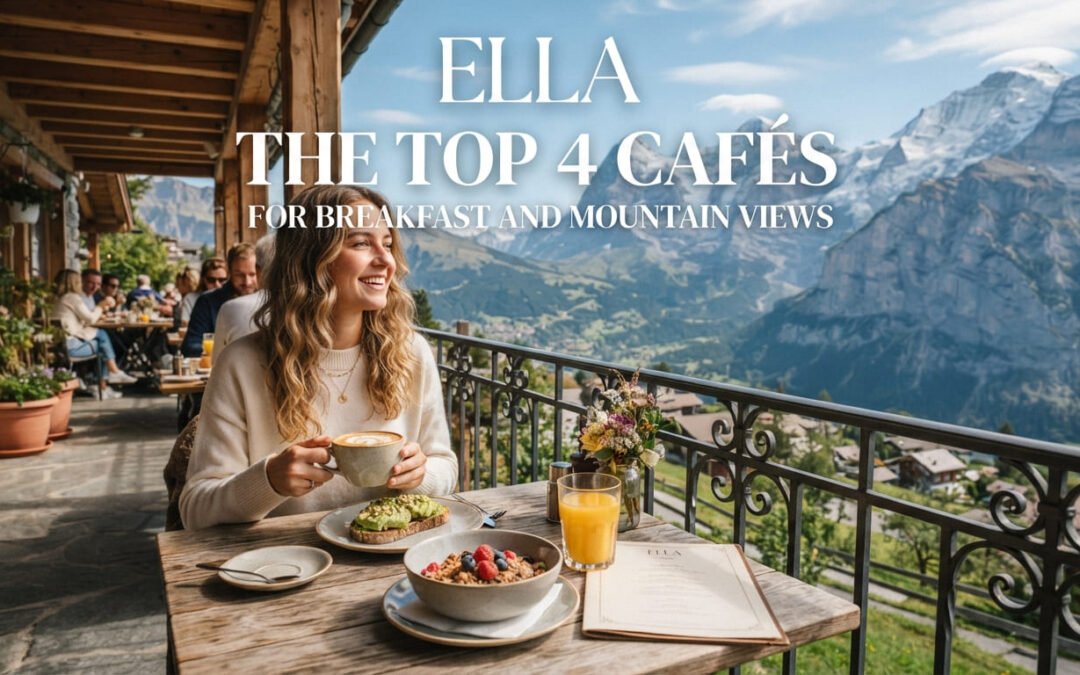
Ella: The Top 4 Cafés for Breakfast and Mountain Views

Ella: The Top 4 Cafés for Breakfast and Mountain Views

Ella is a small town that draws large crowds, and most visitors want the same thing: a slow breakfast with the hills in front of them. The town sits above the Ella Gap, where the land drops away towards the plains, and the trails to Little Adam’s Peak and Ella Rock start close to the centre. Cafés have followed the walkers, so the choice is wide and the quality uneven.

This guide covers four cafés that serve breakfast or morning coffee and suit different kinds of visitors. Only one of them has a mountain view that reviewers consistently praise from the table, and that is stated plainly below. The others earn their place through food, atmosphere or calm. Sources disagree on some opening hours, and a few details rest on a small number of reviews, so check before you plan a morning around any one place. Prices are given in LKR where recent figures exist.

1. Caffora: Coffee and Pastries with the View

Caffora stands on the Wellawaya to Ella highway at the 10th Mile Post, a couple of kilometres before the town centre, according to one visitor. That makes it a natural stop when arriving by road rather than a walk from the station. Reviewers consistently praise the mountain view from its outdoor seating, and a December 2025 visitor called it the perfect spot for a break.

The menu is café style. Expect cappuccinos, matcha and coconut lattes, croissants and a range of sweet and savoury pastries, with wood-fired pizza for later in the day. Listings give hours of 7am to 7pm. It suits couples, drivers and anyone who wants coffee and a pastry with a view rather than a cooked breakfast.

Two cautions apply. Caffora takes cash only, and prices have drawn criticism: an older review called them extremely high with small portions. Ask before ordering and bring enough notes. Recent reviews are few, so confirm the opening hours.

2. Rainbow Cafe: The Full Breakfast Menu

Rainbow Cafe is at 41 Badulla to Bandarawela Road, in the middle of town. It spreads over several levels with couches and a rooftop, and the mood is relaxed and colourful rather than loud. The rooftop is a place to sit and watch town life, but no source describes a mountain view from it.

Breakfast is the draw. The menu runs through the day, with avocado toast, smoothie bowls, shakshuka and bagels mentioned by reviewers, along with an extensive vegan list. Coffee and cocktails are praised too. For something local, one reviewer singled out the Curry in a Hurry, served in a flax basket on a banana leaf, and the jackfruit burgers also score well. It suits families, vegans and groups who want a big choice on one menu.

The practical points are crowds and consistency. Reviewers say it fills quickly, so arrive off peak. Opening time is reported as 8am in one listing and 9am in another, so check before an early start. Some dishes divide opinion, including a tough bagel and a vegan omelette described as closer to a chickpea dosa, and prices run slightly above other local cafés.

3. Crefals Ella: Calm Coffee Away from the Main Road

Crefals Ella is at Block 1, Grand View, on Sapumaltenna Road, and listings give hours of 7am to 8pm. One reviewer describes it as slightly away from the main road and easy to miss, which also explains the calm. Others mention a warm, cosy atmosphere and friendly staff. No review describes a mountain view, so treat this as a coffee stop rather than a viewpoint.

The coffee list is a strong point. Espresso is listed at LKR 1,000, and cappuccino, latte and mocha at LKR 1,500 each. Milkshakes cost LKR 2,000. Reviewers mention Turkish eggs, pancakes, waffles, fruit bowls, avocado toast and an iced matcha, and one praises the Wi-Fi, although its profile does not list Wi-Fi as a feature, so test the connection before settling in for a long session. It suits remote workers, couples and anyone who wants good coffee without the crowd.

The menu is international rather than Sri Lankan, so it will not satisfy a craving for hoppers or roti. Prices sit towards the upper end for Ella.

4. Little Folly: A Vegetarian Breakfast at the Jungle’s Edge

Little Folly is part of Little Folly Hidden Wood Cabins in Ambagollapathana, on the edge of the jungle rather than above the Gap. Listings show hours of 8am to 10pm. The setting is quiet and cosy, and there is a teepee style corner on the rooftop. Free Wi-Fi is listed.

The menu is vegetarian with vegan options. Reviewers recommend it for breakfast and tea time, and mention coconut roti, pol sambol, fruit plates, avocado juice, paratha, dhal and curries, along with coffee and pots of tea. Visitors describe it as affordable, though the menu is shown as images online with no prices, so ask when you order. It suits vegetarians, solo travellers and anyone who wants a gentler start than Main Street offers.

Arrive early. One reviewer advises visiting before 10am, because food can be slow to come after that. Some reviews date back several years, and one rates cleanliness 3 out of 5, so judge the room when you arrive.

5. Choosing Between Them

For the view, Caffora is the clearest answer, with the caveat that it suits a coffee and pastry rather than a full breakfast. Rainbow Cafe offers the widest menu and works best for groups, families and vegans who want to choose from a long list.

Crefals Ella is the better choice for a quiet morning with good coffee and a laptop. Little Folly suits vegetarians and slow starters who value calm over scenery. If the view matters most, pair any of the other three with an early walk to Little Adam’s Peak or Ella Rock first, and take breakfast afterwards.

6. Booking Notes

None of these four lists a booking system, so expect to walk in. Rainbow Cafe is the one most likely to be full, so go outside the usual breakfast rush. Caffora and Crefals both list a 7am opening, which suits an early start, while Little Folly is best reached before 10am. Caffora is cash only, and it is sensible to carry cash for the others as well, since card acceptance was not confirmed for every venue.

Transport differs. Rainbow Cafe is in town and easy to reach on foot. Caffora sits out on the highway and needs a tuk-tuk or your own vehicle. Crefals is on Sapumaltenna Road, slightly off the main route, and Little Folly is in Ambagollapathana, so a short ride is the practical option for both.

Budget around LKR 1,000 to 2,000 for a coffee or milkshake at Crefals, and ask other cafés for current prices before ordering. Cloud and rain can hide the hills at any time of year, so treat the view as a bonus and have a second option ready.

7. Conclusion

Ella rewards an early start. The hills are usually at their best in the first hours of the day, and the town’s cafés reflect different ways of using them: a roadside pastry with a view at Caffora, a long menu at Rainbow Cafe, a quiet cup at Crefals and a vegetarian plate at the jungle’s edge. Walk first if you can, check the opening hours, and let breakfast be the reward.
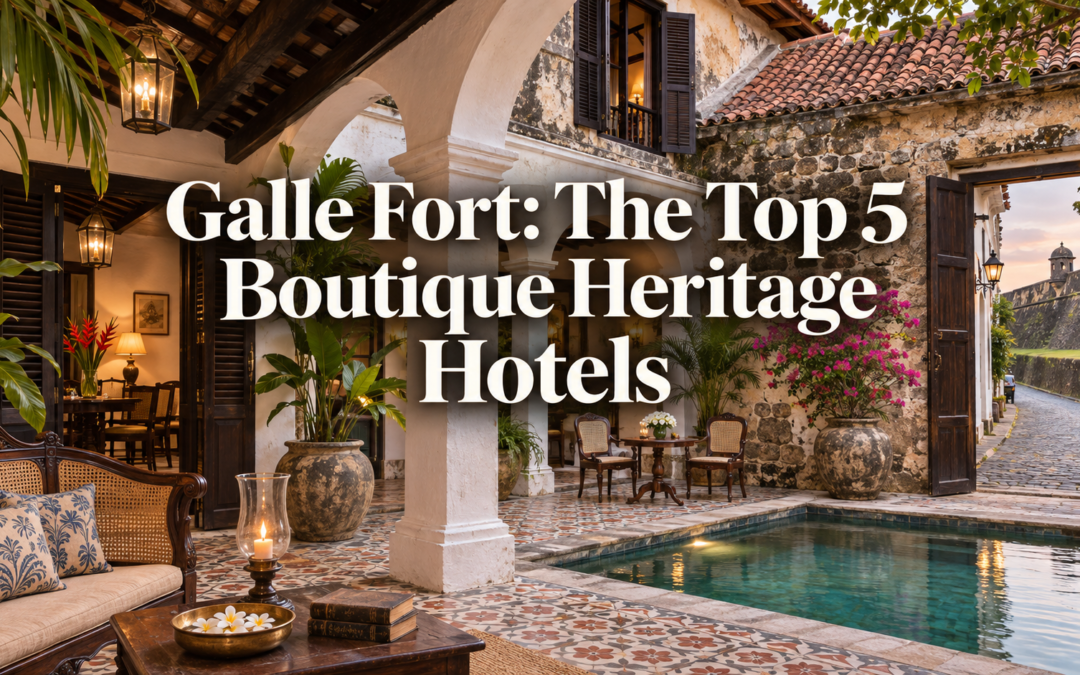
Galle Fort: The Top 5 Boutique Heritage Hotels

Galle Fort: The Top 5 Boutique Heritage Hotels

Galle Fort’s hospitality scene is built almost entirely around restoration rather than new construction, Dutch merchant houses, colonial-era residences, and centuries-old commercial buildings converted room by room into small, character-driven properties. Unlike the resort-scale hotels found along the open coast further south, everything inside the fort walls operates at boutique scale by necessity, the narrow streets and protected heritage status leaving no room for anything larger, which means the difference between a good stay and a forgettable one here comes down almost entirely to how thoughtfully a given restoration has been handled. The five properties below cover the range from grand, old-world splurges to smaller, more intimate stays, each built from a different chapter of the fort’s layered architectural history.

Fort Bazaar

Fort Bazaar occupies a restored 16th-century merchant house at the heart of the fort, and the property wears that history with genuine confidence rather than treating it as mere decoration. The building’s original private courtyard anchors the layout, a shaded, plant-filled centre around which the rooms are arranged, giving the property a sense of enclosed calm that is immediately noticeable after walking in from the fort’s busier streets. The rooms themselves balance heritage detailing, high ceilings, dark timber, deep-set windows, with a level of contemporary comfort that avoids the slightly museum-like feel some restoration projects fall into.

The on-site dining draws consistent praise, a kitchen serious enough to function as a genuine destination restaurant rather than a convenience for hotel guests alone. Fort Bazaar suits a traveller who wants the fort’s history expressed through both architecture and atmosphere, without sacrificing the comfort a longer stay requires, and its central location puts nearly everything else on this list within an easy walk, useful for anyone planning to explore the fort’s ramparts, museums, and craft shops on foot rather than relying on a tuk-tuk for every short trip.

The Charleston

The Charleston has built a reputation as the most consistently well-rounded boutique stay in the fort, the property repeat visitors and review aggregators alike tend to reach for when asked for a single best all-round recommendation. What distinguishes The Charleston is less any single standout feature than the consistency across every part of the stay, rooms, breakfast, service, and location all operating at a genuinely high level without any obvious weak point dragging down the overall experience.

The atmosphere leans polished rather than rustic, a property that has clearly invested in getting the small details right, from breakfast quality to staff attentiveness, rather than relying purely on the fort’s architectural charm to carry the experience. This makes The Charleston the safest recommendation on this list for a traveller who wants a reliably excellent stay without needing to weigh trade-offs between history, comfort, and service, since it delivers reasonably well on all three simultaneously.

Galle Fort Hotel

Galle Fort Hotel is the property to choose for a genuine old-world heritage splurge, a grander scale and more formal register than the smaller boutique properties elsewhere in the fort, colonial-era architecture restored with a level of investment that shows in every public space. The hotel functions as something closer to a proper heritage institution than an intimate guesthouse, high ceilings, a genuinely impressive lobby and communal areas, and a level of formality in service that suits a special-occasion stay rather than a casual overnight, the kind of property where the staff remember a returning guest’s name and preferences from a previous visit.

The rooms carry the same grand, considered restoration as the public spaces, and the overall effect is closer to staying inside a functioning piece of Galle’s colonial history than simply sleeping near it. This is the right choice for a couple marking an anniversary or honeymoon, or any traveller specifically seeking the most elevated version of the fort’s heritage hotel experience, willing to pay a genuine premium for the scale and polish that smaller boutique properties cannot quite replicate.

The Bungalow

The Bungalow occupies a Dutch colonial property whose design leans distinctly toward the residential rather than the institutional, rooms that feel considerably more like staying in a beautifully kept private home than a conventional hotel. Reviewers consistently single out the on-site restaurant as a genuine highlight in its own right, a kitchen that has built a reputation extending beyond hotel guests to draw diners from elsewhere in the fort specifically for the food.

The staff at The Bungalow draw specific praise for warmth rather than mere professionalism, a distinction that matters considerably in a boutique property where the human element of the stay carries as much weight as the architecture itself. The Dutch colonial detailing throughout, deep verandas, period furniture, gives the property a coherent, considered character rather than a generic heritage-hotel aesthetic applied without specificity. This is the choice for a traveller who wants both an excellent kitchen and a genuinely warm, personal service style within the same stay.

Fortaleza

Fortaleza offers boutique comfort within the ramparts at a scale and price point generally more accessible than the fort’s grander heritage properties, without sacrificing the restored colonial character that defines the category. The property suits a traveller who wants the genuine Galle Fort boutique hotel experience, historic building, considered interiors, walkable location, without committing to the premium pricing of Galle Fort Hotel or the destination-dining reputation driving up demand at Fort Bazaar and The Bungalow.

The rooms are comfortable and well-maintained, and the property’s central location keeps every other stop on this list within easy walking distance, useful for a traveller planning to eat and drink around the fort rather than relying solely on the hotel’s own restaurant. Fortaleza is the sensible middle option on this list, delivering the core boutique heritage experience reliably without the highest price tag attached to the fort’s more prestigious names, making it a strong fit for a first-time visitor unsure which end of the fort’s hospitality spectrum actually suits them.

Choosing Between Them

Fort Bazaar suits a traveller drawn to the fort’s oldest architectural layer and a courtyard setting built for quiet. The Charleston suits anyone wanting the single safest, most consistently excellent all-round stay. Galle Fort Hotel suits a special-occasion splurge and the grandest version of the heritage hotel experience. The Bungalow suits a traveller prioritising both food and genuine warmth in service. Fortaleza suits a traveller wanting the core boutique heritage experience at a more accessible price point.

Booking Notes

Rooms at all five properties fill quickly during the December to April high season, and a booking window of several weeks ahead is advisable, particularly for Fort Bazaar and The Charleston given their strong repeat-guest demand. Breakfast is included at all five properties and worth factoring into a same-day arrival plan, since several fort restaurants keep limited morning hours outside hotel dining rooms. Room rates run from mid-range at Fortaleza to a genuine premium at Galle Fort Hotel, with Fort Bazaar, The Charleston, and The Bungalow sitting between the two. Most properties can arrange a private guide for the fort’s ramparts and museums directly at check-in, a worthwhile addition given how much of the fort’s history is not covered by on-site signage, and several also arrange onward transport toward Unawatuna or Mirissa for guests continuing further along the coast.

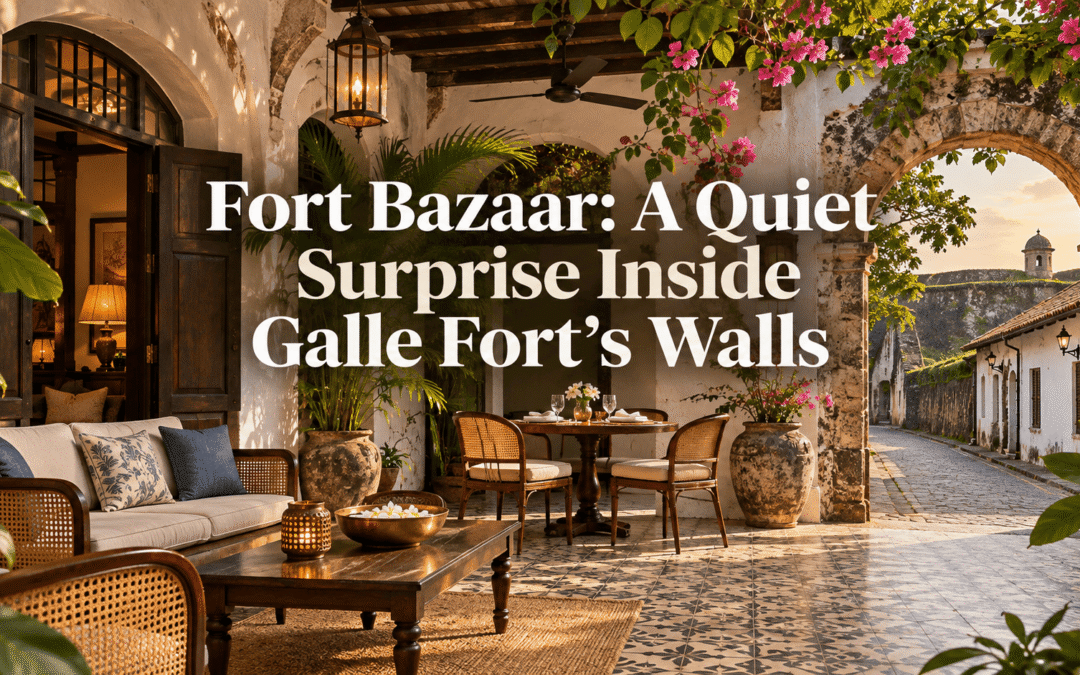
Fort Bazaar: A Quiet Surprise Inside Galle Fort’s Walls

Fort Bazaar: A Quiet Surprise Inside Galle Fort’s Walls

From the street, Fort Bazaar gives almost nothing away. Church Street is narrow and unassuming, lined with the same weathered Dutch facades you’ll find all over Galle Fort, and the hotel’s entrance sits among them without any great fanfare, just a plain door and a discreet sign. Walk through it, though, and the whole mood changes in about four steps. You emerge into a sun washed courtyard shaded by an enormous banyan tree, its roots spilling down one wall like something out of a much older, wilder place, and the contrast between that closed off street front and this open, breathing interior is honestly a little disorienting the first time you experience it.

It makes sense once you know the building’s history. This was a merchant’s house built when Galle Fort was still a working port for spice, tea and gem traders, and it fell into total disrepair through the middle of the twentieth century, briefly serving as an office for Sri Lanka’s Survey Department before being abandoned altogether. Teardrop Hotels found it derelict in 2006 and spent the best part of a decade untangling the planning permissions needed to bring it back, restoring original Dutch arches, extending the roofline and repurposing old rafters rather than replacing them outright. Fort Bazaar finally opened its doors in 2016, and you can feel that patience in the finished result. Nothing about the place feels rushed or generic.

The eighteen rooms are split between Bazaar and Banyan bedrooms, and the naming makes sense the moment you see them. Bazaar Bedrooms open straight onto the central courtyard, dressed with four poster king or twin beds and warm, uncluttered interiors that lean into the building’s heritage rather than fighting it, all cool tiled floors, dark timber and the occasional antique piece that looks like it’s always belonged there. Banyan Bedrooms sit tucked beneath the tree itself, private balconies and terraces giving them a slightly more secluded, treehouse like feel, with dappled light filtering through the leaves for most of the day. Up on the top floor, the suites stretch out with their own living areas and fort view terraces looking over a jumble of terracotta rooftops towards the Indian Ocean, which is about as good a view as you’ll find anywhere within the fort walls, and there’s something rather wonderful about having your morning coffee up there while the fort slowly wakes up below. For those wanting a bit more separation from hotel life altogether, 8 Leyn Baan is a private split level suite managed by Fort Bazaar just up the road, blending contemporary interiors with the same historic bones and its own outlook over the fort’s famous banyan tree.

Food here plays a genuinely central role rather than feeling like an afterthought. Church Street Social, the hotel’s restaurant, sources produce from local farmers and fishermen along the south coast and builds menus around dishes that draw on Sri Lanka’s layered culinary history, colonial, coastal and deeply local all at once, with crab curry and fresh seafood turning up regularly alongside more familiar comfort plates for anyone easing gently into the local flavours. Breakfast and afternoon high tea come as standard for guests, and the daily happy hour has a habit of turning into something longer than intended once you’re settled into one of the courtyard’s rattan chairs with a cocktail in hand, watching the light change against the old walls as evening comes on. There’s a small library too, the kind of quiet, book lined corner that’s easy to forget still exists in a boutique hotel, perfect for an hour with a novel before the courtyard fills up again in the evening.

Wellness gets proper attention as well. The in-house Z Spa offers treatments designed to unwind whatever the day’s exploring has done to you, and the rooftop pool, a relatively recent addition, gives you somewhere to cool off without leaving the property at all. Between the pool, the spa and the shaded courtyard, it’s entirely possible to build a full day here without setting foot outside, though that would mean missing out on what’s arguably the hotel’s greatest asset: its location. Heritage buildings, boutique galleries, centuries old churches and some of the best cafés in Galle are all within a few minutes’ walk, and in-house guests can join a complimentary guided walk with the hotel’s resident historian each morning, an easy way to get proper context on the fort before wandering it alone for the rest of the day.

Beyond the fort walls, the hotel can help arrange cycling trips out into the rural, palm shaded interior, spice garden visits, and boat trips along the coast towards Mirissa for whale watching, so it works equally well as a base for exploring the wider south coast as it does for a couple of quiet nights within the fort itself. The staff seem to genuinely enjoy putting these together rather than treating them as a box ticking exercise, which says a lot about the general atmosphere of the place.

Getting to Galle Fort from Katunayake is refreshingly straightforward, whichever way you choose to do it. The fastest option is the Southern Expressway, which cuts the journey down to a couple of hours by private car or taxi, arriving right at the fort’s edge. If you’d rather do it by rail, the coastal train line down from Colombo Fort to Galle is one of the most scenic routes on the island, hugging the shoreline for long stretches with the ocean practically within reach of the window, though you’d need to first make your way from the airport into Colombo to join it. Long distance buses run regularly along the same expressway corridor for a more budget conscious option, and plenty of visitors choose to break the journey with a night in Colombo before continuing south the next day, especially if the flight in has left them too weary to appreciate the coastline properly. However you arrive, the fort itself is largely pedestrian friendly once you’re inside its walls, luggage trundling over old cobblestones the only real obstacle, so the moment you step through Fort Bazaar’s unassuming front door, the travelling part of the day is essentially done.

I left already planning an excuse to come back, which is not something I say about every hotel I stay in. You can find more on their website at teardrop-hotels.com/fort-bazaar, or follow their courtyard, its light and its ever changing menu on Instagram @fortbazaar_teardrophotels. Either way, it’s worth a look before you go, if only to see how good that banyan tree looks in the late afternoon light.

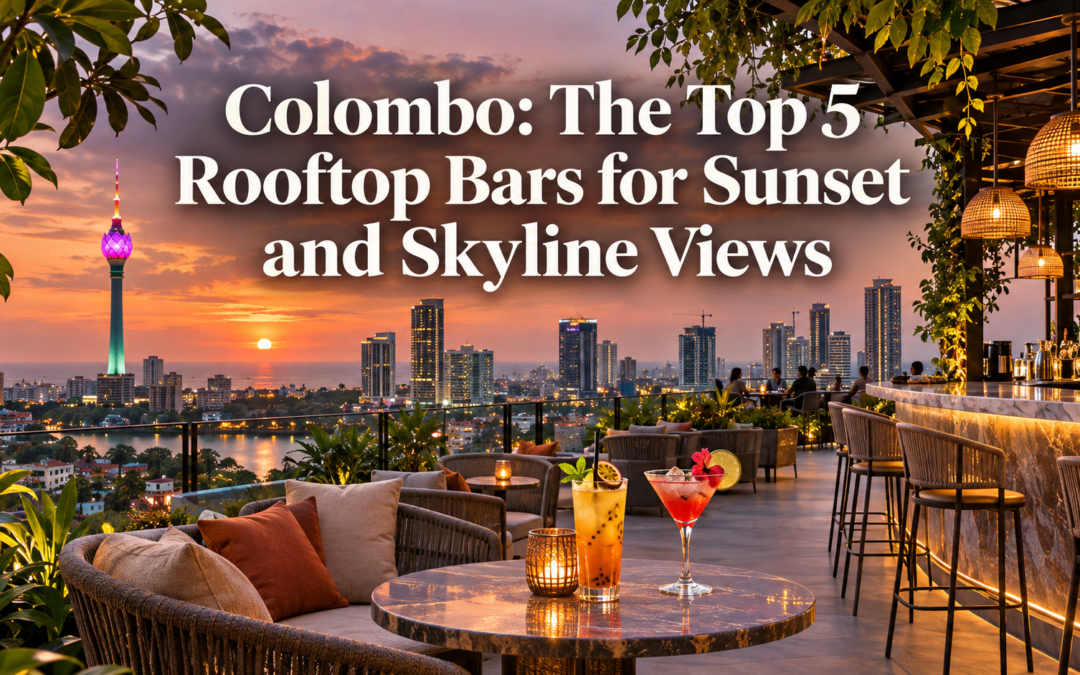
Colombo: The Top 5 Rooftop Bars for Sunset and Skyline Views

Colombo: The Top 5 Rooftop Bars for Sunset and Skyline Views

Colombo’s rooftop bar scene has grown into one of the city’s defining nightlife categories over the past several years, hotel-anchored terraces competing directly on view, cocktail programme, and crowd rather than simply riding on their address. Unlike the beach bars of the south coast, the appeal here is specifically urban, ocean views stacked against a skyline still visibly reshaping itself, and a drinks culture considerably more cocktail-forward than the beer-and-rum register of the coastal towns. Each venue on this list has staked out a genuinely distinct position within that category rather than simply competing on height alone. The five venues below cover the range from oceanfront infinity pool glamour to colonial house intimacy, and the best time of day to arrive at each.

ON14

ON14 sits atop the Radisson and has built its reputation on one of the most photogenic settings in the city, an infinity pool positioned to blend directly into the Indian Ocean horizon beyond it, the skyline stretching along the coast in one direction and open water in the other. The venue functions as both a daytime pool bar and a full evening cocktail spot, a versatility that gives ON14 an unusually long window in which it is worth visiting, rather than a single narrow sunset slot.

The cocktail menu leans toward polished, presentation-conscious drinks suited to the setting, and the crowd skews toward a mix of hotel guests and Colombo’s more design-conscious younger professional set. Arrive in the late afternoon for the pool-bar atmosphere and stay through sunset for the fuller transition into evening service, when the lighting and the view work together most effectively, the pool’s surface catching the colour of the sky in a way photographs of the venue rarely do justice to. ON14 is the clearest choice on this list for anyone prioritising the single most striking physical setting over any other consideration.

Ward7

Ward7 occupies the rooftop of Jetwing Colombo Seven and has become known specifically for its panoramic reach, views extending across a wide arc of the city rather than a single fixed vista, giving it a genuinely different character depending on which side of the terrace you choose to sit. The venue runs a full-day programme, afternoon tea service transitioning into evening cocktails and a livelier late-night atmosphere, a range that few of the other rooftops on this list attempt with equal commitment.

This breadth makes Ward7 a flexible choice depending on when in the day you arrive, a genteel afternoon tea crowd giving way gradually to a younger, more social evening scene as the hours progress. The drinks programme holds its own against the more cocktail-focused venues elsewhere on this list, and the panoramic city views give Ward7 a specifically urban character distinct from ON14’s oceanfront focus. Book ahead for a window table during the sunset transition hour, when demand peaks noticeably.

Sky Lounge

Sky Lounge at The Kingsbury has held its position as one of Colombo’s largest and longest-running rooftop venues, a scale and institutional history that gives it a different kind of authority from the newer arrivals on this list. Its longevity has allowed the venue to build a genuinely broad drinks and food menu, tested and refined over years of continuous operation rather than a newer property still finding its footing.

The scale of the space means Sky Lounge handles larger groups and busier nights with more ease than some of the more intimate venues elsewhere in the city, without sacrificing the view that anchors the whole category, direct sightlines over the Galle Face Green and the ocean beyond. This makes Sky Lounge the sensible choice for a bigger group or a special occasion requiring a reservation that can actually accommodate numbers, and its established reputation means fewer surprises than a newer, less-tested rooftop might carry.

Botanik Rooftop Bistro & Bar

Botanik, atop Fairway Colombo, offers a specifically Fort-district vantage point distinct from the Galle Face-facing views of the hotels further along the coast road, the historic commercial heart of the city spread out below rather than the ocean itself. This positioning gives Botanik a genuinely different visual character from the rest of this list, colonial-era architecture and the working port visible from the terrace rather than an unbroken stretch of coastline.

The bistro-and-bar format means Botanik functions as a legitimate dinner destination rather than a drinks-only stop, a kitchen serious enough to support a full evening rather than a quick cocktail before moving on elsewhere. This makes it a strong choice for a couple wanting a proper rooftop dinner with a view genuinely distinct from the ocean-facing venues that dominate the rest of the category, and for anyone specifically drawn to Colombo’s historic Fort district as a backdrop rather than its beachfront, particularly at night when the district’s older buildings are lit in a way that makes the contrast with the modern skyline beyond even more pronounced.

The REPUBLK

The REPUBLK occupies a restored colonial house and brings a considerably different energy to the rooftop category than the hotel-anchored venues elsewhere on this list, a DJ-driven, higher-tempo atmosphere built for a genuine night out rather than a quiet sunset drink. The colonial house setting gives the venue a distinct character, period architecture repurposed for a contemporary nightlife crowd, and the result sits somewhere between a rooftop bar and a proper late-night venue.

This makes The REPUBLK the right choice specifically for travellers wanting Colombo’s rooftop scene to extend into an actual night out rather than winding down after a single sunset cocktail, and it pairs well as a later stop after an earlier evening spent at one of the more view-focused venues on this list. The crowd skews younger and more locally connected than the more tourist-facing hotel rooftops, giving The REPUBLK a genuinely different social register worth experiencing specifically for that contrast, and the venue’s colonial bones mean the atmosphere still carries a sense of history even at its loudest and busiest.

Getting the Evening Right

A Colombo rooftop evening builds naturally across the city rather than committing to a single venue. Start at ON14 or Ward7 for the sunset transition, move to Sky Lounge or Botanik for a proper dinner, and finish at The REPUBLK if the night is heading toward something livelier. Few visitors need to cover all five in one evening; matching the venue to the specific mood, glamorous, panoramic, institutional, historic, or high-energy, is the more useful way to use this list.

Booking Notes

Sunset tables at ON14 and Ward7 fill quickly, particularly on weekends, and a same-day reservation by early afternoon is worth making rather than risking a walk-in. Most venues enforce a smart-casual dress code, and swimwear at ON14’s pool bar is generally fine for daytime but not for the evening transition. Prices run at a genuine premium compared with the rest of the country, reflecting Colombo’s broader cost of living, with a cocktail typically landing between eighteen hundred and three thousand rupees depending on the venue. Cards are accepted everywhere on this list, unlike many of the smaller establishments found along the coast, and most venues can arrange a taxi or ride-hailing pickup directly from the lobby at the end of the night.

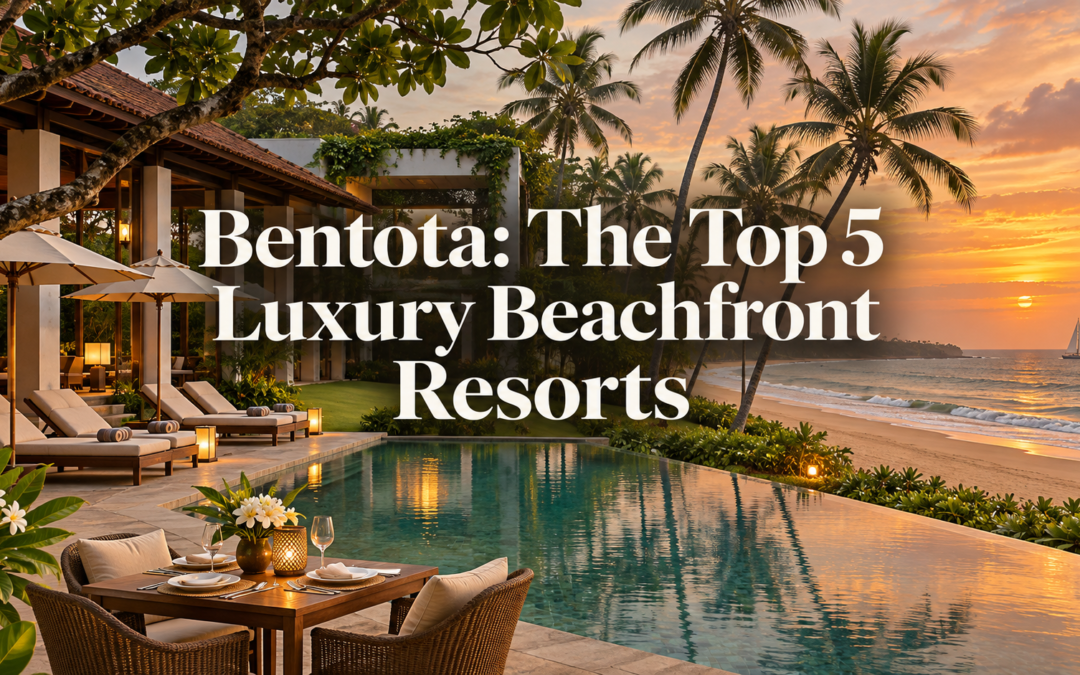
Bentota: The Top 5 Luxury Beachfront Resorts

Bentota: The Top 5 Luxury Beachfront Resorts

Bentota has functioned as Sri Lanka’s original beach resort town since the tourism industry’s earliest days, and its hospitality scene reflects that history directly, a stretch of coast where Geoffrey Bawa himself built some of his most influential early work and where the large-scale luxury resort format the island is now known for first took shape. The result is a town offering both grand, full-service resorts and small, architecturally significant boutique properties within a few kilometres of each other, a genuinely unusual concentration of hospitality history for a single stretch of beach. The five properties below cover that range, from a Bawa-designed original to the coast’s most polished contemporary resorts.

Taj Bentota Resort & Spa

Taj Bentota Resort & Spa has positioned itself as one of the premier luxury resorts on this stretch of coast, a full-service property offering the scale and amenity range that smaller boutique stays cannot match, extensive beachfront grounds, a proper spa, and a dining programme built around multiple distinct restaurants rather than a single kitchen. The seafood-focused restaurant on-site draws specific praise, a genuine strength within a resort that already covers the wider range of amenities a luxury stay typically requires, and evening fire-dance performances by the pool have become something of a signature touch for guests staying through a full week.

The rooms carry the polish expected of an international luxury brand operating in Sri Lanka, spacious and well-appointed, with beachfront views built into the layout of the property’s better categories. This makes Taj Bentota the right choice for a traveller wanting a complete, full-service luxury resort experience, everything handled on-site and to a consistently high standard, rather than a smaller, more intimate stay requiring exploration beyond the property’s own grounds. The resort periodically undergoes room upgrades in phases, so confirming current room availability directly with reservations before booking is a sensible habit.

Cinnamon Bentota Beach

Cinnamon Bentota Beach operates at a genuinely artful register within the large-resort category, its architecture and grounds design contributing as much to the guest experience as the amenities themselves. The Luxury Seafront rooms, positioned for uninterrupted ocean views with a king-size bed, private balcony, and bathtub, are specifically built for guests who want the sense of beachside luxury felt from the moment they wake, rather than a room that merely happens to be near the water.

The resort’s scale allows for a full amenity programme, multiple pools, extensive grounds, and a dining offering that spans the property, while the artful design sensibility keeps the experience from feeling generic despite its size. This makes Cinnamon Bentota Beach a strong choice for a couple or family wanting resort-level amenities delivered with genuine design consideration rather than the more purely functional approach some large-scale properties take, and its beach access rooms in particular are worth the modest upgrade over a standard garden-facing category.

Jetwing Saman Villas, A Luxury Reserve

Jetwing Saman Villas occupies a more elevated, reserve-tier position within the Jetwing portfolio, a property built specifically for travellers seeking a quieter, more considered luxury experience than the town’s larger full-service resorts offer. The villa-style layout gives guests a greater sense of privacy and space than a standard hotel room, and the property’s design draws clearly on the tropical modernist tradition that Bentota’s most significant architecture is known for, private plunge pools and open-plan living spaces standing in deliberate contrast to the corridor-and-room layout of a conventional resort wing.

The setting suits a couple or a small group prioritising seclusion and design over the extensive activity programmes and multiple restaurants of the town’s largest resorts, a stay built around calm rather than constant amenity. This makes Jetwing Saman Villas the right choice for a genuine luxury reserve experience, a step up in privacy and design consideration from the standard resort format, without the scale of Taj Bentota or Cinnamon Bentota Beach, and it suits a couple celebrating a special occasion who want the quiet, unhurried register that a smaller property allows.

The Villa Bentota

The Villa Bentota holds a specific historical significance within this list as Sri Lanka’s first boutique hotel, a property once owned by Geoffrey Bawa himself and still operating as one of the island’s most iconic beachside stays. Fourteen guestrooms, swaying palms, two swimming pools, and a level of service reviewers consistently describe as top-notch combine to give the property an elegant, grown-up atmosphere distinct from the family-oriented resorts elsewhere in Bentota.

The architectural significance here is not incidental but central to the property’s appeal, a direct physical connection to the tropical modernist tradition that shaped Sri Lankan luxury hospitality for the following half century. This makes The Villa Bentota the right choice for a traveller specifically drawn to Bawa’s architectural legacy, or for a couple wanting an intimate, adults-oriented stay with genuine design pedigree rather than a large-scale family resort, and its limited fourteen rooms mean the atmosphere stays personal throughout even during the busiest weeks of the year.

Club Villa Bentota

Club Villa Bentota shares part of its design lineage with The Villa Bentota, developed in part by Geoffrey Bawa alongside other significant Sri Lankan architects, but pursues a considerably more relaxed, family-friendly atmosphere than its more formal neighbour. The property’s games room and generally laid-back character give it a distinctly different personality within the same broad architectural tradition, colourful decor and antique furnishings paired with a genuinely welcoming, unpretentious hospitality style.

This makes Club Villa Bentota the right choice for a family or a group wanting the same Bawa-influenced architectural quality found at The Villa Bentota, but in a considerably more relaxed, less formal register, suited to children and a broader range of ages rather than an adults-focused romantic stay, with a poolside atmosphere that stays comfortably informal even when the property is at full capacity.

Choosing Between Them

Taj Bentota suits a traveller wanting a complete, full-service luxury resort experience with everything handled on-site. Cinnamon Bentota Beach suits a couple or family wanting large-resort amenities delivered with genuine design consideration. Jetwing Saman Villas suits a traveller prioritising privacy, seclusion, and tropical modernist design over an extensive activity programme. The Villa Bentota suits anyone specifically drawn to Bawa’s architectural legacy in an intimate, adults-oriented setting. Club Villa Bentota suits a family wanting that same architectural pedigree in a considerably more relaxed, welcoming register, and between the five of them, the range covers almost every version of a luxury beach stay a traveller could reasonably want from this stretch of coast.

Booking Notes

Bentota’s peak season runs December through March, when sunny weather makes pool time the priority over swimming, since the sea can run genuinely too rough for casual swimming during parts of this window. Rooms at the smaller boutique properties, The Villa Bentota and Club Villa Bentota in particular, fill quickly given their limited room counts, and a booking window of several weeks ahead is advisable. The larger resorts, Taj Bentota and Cinnamon Bentota Beach, generally hold more availability but still merit early booking during the peak months. Most properties can arrange a day trip to Galle Fort by train, a popular addition to a Bentota stay given the relatively short journey, and several also arrange excursions along the Bentota River for a change of pace from beachfront lounging.

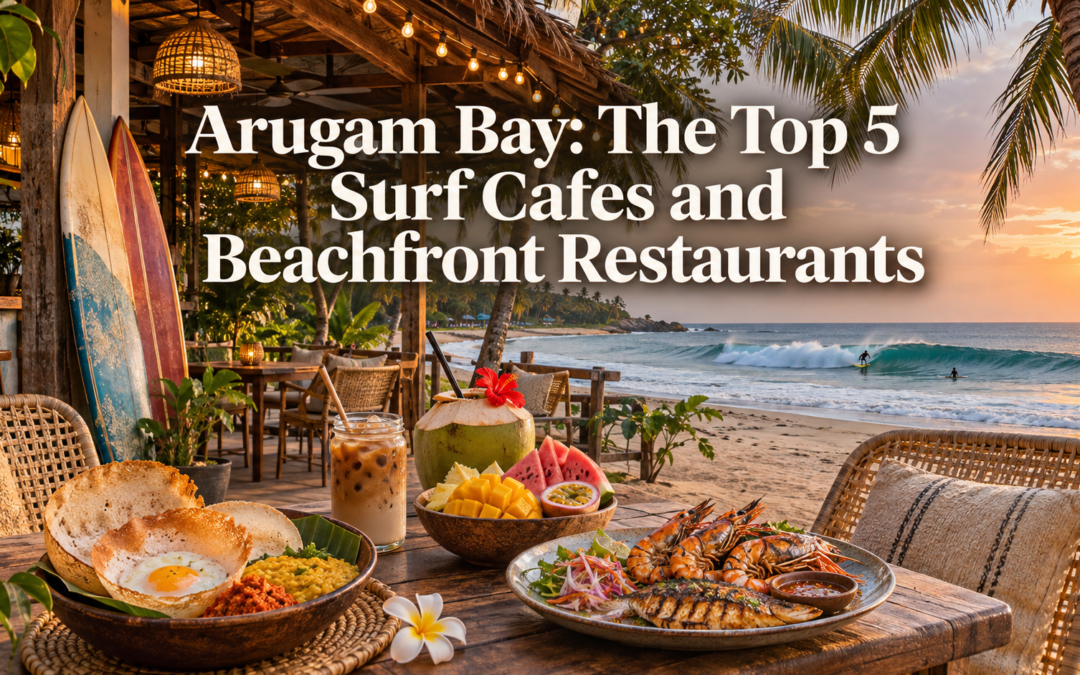
Arugam Bay: The Top 5 Surf Cafes and Beachfront Restaurants

Arugam Bay: The Top 5 Surf Cafes and Beachfront Restaurants

Arugam Bay’s single main strip runs on a specific rhythm that has very little to do with a conventional tourist town’s meal schedule, slow mornings and strong coffee before the first surf check, a lull through the flattest, hottest part of the day, and then beachfront restaurants and bars carrying the afternoon into evening and, on the busier nights, well beyond it. The town’s food scene has grown up entirely around this rhythm rather than against it, kitchens that understand a surfer’s actual daily schedule better than a standard restaurant timetable would suggest, breakfast that starts early and stretches long, dinner service that expects to be interrupted by a last-light session report. The five places below cover that full arc, from the post-surf breakfast bowl to the last beachfront drink of the night.

Hideaway Café

Hideaway Café has built its reputation specifically around the post-surf crowd, a health-conscious menu of smoothie bowls, fresh juices, and lighter, protein-forward plates designed for a body that has just spent two or three hours in the water rather than a standard tourist breakfast. The café’s setting is relaxed and unfussy, the kind of place where wetsuits drying over a railing and boards leaning against the wall outside are simply part of the daily scenery rather than an aesthetic choice.

The menu’s emphasis on genuinely fresh, considered ingredients has made Hideaway a default recommendation among longer-staying surfers and digital nomads working from the bay for weeks or months at a time, the sort of clientele whose opinion on a café’s consistency carries real weight given how often they return. It is the right stop for the first meal of the day, ideally arriving straight from the water rather than after a shower and a change, and the café’s relaxed pace suits lingering over a second coffee while checking the next swell forecast, laptop open on the table beside the empty smoothie bowl.

The Seahorse Inn

The Seahorse Inn anchors its reputation around a genuinely seafood-focused kitchen, prawns, crab, and the daily catch prepared with a level of care that distinguishes it from the more generic international menus found at some of the newer arrivals along the strip. The setting is straightforward beachfront dining, unpretentious tables within reach of the sand, and the atmosphere stays comfortably relaxed even as the restaurant fills through the dinner hours.

This makes The Seahorse Inn the right choice for a proper seafood dinner rather than a quick bite between sessions, and its consistency across a large number of return visits from regular Arugam Bay travellers has made it one of the more trusted names on the strip. It suits a couple or small group wanting a sit-down meal with genuine attention paid to the seafood itself, rather than a menu trying to cover too many cuisines at once.

Siam View Hotel Restaurant

Siam View Hotel Restaurant has held its position as one of Arugam Bay’s longest-running and most consistently mentioned names, a Thai and Sri Lankan fusion menu that has become something close to an institution for repeat visitors to the bay. The restaurant’s longevity in a town where newer, flashier arrivals open and close with some regularity says something specific about the kitchen’s ability to keep bringing people back year after year, a track record the newer competition on this list cannot yet claim.

Beyond the food, Siam View has also built a reputation as one of the bay’s more reliable evening social hubs, a place where the surf community naturally gathers regardless of which guesthouse or hotel any individual traveller happens to be staying at. This makes it a strong choice not just for the fusion menu itself but for the specific, long-established social atmosphere that comes with eating there, a genuine sense of Arugam Bay’s community history rather than a purely transactional meal, the kind of place where a solo traveller can easily end up sharing a table with strangers who became friends over the course of a single evening.

Aloha

Aloha has built a beach-club energy distinct from the more low-key, surfer-café register found elsewhere in this list, a venue that leans into daytime lounging, evening cocktails, and a livelier social atmosphere than the quieter dinner spots along the strip. The setting supports both a full day spent on loungers near the water and a genuine evening cocktail scene once the sun goes down, giving Aloha an unusually wide window of relevance across a single day.

This versatility makes Aloha the right stop for travellers wanting a proper beach-club day, rather than simply a meal, somewhere to spend several hours moving between the water, a lounger, and the bar without needing to relocate. The evening cocktail programme carries the venue into the night with a noticeably higher energy than the more food-focused restaurants on this list, making Aloha a natural later stop once dinner elsewhere has finished, and its daytime lounger setup means it also functions perfectly well as a standalone destination on a day when the surf itself is flat.

Stardust

Stardust occupies a mid-range boutique niche within Arugam Bay’s dining scene, a kitchen and setting positioned a step above the town’s more casual surf cafés without reaching for the higher-end pricing found at some of the newer beachfront developments further along the coast. The menu balances Sri Lankan and international dishes competently, and the atmosphere leans toward a considered, slightly more polished evening than the strip’s more rustic beach-shack options.

This makes Stardust a sensible choice for a dinner that feels like an occasion without requiring a special-occasion budget, and its boutique styling gives it a genuinely different atmosphere from the surf-focused cafés that dominate much of the rest of this list. It suits a traveller wanting one more considered meal during a stay otherwise built around casual, sand-between-the-toes dining, particularly toward the end of a longer stay when a slightly more polished evening starts to feel like a welcome change of pace.

Getting the Day Right

An Arugam Bay day typically starts at Hideaway Café before or after the first surf session, moves through an unhurried midday lull, and picks back up in the late afternoon with a stop at Aloha for the beach-club atmosphere or Siam View for its long-running social scene. The Seahorse Inn and Stardust both suit a dedicated, sit-down dinner rather than a stop folded into a longer beach-hopping evening, and either works well as the night’s single anchor point.

Booking Notes

Arugam Bay’s peak season runs May through September, aligned with the east coast surf season, and tables at the most popular spots fill quickly during this window, particularly around the full moon periods that draw larger crowds. Most establishments accept cash, and card acceptance remains inconsistent enough outside the largest venues that carrying sufficient rupees is a sensible habit. Prices across the strip run reasonably affordable by international standards, with a full meal typically landing between six hundred and fifteen hundred rupees per person before drinks. Outside peak season several smaller establishments reduce their hours or close entirely, so confirming a specific venue is open before making the walk down the strip is worth the extra step between October and April.