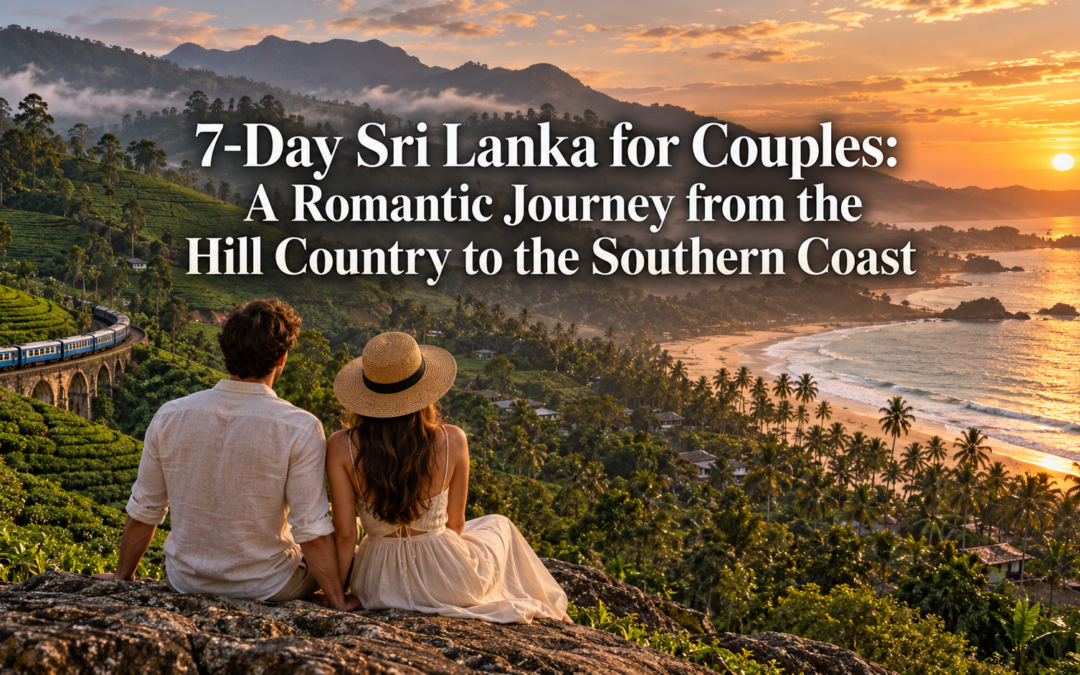
7-Day Sri Lanka for Couples: A Romantic Journey from the Hill Country to the Southern Coast

7-Day Sri Lanka for Couples: A Romantic Journey from the Hill Country to the Southern Coast

Sri Lanka does not announce itself as a romantic destination the way that Bali or the Maldives do. What it has instead is something harder to manufacture: a landscape of genuine variety that rewards two people moving through it slowly, and a selection of boutique properties and converted colonial bungalows that offer the kind of considered, personal experience that large resorts cannot replicate regardless of price.

This is a seven-day journey from the hill country to the southern coast, written for couples who want the experience rather than the packaging. It covers the genuinely romantic moments this island produces, the properties that suit two people better than a group, and the specific details that make the difference between a good holiday and one you talk about for years afterward.

Day 1 — Arriving and the First Evening in Kandy

Begin in Kandy rather than Colombo. The hill country city is a more atmospheric arrival point for a romantic journey than the capital. Take the train from Colombo Fort if your flight schedule allows, the two and a half hour climb into the highland views setting the tone for the days ahead far better than a highway transfer.

Arrive in the afternoon and walk the lake road before the light goes. The Kandy Lake in the early evening, with the Temple of the Tooth illuminated on the far bank and the hills reflected in the still water, is one of those scenes that requires no effort to appreciate. The evening puja at the temple, conducted with drums and incense and a density of devotion that fills the surrounding streets, is worth timing your arrival for.

For accommodation, The Kandy House outside the city is the most romantic property within reach of Kandy, a beautifully restored ancestral manor with individually designed rooms, a pool garden, and the kind of attentive unhurried service that large hotels spend considerable money trying to replicate. For a more central option, Helga’s Folly in the city is the most characterful hotel in Kandy, its eccentric art-filled interior unlike anything else in the hill country.

For dinner, The Empire Cafe on Temple Street serves a good set dinner in a restored colonial building with a terrace overlooking the town, the combination of setting and food making it the right choice for a first evening.

Day 2 — The Tea Estate Walk and the Dimbula Bungalow

Drive west from Kandy into the Dimbula tea district and check into one of the converted colonial estate bungalows that represent Sri Lanka’s most distinctive romantic accommodation category. Tientsin Bungalow or Norwood Bungalowabove Hatton are the two finest options, offering original colonial furniture, a log fire in the sitting room, and views across the tea rows that no resort can replicate. Book well in advance.

Spend the afternoon walking the estate rows, the pickers moving through the bushes in the late afternoon light a working scene rather than a staged one. The bungalow kitchen prepares a set dinner using estate produce, eaten at a table for two with the fire going and highland cold outside the windows.

Day 3 — Lipton’s Seat at Dawn

Wake before five and drive to Lipton’s Seat above the Dambatenne Estate before sunrise. The summit at 1,970 metres in the pre-dawn dark has a stillness that the tourist version later in the morning entirely lacks. Watch the sun come up over the eastern hills, the estates emerging from the dark below and the southern lowlands visible in the distance as the light arrives.

Drive back to the bungalow for a late breakfast and spend the rest of the morning on the veranda with a pot of the estate’s own tea watching the valley settle into its working day.

In the afternoon, drive to Haputale. The Adisham Bungalow, a 1931 colonial manor house now occupied by Benedictine monks, is worth a quiet hour in the garden if your arrival coincides with the weekend opening hours. The monks produce jams and cordials available at the entrance, among the more distinctive food souvenirs in the hill country.

For accommodation in Haputale, Kelburne Mountain View Cottages on the ridge offers stone cottages with valley views that are the finest available in the area at a mid-range price point.

Day 4 — World’s End and the Cloud Forest

Drive to Horton Plains National Park for opening time at six in the morning. The World’s End escarpment on a clear morning, the plateau ending in a sheer 870-metre drop with the southern lowlands far below, is one of the most affecting natural spectacles in Sri Lanka and one specifically well-suited to experiencing as two people. Arrive early enough and you will have the viewpoint to yourselves for fifteen minutes before the cloud rolls in.

The nine-kilometre loop through the cloud forest takes around three hours. The forest at this altitude has a strange, ancient quality, the gnarled trees draped in moss, and the walk through it side by side has an intimacy that the exposed viewpoints do not.

Return to Haputale for lunch at Hotel Royal before the afternoon drive south, the road descending from the escarpment through the tea estates into the warmer southern lowlands.

Day 5 — The Southern Coast and Tangalle

Arrive at Tangalle by late afternoon and check in to Amanwella, the most beautiful property on the southern coast. The villas sit in a curve of hillside above a private beach, each positioned for maximum privacy, the beach below among the finest on the southern coast.

For couples who find Amanwella’s price point above their budget, Buckingham Place a short distance along the coast offers a similarly considered but considerably less expensive alternative, its beachfront setting and boutique scale making it the best mid-range romantic option on this stretch.

Dinner on the open terrace above the sea uses locally sourced seafood handled with the simplicity that good ingredients reward. A table for two as the sun sets over the Indian Ocean entirely earns the occasion.

Day 6 — The Turtle Beach and the Rekawa Lagoon

Spend the morning at the Rekawa Lagoon on a boat trip through the mangrove channels, arranged through your accommodation at around one thousand two hundred rupees for two hours. The quiet, undisturbed beauty of the inner channels suits two people considerably better than a group excursion.

In the evening, visit the Rekawa turtle nesting beach, where the community conservation project operates guided visits between April and August. The experience of watching a sea turtle come ashore in the dark, silence and no lights required, creates a shared intimacy specific to this kind of encounter.

Day 7 — Galle and the Return

Use the final morning for Galle Fort, arriving early when the streets are quiet and the light golden on the Dutch facades. Walk the full circuit of the ramparts together before the day visitors arrive.

For a farewell lunch, The Fort Printers inside the fort walls is the most considered restaurant in Galle, its menu using local ingredients with genuine care and its restored colonial interior providing a setting that suits a last meal on the southern coast well.

The drive back to Colombo takes around ninety minutes on the expressway. The journey back is always a small loss, the measure of how much the seven days actually gave you.

Practical Notes

The estate bungalows in the Dimbula valley require at least two weeks advance notice during peak season between December and April. Amanwella and the better southern coast properties require similar advance planning. The Horton Plains morning visit is best planned for January through April when clear mornings are most reliable. The Rekawa turtle visits are seasonal between April and August. A hired car with driver for the full seven days costs around six thousand to eight thousand rupees per day including fuel and makes the logistics of this 
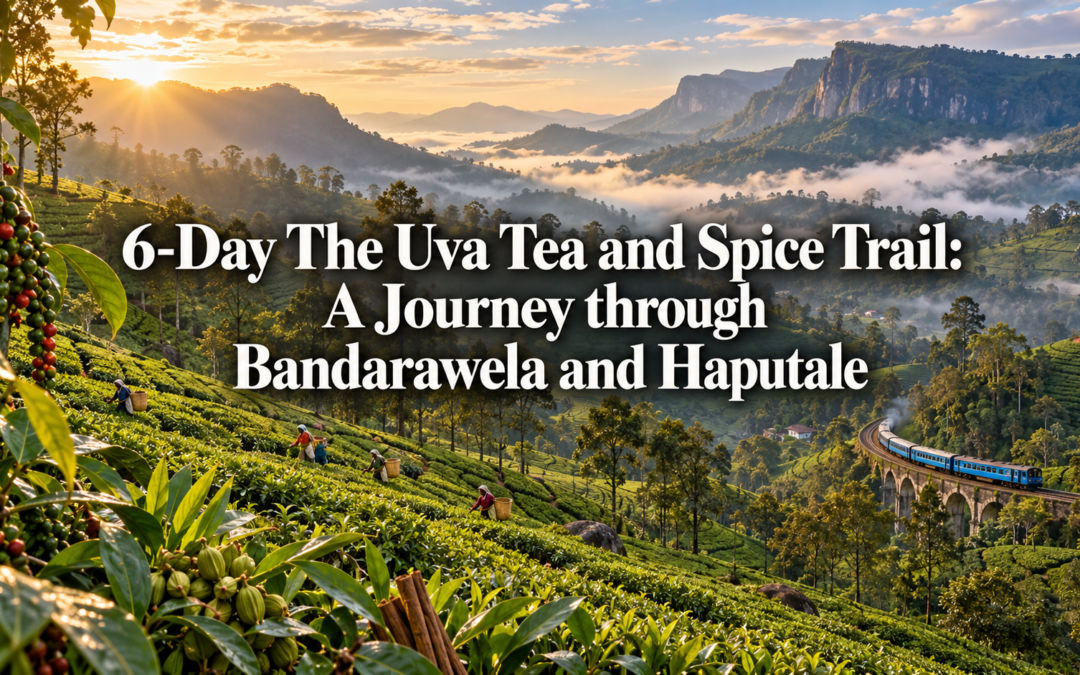
 

6-Day The Uva Tea and Spice Trail: A Journey through Bandarawela and Haputale

6-Day The Uva Tea and Spice Trail: A Journey through Bandarawela and Haputale

The Uva highlands have a reputation that precedes them in the tea world in a way that is unusual even for Sri Lanka. Uva tea, grown on the eastern-facing slopes between Bandarawela and Haputale at elevations between 1,200 and 1,800 metres, has a flavour profile so distinctive that the industry gave it its own name. The Uva flavour, a slightly spiced, almost menthol quality that arrives in the finish of a well-brewed cup, is produced by a specific combination of altitude, soil, and the dry south-west wind that strips moisture from the leaves during the July and August season. It cannot be replicated elsewhere. It is not a marketing claim but a geographical fact.

This journey moves through the landscape that produces that flavour, from the Dambatenne estate above Haputale where Thomas Lipton built his tea empire in the 1890s to the colonial planter’s bungalows on the Haputale ridge that sit above the clouds with views extending in clear conditions to both coasts simultaneously. It is for the traveller who wants to understand tea not as a beverage but as a landscape, an economy, and a way of life that has shaped this corner of the island for a hundred and fifty years.

Day 1 — Arriving in Haputale

Take the train to Haputale. The hill country railway from Colombo climbs through the full range of Sri Lankan highland landscape before the Haputale station appears, a small, well-maintained building on a ridge so narrow that the town on one side drops away almost immediately into the valley on the other. The view from the platform on a clear morning, the southern lowlands visible far below through the gaps in the cloud, is one of the more unexpected arrival experiences in the hill country.

Haputale is a small ridge town with a single main street that runs along the spine of the hill, the land falling away sharply on both sides. The shops are of the practical sort, hardware merchants and small grocers and a bakery that opens before six and sells fresh bread to the estate workers before the town’s other businesses have stirred. The Haputale Bakery on the main street produces a coconut roll that the surrounding community considers a morning standard and that costs about sixty rupees. Buy two.

For accommodation, Olympus Plaza Hotel on the main road offers clean mid-range rooms with good valley views and a reliable kitchen. Kelburne Mountain View Cottages a short distance from the town provides a more atmospheric option, the stone cottages sitting on the ridge with views that change character completely between the morning mist and the clear afternoon. For budget travellers, Amarasinghe Guest House near the station offers basic rooms at around one thousand eight hundred rupees per night with a warmth that the larger properties cannot replicate.

For dinner on the first evening, Hotel Dilshan on the main street serves a good rice and curry from six in the evening with a dhal that the kitchen makes fresh daily and a pol sambol that is ground that morning. It is a straightforward restaurant that does what it does without elaboration and is reliable for exactly that reason.

Day 2 — Lipton’s Seat and the Dambatenne Estate

The Dambatenne Tea Factory, about ten kilometres from Haputale on a road that climbs through the upper estate land, was built by Thomas Lipton in 1890 and is still producing tea on the estate he established. The factory tour, offered daily to visitors at around five hundred rupees, covers the full processing cycle from the green leaf arriving from the surrounding estate rows to the finished tea packed for export, with a tasting session at the end that gives you a direct encounter with the Uva flavour in the cup most likely to express it clearly.

Lipton’s Seat, the viewpoint above the Dambatenne estate where Thomas Lipton is said to have surveyed his domain on horseback, sits at around 1,970 metres and on a clear morning offers one of the most expansive views in the hill country. The walk from the factory to the seat takes about forty-five minutes through the upper estate rows, the path climbing steadily through the tea bushes and then into the montane scrub of the highest section. On a clear day the southern coast is visible in one direction and the central highland ridges in the other, the full vertical range of Sri Lanka compressed into a single view.

Go early. The mist arrives at Lipton’s Seat reliably by mid-morning and the clear window is narrow. A flask of tea from your guesthouse, drunk at the viewpoint with the view open below you, is the most direct possible relationship between this landscape and what it produces.

For lunch after the estate visit, the Dambatenne Factory Canteen serves plain tea and biscuits to the estate workers and accepts visitors without ceremony. A proper lunch is better taken back in Haputale at Hotel Royal, which opens at noon and serves a good short eats selection alongside a fresh juice that uses the highland fruits from the surrounding gardens.

Days 3 and 4 — The Haputale Ridge and the Planter’s Bungalows

The Haputale ridge runs east from the town through a series of tea estates whose bungalows were built for British planters in the late 19th century and designed for a life organised around the estate, the club, and the fire in the sitting room at the end of the day. Several of these bungalows have been converted into guesthouses that accept visitors, and staying in one for two nights rather than driving between sites is the decision that makes this journey substantially more than a sightseeing circuit.

Thotalagala Bungalow on the Haputale ridge is among the finest of these conversions, a beautifully preserved colonial property on a working estate with original furniture, a log fire in the sitting room, and a kitchen that prepares a set dinner using the estate’s own produce. The views from the bungalow garden, across the valley and toward the southern lowlands visible on clear days as a faint line at the edge of the sky, are the kind that make extended sitting on a veranda feel like the most productive possible use of an afternoon.

Wake on the first bungalow morning before six. The estate rows in the early light, the pickers moving through the upper sections with their baskets filling steadily and the mist still in the valley below the estate, are one of the defining images of the Uva highlands and one that requires an early start and a bungalow position to experience properly. Arrange through the bungalow host to walk with the estate supervisor for the first hour, who will explain the particular demands of high-grown tea picking and the difference between the quality grades that the estate produces.

On the second day at the ridge, take the Adisham Bungalow as a late morning visit. Built in 1931 by a British planter as a replica of a Kent manor house, it was later donated to the Benedictine monks who still occupy it and who maintain both the building and the surrounding garden with a care that reflects their understanding of what they have been given. The garden is open to visitors on weekends and the interior on limited occasions. The jam and cordials produced by the monks from the garden’s fruit are available for purchase at the entrance and are among the more distinctive food souvenirs available in the hill country.

For dinner at the bungalow on both evenings, the set menu prepared by the kitchen uses vegetables from the surrounding garden and estate produce alongside a glass of the estate’s own tea served after dinner in the way it should always be served, hot and plain and without apology.

Day 5 — The Spice Gardens of the Lower Slopes

The lower slopes of the Uva highlands, descending from the tea country toward the dry zone border around Wellawaya, support a spice growing economy that sits between the highland tea industry above and the agricultural dry zone below. Cardamom, pepper, cloves, and vanilla grow in the forest gardens of the mid-elevation villages in a mixed cultivation system that produces high-quality spices in small quantities for the Colombo market.

Hire a tuk-tuk from Haputale for the day and take the road toward Diyatalawa through the lower estate country, stopping at the spice gardens that appear on the roadside as the elevation drops. The transition from pure tea country to the mixed spice and tea gardens of the lower slopes happens gradually and is visible in the changing vegetation alongside the road, the flat geometric tea bushes giving way to the taller, more varied planting of the mixed gardens.

The Diyatalawa market, held on the main road through the week, sells produce from both the highland estates and the lower slope gardens and is one of the more honest agricultural markets in the Uva region. The spice section carries cardamom and pepper at prices that reflect the local production rather than the Colombo retail margin, and buying directly from the growers who bring their produce to this market is a more direct transaction than any organised spice garden tour provides.

For lunch in Diyatalawa, Hotel Uva on the main road serves a good rice and curry from eleven in the morning with a rotating accompaniment selection that changes with the season and the surrounding gardens’ production.

Day 6 — The Return Through the Valley

The train from Haputale back toward Colombo descends through the full range of the hill country landscape in a journey that takes around seven hours and covers terrain that the road misses entirely. Book a seat on the morning departure and sit on the left side for the descent, which gives the better views of the valley below as the train curves through the southern escarpment sections.

Stop at Ella if the train schedule allows a brief detour. The Nine Arches Bridge, fifteen minutes walk from the Ella station, is at its finest in the early morning before the crowds assemble, and the train that crosses it on the Haputale descent passes through at a time that is worth knowing in advance. Watching the hill country train cross the Nine Arches Bridge from the viewpoint below, after six days in the estate landscape that the same railway passes through, gives the bridge a different meaning from the standard tourist photograph. It is infrastructure as well as scenery, and understanding both makes the image more interesting than either alone.

Practical Notes

The best time for Haputale is between December and April when the mist patterns are most reliable and Lipton’s Seat is most likely to be clear in the early morning. The Uva tea flavour is most pronounced in July and August when the dry south-west wind produces the conditions that create it, making those months worth considering despite the higher rainfall elsewhere on the island. The Adisham Bungalow garden is open on Saturdays and Sundays only. Book ridge bungalow accommodation at least two weeks in advance as availability is limited.

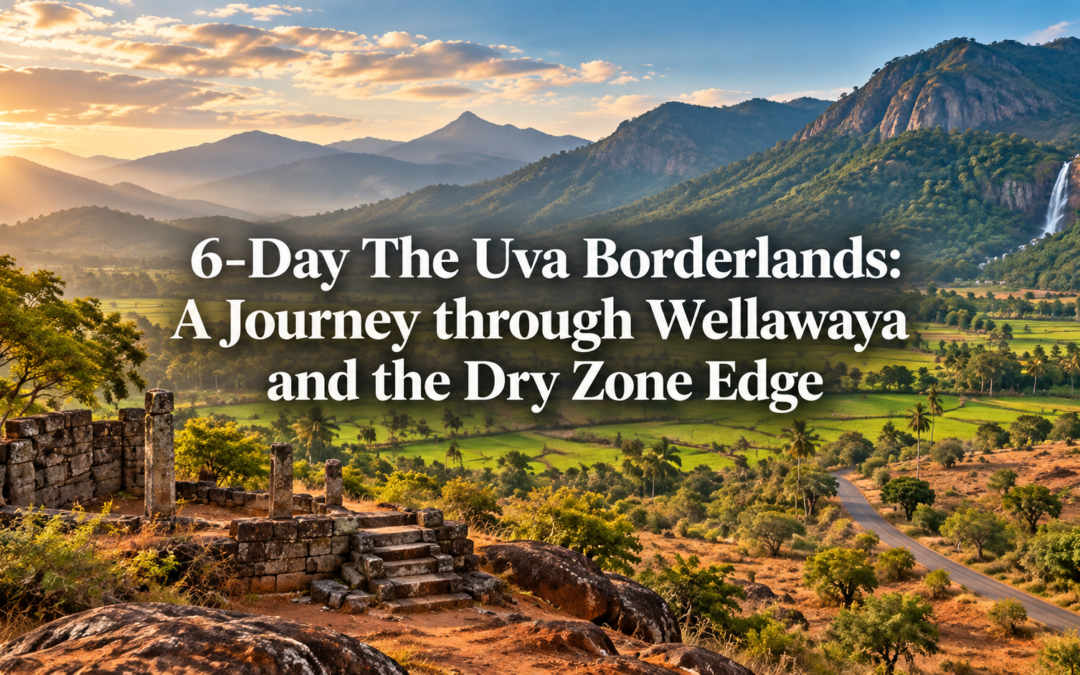
6-Day The Uva Borderlands: A Journey through Wellawaya and the Dry Zone Edge

6-Day The Uva Borderlands: A Journey through Wellawaya and the Dry Zone Edge

Ella gets the crowds. Rightly so — the view from Little Adam’s Peak on a clear morning is as good as anything the hill country offers, and the Nine Arches Bridge has earned its place on every travel list that mentions Sri Lanka. But the land that falls away from the southern escarpment beyond Ella, dropping through the Ella Gap into the dry zone border town of Wellawaya, is a different proposition entirely. Almost nobody stops there. The buses pass through it on the way to somewhere more legible on the map, and the passengers look out the window at the landscape changing and do not think to get off.

That landscape change is the point of this journey. Where the wet highlands meet the dry lowlands, where the mist-covered ridges give way to open scrub and the temperature rises ten degrees in twenty minutes of driving, where two completely different Sri Lankas share a border that is visible and dramatic in every direction. Six days in the Uva borderlands, moving between the escarpment and the plains, covers terrain that the standard itinerary leaves entirely blank.

Day 1 – The Descent Through the Ella Gap

Begin in Ella and leave slowly. The descent from the hill country through the Ella Gap is one of the great drives of Sri Lanka, a series of switchbacks that drop through the southern escarpment with views that open and close as the road curves, the dry zone plains visible in the distance below and the mist of the highlands still visible in the rearview mirror. Take it at whatever pace the road allows and stop when something demands it.

Before leaving Ella, breakfast at Curd Shop Ella on the main road, a small, no-frills establishment that serves buffalo curd with treacle from a clay pot and a short eats selection that changes daily. It opens at seven and is busy by eight. The curd here is made locally and tastes different from the commercial versions available in Colombo, which is the only recommendation it needs.

The road through the Ella Gap passes the Ravana Falls about four kilometres below the town, a wide cascade that drops directly onto the road from the cliff face above. It is crowded by mid-morning with day-trippers from Ella, which is reason enough to pass through early. The falls at seven in the morning, with the mist still in the gorge and almost nobody else present, are a different experience from the same falls at noon.

The descent ends at Wellawaya, a small dry zone border town about thirty kilometres from Ella that announces the change in landscape with complete immediacy. The air is warmer. The vegetation is sparser. The red laterite soil appears at the road edge where the tarmac has crumbled. Everything about the place signals that you have crossed a threshold.

For accommodation in Wellawaya, Wellawaya Inn on the main road is a clean, reliable budget option with simple rooms and a kitchen that opens early for travellers heading out to the morning sites. For mid-range comfort, Saffron Garden Wellawaya offers better rooms and a small garden setting that makes the heat more manageable in the evenings.

Day 2 – Buduruwagala and the Rock Giants

The Buduruwagala rock temple sits about five kilometres west of Wellawaya along a narrow road that passes through scrub forest and arrives at a granite face of considerable scale. Carved directly into the rock in the 9th century AD, seven colossal figures stand in a row across the cliff face, the largest a standing Buddha over fifteen metres tall, the others a series of Bodhisattva figures and consorts rendered in the Mahayana style that was briefly predominant in Sri Lanka during this period before Theravada reasserted itself.

The site opens at six in the morning and the entrance fee for foreign visitors is around five hundred rupees. Arrive at opening time. The figures in the early morning light, with the mist still in the surrounding forest and the red soil dark with overnight dew, have a quality that the same scene at midday, bleached white by the sun, does not replicate. The central Bodhisattva figure, whose right hand once held a flame-shaped object now lost, retains traces of original stucco on the surface that give the carving a depth the other figures have largely lost to weathering.

There are no cafes at Buduruwagala, which is appropriate. Bring water and eat when you return to Wellawaya. Hotel Sudu Araliya on the main street serves a good rice and curry lunch from eleven in the morning and is the correct place to decompress after a morning at the rock face.

Days 3 and 4 – Udawalawe and the Elephant Reservoir

Udawalawe National Park sits about forty kilometres west of Wellawaya along the southern edge of the Uva borderlands, its boundary formed in part by the vast Udawalawe Reservoir built in 1968 by damming the Walawe River. The reservoir displaced several villages and a significant area of elephant habitat, which is part of why the elephant population that subsequently concentrated in the remaining park land is among the densest in Asia. Udawalawe is not Yala. There are fewer leopards and considerably less competition for jeep space, and the elephant encounters here, with herds of thirty or forty animals moving across open grassland in the late afternoon, are among the most reliable on the island.

Take a jeep safari in the late afternoon on the first day, when the elephants move toward the reservoir for their evening drink and the light is at its most photogenic. The jeep operators at the park entrance charge around five thousand rupees for a three-hour trip, and the guides who work this park regularly have a detailed knowledge of individual elephant behaviour that significantly enriches the experience.

For accommodation near Udawalawe, Centauria Wild Hotel on the park boundary road offers comfortable mid-range rooms with good safari arrangements and a kitchen that serves a decent dinner after the evening drive. For a more atmospheric option, Kalu’s Hideaway a few kilometres from the park entrance combines simple but well-designed accommodation with a genuine commitment to the surrounding landscape. The birdlife around the property in the early morning is excellent even before you enter the park.

On the second day, visit the Elephant Transit Home adjacent to the park, where orphaned elephants are rehabilitated before release into the wild. Feeding times at nine in the morning, noon, and three in the afternoon are open to visitors and the sight of a dozen young elephants descending on a row of milk bottles with complete single-minded focus is one of the more unexpectedly moving wildlife experiences in Sri Lanka. Entrance is around one thousand rupees for foreign visitors.

For dinner on the second evening, Udawalawe Safari Camp Restaurant near the park entrance serves a reliable grilled fish and rice combination that the kitchen handles better than the more ambitious items on the menu. Cold Lion Lager is available and entirely warranted after a long day in the dry zone heat.

Day 5 – The Border Landscape and the Transition Zone

The landscape between Wellawaya and the Udawalawe reservoir represents the transition zone where the wet and dry zones meet, and spending a day moving slowly through it rather than driving directly between sites reveals details that the faster journey misses entirely.

The Diyaluma Falls, about twenty kilometres east of Wellawaya on the Haputale road, is the second highest waterfall in Sri Lanka at 220 metres and one of the most dramatic. The road climbs back into the escarpment zone to reach it, and the falls drop from the highland edge directly onto the dry zone plain below in a single unbroken column. The pool at the base is accessible by a thirty-minute walk through the surrounding scrub and is cold, clean, and usually uncrowded before nine in the morning.

The small town of Koslanda, between Wellawaya and Diyaluma, has a weekly market on Wednesday mornings that draws farmers from both the highland and lowland sides of the border. The produce reflects the transition zone honestly, highland vegetables and dry zone fruits sold alongside each other by people who live on different sides of the same escarpment. Stop for a glass of fresh king coconut from the vendors near the market entrance and spend an hour walking the stalls.

Day 6 – The Return Through the Hill Country

Use the final morning for the drive back up through the Ella Gap, which in the opposite direction, ascending from the plains into the highlands, has a completely different quality. The plains recede below you. The temperature drops. The mist comes back. The vegetation closes in on either side of the road and by the time you reach Ella the dry zone feels like a memory from a different country.

Stop at Dream Cafe in Ella for a late breakfast before the onward journey. It opens at eight and serves good eggs on toast alongside a Sri Lankan breakfast option that includes pol roti and seeni sambol. The view from the upper terrace across the Ella Gap, looking south toward the plains you have just spent six days exploring, is a quietly satisfying way to close a journey that was, throughout, about the edges of things and what happens at the border between one world and another.

Practical Notes

The best time for this route is between December and April when both the highland and dry zone sections are at their most accessible. The Udawalawe elephant population is present year-round but most active in the dry season between May and September when water sources concentrate the herds near the reservoir. Jeep hire at Udawalawe is best arranged the evening before through your accommodation. The road to Buduruwagala requires a vehicle with reasonable ground clearance in the wet season.

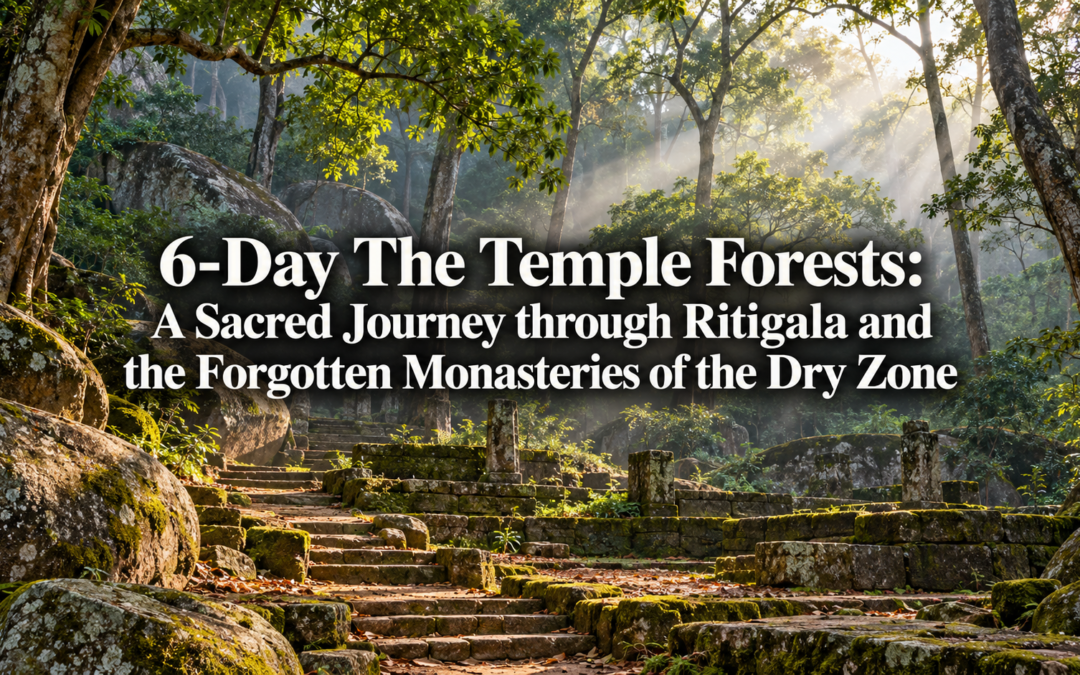
6-Day The Temple Forests: A Sacred Journey through Ritigala and the Forgotten Monasteries of the Dry Zone

6-Day The Temple Forests: A Sacred Journey through Ritigala and the Forgotten Monasteries of the Dry Zone

The dry zone interior between Anuradhapura and Polonnaruwa is most commonly experienced as a transit corridor, the road connecting two famous ancient cities passing through a landscape of scrub forest and tank villages that most travellers move through without stopping. Hidden within that corridor, and in the forested highlands rising from its edge, are some of the most important and least visited Buddhist monastic sites in Sri Lanka, forest hermitages and strict observance monasteries built by monks who specifically wanted distance from the world and achieved it so completely that the world largely forgot they were there.

This journey follows that sacred geography, moving through six days of forest monastery sites, cave hermitages, and tank village temples that together constitute a layer of Sri Lankan religious history as significant as anything in the cultural triangle and considerably less crowded than any of it.

Day 1 — Arriving at Ritigala

Ritigala is the starting point for this journey, both geographically and in terms of what it establishes about the tradition you are exploring. The forested highland of Ritigala rises unexpectedly from the surrounding dry zone plain, its extra elevation and the mist that collects around its slopes creating a microclimate distinctly different from the scrub and heat below, and it was precisely this difference that the monks who settled here in the early centuries of the common era were seeking.

The drive from Colombo to Ritigala takes around four hours, approaching from the south via Habarana. Arrive by early afternoon and check into your base accommodation before making a first reconnaissance visit to the forest boundary in the late afternoon when the temperature is beginning to ease. The forest at this hour, with the light filtering through the canopy at a low angle and the birds active in the upper branches, gives you an initial sense of what made this particular hill so consistently attractive to contemplative monks across seventeen centuries of occupation.

For accommodation, Cinnamon Lodge Habarana is the most comfortable mid-range option within reasonable distance, its well-designed property offering a good base for several days of early morning site visits. Habarana Village by Cinnamon provides a slightly more affordable alternative at the same standard of comfort. For budget travellers, Habarana Inn near the town junction offers clean basic rooms at around two thousand five hundred rupees per night, practical and well-positioned for the surrounding site circuit.

For dinner at Cinnamon Lodge, the buffet dinner draws on produce from the surrounding agricultural estates and the Sri Lankan sections of the menu are consistently better than the international alternatives. Eat outside if the tables are available, the evening air in the dry zone interior considerably more pleasant than the midday heat suggested was possible.

Day 2 — Deep into the Ritigala Monastery

Enter the Ritigala Strict Observance Monastery at opening time, ideally by six in the morning before the day’s heat makes the forest walk demanding. The site is accessible only on foot through the surrounding forest, the path climbing gradually to the monastery complex through mature dry zone woodland that has been allowed to grow undisturbed for centuries around the ruins it contains.

The monastery belongs to the pamsukulika tradition of Buddhist monasticism, a particularly austere strand of practice that required monks to wear only robes made from charnel ground cloth and to live in the most minimal conditions possible. The architecture reflects this austerity completely, stone platforms and pathways raised above the forest floor for walking meditation, double platforms at each end for seated practice facing a fellow monk, no decorative carving, no image houses, no concession to the aesthetic elaboration that characterises most Buddhist religious architecture in Sri Lanka.

A guide from the Department of Archaeology, available at the site entrance at around one thousand rupees, makes the difference between a meaningful visit and a puzzling walk through stone-covered forest. The guide’s knowledge of which platform served which function, the relationship between the water management infrastructure and the meditative practice it supported, and the historical context of the pamsukulika tradition within the broader development of Sri Lankan Buddhism, transforms the ruins from impressive to genuinely instructive.

The Ritigala forest itself is a nature reserve of considerable ecological significance, its extra altitude and moisture supporting plant species not found in the surrounding dry zone. The walk through it to reach the monastery is worth taking slowly rather than treating as mere access, the forest pressing in on either side with a density and variety that the scrub below the hill cannot match.

For lunch on the return, the small restaurants in Habarana town serve a reliable rice and curry from eleven in the morning. Hotel Gimanhala near the junction has a kitchen that handles the freshwater fish preparation particularly well, the tank fish curry here using species from the surrounding irrigation system that have a lighter, cleaner flavour than anything from the coastal catch.

Day 3 — The Cave Hermitage Circuit

The scrub forest between Ritigala and Polonnaruwa contains numerous small cave hermitage sites, natural granite shelters modified for monastic use in the early centuries of Sri Lankan Buddhism and subsequently occupied and abandoned repeatedly as political circumstances changed. Most receive no visitors and have no official access arrangements, reached by rough tracks through the forest and known primarily to the surrounding village communities and the occasional archaeologist.

Arrange a full day’s exploration of two or three of the most accessible cave sites through a local guide familiar with the terrain, available through your Habarana accommodation at around two thousand rupees for the day. The guide’s knowledge of which sites are worth visiting and how to reach them efficiently makes the difference between a productive day and a frustrating one in forest that looks similar in every direction and is considerably less navigable than it initially appears.

The caves themselves vary considerably in character, some consisting of little more than a modified rock overhang with a drip ledge cut above the entrance, the minimal intervention of a community that valued simplicity as a spiritual principle. Others show more elaborate modification, the living platform carved from the rock floor and the surrounding area cleared and levelled for a small community rather than a single monk. All of them carry the particular atmosphere of places that were chosen specifically for their isolation and that have maintained that isolation across many centuries of subsequent history.

For dinner, return to Habarana and eat at Hotel Acme on Colombo Road, where a good devilled cuttlefish and freshly made pol roti in the evenings represent the reliable local standard that the surrounding community relies on without fanfare.

Day 4 — The Medirigiriya Vatadage

The Medirigiriya Vatadage sits on a low rocky hill about sixty kilometres from Habarana, surrounded by a landscape of tank and paddy field that has remained essentially unchanged in its agricultural geometry since the monument was built in the seventh century AD. The vatadage, a circular relic house with concentric rings of stone pillars still standing around the central dagoba, is one of the finest examples of its architectural type in Sri Lanka and one of the most accessible in terms of the quality of the ruins, the pillars upright and largely complete in a way that the similar structure at Polonnaruwa, better known and more visited, cannot quite claim.

Arrive early. The monument in the morning light, with the surrounding tank visible below the hill and the birds active in the vegetation at the water’s edge, has a quality that the midday visit entirely lacks. The entrance fee is modest and the site is rarely crowded, giving the ruins a silence and a physical accessibility that the more famous monuments of the cultural triangle, surrounded by their guided tour groups, have largely lost.

Spend a full two hours at the vatadage, walking the concentric pillar rings slowly and observing the detail of the stone carving on the entrance platforms, before descending to the tank below for a second perspective on the hill and its monument from the water’s edge. The view from the tank bund, looking up at the vatadage against the sky with the surrounding forest pressing in on either side, is considerably more affecting than the view from within the site itself.

For lunch near Medirigiriya, the small restaurants in the nearby town of Hingurakgoda serve a straightforward rice and curry at around three hundred rupees, the kitchen rotating its accompaniments with the day’s market supply.

Day 5 — The Tank Village Temples

The tank villages between Habarana and the Polonnaruwa boundary maintain a religious life organised around the village temple in a way that has not changed significantly in its essentials for several centuries. These temples are working institutions rather than heritage sites, their upkeep the responsibility of the surrounding farming community, their festivals organised around the agricultural calendar, and their welcome to respectful visitors genuine rather than commercially motivated.

Spend the day driving the back roads of the tank village circuit, stopping at temples as you encounter them and spending enough time at each to move beyond a superficial impression. The painted interiors of these smaller village temples have a directness and an emotional immediacy that the more elaborate decorative programmes of the major royal temples sometimes sacrifice in favour of technical refinement. These are images painted for a community that knew the stories already, and the familiarity embedded in that relationship gives the work a quality that formal religious art rarely achieves.

The Kaludiya Pokuna forest monastery, accessible from the Habarana area and briefly encountered in the Mihintale chapter but deserving of its own full morning here, sits in scrub forest above a small natural tank with a meditative atmosphere that the tank and the surrounding trees amplify without needing any additional architectural assistance. The resident monk, if present, is usually willing to sit and talk with visitors who show genuine interest in the forest monastery tradition rather than simply wanting a photograph.

For dinner on this final full day at Habarana, Cinnamon Lodge restaurant is worth returning to for the set dinner, which changes daily and handles the Sri Lankan menu considerably better than the international alternatives. Eating on the outdoor terrace as the dry zone evening settles around the property, the day’s temple circuit complete and the sounds of the surrounding forest beginning to replace the daytime bird calls, is a quietly satisfying close to a journey that has been, throughout, about the places that chose to disappear and the things they left behind.

Day 6 — The Return

Drive back toward Colombo via Dambulla, stopping at the cave temples there not as an obligatory tourist tick but as a final encounter with the devotional tradition you have spent five days exploring in its more remote and less curated forms. The Dambulla caves in this context, understood now as the royal elaboration of a monastic tradition that produced the Ritigala hermitage and the Medirigiriya vatadage and the cave sites of the forest circuit, carry a different significance from the impression they make on a visitor encountering them in isolation.

Allow two hours at Dambulla before the drive south, the expressway carrying you back to Colombo in around three hours from the junction, the dry zone receding behind the road and the scrub forest closing over the monastery sites and the cave hermitages as though the past six days happened in a landscape that prefers, as it always has, to be left largely to itself.

Practical notes: This route is best undertaken between December and April when the dry zone tracks are most accessible and the forest walks are at their most comfortable in the cooler morning hours. The Ritigala site requires booking an archaeological guide in advance through the Central Cultural Fund where possible, though guides are usually available at the entrance on the day. The cave hermitage circuit requires a local guide and should not be attempted without one. Carry cash throughout, as ATM access outside Habarana town is limited.

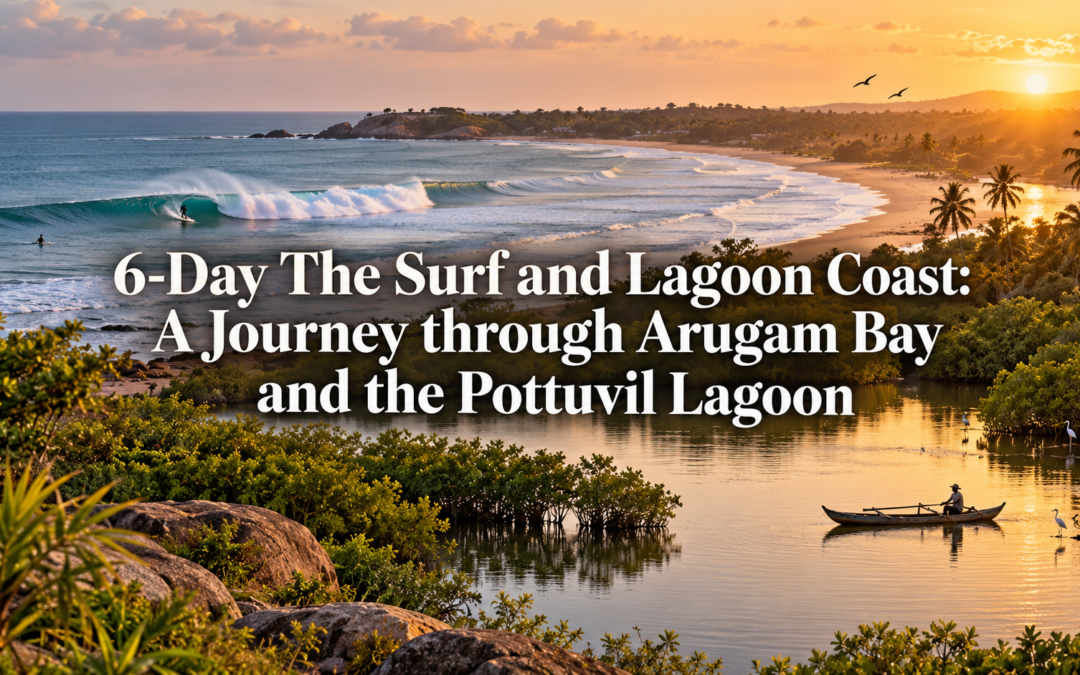
6-Day Surf and Lagoon Coast: A Journey through Arugam Bay and the Pottuvil Lagoon

6-Day Surf and Lagoon Coast: A Journey through Arugam Bay and the Pottuvil Lagoon

The first thing you notice about Arugam Bay is the light. It arrives differently on the east coast, harder and more direct than the diffused coastal light of the south and west, and in the early morning it turns the sea a shade of pale gold that makes the handful of surfers already in the water look like they are moving through something precious. By seven in the morning the point break at the southern end of the bay is working, the sets coming through with the regularity that has made this stretch of coast one of the finest right-hand surf breaks in Asia and one of the fastest-growing surf destinations on the continent.

Arugam Bay is no longer undiscovered. Lonely Planet named it among the best places to travel in recent years, and the boutique eco-lodges, surf schools, and digital nomad cafes that have appeared along the beach road in the past five years reflect a destination that has found its international audience. But the wider landscape surrounding the bay, the vast Pottuvil Lagoon behind the beach, the elephant corridor stretching south toward Kumana, and the ancient temple sitting directly on the shoreline a short walk from the surf strip, remains largely unexplored by the visitors who come here for the waves. That is the part of this journey worth understanding.

Day 1 – Arriving in Arugam Bay

The drive from Colombo to Arugam Bay takes around seven hours via the expressway and the Monaragala road, the landscape shifting dramatically from the wet zone lowlands through the dry zone interior before the flat coastal plain of the east appears and the bay itself comes into view around a final curve in the road. Arrive in the late afternoon when the light is at its best and the surf community is gathering at the point for the evening session.

The beach road is compact and walkable, the guesthouses and cafes arranged along a single strip that runs parallel to the shore. For accommodation, Stardust Hotel is the most established mid-range property in the bay, with comfortable beach-facing rooms, a reliable kitchen, and a surf school that has been operating here long enough to know the break thoroughly. The breakfast at Stardust, served on the beach terrace from seven in the morning, includes a good egg roti and fresh fruit that sets the day up correctly. For budget travellers, Mambo’s on the main strip offers clean, simple rooms at around two thousand five hundred rupees per night and a social atmosphere that suits solo travellers particularly well.

For dinner on the first evening, Gecko Restaurant on the beach road serves a wood-fired pizza that has developed a loyal following among the bay’s long-stay visitors, alongside a fresh tuna preparation that reflects the quality of what the local boats bring in daily. Eat outside if the tables are available. The evening air in Arugam Bay, warm and carrying a faint salt smell from the sea, is the correct accompaniment to a first dinner on the east coast.

Day 2 – The Point Break and the Southern Beaches

The surf season at Arugam Bay runs from April through October, when the south-west monsoon generates the consistent swell that drives the point break at its best. Outside of peak season the waves are smaller and more forgiving, which makes the bay an excellent learning environment for beginners. Arugam Bay Surf School on the main strip charges around three thousand five hundred rupees for a two-hour beginner lesson including board and instruction, and the instructors who work here have the patience that comes from years of teaching people who have never stood on a board in their lives.

Even if surfing is not the reason you came, spend a morning watching the point break from the southern headland. The break here produces long, fast walls that experienced surfers ride for considerable distances, and the spectacle of a good set coming through, the wave standing up and the surfers dropping in one after another, is genuinely compelling viewing from the rocks above.

The beaches south of the point, accessible by tuk-tuk for about three hundred rupees, are considerably less visited than the main bay and have a different, quieter character. Elephant Rock and Whisky Point, both within a few kilometres of the main beach, offer their own breaks and their own small communities of surfers. The sea at Whisky Point on a calm morning is clear enough to snorkel without a guide, and the coral formations close to the headland support a good fish population.

For lunch, Hideaway Restaurant near Whisky Point serves a simple grilled fish with rice and coconut sambol that the kitchen makes well and prices honestly at around six hundred rupees. Eat on the terrace above the water.

Day 3 – The Pottuvil Lagoon

The Pottuvil Lagoon, stretching behind the bay for several kilometres, is one of the most significant wetland ecosystems on the east coast and one of the least explored by visitors to Arugam Bay. The shallow, mangrove-edged water supports large populations of wading and water birds alongside the crocodile population that has occupied the inner channels for as long as anyone in the surrounding villages can remember.

Arrange a morning boat trip through one of the operators at the lagoon jetty in Pottuvil town, about three kilometres north of the bay. The better operators charge around one thousand five hundred rupees for a two-hour trip through the main channel system and the mangrove inlets, and the experience of moving quietly through the inner channels in the early morning, with the mist still on the water and the birds active in the vegetation on both sides, is entirely different from anything the beach strip offers. Purple herons stand in the shallows with complete stillness. Kingfishers cut low across the water ahead of the boat. The occasional crocodile, usually visible only as a shape at the waterline, slides silently below the surface as the boat approaches.

For a mid-morning break after the lagoon, Green Rooms cafe on the Pottuvil road serves a good ginger tea and a coconut cake that has become something of a local institution among the bay’s regular visitors. It opens from eight in the morning and the shaded outdoor seating makes it a practical stop in the late morning heat.

Day 4 – Muhudu Maha Viharaya and the Elephant Corridor

The Muhudu Maha Viharaya, a Buddhist temple believed to date from the 2nd century BC, sits directly on the beach about two kilometres south of the main bay, its white dagoba visible from the water and its setting on the shoreline unlike any other sacred site on the east coast. The temple is believed to mark the landing point of Princess Viharamahadevi, who was cast out to sea by her father and arrived on this shore, later becoming the mother of King Dutugamunu. Whether or not the history is precisely as stated, the site has a genuine antiquity and a setting that is quietly extraordinary. The sound of the sea on the beach immediately below the temple wall, combined with the smell of incense and the view north along the coast, makes for an atmosphere that is unlike anything in the more accessible and more visited sacred sites of the south and west.

The elephant corridor that runs between Arugam Bay and Kumana National Park to the south brings elephants through the scrub forest adjacent to the beach road in the early morning and evening hours. A tuk-tuk driver who knows the corridor well can take you along the southern road at dusk for around five hundred rupees, and elephant sightings on this stretch are common enough that the local drivers treat them as a reliable feature of the evening rather than a lucky exception.

For dinner on this day, Spice Trail Restaurant near the main junction in Arugam Bay serves a Sri Lankan rice and curry that draws the local community alongside visitors, which is always the correct indicator. The devilled prawn here, made with the small sweet prawns from the surrounding waters, is the dish to order.

Day 5 – Kumana and the Bird Sanctuary

Kumana National Park, about forty kilometres south of Arugam Bay along a road that passes through coastal scrub and small fishing settlements, is one of the most significant bird sanctuaries in Asia and one of the least visited parks in Sri Lanka. The Kumana Villu, a shallow coastal wetland at the park’s centre, supports one of the largest concentrations of nesting waterbirds on the island during the April to July season, the painted storks and night herons and spoonbills present in numbers that fill the air above the villu with wings from before sunrise until after dark.

Arrange a jeep from Arugam Bay the evening before through your accommodation. The drive to the park takes about an hour and the entrance procedures at the Okanda gate are straightforward. A morning in the park, moving between the villu and the coastal scrub, is enough to understand why the site is considered one of the finest birding destinations in South Asia. The elephant population is substantial and the late afternoon game drive back toward the coast reliably produces sightings.

For the overnight before the Kumana drive, staying at Kumana Village Resort near the park boundary rather than driving from Arugam Bay is worth considering. It is a simple, well-run property with good food and staff who can arrange the park entry and guide logistics more efficiently than the operators further north.

Day 6 – The Last Morning and the Long Drive

Use the final morning for the thing that Arugam Bay does best and that is worth doing once more before you leave. Wake at five thirty. Walk to the point. Watch the first sets come through in the early light with a cup of tea from the small stall that opens before the surf school and before the guesthouses and before almost everything else in the bay. The tea is plain and hot and costs fifty rupees and is served in a small glass by a man who has been doing this every morning for years.

The drive back to Colombo from Arugam Bay is long, around seven hours, and is best started by eight in the morning to arrive before the evening traffic builds around the city. The road through Monaragala and the dry zone interior is fast and uncomplicated, the landscape outside the window shifting from the flat coastal plain through the agricultural dry zone and then into the foothills before the expressway takes over and the city begins to assemble itself around the road.

Practical Notes

The surf season runs from April to October with June, July, and August producing the most consistent and powerful conditions. The bird nesting season at Kumana peaks between April and July. Outside of these months the bay is quieter, the waves smaller, and the accommodation prices lower by around thirty percent. Tuk-tuks within Arugam Bay charge around two hundred to three hundred rupees for short journeys. A tuk-tuk to Pottuvil town costs about three hundred rupees. Book accommodation at least two weeks in advance for the June to August peak season.

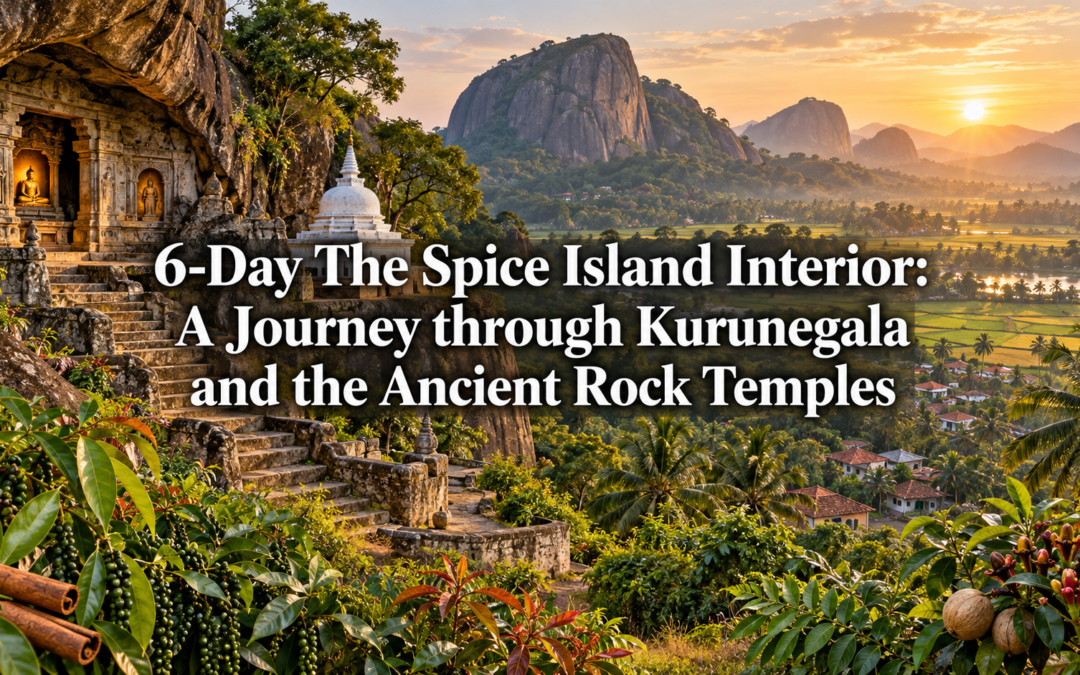
6-Day The Spice Island Interior: A Journey through Kurunegala and the Ancient Rock Temples

6-Day The Spice Island Interior: A Journey through Kurunegala and the Ancient Rock Temples

The cultural triangle of Sri Lanka, that well-mapped triangle of Anuradhapura, Polonnaruwa, and Kandy, absorbs the vast majority of visitors who come looking for the island’s ancient history. It deserves that attention. But there is a parallel history, quieter and less organised for consumption, sitting in the landscape of the North Western Province just beyond the cultural triangle’s western edge. Rock temples that rival Dambulla in atmosphere. A royal capital whose ruins sit beneath a working town without fanfare. Forest monasteries built by monks who wanted distance from the world and achieved it so completely that the world largely forgot they were there.

Kurunegala and the ancient sites around it offer six days of cultural travel that covers terrain most itineraries never reach. The crowds are absent. The entrance queues do not exist. What is there instead is the particular quality of a historical landscape that has not yet been curated into a product, where the ruins sit in their original relationship with the surrounding villages and the monks who maintain the temples do so because it is their vocation rather than their tourism role.

Day 1 – Kurunegala and the Rock Above the Town

Kurunegala sits about ninety kilometres north of Colombo, close enough for a comfortable morning drive, far enough that the city feels genuinely left behind by the time you arrive. The town is the administrative capital of the North Western Province and a busy commercial centre, its streets full of the ordinary business of a mid-sized Sri Lankan town. But above it, rising from the flat plain with an abruptness that the eye keeps returning to, is the Ethagala Rock, a massive granite outcrop crowned with a large Buddha statue that is visible from most of the town and from the road for several kilometres in every direction.

Climb the rock in the late afternoon when the heat has eased. The path is well-maintained and takes about twenty minutes. From the top, the surrounding plain spreads out in every direction, the tank system that still irrigates the agricultural land around the town visible as a series of glinting surfaces in the evening light. The ancient name of Kurunegala was Hastisaila, the elephant rock, and the granite formations around the town base do bear a passing resemblance to various animals if you approach them with sufficient goodwill.

The town was a royal capital of the Kurunegala Kingdom in the late 13th and early 14th centuries, and the ruins of that period, though not extensively excavated, sit in and around the modern town in a state of comfortable integration with daily life. The old tank, the Kurunegala Wewa, still irrigates the surrounding fields and still reflects the rock above it in the early morning, as it has done for seven hundred years.

For accommodation, Kurunegala Rest House is a government-run property with a good location near the tank and basic but clean rooms at budget prices. For mid-range comfort, Rohansha Hotel in the town centre is reliable and well-positioned for exploring the surrounding sites.

Days 2 and 3 – Ridi Vihara and the Silver Temple

The Ridi Vihara, about thirty kilometres south-west of Kurunegala, is one of those temple complexes that rewards the traveller who arrives without expectation and leaves without hurrying. Its name means Silver Temple, a reference to the silver ore discovered on the site during the reign of King Dutugamunu in the 2nd century BC, ore that was used to fund the construction of the Ruvanvelisaya Dagoba in Anuradhapura. The site has been continuously occupied and expanded ever since, the result being a layered complex of caves, image houses, and courtyards that spans more than two thousand years of Sri Lankan religious art.

The lower cave temple contains some of the finest Dutch-period decorative tiles in Sri Lanka, blue and white Delft tiles brought as offerings by the Dutch East India Company in the 17th century and set into the interior walls with a pragmatic generosity that somehow works perfectly alongside the older Sri Lankan painting tradition surrounding them. The recumbent Buddha in the main cave is a large and beautiful figure, and the painting behind it, depicting scenes from the life of the Buddha in the Kandyan style, is well-preserved and worth extended attention.

The upper temple complex, reached by a steep path above the main cave, contains older structures and a more austere atmosphere. The views from up here across the surrounding agricultural landscape, low hills covered in rubber and coconut with the occasional tank reflecting the sky, have the quality of a landscape that has not changed significantly in its essentials for several centuries.

On the second day, move to the nearby village tank circuit. The agricultural landscape around Ridi Vihara is threaded with small irrigation tanks and the paddy fields they serve, and driving the back roads between them in the early morning, when the mist is still in the low ground and the egrets are feeding in the shallows, is one of those experiences that requires no particular destination to justify it.

For accommodation near Ridi Vihara, small guesthouses in the village of Ridigama offer basic rooms and home cooking. The Kandy House, about an hour’s drive toward Kandy, provides a more luxurious option for travellers who want a heritage property as a base for day trips.

Day 4 – Arankele and the Forest Monastery

The Arankele forest hermitage sits in the jungle north of Kurunegala, at the end of a road that narrows steadily as it approaches the site and arrives finally at a clearing where the forest takes over completely. It was established in the 6th century AD as a monastery for monks following the forest-dwelling tradition of Theravada Buddhism, a tradition that prioritised meditation and withdrawal over the communal life of the larger temple complexes.

The ruins at Arankele are not ruins in the conventional sense. They are the remains of a community that organised itself around the practice of meditation in the most literal way possible. The meditation platforms, long stone pathways raised slightly above the forest floor and running in straight lines between the trees, were designed for walking meditation, the monk moving back and forth along the path for hours at a time. The double platforms at the ends of some pathways are where monks sat facing each other for communal practice. The stone toilet facilities are precisely where you would expect them to be if you were designing a community around the elimination of distraction.

What makes Arankele extraordinary is the degree to which the forest has been allowed to continue its relationship with the ruins. Trees grow through the meditation platforms. Roots have lifted and cracked the stone pathways. The jungle presses in on every side with a gentle and persistent insistence that will eventually, over centuries, reclaim the site entirely. Walking through it on a quiet morning, with the sound of the forest and the occasional distant bell from a monk’s quarters somewhere deeper in the trees, is one of the more genuinely meditative experiences available to the non-meditating traveller in Sri Lanka.

Day 5 – The Village Temples and the Agricultural Interior

The North Western Province interior between Kurunegala and the coast is one of the least visited landscapes in Sri Lanka and one of the most honest. The villages here are agricultural communities organised around their tanks and their temple, following a seasonal rhythm that has not changed significantly in its essentials for centuries. The temples in these villages are not tourist sites. They are working religious institutions, maintained by the community and used daily, and the welcome they extend to respectful visitors is genuine rather than commercial.

Spend the day driving the interior roads between Kurunegala and Maho, stopping at village temples as you encounter them. The painted interiors of the smaller village temples are often more immediate and more emotionally direct than the refined artistry of the larger royal complexes. The artists who worked in these temples were painting for their own communities, telling stories that everyone in the village already knew, and the familiarity of that relationship gives the work a quality that formal religious art sometimes lacks.

The Tantrimale ancient site, near Nochchiyagama north of Kurunegala, is worth including on this day if your routing allows. An ancient rock temple with a large natural Buddha image carved into the granite face, it sits in a landscape that feels genuinely remote despite being relatively accessible, and the walk through the surrounding scrub forest to reach the main image has a quality of approach that the more accessible sites cannot replicate.

Day 6 – The Return Through the Coconut Triangle

The drive back to Colombo from Kurunegala passes through the coconut triangle, the broad swathe of North Western Province lowlands where coconut cultivation has dominated the landscape and the economy for over a century. The estates here are large and old, the trees tall and widely spaced, the ground beneath them kept clear in the traditional manner.

Stop at Dambadeniya on the way south, a small town that was briefly the royal capital of Sri Lanka in the 13th century when the Polonnaruwa kingdom collapsed under South Indian invasion. The ruins of the Dambadeniya palace complex and the Vijayasundarama temple, which once housed the Tooth Relic during the capital’s period of significance, sit above the town on a rocky hill with views across the coconut estates in every direction. The site receives very few visitors and the caretaker, if present, will usually offer an informal tour of considerable depth and enthusiasm.

The final stretch into Colombo from the north passes through Negombo and the coastal plain, the city appearing gradually through the suburban sprawl that extends further from the centre each year. After six days in the quiet interior, the re-entry into the capital has the quality it always has after a good journey. The city feels both familiar and slightly strange, and the strangeness is the measure of how far you actually went.

Where to Stay

In Kurunegala, Kurunegala Rest House handles budget accommodation well with good tank views, while Rohansha Hotel is the reliable mid-range choice. Near Ridi Vihara, village guesthouses in Ridigama offer basic and genuine accommodation, with The Kandy House providing a more luxurious heritage option within day-trip distance. For travellers who prefer a single comfortable base throughout, Kurunegala is centrally positioned for all sites on this route and the daily drives are manageable.