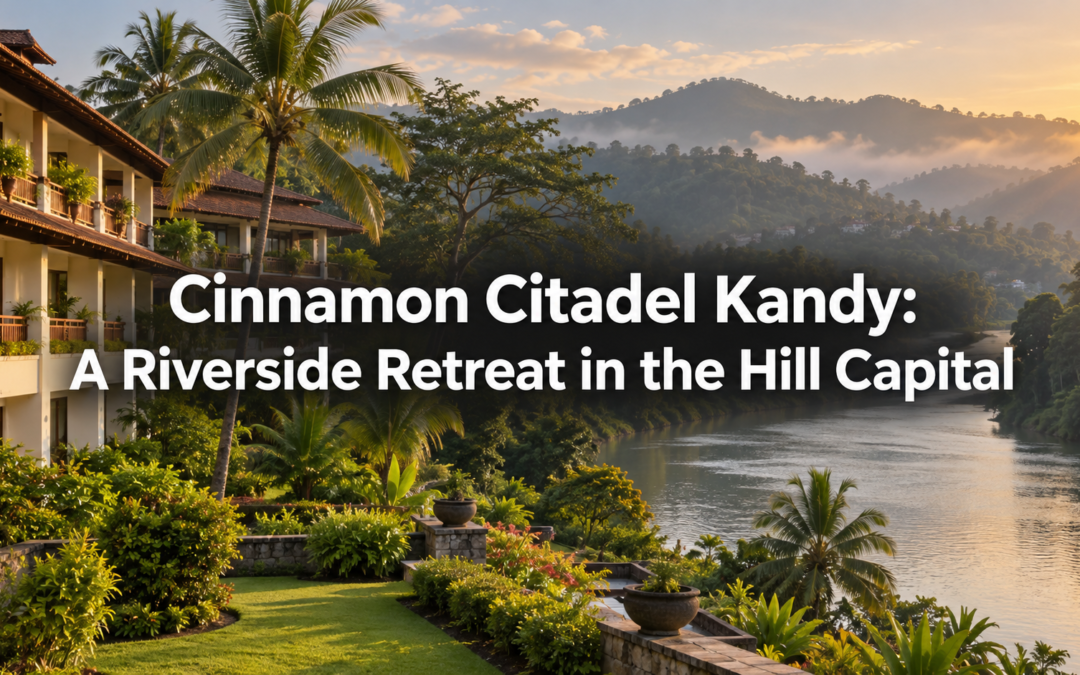
Cinnamon Citadel Kandy: A Riverside Retreat in the Hill Capital

Cinnamon Citadel Kandy: A Riverside Retreat in the Hill Capital

The Mahaweli River doesn’t rush through Kandy the way rivers often do elsewhere. Here it moves slowly, folding round the hills in wide, unhurried bends, mist clinging to its surface in the early morning before the sun burns it off. Cinnamon Citadel Kandy sits right along one of those bends, low against the water, its terraces angled to catch the river light rather than compete with it. You feel the pace of the place before you’ve even checked in. Everything here seems to take its cue from the water outside.

Getting to the hotel from Katunayake Airport takes a bit of planning, since Kandy sits well inland in the island’s hill country. A private car or arranged driver is the simplest option, generally taking around three hours depending on traffic through Colombo, and it means you can stop along the way if something catches your eye. The train is the more scenic route, usually involving a change in Colombo, with the final stretch climbing gently through tea country before Kandy reveals itself. Buses cover the same ground too, a bit slower and less comfortable, but a perfectly workable option if you don’t mind the winding roads. However you arrive, the hotel’s riverside setting feels like a proper exhale after the journey.

The rooms lean into that setting rather than distracting from it. Superior rooms open onto garden views with private balconies or terraces, ideal if you’d rather wake to birdsong and greenery than city noise. If you can, ask for one of the river view rooms. Watching the Mahaweli change colour through the day, silver at dawn, green through the afternoon, gold as the light drops, is reason enough to linger indoors longer than planned. The suites go a step further again, with more generous space, a bathtub, and the kind of quiet privacy that suits a special occasion or a longer stay in the hills.

Meals here are spread across a few distinct settings rather than a single dining room, which keeps things interesting over a multi-night stay. Chutneys serves up a broad spread of Sri Lankan and international dishes, the kind of buffet spread that seems to shift daily depending on what’s fresh. Panorama, true to its name, leans into the river views for a more relaxed setting, while the Lounge Bar is where I found myself most evenings, nursing a drink as the light softened over the water. For something a little different, the hotel also arranges destination dining experiences elsewhere on the grounds, worth asking about if you fancy a change of scene for an evening.

There’s a genuine sense of things to do here beyond simply admiring the view, which I hadn’t quite expected from a hotel that markets itself on stillness. A boat ride along the Mahaweli is easily arranged through the hotel, gliding past riverside villages and keeping an eye out for water monitor lizards and the occasional flash of a kingfisher. Tea plantation visits are within easy reach too, giving you a proper look at how the leaves in your morning cup actually get there. On the grounds themselves, there’s an outdoor pool that looks straight out over the river and hills, a genuine highlight if you catch it in the late afternoon light, along with a sauna and fitness facilities for those who want to keep some structure to their days.

The hotel’s location makes it a natural base for exploring the rest of Kandy too. The Temple of the Sacred Tooth Relic is a short drive away, and the hotel can help arrange a proper city tour taking in the Royal Palace complex and Kandy Lake along the way. The Peradeniya Botanical Gardens, with their sprawling collection of orchids and towering bamboo groves, make for an easy half day trip. If you’re feeling more adventurous, the Udawattakele Forest Reserve offers a genuine trek through dense woodland dotted with hidden temples, all within striking distance of the hotel.

What struck me most, though, was how the hotel itself never felt like it was trying too hard. There’s no forced grandeur here, no oversized lobby demanding attention. Instead there’s Dumbara weaving on display, hand carved details worked quietly into the architecture, and staff who seem to genuinely know the surrounding hills rather than reciting a script. When I mentioned wanting to see the Knuckles Mountains, someone at reception talked me through a scenic route without missing a beat, clearly speaking from personal experience rather than a laminated card.

Evenings here have their own particular rhythm. As the light drops, the pool takes on a blue that seems to deepen the darkening hills around it, and the terrace by the Lounge Bar fills slowly with the low hum of conversation rather than music. I spent one evening watching what I was fairly sure was the resident peacock strutting along a rooftop in the last of the light, entirely unbothered by the guests below. It felt like a small, unscripted moment that summed the place up rather well.

If your stay coincides with a wedding or event on the property, don’t be surprised to find the grounds transformed for the occasion. The hotel handles weddings and larger gatherings with real care, using the riverside setting and outdoor spaces to properly striking effect, and even as a passing guest it’s worth a wander past if you spot the preparations underway.

For something a little unusual, ask the front desk about the craftsman tour out to Udunuvara, a short drive from the hotel. It’s a step away from the usual sightseeing circuit, taking you to meet one of the last remaining masters of a rare, centuries-old tradition of shaping and polishing quartz lenses entirely by hand. It’s slow, deliberate work to watch, and a reminder that Kandy’s heritage runs well beyond its temples and palaces. If you fancy something a little more active instead, the hotel also offers air rifle shooting on the grounds, a pleasant surprise for an afternoon and a nice change of pace from lounging by the pool.

Breakfast deserves its own mention. Taken on the terrace overlooking the river, with hills still wrapped in morning mist and the occasional flash of a peacock crossing the lawn below, it’s easily one of the most memorable parts of any stay here. The spread leans generously toward Sri Lankan favourites, string hoppers, kiri hodi, and proper sambols alongside the usual international staples, giving you a genuine taste of the region before a day of sightseeing.

Cinnamon Citadel Kandy makes a genuinely restful base for exploring the hill capital, close enough to the city’s landmarks to make sightseeing easy, but set apart just enough on the riverbank to feel like a proper retreat at the end of each day. You can find more on their official website, or follow along on 

Instagram and Facebook for a steady stream of misty river mornings and reminders of just how lovely this stretch of the Mahaweli really is.
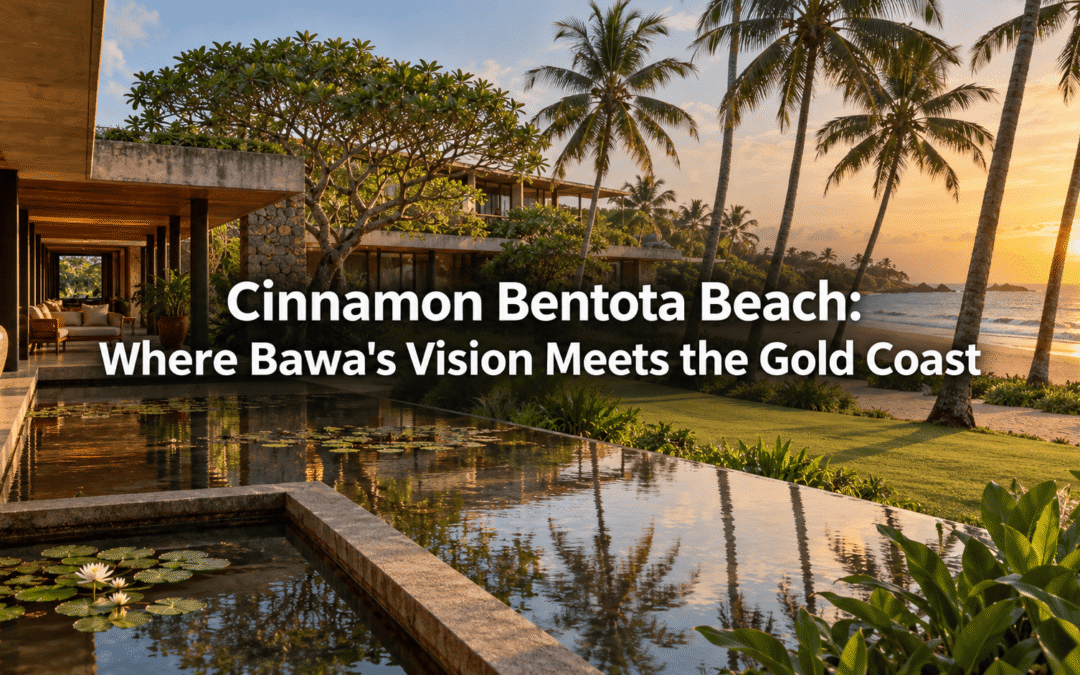
Cinnamon Bentota Beach: Where Bawa’s Vision Meets the Gold Coast

Cinnamon Bentota Beach: Where Bawa’s Vision Meets the Gold Coast

The lobby at Cinnamon Bentota Beach doesn’t so much welcome you as slow you down. You walk in from the heat and the glare of the driveway and suddenly you’re standing beneath a vast ceiling of hand dyed batik panels, indigo and ochre and rust swirling overhead in patterns that took months to make, and the whole space seems to exhale around you. Beyond it, framed like a painting through the open far wall, the Indian Ocean is doing exactly what you hoped it would be doing. I stood there for a good minute before anyone even asked for my name.

This is a resort with proper architectural pedigree, and it shows the moment you start paying attention to the details rather than just the view. The original hotel was designed by Geoffrey Bawa in the late 1960s, back when Bentota was being shaped into Sri Lanka’s first purpose built holiday coast, and Bawa’s tropical modernist instincts are still very much present in the bones of the place even after a substantial rebuild completed under the direction of Channa Daswatte. Courtyards open into more courtyards. Water finds its way into corridors where you don’t expect it. Corners keep revealing themselves rather than announcing what’s coming, and there’s a restraint to the whole layout that feels rare in beach resorts of this scale, where the instinct is so often to go bigger and louder rather than quieter and more considered.

The batik ceiling in the lobby, incidentally, is a story worth knowing before you walk under it. The original was created by Ena de Silva in 1967, and when the hotel was reimagined decades later, the same craft tradition was called on to recreate it, this time under the guidance of the Aluvihare Heritage Centre working from Ena de Silva and Anil Gamini Jayasuriya’s original design. It’s the kind of detail that could easily go unnoticed if a member of staff didn’t happen to mention it over breakfast, so ask. Sri Lankan hospitality tends to come with these small offerings of history if you give people the opening.

Where the resort really commits to its sense of place is in the suites, several of which lean into specific strands of Sri Lankan craft and heritage rather than generic luxury shorthand. The Kurundu Suite takes its name from the Sinhala word for cinnamon, with cinnamon quills woven through the fabric by local artist Marie Gnanaraj and prints referencing the spice trade that first drew Portuguese traders to this coast in 1518. Down the corridor, a suite themed around Jaffna’s dry zone landscape stretches Barbara Sansoni’s textile work across the headboard, all flat sandy plains and palmyra palms rendered in fabric rather than photograph. Whichever room type you land in, from the garden facing options with their own private terraces to the beach access rooms that put you close enough to hear the surf from bed, there’s a consistency of craft running through the interiors that raises the whole stay a notch above simply pleasant.

Food here doesn’t sit still in one register either. Nossa handles the all day dining, easy going and reliably good for anything from a long breakfast to a late dinner when you can’t be bothered deciding on somewhere more specific. Sea Meats Spice leans into the coastal catch, unsurprising given how close the boats bringing it in are moored, while Zest turns towards pan-Asian flavours for evenings when you want a change of pace. Ottimo, tucked into its own corner of the resort, does Italian with enough conviction that I found myself back there twice in four nights, which isn’t something I say about hotel restaurants very often. Between the four, you could genuinely eat somewhere different every night of a longer stay and never feel like you were working through a checklist.

The pool sits between the gardens and the beach in that classic Bentota arrangement, so you get to choose your relationship with the ocean on any given afternoon rather than being locked into one or the other. I spent one lazy day drifting between sun loungers by the water’s edge and the calmer, shaded stretch further back under the palms, which is where most of the resort’s cultural evenings and live music seem to gather guests as the light starts to change. There’s a spa on site too, Kurundu, which leans into the same cinnamon heritage as the suite of the same name, drawing on Ayurvedic traditions for treatments that feel properly local rather than generically spa branded. I booked in for an hour and came out an hour and a half later, having lost track of time in the best possible way.

Beyond the resort gates, Bentota rewards a bit of wandering. The river that gives the coast its winding, lagoon threaded character is worth an early morning boat trip if you can manage it, gliding past mangroves and the occasional monitor lizard sunning itself on the bank. Local artisans in the area still work in traditional crafts, and a short drive brings you to spots like Bloom Garden and the Butterfly Garden if you fancy an afternoon away from the sand. Water sports are a genuine strength of this particular stretch of coast, and the resort’s own facilities make it easy to try something new, whether that’s a first attempt at windsurfing or simply a slow paddle along the calmer river water rather than the open sea.

Getting to Cinnamon Bentota Beach from Katunayake Airport is refreshingly straightforward compared with some of Sri Lanka’s more inland destinations. A private transfer along the Southern Expressway takes a little under two hours in reasonable traffic, making it one of the easier post flight journeys on the island. Taxis and pre arranged airport pickups run the same route, and if you’d rather do it independently, trains from Colombo Fort down the coastal line stop at Aluthgama, a short tuk tuk ride from the resort itself, which turns the last leg of the trip into a small adventure of its own.

I left Cinnamon Bentota Beach the way I imagine most people do, slightly reluctant and already working out an excuse to come back. There’s a particular kind of resort that gets the big things right and lets the details slide, and then there’s the kind that clearly sweated over the ceiling panels as much as the ocean view. This one is unmistakably the latter. You can find more on their official website or follow along with the resort’s day to day on Instagram.

On the Edge of Everything: Cape Weligama, Sri Lanka

On the Edge of Everything: Cape Weligama, Sri Lanka

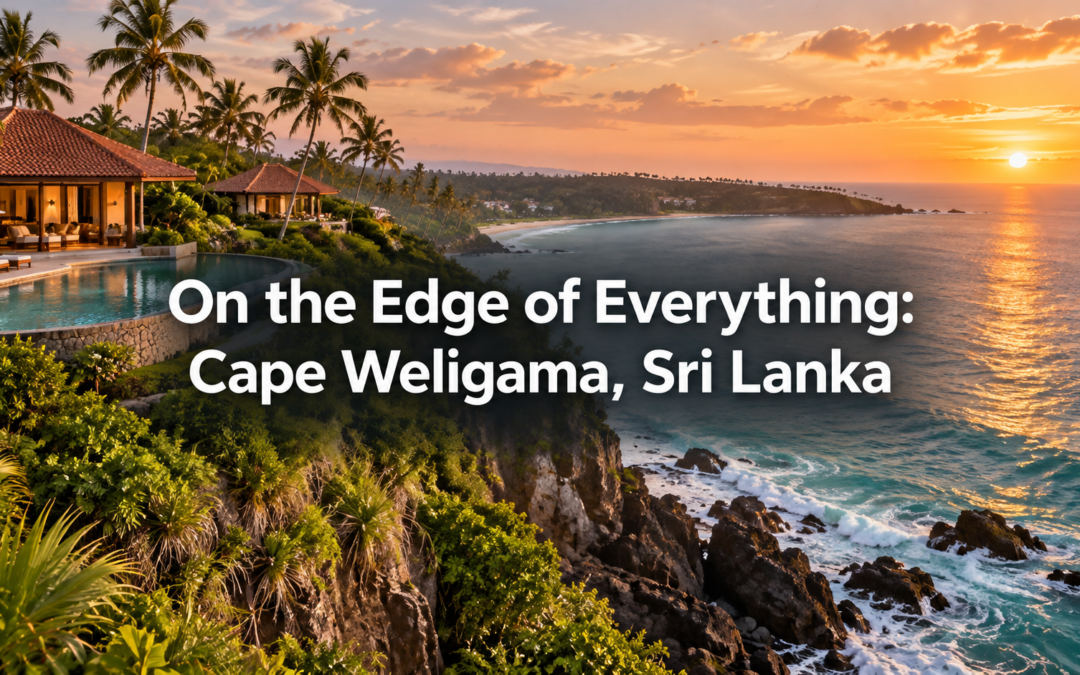
The Indian Ocean is right there. Not visible from the lobby in a tasteful, framed sort of way, but genuinely, insistently right there: a vast sweep of blue-green water that fills the view from almost every angle the moment you step through the entrance of Cape Weligama. The resort sits on a headland above Weligama Bay on Sri Lanka’s southern coast, and the position is so unambiguously dramatic that the architecture has largely had the sense to get out of the way and let the landscape do its thing.

Cape Weligama opened in 2017 and belongs to the Cape Hotels collection, a small group of Sri Lankan luxury properties that have built a reputation on the combination of spectacular natural settings and understated, considered design. The Weligama property delivers on both. The villas cascade down the headland in tiers, each positioned to maximise the sea view, and the overall effect from the lower terraces is of a resort that appears to be growing organically out of the cliff face rather than imposed upon it.

The Villas and the View

There are 39 pool villas spread across the property, ranging from garden-facing hillside rooms to clifftop and ocean-view villas that put the sea front and centre. I stayed in one of the ocean-view villas and can report that the view does not disappoint. The private plunge pool looks straight out over the bay, and the experience of watching the light change across that water from the edge of your own pool is precisely as good as it sounds. The interiors are spacious and warm, finished in natural materials, dark timber, stone, and local fabrics, with enough thought given to the details that the rooms feel designed rather than merely decorated.

The bathrooms are worth mentioning separately. Large, open, with outdoor shower options and soaking tubs that look out over the treetops toward the sea. It’s the sort of bathroom that makes you rearrange your morning plans without much regret.

Food, Drink, and the Clifftop Bar

The main restaurant, Cove, handles its setting with confidence. The open-air design means you’re never quite indoors, and tables positioned at the edge of the terrace give unbroken views across the bay. The menu leans into Sri Lankan produce and flavours without being rigidly local, mixing fresh seafood with more international influences in a way that tends to work. The hoppers are excellent, the grilled fish is everything the surroundings promise it will be, and breakfast on the terrace with that view is the kind of thing you genuinely look forward to the night before.

The bar on the upper cliff is the social heart of the property and one of the most spectacularly positioned drinking spots on the southern coast. Sundowners here have become something of a ritual for guests, and it’s easy to see why. The sun drops into the ocean directly ahead of you, and whoever thought to put a bar in exactly this spot deserves considerable credit. The cocktail list draws on local ingredients, arrack-based drinks sit alongside more familiar options, and there’s enough variety to keep you planted there well into the evening without running out of reasons to stay.

The Pool, Spa, and Getting Into the Water

The main infinity pool is the centrepiece of the resort’s social landscape, stretching out toward the ocean with the horizon apparently continuous beyond the lip. It’s a well-designed pool in a well-designed spot, and it’s large enough that finding a quiet stretch of water at most times of day is entirely possible. There are also the private plunge pools attached to individual villas, which means that if full solitude is what you’re after, you don’t need to compete for it.

The spa occupies a quieter corner of the property and offers a full range of treatments drawing on Ayurvedic traditions alongside more standard wellness therapies. The therapists are well trained and the treatment rooms have the kind of calm, considered atmosphere that makes an hour there feel like rather more. It’s the sort of spa that rewards booking ahead, particularly over weekends when the resort tends to fill up.

Weligama Bay itself is one of the better beginner surfing spots in Sri Lanka, and the resort can arrange surf lessons through local instructors. The bay’s long, gentle break is forgiving enough for first-timers, and there’s something quietly satisfying about paddling out into water you’ve been looking at all morning from your pool. Snorkelling, kayaking, and catamaran excursions are also available, and the activities team handles bookings without fuss.

Weligama and the Southern Coast

Weligama town is a ten-minute tuk-tuk ride from the resort and worth a visit for its fish market, the stilt fishermen who still work sections of the coast here in the early morning, and the general unhurried pace of a south-coast fishing town that hasn’t yet been entirely absorbed by tourism. Mirissa is close by, and while it’s busier than it used to be, the beach remains beautiful and the whale-watching boats that operate from November through April give access to blue whale sightings that are among the most reliable in the world.

Galle is about forty minutes to the west, and a half-day trip to the Fort is well worth the drive. The 17th-century Dutch fortifications are a UNESCO World Heritage Site, the streets inside are lined with galleries, restaurants, and boutiques, and the whole place has a layered, well-preserved colonial character that repays an afternoon of slow wandering.

Getting There from Katunayake

Cape Weligama is approximately 170 kilometres south of Bandaranaike International Airport, and the most comfortable way to make the journey is by private car or hired driver via the Southern Expressway. The expressway cuts the travel time to around two and a half hours, a significant improvement over the old coastal road, and the drive down from Colombo through the expressway’s long green corridors is pleasant enough. The resort’s concierge team can arrange airport transfers directly if you’d prefer to have everything sorted before you land.

The train from Colombo Fort to Matara is a good alternative for those who’d rather travel by rail. The coastal line runs south through Aluthgama, Hikkaduwa, and Galle before reaching Weligama, and the stretch between Ambalangoda and Galle in particular, where the track runs right along the clifftop above the sea, is among the most scenic train journeys on the island. Weligama has its own station, and the resort is about ten minutes by tuk-tuk from there. Budget around four hours for the full train journey from Colombo.


Cape Weligama sits in that fortunate category of places where the setting is extraordinary enough to do a great deal of the work, but where the property itself is considered enough not to waste it. The headland position, the villa design, the clifftop bar, the food: they all pull in the same direction. Find out more at their website, or follow the property on Instagram for a preview of that view before you book.

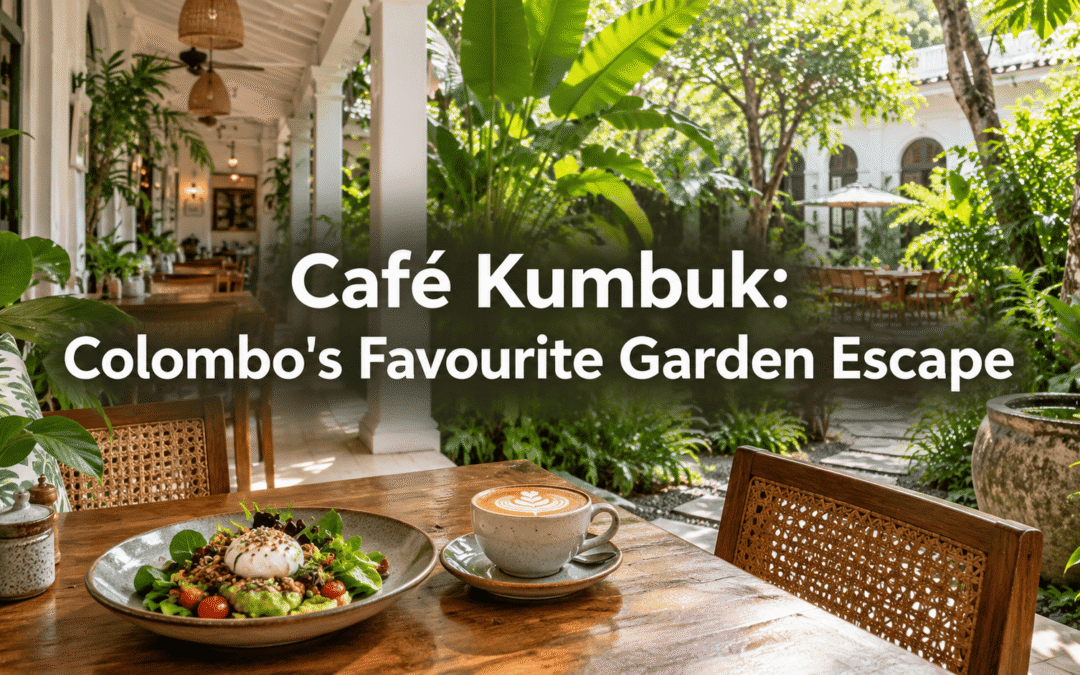
Café Kumbuk: Colombo’s Favourite Garden Escape

Café Kumbuk: Colombo’s Favourite Garden Escape

The smell hits you first. Coffee, warm bread, something herby and green, all drifting out from a low-slung colonial building tucked behind Independence Avenue, where the city’s noise seems to thin just a little. I almost walked past the turn-off. The entrance is easy to miss: a narrow lane, a hand-painted sign, and then suddenly an open courtyard spilling over with potted palms and afternoon light. That’s Café Kumbuk. And once you’ve found it, you’ll wonder how you ever ate breakfast anywhere else in Colombo.

The café takes its name from the kumbuk tree, a species native to Sri Lanka that grows tall along riverbanks, casting wide shade and outlasting almost everything around it. It’s a fitting namesake. In a city where trendy spots open and close with startling speed, Café Kumbuk has quietly become a fixture, loved equally by neighbourhood regulars, visiting expats, and travellers who’ve been tipped off by someone who stayed in Colombo longer than expected. It doesn’t try to be fashionable. It simply tries to be good. And it is.

A Space That Breathes

The interior manages to feel both thoughtfully designed and completely unstudied. Rustic wooden tables sit on uneven terracotta floors. Succulents crowd windowsills. Old photographs and hand-drawn maps of Sri Lanka line the walls. The counter itself is panelled in kumbuk wood, and behind it you can watch the whole kitchen at work: a team of chefs chopping, blending, toasting, and plating in full view. There’s something grounding about that kind of transparency. You know exactly where your food is coming from, and you can see how much care goes into making it.

Outside, a small courtyard offers seating under a canopy of green, where ceiling fans are replaced by actual trees and the light filters through leaves rather than louvres. On cooler mornings it’s one of the best spots in Colombo to sit with a notebook and a coffee and pretend you have nowhere to be. On warmer afternoons it’s still perfectly fine, the shade doing most of the heavy lifting.

Food That Actually Means It

The menu at Café Kumbuk is seasonal, produce-driven, and refreshingly free of shortcuts. The kitchen says no to refined white sugar and artificial flavour enhancers, sourcing salad leaves from Honest Greens and fresh produce from local markets. Bread arrives daily from The Baker’s Choice and Bread.lk. Coffee is roasted in Sri Lanka by Temple Grounds. Tea comes from Peekoh Tea. Every supplier is chosen deliberately. You can taste the difference.

Breakfast and brunch are where the café really shines. The menu blends Sri Lankan instincts with broader influences, so you might find jackfruit tacos sitting alongside beetroot hummus on toast, or a chia pudding parfait next to something that feels like it belongs on a verandah in Galle. Smoothie bowls arrive thick and properly tropical. The banana matcha has developed something of a cult following among regulars. Portions are generous without being excessive, and the kitchen accommodates vegan, vegetarian, and dairy-free diners without any fuss or substitution theatre.

The coffee deserves its own mention. Locally grown and roasted, it’s served with the kind of quiet confidence that comes from using genuinely good beans. I had two cups during my first visit and found myself thinking about a third. A pot of Peekoh tea, delivered alongside a small piece of pol toffee, is the kind of touch that makes you want to stay another hour.

Grounded in Something Genuine

Café Kumbuk was founded by someone who studied in London, came home to Colombo, and built the café they wished already existed: affordable, honest, locally rooted, and uncompromising about quality. That origin story matters because you can feel it in the place. This isn’t a café designed to photograph well and then deliver mediocrity. The philosophy runs all the way through, from the suppliers to the furniture to the way staff move around the room.

There’s a merchandise corner tucked into one end of the space, where you can pick up Kumbuk-branded goods and a handful of curated lifestyle products in keeping with the café’s commitment to conscious, local living. It’s low-key and unsalesmanlike, the kind of thing you notice and browse without feeling like you’ve wandered into a gift shop. Occasionally the café hosts pop-up events, creative gatherings, and community evenings. If something’s happening when you visit, it’s worth staying for.

Staying Above the Café

For those who want to sleep as close to a good breakfast as physically possible, there’s Srilax, a five-room guesthouse that occupies the floor directly above Café Kumbuk. The rooms are simple and clean, designed with a modern Sri Lankan aesthetic: air conditioning, overhead fans, fast WiFi, and immaculate bathrooms. Waking up to the smell of coffee rising from downstairs is, frankly, one of the more civilised ways to start a morning in Colombo. The guesthouse is central, quiet, and run with the same care that characterises everything else in the building. For travellers who want a neighbourhood base rather than a hotel lobby, it’s hard to beat.

Finding Your Way

Café Kumbuk is on Thambiah Avenue, off Independence Avenue in Colombo 7, a leafy residential quarter not far from Viharamahadevi Park and some of the city’s better hotels. The address is 3/1 Thambiah Avenue, and it’s worth plugging directly into a maps app because the street is genuinely easy to miss the first time.

From Bandaranaike International Airport in Katunayake, the most straightforward route into the city is by metered taxi or a pre-arranged private transfer. The drive takes roughly forty-five minutes to an hour depending on traffic, and Colombo traffic being what it is, mornings and late afternoons tend to be longer. The airport is connected to the city by the Colombo-Katunayake Expressway, which cuts the drive time considerably compared to the old coastal road. Tuk-tuks are a practical option once you’re in the city, and apps like PickMe operate throughout Colombo and take the haggling out of the equation. The café opens Tuesday through Sunday, so it’s worth checking the day before you plan a visit.

Colombo has no shortage of places to eat well, but Café Kumbuk sits in a category of its own. It’s the kind of place that makes a city feel liveable rather than just visitable, where the food is excellent, the ethos is genuine, and the courtyard asks nothing more of you than to sit down and slow up. I’ve been back twice since that first visit. I’ll be back again.

Find out more at cafekumbuk.com or follow the café on Instagram and Facebook.

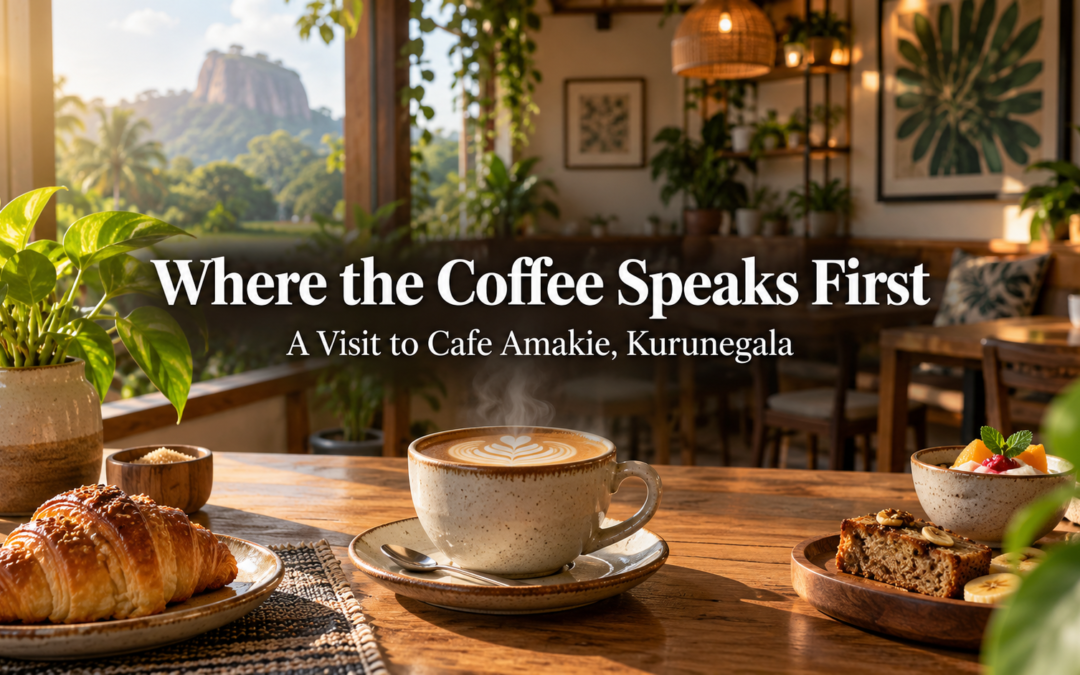
Where the Coffee Speaks First

Where the Coffee Speaks First

A Visit to Cafe Amakie, Kurunegala

Some places announce themselves quietly. No billboards, no theatrical signage, just a clean facade, warm light spilling through the glass, and the faint promise of good coffee carried on the air. Cafe Amakie, sitting on Dambulla Road in Kurunegala, is one of those places. It does not need to shout. The moment you step inside, it becomes immediately clear that someone here has thought carefully about what a great cafe ought to feel like.

Positioned along one of Sri Lanka’s most-travelled inland routes, Cafe Amakie has quietly earned itself a reputation that reaches well beyond the North Western Province. Whether you are passing through on the long drive north to Sigiriya, making your way back towards Colombo, or simply a local in search of a proper cup of coffee, this is a spot that tends to hold onto people a little longer than they originally intended.


A Space That Earns Its Atmosphere

Walk in and the first thing you notice is the air conditioning, which in the Sri Lankan midday heat feels like a small act of mercy. The interior is modern and thoughtfully arranged, with clean tables, comfortable seating, and an aesthetic that manages to feel both polished and relaxed. The decor leans into warmth rather than sterility, with wood-accented surfaces and a considered use of space that makes even a large group feel at ease without the chaos that can come with a busy popular venue.

The lighting does a lot of quiet work here. It is neither the harsh fluorescence of a roadside eatery nor the affected dimness of somewhere trying too hard to be atmospheric. It is simply right. Tables are well-spaced, the washrooms are kept to a standard that inspires genuine confidence, and there is ample parking outside, which counts for more than it might seem when you have just navigated the Kurunegala junction with your patience fully intact.

Soothing background music drifts through the space at just the right volume: present enough to set a mood, quiet enough that conversation does not require effort. It is the kind of atmosphere that makes a forty-five-minute stop feel like a reward rather than a pause.


The Coffee Is the Story

Cafe Amakie describes its mission as delivering a world-class coffee experience at your hometown, and the coffee very much lives up to that ambition. The cappuccinos are consistently singled out by visitors as among the best they have had anywhere in Sri Lanka, a claim that is easy to dismiss until you are sitting in front of one. They arrive topped with barista art rendered in chocolate syrup or steamed milk that is detailed enough to stop you for a moment before drinking. The craft is evident, and the skill of the baristas is one of the cafe’s most genuine points of pride.

The espresso-based drinks are the headline act, but Cafe Amakie offers considerably more than that. The iced mocha has become something of a signature, rich and balanced without tipping into sweetness. Fresh fruit juices are prepared to order and arrive tasting exactly as they should. For those who prefer something warming without the caffeine, the hot chocolate is a deeply satisfying option, described by more than one visitor as the highlight of their visit. There is also an Amakie tea, the cafe’s own house blend, which turns out to be quietly refreshing and quite unlike anything you will find at a standard roadside stop.

Tea lovers will find a selection worth exploring, from masala chai served in its own glass pot to black tea and silver tips for those who know what they are looking for. The drinks menu, in short, is the work of people who take what they do seriously.


Eating Well on the Road

The food at Cafe Amakie manages something that many cafes in Sri Lanka find genuinely difficult: it bridges the gap between proper western fare and familiar local tastes without compromising either. Breakfast is served from six in the morning, which means that the very earliest risers heading north can arrive at dawn and leave with a full stomach and a clear head.

A full English breakfast is available and has been praised for its accuracy, the kind of detail that matters when you have been craving something specific. Toasted sandwiches and wraps with chicken and fish fillings are perennial favourites, the wraps in particular striking visitors as well-seasoned and generously filled. The chicken pasta has drawn comparisons to five-star hotel quality, which is either very high praise or an honest reflection of just how carefully the kitchen works.

For those who want Sri Lankan food, the menu delivers on that too. Milk rice, string hoppers with chicken curry, yellow rice with a rich creamy chicken dish, and a fresh salad with dressing that adds contrast to the plate. The food is presented beautifully, plated with a care that suggests the kitchen views each dish as a finished piece rather than a fuel stop. Lunch and dinner menus extend the options further, making Cafe Amakie one of the few places along this corridor where you can eat well at any hour of the day.

The cakes and baked goods deserve a mention of their own. The carrot cake with cream cheese topping has accumulated its own small following, and the chocolate chip cake is a reliable companion to an afternoon coffee. There are also pastries and lighter snacks available, including items displayed in a counter for those who want something quick without the wait.


Live Music and the Evening Shift

Cafe Amakie transforms noticeably after seven in the evening. Live music takes over the atmosphere from around that hour, drawing in a different crowd from the mid-morning coffee-and-dash visitors. The music is a natural fit with the space, adding energy without disrupting the comfort that the cafe maintains throughout the day. It makes Cafe Amakie genuinely versatile: a place to start the morning properly and, if the occasion calls for it, a place to end the evening on a good note as well.

The cafe stays open until ten at night every day of the week, opening at six in the morning, which means it comfortably absorbs travellers at both ends of a long day. This consistency, seven days a week without exception, is one of the things that makes it genuinely reliable rather than merely good when circumstances align.


The People Behind the Counter

Staff at Cafe Amakie are frequently mentioned in visitor accounts, and almost always in the same terms: friendly, attentive, efficient without being rushed. For a spot as busy as this one, the speed of service is notable. Large groups have been served quickly, coffee orders have arrived with their art intact and their temperature correct, and the general impression is of a team that knows what it is doing and takes satisfaction in the work.

There is a warmth to the service that goes beyond efficiency. Regulars report being remembered between visits. First-timers are made to feel at ease rather than like strangers navigating an unfamiliar system. It is the kind of hospitality that does not feel performed, which is the only kind worth having.


Getting There

Cafe Amakie is located at No. 84, Dambulla Road, Kurunegala Colony, Kurunegala. It sits just north of the Kurunegala highway exit, making it easy to find whether you are arriving from Colombo or continuing towards Dambulla and the Cultural Triangle beyond. Parking is available on-site, and the location is accessible without the navigation anxiety that some town-centre spots can produce.


Connect With Cafe Amakie

Facebook: https://www.facebook.com/cafeamakielk/

Instagram: https://www.instagram.com/cafeamakie/

Telephone: +94 372 223 242

Email: cafeamakie@gmail.com

Opening Hours: Daily, 6:00 AM to 10:00 PM


Kurunegala is a town that most travellers pass through rather than stop in, eyes already fixed on Sigiriya or Polonnaruwa or the cooler highlands further on. Cafe Amakie is a good reason to reconsider that impulse, to pull off the main road and spend an hour in a place that is doing something genuinely well. The coffee is worth the detour on its own. Everything else is a pleasant surprise that, by the time you leave, feels less like a discovery and more like something you will tell other people about.

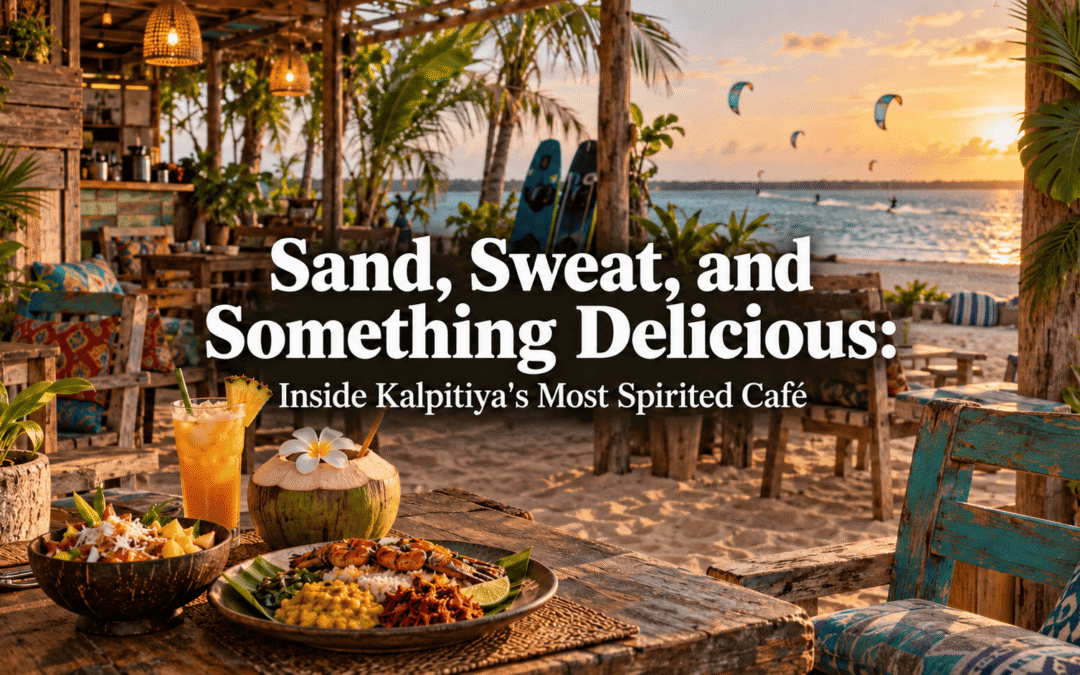
Sand, Sweat, and Something Delicious: Inside Kalpitiya’s Most Spirited Café

Sand, Sweat, and Something Delicious: Inside Kalpitiya’s Most Spirited Café

Kalpitiya does not shout for attention. This slender peninsula on Sri Lanka’s north-western coast goes about its business quietly, letting the wind do the talking as it whips across Dutch Bay and sets a thousand kite-lines singing overhead. It is the kind of place that rewards the traveller who goes looking rather than the one who waits for a brochure to arrive. And tucked along Dutch Bay Road in the village of Kandakuliya, half-hidden by coconut palms and salt air, is a place that perfectly embodies that spirit: The BNKR Café.

BNKR is short for Bunker, and the name carries a certain charm. This is not a polished resort restaurant, nor a tourist trap dressed up in fairy lights. It is something altogether more honest: a beachside wellness café and fitness camp that has carved out its own unmistakable identity at the edge of the Indian Ocean. Whether you arrive sun-scorched after a morning on the water, midway through a fitness retreat, or simply hungry and curious, the BNKR has a way of making you feel you have stumbled upon exactly the right place at exactly the right time.

A Philosophy on a Plate

The café’s food philosophy is rooted in something refreshingly straightforward: eat local, eat seasonal, eat well. At least eighty per cent of the produce used in the kitchen is sourced locally, which means the menu moves and breathes with what the land and sea have to offer at any given moment. Some days the avocados are in. Other days they are not, and the kitchen does something arguably more interesting in their absence, reaching for Sri Lanka’s own extraordinary pantry of tropical fruits, lentils, grains, and garden greens.

The menu spans all-day breakfast, salads bursting with colour and texture, lentil burgers, colourful tacos, and a daily-changing pizza that has developed something of a cult following among regulars. One evening it might arrive with chicken, falafels and pineapple chutney; on another night the base is topped with jackfruit, a nod to Sri Lanka’s most versatile ingredient. Alongside these, fresh-baked pancakes, chickpea dishes, and seasonal salads complete a menu that feels neither contrived nor repetitive. The kitchen is open and visible, which means you can watch your meal come together, an experience that turns eating into a small, satisfying performance.

What sets the BNKR apart from countless other beach cafés is its genuine commitment to dietary inclusivity. Gluten-free, vegan, paleo, vegetarian: every preference is catered for without fanfare or compromise on flavour. Nobody is made to feel like an afterthought, and the food always tastes like something someone genuinely cared about making.

The Coffee Conversation

Among the café’s most loyal admirers, the coffee inspires near-religious devotion. Freshly ground from a Sri Lankan dark roast, it is prepared to barista standard, which in a coastal village three hours from Colombo is no small achievement. Whether taken black in the early morning while the beach is still quiet, or with a splash of coconut milk as the afternoon stretches long and unhurried, each cup carries the kind of depth and richness that makes you slow down. Travellers who have worked their way across the island frequently declare it the best coffee they encountered anywhere in Sri Lanka, and there is little reason to argue the point.

For those who prefer something colder, the smoothies and fresh-pressed juices hold their own. Built from whatever tropical fruits are in season, they arrive vibrant in both colour and taste. A mango and lime blend on a hot afternoon is, quite simply, one of life’s more uncomplicated pleasures. Smoothies are designed to complement the café’s broader nutrition ethos, doubling as post-training refuels or mid-afternoon pick-me-ups depending on your day’s agenda.

The Setting: Rustic, Intentional, Irreplaceable

The BNKR occupies a stretch of beachfront property that no interior designer could convincingly recreate indoors. The architecture leans into its natural surroundings rather than fighting them: open-sided structures allow the ocean breeze to pass freely through, repurposed driftwood features throughout the space, and an abundance of plants soften every corner. There is no air conditioning, nor is there any need for it. The buildings are designed to maximise airflow, and the winds that power the kites offshore do an equally fine job of keeping things comfortable on land.

Upcycling and sustainability are not buzzwords here but genuine operating principles. Guests notice small details: the way materials have been given a second life, the absence of excess, the sense that every element of the space has been chosen thoughtfully rather than expensively. It gives BNKR a character that cannot be manufactured. You feel it the moment you sit down.

The café shares its grounds with an open-air gym and calisthenics playground, which means the view from your table might include someone doing pull-ups against a backdrop of palm trees and the Indian Ocean. Far from being incongruous, it adds to the energy of the place. The BNKR has never tried to be purely a café or purely a gym: it is both, and the interplay between the two gives it a vitality that single-purpose spaces rarely achieve.

Train, Work, Unwind

The gym at BNKR is no afterthought. Equipped with rowers, assault bikes, barbells, kettlebells, and a calisthenics playground, it operates as a fully functioning strength and conditioning space. Group classes run across CrossFit, mobility, primal fitness, and barbell and kettlebell training, with sessions designed to scale to any fitness level. Personal training is available for those who prefer a more tailored approach, and a dedicated kite fitness programme serves the kitesurfers who descend on Kalpitiya every high season looking to build the specific strength and endurance the sport demands.

For those who have left an office behind but not their laptop, the BNKR holds a rather special distinction: it is the first beach coworking and coliving space in Sri Lanka. Dedicated workstations overlook the Indian Ocean, high-speed Wi-Fi keeps productivity intact, and the combination of clean food, daily exercise, and open-air surroundings creates working conditions that most open-plan offices could not dream of matching. Informal social events, including the beloved beer and wine Fridays, ensure that digital nomads and remote workers share more than just a broadband connection.

Fitness Retreats and Immersive Escapes

The BNKR’s retreat programme is where the café, the gym, the accommodation, and the ethos converge most powerfully. Retreats here are built around a simple but compelling promise: eat real food, move your body, breathe good air, and leave feeling considerably more yourself than when you arrived. The format is deliberately flexible, with no fixed start dates or set durations, allowing guests to build a programme around their own schedule rather than the other way around.

A full retreat package typically includes daily gym classes, personal nutrition and fitness consultations, a full-board healthy meal plan, dedicated office space, high-speed internet, and accommodation in private garden-view bungalows with air conditioning. Morning yin yoga flows, beach boot camps, and community activities such as mangrove planting and regular beach clean-ups round out an experience that is as restorative as it is active. Guests who have passed through describe returning home with clearer skin, more energy, and a changed relationship with food, which is not a modest claim for any holiday to make good on.

The retreat also accommodates those who simply want to drop in for a class or a week of training without a structured programme. The BNKR is, at its best, a community rather than a transaction. You arrive as a guest and leave, more often than not, as a regular.

The People Behind It

Much of what makes the BNKR work as well as it does comes down to its founder, Vicky, whose warmth and commitment to genuine hospitality permeates everything from the food to the fitness schedule. Her approach to nutrition is personal and practical, working with guests individually to understand their goals and build meal plans that feel like a pleasure rather than a prescription. The wider team carries the same spirit: people who are here because they want to be, and who make every visitor feel the same way.

How to Find Them

The BNKR is located at Dutch Bay Road, Kandakuliya, Kalpitiya, Sri Lanka. It sits approximately three hours from Bandaranaike International Airport, making it an accessible escape that feels far more remote than the drive time suggests. During low season, the café operates on an advance booking basis, so a WhatsApp message before you arrive is always a good idea.

You can find everything you need to plan a visit or a retreat at the official website: 

www.thebnkr.life

Follow the team’s latest news, fitness content, and café updates on Instagram at 

@thebnkr.srilanka

And connect on Facebook at 

The BNKR at Club ManGo

Kalpitiya will always be known for its winds, its lagoons, and its dolphins. But for a certain kind of traveller, the memory that lingers longest is of a cup of coffee drunk in an open-sided room with sand between their toes and the sound of the ocean close enough to touch. The BNKR makes that moment available every day, and it makes it taste extraordinary.