by Travel Nomad | Apr 7, 2026 | Southeast Asia, Sri Lanka |
I didn’t arrive in Gal Oya with a checklist. I arrived with dust on my shoes, the smell of sun-warmed forest in the air, and the growing sense that I was drifting toward the edge of something quieter and older than the roads that led me here.
This part of Sri Lanka doesn’t announce itself. It doesn’t compete for attention. The backcountry around Gal Oya exists in a slower register, where jungle presses up against water, villages lean gently into the forest, and the reservoir holds more stories than reflections.
The First Impressions: Where Roads Thin Out
As I left the main highway behind, the road narrowed, then softened. Asphalt gave way to gravel, gravel to earth. The landscape thickened. Trees grew closer together. Villages appeared briefly—shops with sun-faded signs, dogs asleep in impossible positions, bicycles propped against walls—then vanished again into green.
Gal Oya’s backcountry is not a destination you rush toward. It reveals itself gradually, like a conversation that only deepens if you stay long enough to listen.
The Reservoir: A Body of Water With a Memory
The Gal Oya Reservoir arrived quietly, without ceremony. One moment I was driving through forest; the next, the land opened into water that seemed too wide, too calm, too deliberate to be accidental.
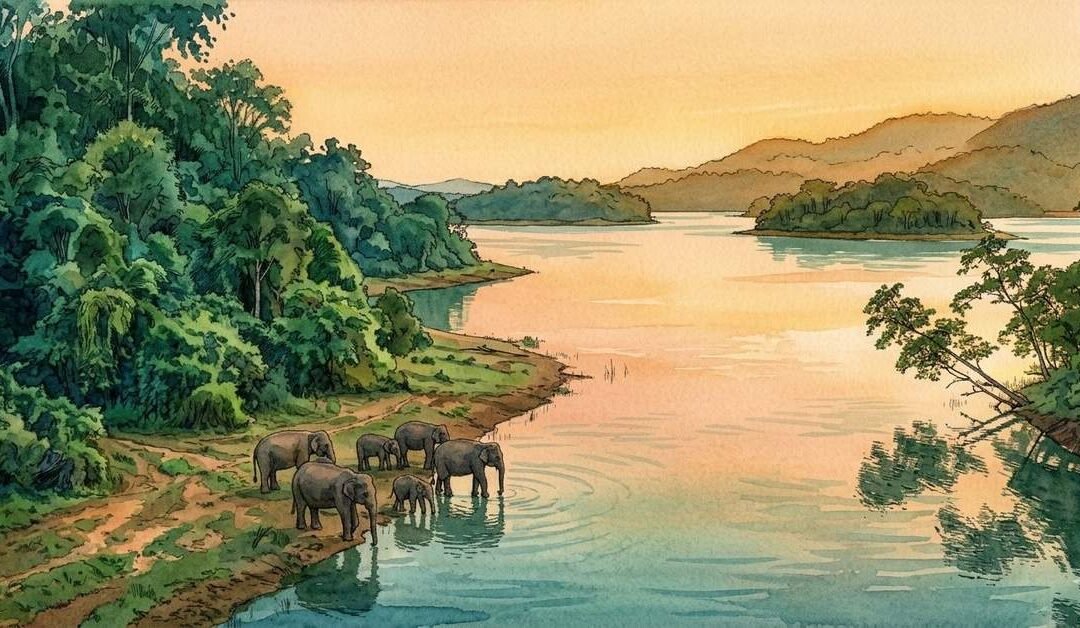
This reservoir is vast, but it never feels overwhelming. Dozens of forested islands rise from its surface, their edges softened by distance and mist. In the early morning, the water mirrors the sky so perfectly that it’s difficult to tell where one ends and the other begins.
I stood at the edge for a long time, watching ripples drift outward, thinking about how many villages, fields, and footpaths now rest beneath this still surface. The reservoir doesn’t erase what was here. It holds it.
What to Do: Moving at the Speed of the Land
The best way to experience Gal Oya’s backcountry is to slow down until your pace matches the place.
I spent mornings walking village paths that curved without reason, following sounds rather than directions. A woodpecker’s rhythm led me deeper into the forest. Children waved from doorways. A farmer pointed wordlessly toward a trail when I looked unsure.
Boat journeys across the reservoir reveal a different perspective. Forested islands drift past slowly, their trees leaning toward the water as if curious. Wildlife appears without warning—birds lifting suddenly from branches, crocodiles slipping soundlessly below the surface, deer pausing at the shoreline to drink.
Hiking through the surrounding jungle brings you face to face with the raw textures of the region. Tree roots twist across paths like frozen waves. The air smells of damp earth and leaves. Occasionally, the forest opens just enough to offer a glimpse of the reservoir below, shining through the canopy.
What to See: Wildlife Without the Spectacle
Gal Oya is known for wildlife, but the backcountry shows it to you differently.
Here, animals are not performances. They are presences.
Elephants move between forest and water along ancient routes, sometimes appearing at the reservoir’s edge in the late afternoon. Birds dominate the soundscape—calls layered upon calls, each species announcing itself with confidence. I spotted kingfishers skimming the surface, eagles circling high above, and peacocks strutting unapologetically through village clearings.
What struck me most was how seamlessly human life fits into this ecosystem. Villages exist not in opposition to the jungle, but in negotiation with it.
Life in the Backcountry Villages
Spending time in the villages around Gal Oya is an exercise in observation.
Days begin early. Smoke rises from cooking fires. Cattle are guided toward grazing land. People greet each other with easy familiarity, conversations unfolding slowly and often ending in laughter.
I sat on verandas, drank tea, and listened. Stories here are not delivered quickly. They circle, pause, double back. Topics drift from crops to rainfall to memories of before the reservoir, when the land looked different but life followed the same rhythms.
Evenings belong to the outdoors. Children play under fading light. Elders gather near doorways. The forest hums closer after sunset, reclaiming the edges of the village.
Where to Stay: Close to the Forest
Accommodation in Gal Oya’s backcountry is about proximity rather than luxury.
I stayed in places that felt intentionally quiet—lodges tucked into forest clearings, simple guesthouses run by families who know every bend in the nearby paths. Mornings arrived with birdsong instead of alarms, and nights settled in with the sound of insects and distant water.
Staying close to the reservoir or on the forest fringe allows the landscape to shape your day naturally. There’s no separation between where you sleep and where the experience begins.
The Reservoir at Different Hours
Gal Oya changes dramatically with the light.
Early mornings are hushed and misty. The reservoir feels like a held breath. Boats glide silently. Wildlife emerges cautiously.
Midday brings clarity and heat. The water turns blue and reflective. Forest edges sharpen.
But it’s evening that lingers longest in memory. As the sun lowers, the reservoir glows amber. Islands darken into silhouettes. Elephants sometimes appear at the waterline, their reflections stretching and breaking with each step.
Night transforms everything again. Stars reflect faintly on the water. Sounds carry farther. The forest feels closer, more intimate.
How to Get There from Katunayake Airport
Reaching Gal Oya’s backcountry from Katunayake Airport is a journey through changing landscapes.
By road, the drive takes you eastward across the island, passing through towns, farmland, and forest. Hiring a car with a driver allows for flexibility, letting you stop when something catches your attention.
Public transport offers a slower, more immersive route. Trains or buses can take you toward towns like Ampara or Inginiyagala, followed by local buses or tuk-tuks that wind into the backcountry. These final stretches are often the most memorable, revealing daily life in motion.
For those short on time, a domestic flight to a nearby regional airstrip can shorten the journey, with road transport completing the final leg.
No matter how you arrive, the last few kilometers feel like a transition—from movement to stillness.
What the Backcountry Teaches You
Gal Oya’s backcountry doesn’t overwhelm you with sights. It recalibrates you.
Here, silence is not empty. Stillness is not inactivity. The jungle and reservoir exist in a careful balance, shaped by time, water, and human adaptation.
I found myself listening more, speaking less. Watching patterns—of birds, of villagers, of light—and realizing how rarely modern travel allows for this kind of attention.
Leaving Gal Oya
When I eventually left, the road widened again. Signals returned. Noise crept back in.
But something had shifted.
Gal Oya’s backcountry stayed with me—not as a list of experiences, but as a feeling. A reminder that some places don’t need to be conquered, consumed, or even fully understood.
They only ask that you arrive slowly, stay quietly, and leave respectfully.
Where the jungle meets the reservoir, life flows at its own pace. And if you let it, it will quietly change yours.
by Travel Nomad | Apr 6, 2026 | Southeast Asia, Sri Lanka |
I didn’t mean to end up in the middle of the eastern wilderness, dust on my shoes and silence ringing in my ears — but Sri Lanka has a habit of pulling you off the main road and into stories far older than maps.
Seruwila Mangala Raja Maha Viharaya isn’t the kind of place you casually stumble upon. It doesn’t shout for attention, doesn’t compete with beach towns or hill-country lookouts, and doesn’t appear in glossy travel montages. Instead, it waits — surrounded by scrubland, forest, and the slow rhythm of rural life — quietly guarding one of the most sacred relics in the country.
This is not just a temple visit. It’s a pilgrimage through time.
First Impressions: A Temple That Emerges From the Wild
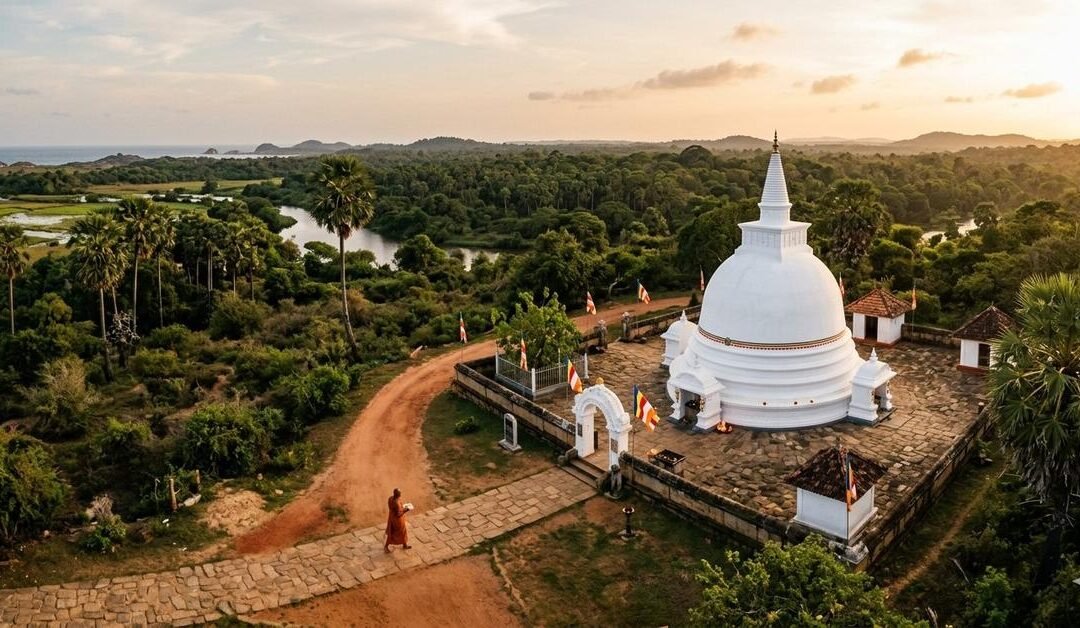
The road to Seruwila narrows as you approach. Villages thin out, trees press closer, and suddenly the modern world feels very far away. Then, rising calmly above the greenery, the white stupa appears — clean, circular, timeless. No dramatic entrance. No chaos. Just a sense that you’ve arrived somewhere that has been waiting for you longer than you’ve been alive.
Seruwila Mangala Raja Maha Viharaya is believed to enshrine the Lalata Dhatu, the sacred frontal bone relic of the Buddha. That alone makes it one of the most important Buddhist sites in Sri Lanka — yet it remains surprisingly uncrowded, especially compared to the southern and central pilgrimage circuits.
The atmosphere here is different. Quieter. Slower. More introspective.
A Little History (Without the Lecture)
According to ancient chronicles, this temple dates back over two thousand years, established during the reign of King Kavantissa. The area once sat along old trade routes that connected the east coast to inland kingdoms — a reminder that today’s wilderness was once very much part of a thriving world.
Centuries passed. Kingdoms fell. Forests reclaimed the land. The temple faded into obscurity, protected by isolation rather than walls.
Its rediscovery and restoration in the modern era feel less like a revival and more like a gentle reawakening.
What to See When You’re There
The Sacred Stupa
The heart of the temple is the stupa itself — serene, brilliant white, and perfectly balanced against the blue eastern sky. Walking clockwise around it, barefoot on warm stone, is a meditative experience even if you’re not on a spiritual quest.
There’s no rush here. No guides herding groups along. Just space to walk, pause, and breathe.
Shrine Rooms and Murals
Nearby shrine rooms house Buddha statues and wall paintings that reflect eastern Sri Lankan artistic styles — subtle, earthy, and deeply expressive. They don’t overwhelm you; they invite you in.
The Surrounding Grounds
Don’t miss walking the perimeter paths. The temple complex opens out into views of forested land and open sky, and it’s not uncommon to hear birds, distant temple bells, or simply the wind moving through trees.
This is one of those rare places where silence feels intentional.
What to Do Beyond Praying
Even if you’re not visiting purely for religious reasons, there’s plenty to engage with:
- Mindful walking around the stupa and grounds.
- Photography, especially early morning or late afternoon when the light softens everything.
- Quiet reflection or journaling — this place practically demands it.
- Observing daily temple life, from monks moving between buildings to villagers stopping by on their way home.
There’s no checklist here. The experience unfolds at its own pace.
Getting There From Katunayake Airport
Seruwila is in Sri Lanka’s Eastern Province, near Trincomalee, and reaching it is part of the adventure.
By Car or Taxi
From Bandaranaike International Airport (Katunayake), the journey takes you through the heart of the island.
- Route typically passes through Dambulla or Habarana before heading east toward Trincomalee.
- Roads are mostly good, with changing scenery from city to jungle to open plains.
- Ideal if you want flexibility and scenic stops along the way.
By Train + Road
A more relaxed (and very Sri Lankan) option:
- Travel from Negombo or Colombo to Trincomalee by train.
- From Trincomalee town, continue to Seruwila by tuk-tuk or private vehicle.
The train ride east is especially beautiful, cutting through forests and rural villages.
By Bus
Long-distance buses run toward Trincomalee from Colombo and surrounding hubs.
- Expect a slower journey.
- A great way to observe everyday life unfolding outside your window.
- From Trincomalee, local transport takes you the rest of the way.
No matter how you arrive, the final stretch feels like stepping out of the modern world.
Where to Stay
Seruwila itself is quiet and rural, so most travelers base themselves nearby.
Trincomalee
The best option for comfort and variety:
- Beachside guesthouses and small hotels.
- Easy access to Nilaveli and Uppuveli beaches.
- Good food options and transport connections.
You can visit the temple as a peaceful day trip from town.
Habarana or Dambulla (If You’re Looping the Island)
If Seruwila is part of a larger cultural circuit, staying inland works well:
- Convenient for combining with ancient cities.
- Early morning departures to the east are especially atmospheric.
When to Visit
Mornings are magical here. The air is cooler, the light is soft, and the temple feels almost suspended in time. Late afternoons are equally beautiful, with golden light settling over the stupa and long shadows stretching across the grounds.
Dress modestly, move quietly, and let the place guide your behavior — it naturally does.
Why Seruwila Stays With You
Some destinations impress you. Others entertain you. Seruwila does neither — and that’s exactly its power.
It grounds you.
Long after I left, what stayed with me wasn’t a photo or a fact, but a feeling: that I had briefly stepped into a rhythm older than noise, older than urgency. A place that doesn’t ask for attention, but rewards presence.
If you’re traveling through Sri Lanka and craving something deeper than beaches or ruins — something quieter, truer — make the journey east.
Seruwila Mangala Raja Maha Viharaya will be there, waiting, just as it always has.
Sometimes, the most sacred places aren’t hidden because they’re lost — they’re hidden because you have to slow down enough to find them.
by Travel Nomad | Apr 5, 2026 | Southeast Asia, Sri Lanka |
I didn’t come here looking for ruins. I came looking for water.
From photos alone, Rantembe and Randenigala appear calm, almost meditative—two vast reservoirs folded neatly into Sri Lanka’s hill country, reflecting clouds like they’ve got nothing to hide. It’s only when you stand at their edges, watching the surface hold its breath, that you realize these waters are not just scenic. They are full. Not only of rain and river, but of memory.
These reservoirs didn’t simply reshape landscapes. They erased villages.
Following the Mahaweli Into the Hills
The journey inland feels like slipping behind the scenes of Sri Lanka.
Leaving the western plains behind, the road climbs steadily toward Kandy, then continues eastward toward Mahiyanganaya. The air changes. The crowds thin. The land begins to speak more quietly.
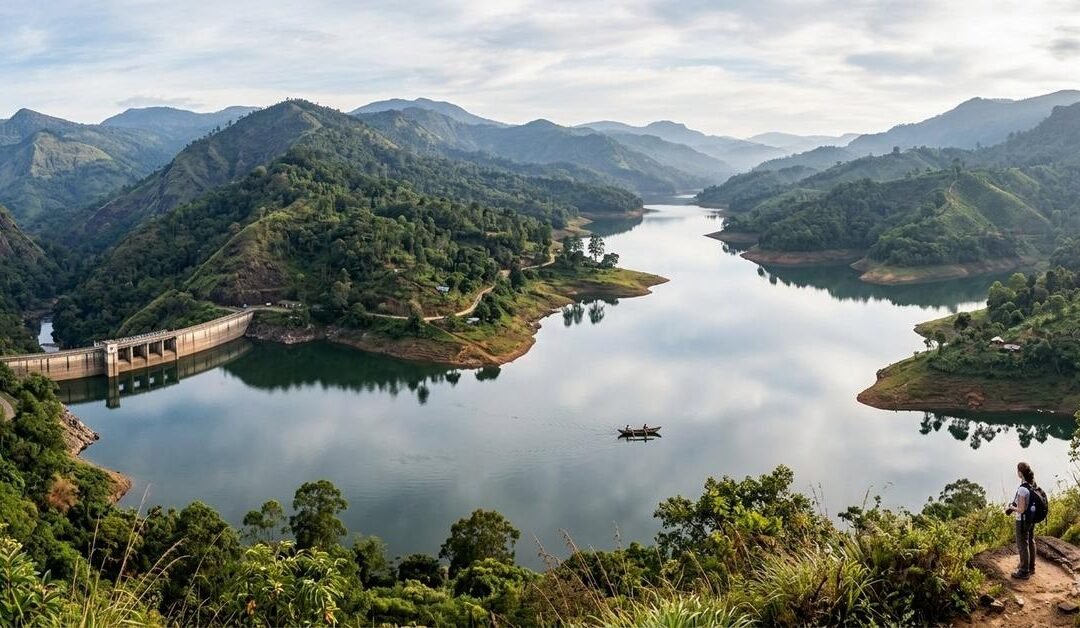
The Mahaweli River appears in fragments at first—glimpses between bends, flashes of silver through forest—before finally surrendering itself to concrete and engineering. Rantembe comes first, upstream and restrained. Randenigala follows downstream, wide and commanding, a body of water that demands you stop the vehicle and step out just to absorb it.
From above, the reservoirs curve through drowned valleys, their fingers reaching into places that were once paths, gardens, and school routes.
What Lies Beneath the Surface
Locals don’t speak about the reservoirs dramatically. They don’t need to.
Someone will point toward a quiet stretch of water and say, “There was a temple there.” Another will mention a market that used to sit where the water now deepens. The tone is neutral, almost practical, as if memory has learned to coexist with inevitability.
When the dams were built as part of the Mahaweli Development Scheme, entire communities were relocated. Houses were dismantled. Temples were moved where possible. Some things were taken carefully. Others were left to the water.
On rare days when water levels recede, the past briefly returns—stone steps, foundations, lines that hint at former lives. Then the water rises again, and the land forgets in its own way.
What to See: Scale, Silence, and Light
The dams themselves are worth pausing at—not because they are beautiful in a traditional sense, but because they are uncompromising.
Randenigala Dam, especially, stretches across the valley with quiet authority. Standing there, you feel both impressed and unsettled. Human ambition made physical.
Beyond the structures, the real spectacle is the water meeting the hills. Early mornings bring mist that softens everything. By afternoon, the reservoirs shine harsh and metallic. Evenings turn them into mirrors tinted with orange and violet.
Viewpoints along the access roads offer long, uninterrupted looks across the water. These are not places for quick photos. They’re places where you sit longer than planned.
Things to Do: Observe, Walk, Listen
This is not a destination that overwhelms you with activities.
The best thing to do here is to move slowly. Walk sections of the reservoir edge where access allows. Watch local fishermen work with practiced patience. Notice how birdlife gathers where water and forest meet—eagles overhead, herons unmoving, kingfishers striking suddenly.
Photography rewards waiting rather than wandering. The reservoirs change mood constantly, and the best moments arrive unannounced.
If you’re open to conversation, speak with people who lived through the transition. Their stories are rarely rehearsed, but they stay with you far longer than any viewpoint.
Wildlife Along the New Shorelines
Where villages once stood, ecosystems have adapted.
The reservoirs attract birds in impressive numbers, especially during quieter hours. Monkeys patrol the trees, alert and curious. Deer sometimes appear near the edges, cautious but present.
Nature adjusts quickly. Human memory takes longer.
Where to Stay: Quiet Hills Over Waterfront Views
Accommodation around Rantembe and Randenigala is spread across the surrounding hills rather than clustered at the water.
Small guesthouses, eco-lodges, and homestays are scattered through nearby villages and hill towns. Staying higher up offers broader views and cooler evenings, along with easier access to main roads.
Some travelers choose bases near Mahiyanganaya, combining reservoir visits with nearby cultural and natural sites. Others prefer staying closer to the hills, where mornings begin with mist and end in deep quiet.
Wherever you stay, expect early nights and very dark skies.
How to Get There from Katunayake Airport
Reaching Rantembe and Randenigala requires distance, not difficulty.
From Katunayake Airport, traveling by private vehicle is the most direct option. The route heads toward Kandy and then onward to Mahiyanganaya, from where smaller roads branch toward the reservoirs.
Public transport works with flexibility. Buses run frequently from Colombo to Kandy and Mahiyanganaya. From Mahiyanganaya, local buses or tuk-tuks continue toward Rantembe and Randenigala, though timing depends more on rhythm than schedule.
Trains can take you as far as Kandy. From there, road travel completes the journey through increasingly scenic terrain.
The final stretches are narrow and winding. Give them the time they deserve.
When to Visit: Let the Water Decide
The reservoirs tell different stories depending on the season.
When water levels are high, the landscape feels endless and serene. When levels drop, shorelines stretch outward and textures emerge, making it easier to imagine what once existed.
Early mornings offer mist and stillness. Late afternoons bring dramatic light and long reflections. Midday is better spent resting, observing from shade.
Weather in the hills changes quickly, so adaptability matters more than planning.
What These Places Make You Think About
Rantembe and Randenigala don’t fit neatly into the idea of a tourist attraction.
They are beautiful, undeniably so. But they also carry weight—the kind that doesn’t announce itself. Standing there, I thought about electricity flowing invisibly into cities, irrigation channels feeding distant fields, and the quiet sacrifices that made it possible.
There are no dramatic memorials marking what was lost. Just water, holding everything evenly.
Life continues around it. Children grow up knowing only the reservoirs, not the villages beneath them. Memory fades, but not completely.
Leaving With a Different Kind of Memory
When I left, I didn’t feel energized the way I do after beaches or mountains. I felt thoughtful.
Rantembe and Randenigala are not places you conquer or consume. They are places you sit with.
Not every destination is meant to entertain.
Some exist to remind you that landscapes have histories, and progress always leaves something behind.
These reservoirs hold water.
And beneath that, they hold lives.
by Travel Nomad | Apr 2, 2026 | Southeast Asia, Sri Lanka |
There’s a point in every Sri Lanka journey when the roads thin out, the crowds vanish, and the ocean starts to feel like it belongs only to you. For me, that moment arrived somewhere past the last busy junction, when the tarmac gave way to dust, salt hung in the air, and the Indian Ocean appeared—wild, empty, and unapologetically untamed.
This is Panama and Okanda, two remote coastal villages on Sri Lanka’s east coast that don’t beg for attention. They don’t advertise themselves with beach clubs or neon signs. They simply exist—quiet, sunburnt, and breathtakingly raw.
If Sri Lanka’s south coast is a polished postcard, Panama and Okanda are the pages of a travel journal that still smell like sea spray.
First Impressions: Where the Map Feels Optional
Panama sits just south of the more familiar surf town of Arugam Bay, while Okanda lies even further south, skirting the edge of Yala East National Park. This stretch of coastline feels like the country exhaling after holding its breath.
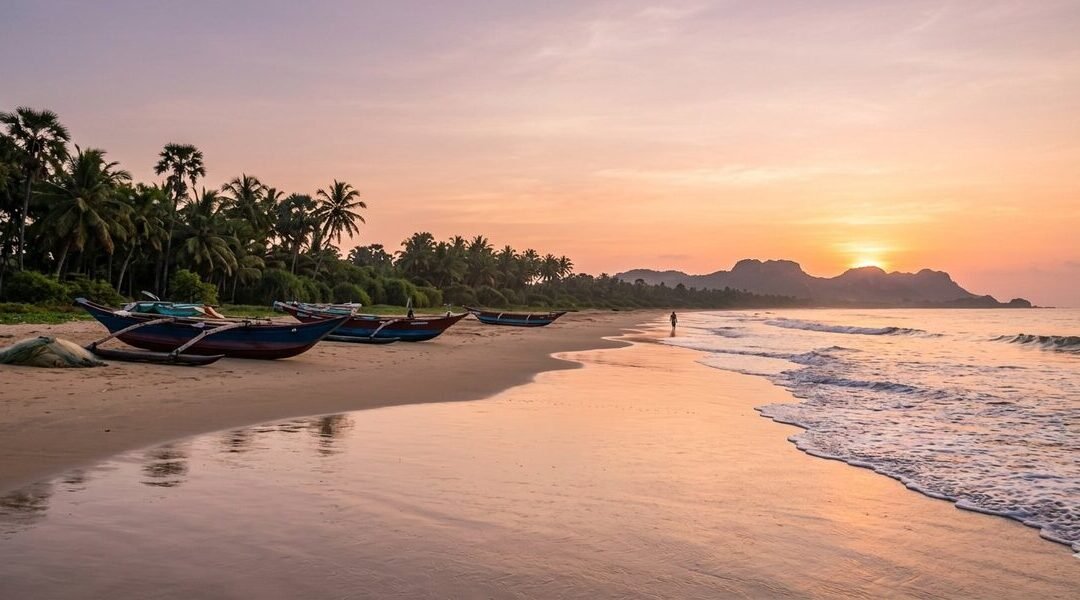
The beaches are long and uninterrupted. Fishing boats rest on the sand like they’ve been paused mid-story. Palmyrah trees lean toward the sea. And the silence—broken only by waves and wind—feels deliberate.
I remember standing on the shore at Okanda at sunrise, realizing there were no footprints in the sand except my own. No vendors. No music. Just ocean, sky, and time moving slowly.
Panama Beach: Laid-Back, Local, and Beautifully Unpolished
Panama village has a gentle rhythm. It’s not sleepy—it’s simply unhurried.
What to See in Panama
Panama Beach
Wide, sandy, and often empty, this beach feels personal. The waves roll in with confidence, and the shoreline stretches far enough that walking it feels meditative.
Lagoon Backdrops
Just inland, you’ll find lagoons and wetlands reflecting the sky, especially stunning in the early morning when birds rule the airspace.
Fishing Life
Watching fishermen bring in their catch at dawn is its own quiet spectacle. No performance, no audience—just daily life continuing as it always has.
What to Do in Panama
Surf Without the Scene
The waves here attract surfers who prefer solitude over surf schools. It’s surfing stripped back to its essentials.
Beach Walks That Go Nowhere (In the Best Way)
No destinations, no checkpoints—just walk until you feel like turning around.
Stargazing
With almost no light pollution, nights here reveal a sky that feels impossibly large.
Okanda: Where the Road Ends and the Wild Begins
Okanda feels like the edge of something—civilization, perhaps, or routine.
This is a place shaped by pilgrimage, wilderness, and the ocean. It’s also one of the last coastal villages before the landscape becomes deeply untamed.
What Makes Okanda Special
Okanda Murugan Temple
A sacred site for pilgrims traveling on foot along the coast. The temple adds a spiritual gravity to the area, especially during early morning prayers.
Proximity to Yala East
Okanda sits near the boundary of Yala’s lesser-visited eastern side. Elephants, peacocks, and deer don’t respect invisible borders—and that’s part of the magic.
Endless, Empty Beach
This is the kind of beach where you instinctively lower your voice. Not out of fear—but respect.
What to Do in Okanda
Sunrise Watching
The sun rises directly over the ocean here, painting the sky in colors that feel unreal.
Quiet Exploration
Wander the village paths, observe daily life, and let curiosity—not itineraries—lead.
Disconnect Completely
Okanda isn’t interested in constant connectivity. And after a day here, neither was I.
Getting There from Katunayake International Airport
Reaching Panama and Okanda is part of the experience. This isn’t a hop-on, hop-off destination—and that’s exactly why it remains special.
Option 1: Private Car or Taxi
From the airport, the journey takes you across the island—from the west coast, through central landscapes, and down toward the east. It’s the most comfortable and flexible option, especially if you want to stop along the way.
The scenery changes dramatically as you travel—urban sprawl fades into paddy fields, then forests, then open coastal plains.
Option 2: Train + Road Combo
Travel from the airport to Colombo Fort
Take a train toward Batticaloa or Ella
From a major stop like Monaragala or Pottuvil, continue by tuk-tuk or local vehicle
This option is slower but deeply rewarding, offering a window into everyday Sri Lankan life.
Option 3: Bus for the Adventurous
Long-distance buses run from Colombo toward Pottuvil and Panama. From Panama, Okanda is accessible via rugged coastal roads, best navigated by tuk-tuk or 4WD vehicles.
Expect dust, bumps, and unforgettable views.
Where to Stay: Simple, Comfortable, and Close to Nature
Accommodation in Panama and Okanda reflects the spirit of the place—low-key and thoughtfully minimal.
Panama Stays
Eco Lodges tucked among trees, offering open spaces and ocean sounds as your alarm clock
Small Guesthouses run by local families, where evenings often end with shared stories and home-cooked meals
Okanda Stays
Basic Beach Cabins designed for travelers who value location over luxury
Nature Retreats near the forest edge, where wildlife sightings aren’t scheduled—they just happen
If you prefer more amenities, nearby Arugam Bay offers additional options while still allowing easy day trips south.
What to Pack (and What to Leave Behind)
Bring:
Light clothing for heat and humidity.
A good hat and sunscreen.
Reusable water bottle.
Curiosity and patience.
Leave behind:
Rigid schedules.
Expectations of nightlife.
The need to always be “doing something”.
These beaches reward stillness.
Best Time to Visit
The east coast shines when the rest of the island is drenched. Sunny days, calm seas, and open skies make this region especially inviting during its peak season.
Mornings and evenings are magical—soft light, cooler air, and a sense that the world is briefly holding its breath.
Why Panama & Okanda Stayed With Me
Some places impress you.
Others change your pace.
Panama and Okanda did the latter.
Here, I stopped checking the time. I started measuring days by tides and sunsets. Conversations felt unforced. Meals tasted better. Sleep came easier.
These beaches don’t try to entertain you—they invite you to listen.
And once you do, it’s hard to forget the sound of waves crashing on an empty shore, with no one around to witness it but you.
If you’re searching for Sri Lanka beyond the brochures—where the island feels ancient, spacious, and beautifully indifferent to tourism—Panama and Okanda are waiting
by Travel Nomad | Mar 30, 2026 | Southeast Asia, Sri Lanka |
Some destinations steal your heart immediately. Others do it quietly—slowly—like a soft tide that laps at your feet until you suddenly realize you’re knee-deep in wonder. Dutch Bay in Kalpitiya was exactly that kind of place for me.
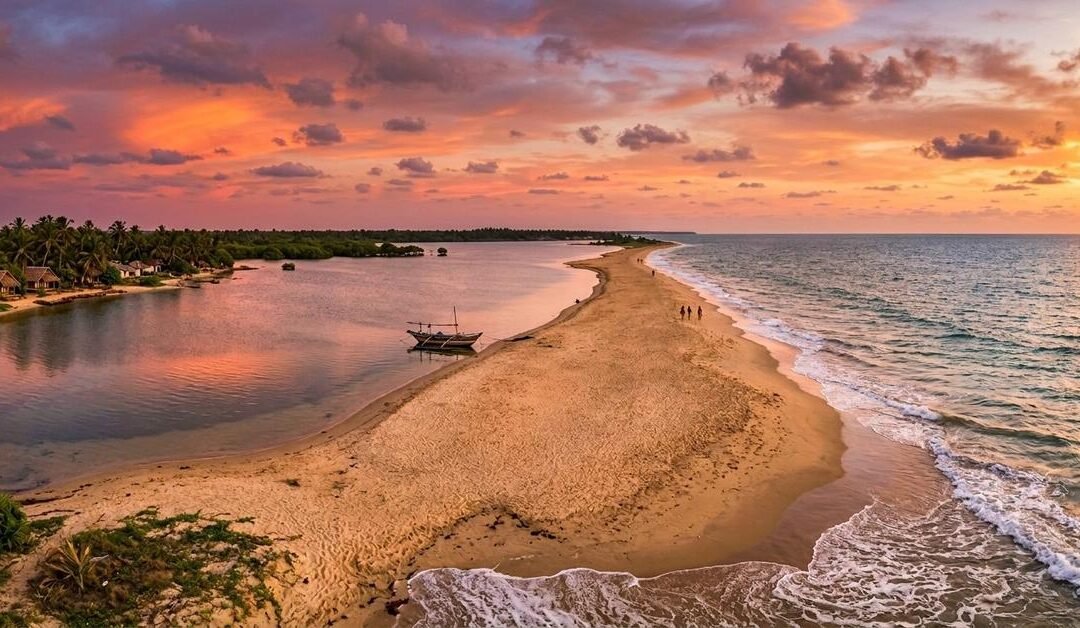
Set along the northwestern coast of Sri Lanka, Dutch Bay is part of the larger Kalpitiya peninsula—a slender tongue of land where the Indian Ocean and the Puttalam Lagoon breathe in unison. Everyone talks about Kalpitiya’s kitesurfing, about Wilpattu’s leopards nearby, and dolphin-watching in the sea. But few speak about Dutch Bay—a pristine, windswept sand spit that feels like a secret whispered only between ocean, sky, and wandering souls.
This is the story of how I fell under its spell.
Getting to Dutch Bay from Katunayake Airport
Dutch Bay isn’t far from the airport, but it feels like you’re traveling toward the end of something—an edge, a border between known and wild.
Here are your options:
Private vehicle:
The easiest route is to drive from Katunayake up the western coastline through Negombo, Chilaw, and Puttalam. The road is smooth, lined with toddy shops, coconut estates, salt pans, and stretches of lagoon shimmering in the sun. As you approach Kalpitiya, the road narrows and the world becomes quieter, flatter, saltier.
Taxi + Local Transfer:
You can catch a taxi to Chilaw or Puttalam and switch to a tuk-tuk or local vehicle heading toward Kalpitiya town and Dutch Bay.
Bus:
Direct buses run up the coastal route. From Puttalam, smaller buses or tuk-tuks will take you toward Kalpitiya and the bay.
Train + Road:
Take a train to Puttalam (a scenic, palm-shaded ride), then transfer to a local bus or tuk-tuk towards Kalpitiya.
By the time I arrived, the salty wind was already in my hair, and I could smell the sea long before I saw it.
First Impressions: A World of Wind, Water, and Wide Horizons
Dutch Bay feels untouched.
The first thing I noticed was the wind brushing past me—constant, playful, full of mischief. The second was the endlessness: flat land, low shrubs, sand dunes, and a horizon so wide it felt like the sky was stretching just for me.
You won’t find crowds here. No chaotic beach bars. No lines of umbrellas or music blaring from speakers. Dutch Bay is spacious, raw, and astonishingly quiet.
As I stepped onto the sand spit for the first time, the world seemed to pause. The sea sparkled on one side. The lagoon shimmered on the other. And in between stood this slender strip of golden sand, reaching out like a finger toward the deeper ocean.
It was love at first sight.
What to Do in Dutch Bay
Dutch Bay is not for people who crave loud, packed beach scenes. It’s for dreamers. Wanderers. People who want to feel the world breathe.
Here’s what filled my days:
1. Wander Along the Sand Spit
Dutch Bay’s sand spit is one of the most unique geographical features in Sri Lanka. It stretches impossibly far—narrow at points, widening at others, always bordered by blue.
Walk it. That’s my advice.
Early morning, when the light is soft and cool, the sand is patterned with bird tracks. Midday, the ocean is bright and bold. Sunset? Pure magic. The sky explodes into pinks and oranges, reflected on both sides by water.
At times, I walked barefoot with waves touching both ankles at once. It felt like walking on the spine of the world.
2. Dolphin Watching in Kalpitiya
Dutch Bay is one of the best launching points for dolphin watching on the island. Boats leave at dawn, cutting across the calm morning waters of the Indian Ocean.
I remember the exact moment when a pod of spinner dolphins leaped beside our boat—sleek, playful, dancing in arcs of sunlight. There were dozens, maybe hundreds, gliding effortlessly together.
If you’re lucky, you may also spot:
Bottlenose dolphins.
Risso’s dolphins.
Occasional whales cruising further offshore.
It’s humbling to witness.
3. Explore the Mangroves and Lagoon
Dutch Bay borders the enormous Puttalam Lagoon—one of Sri Lanka’s richest aquatic environments. Renting a kayak or joining a small lagoon ride lets you slip into a world of:
Mangrove tunnels.
Hidden sandbanks.
Fishermen balancing on narrow canoes.
Migratory birds perched like ornaments along the water’s edge.
The lagoon has its own rhythm—calmer, slower, reflective.
One evening, I drifted among the mangroves as the sun fell and the water turned to glass. It’s moments like that which stay etched in memory.
4. Kitesurfing (Even if You Don’t Try It!)
Even if you never strap into a kite, watching kitesurfers swooping across the lagoon is a spectacle. Dutch Bay and Kalpitiya are world-famous for strong, steady winds—perfect for the sport.
Giant colorful kites streak across the sky like tropical birds. Surfers glide over the surface with unbelievable finesse. The whole scene has an energy that makes you want to cheer.
If you’re adventurous, this is the place to take your first lesson.
5. Visit St. Anne’s Church Thalawila
A short drive south takes you to the historic St. Anne’s Church—one of the oldest and most beloved pilgrimage sites in Sri Lanka.
Its white façade stands out against the coconut fringes. Inside, it’s quiet, peaceful, and filled with the scent of old wood and candles. Even if you’re not religious, the atmosphere feels comforting.
6. Birdwatching Around the Lagoon
Dutch Bay is a paradise for bird lovers. Some of the species I spotted:
Grey herons.
Egrets.
Flamingos (seasonal, but worth dreaming about)
Brahminy kites.
Sandpipers.
Terns.
Pelicans.
The early mornings hum with wings.
7. Sunset Watching—The Ritual
Every evening, Dutch Bay becomes a theatre.
The wind calms slightly. Fishermen return with their boats. The sky begins to glow. The sand cools beneath your feet.
And then—the sun dips. First orange. Then pink. Then a deep purple that ripples across the sky like spilled ink.
Sunset here is not just something you watch. It’s something you feel.
Where to Stay
Most accommodations around Dutch Bay are boutique-style lodges, eco cabanas, or small hotels designed to blend with the natural environment. The vibe is relaxed, breezy, and tucked-away.
Expect stays with:
Cabanas nestled among palms
Open-air lounge areas
Hammocks slung between casuarina trees
Sea or lagoon views
Candlelit dinners under star-heavy skies
Some stays are close to the beach, while others sit along the lagoon—both options offer beautiful views and incredible silence at night.
I stayed in a small eco-lodge where evenings were spent listening to the wind and mornings began with strong tea and the call of seabirds.
What to Eat in and Around Dutch Bay
Seafood rules here.
Must-try dishes:
Fresh lagoon crab
Grilled sea fish caught at dawn
Prawn curry with coconut milk
Pol roti with spicy lunu miris
Tropical fruit platters with watermelon, pineapple, and papaya
One night, I ate dinner on the beach—bare feet in the sand, stars overhead, the sound of waves as the only music. If I could bottle that moment and keep it forever, I would.
What Makes Dutch Bay Special
I’ve visited many of Sri Lanka’s beaches—from Mirissa’s waves to Jaffna’s coves to Trincomalee’s soft sands. But Dutch Bay? Dutch Bay is different.
It’s untouched.
It’s quiet.
It’s windswept.
It’s wild.
It’s honest.
The beauty here is raw—like nature before it learned to perform for tourists. There are no crowds. No loud markets. No clusters of hotels competing for space. Just the sea, the lagoon, the mangroves, the wind, and the long sweep of sand that holds it all together.
At Dutch Bay, the world feels wider. The air feels lighter. And time feels slower.
My Last Morning in Dutch Bay
On my last morning, I woke before dawn and walked to the water’s edge. The world was still blue—half awake. The wind was soft for once.
Birds skimmed across the lagoon. Fishermen lit small lamps on their boats. The smell of the sea was sharp, clean, awakening.
I stood on the sand spit, shoes in hand, and watched the first golden line of sunlight stretch across the water.
And as the sky broke open into color, I realized something:
Dutch Bay is not just a destination.
It is a feeling—of being suspended between sea and sky, between noise and silence, between life’s rush and its hush.
It is a place where you remember how to breathe deeply.
Where you see beauty in simplicity.
Where your heart becomes a little lighter.
And long after you leave, you will carry it with you.
If you’re searching for a hidden corner of Sri Lanka where nature still speaks in its original voice, Dutch Bay is waiting—quiet, untouched, windswept, and impossibly beautiful.
by Travel Nomad | Mar 27, 2026 | Southeast Asia, Sri Lanka |
A first-person wander through Sri Lanka’s most atmospheric UNESCO World Heritage Site
Galle Fort does something unusual for a historical monument: it functions. Not as a theme park version of itself, not as a carefully preserved ruin that you peer at through a fence, but as a living, inhabited, genuinely occupied city within a city. People are born here. Families have lived in the same houses for generations. The streets are narrow and the walls are thick and the Indian Ocean is visible from almost everywhere, and the whole thing operates with a confidence that suggests it has absolutely no interest in your opinion of it.
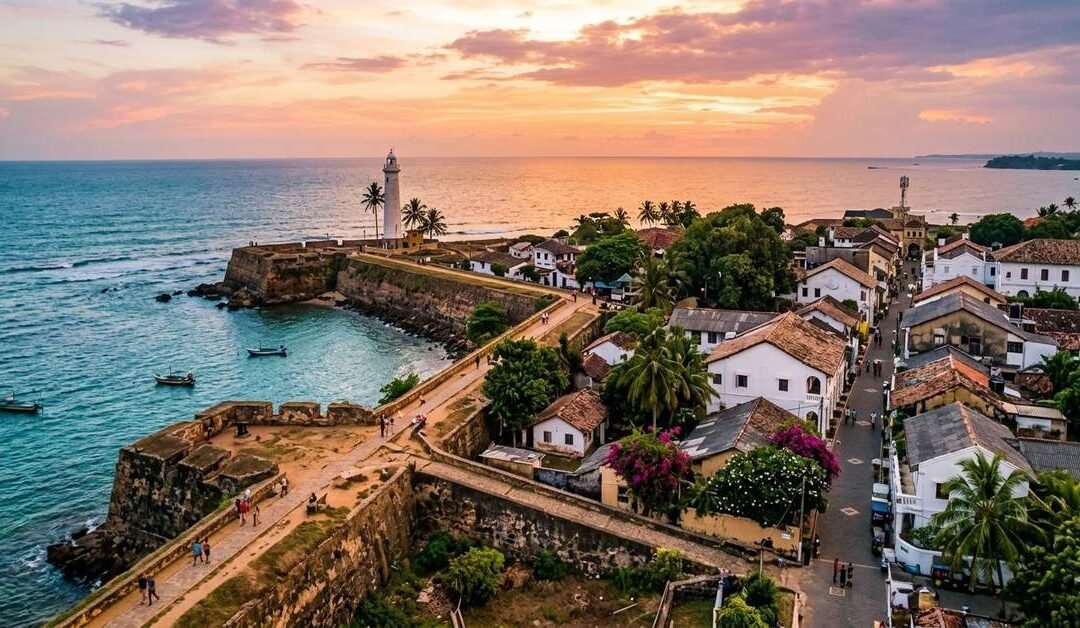
The Fort is a 36-hectare promontory on Sri Lanka’s south coast, first fortified by the Portuguese in the late 16th century, substantially rebuilt by the Dutch in the 17th and 18th centuries, and then absorbed into the British Empire without much fuss. Each colonial power left its marks in the architecture, the street plan, the place names. But the most interesting thing about Galle Fort isn’t its colonial history. It’s what the Sri Lankans did with that history once the colonisers went home: they moved in, made it entirely their own, and turned it into one of the most singular places in Asia.
I’ve visited a lot of UNESCO sites over the years, and many of them carry a faint air of obligation, as though you’re there because you’re supposed to be. Galle Fort never feels like that. It feels like a place worth being in for its own sake, on its own terms, without any particular agenda beyond walking and looking and letting the afternoon go where it wants to.
Getting There from Katunayake Airport
Galle is roughly 160 kilometres south of Bandaranaike International Airport, which sounds simple until you factor in Colombo traffic, which can add an unpredictable 45 minutes to an hour to your journey time depending on the hour of day. Total travel time from the airport to Galle Fort runs between two and a half and four hours. Build in the buffer. Sri Lanka will always find a way to use it.
The fastest and most comfortable option is the Southern Expressway by private car or taxi. The expressway bypasses Colombo entirely if you pick it up from the Katunayake junction, and the drive down to Galle takes under two hours in normal conditions. It’s a modern, well-maintained highway and the first stretch, before the road turns inland, gives you occasional flashes of the coast that serve as a reasonable preview of what’s coming. Hire a driver through your hotel or through PickMe or Uber, both of which operate in Sri Lanka. A knowledgeable driver is worth asking for by name if your accommodation can recommend one.
The train is the more atmospheric option and frankly one of the better train journeys in Asia. From Colombo Fort Station, the coastal line to Galle runs south along the shoreline with the ocean appearing and disappearing on your left as the train weaves between fishing villages, coconut groves, and seaside towns. The journey takes about two and a half hours on the intercity express. The views from the right-hand windows as you head south are consistently lovely, and the whole experience has a gentle, unhurried quality that puts you in exactly the right frame of mind for the Fort. You’ll need to get to Colombo Fort Station first, which is about 45 minutes from the airport by taxi.
Intercity buses from Colombo to Galle run frequently from the Bastian Mawatha terminal and take around two to three hours depending on which service you catch. The express buses are faster and air-conditioned. They’re not as scenic as the train but they’re perfectly comfortable and very straightforward to use. Again, you’ll need to make your own way to the Colombo terminal from the airport first.
Once in Galle town, the Fort is walkable from the main bus and train stations. It takes about ten minutes on foot from the Galle train station to the main gate of the Fort, which is a perfectly reasonable walk with luggage if you’re travelling light. Tuk-tuks are available outside both stations if you’re not.
What to See
The ramparts are where you start and where you’ll probably end up returning several times. The Fort’s walls run for nearly three kilometres around the promontory, and walking them gives you a continuously shifting perspective: the town below on one side, the ocean on the other, and the light changing constantly as the sun moves across the sky. The best times are early morning and the hour before sunset, when the stone takes on a warm, tawny quality and the sea turns colours that seem slightly implausible. But honestly, the ramparts are worth walking at any hour.
The Dutch Reformed Church, dating to 1755, is one of the Fort’s most striking buildings. The interior is largely unchanged from its original construction, with pew-end inscriptions and tombstones set into the floor that read like a compressed history of Dutch colonial life and death in Ceylon. The graves of merchants, military officers, and their families are laid out beneath your feet as you walk, and the dates and inscriptions are more affecting than any museum display.
The National Maritime Museum, housed in a Dutch warehouse on the harbour side of the Fort, focuses on Sri Lanka’s long relationship with the sea: ancient trade routes, traditional fishing craft, the natural history of the surrounding ocean. It’s not a vast collection but it’s thoughtfully presented and provides useful context for the Fort’s significance as a port.
The streets themselves are the real museum. Leyn Baan Street, Church Street, Pedlar Street: these narrow lanes are lined with Dutch colonial architecture in various states of elegant disrepair or careful restoration. Shuttered windows, tiled roofs, thick whitewashed walls. Bougainvillea spilling over courtyard gates. A cat asleep on a step outside a gem shop. A school in a building that’s been a school since the 18th century. The Fort rewards slow, undirected walking in a way that few places do.
The lighthouse at the southern tip of the Fort is the oldest in Sri Lanka, originally constructed by the British in 1848. It’s still operational, which seems right somehow. It remains exactly where it was built, doing exactly what it was built to do, while the world has changed entirely around it.
What to Do
Walk the ramparts at sunrise. Set your alarm, which will feel unreasonable at the time and entirely justified once you’re standing on the Fort walls at six in the morning with the ocean going gold below you and almost no one else around. The Fort at sunrise belongs to the people who live here: the fishermen heading out, the women sweeping their front steps, the monks walking in procession. It’s a completely different place from the busy, tourist-filled afternoon version, and it’s the better one.
Browse the shops and galleries, which are genuinely worth your time. The Fort has attracted an interesting mix of independent traders, local artisans, antique dealers, and small galleries over the years. You’ll find Sri Lankan handloom fabrics, local jewellery, antique maps and prints, handmade books, small-batch spices. It’s not a souvenir market in the conventional sense. The shops here have considered what they’re selling and the things they stock reflect that. Bring more cash than you think you need.
Eat and drink well. Galle Fort has, over the past decade, developed a food scene that would be impressive in a city ten times its size. Small restaurants and cafes occupy restored Dutch buildings throughout the Fort, offering everything from proper Sri Lankan rice and curry to wood-fired pizza to some genuinely excellent seafood. The rooftop at the Galle Fort Hotel, though the hotel itself is beyond the budget of most travellers, has a bar that’s worth visiting for a sundowner even if you’re not staying there. The view across the ramparts and the ocean from that terrace at dusk is exactly as good as it sounds.
Attend the Galle Literary Festival if your visit coincides with it. Held annually in January, it’s one of the better literary events in Asia and uses the Fort’s various indoor and outdoor spaces as its venues. Writers, readers, and the literary curious descend from around the world, and the combination of intelligent conversation about books and the Fort’s extraordinary setting produces an atmosphere that’s genuinely unlike any other festival I’ve attended.
Day trips from the Fort are easy and worthwhile. Unawatuna Beach, three kilometres east, is one of Sri Lanka’s most popular swimming beaches and is accessible by tuk-tuk in ten minutes. Hikkaduwa, further along the coast, has good snorkelling on its reef. Mirissa, about 40 kilometres east, is the departure point for whale watching trips between November and April. The hinterland behind Galle holds cinnamon plantations, rubber estates, and small Buddhist temples that receive very few visitors.
Where to Stay
Staying inside the Fort is unambiguously the right choice if you can manage it. The experience of waking up within the walls, of having the Fort’s streets available to you before and after the day visitors arrive, is qualitatively different from commuting in from outside each day. The Fort accommodates everyone from backpackers to honeymooners, and the range of options is wider than you might expect from such a contained area.
At the top end, several of the Fort’s historic Dutch houses have been converted into small boutique hotels of considerable elegance. These are typically eight to twelve rooms in restored colonial buildings with high ceilings, antique furniture, courtyard gardens, and the kind of attentive service that only small properties can provide. They’re not cheap by Sri Lankan standards, but the buildings themselves are extraordinary and the location is impossible to replicate.
Mid-range guesthouses in the Fort offer clean, comfortable rooms in historic buildings at considerably more accessible prices. Many are family-run, and the owners tend to be excellent sources of local knowledge: which restaurant opened recently, which lane is best for sunset photographs, when the cricket matches are played on the Fort grounds. Ask questions and pay attention to the answers.
Budget accommodation exists within the Fort but is limited. If you’re travelling on a tight budget, staying just outside the walls in Galle town proper is a practical alternative. The Fort is a short walk from anywhere in the town, and the savings can be significant. Unawatuna, three kilometres away, has a wide range of budget beach accommodation and is a popular base for day trips into the Fort.
Book ahead if you’re visiting between December and March, which is the dry season on the south coast and the period when the Fort is at its busiest. The January literary festival in particular fills accommodation weeks in advance. Outside peak season, the Fort is quieter and more itself, and many of the better guesthouses will have availability on shorter notice.
The Thing About Galle Fort
Most UNESCO World Heritage Sites are significant for what they were. Galle Fort is significant for what it continues to be. The history is real and the architecture is remarkable and the designation is entirely deserved. But the reason to come here isn’t principally to look at old buildings. It’s to spend time in a place where four centuries of layered history have produced something that feels, improbably, entirely alive.
The Muslim families who’ve traded here for generations. The Sinhalese craftsmen whose workshops occupy buildings the Dutch constructed. The Tamil residents whose grandparents moved here before independence. The small wave of internationally minded Sri Lankans who’ve opened restaurants and galleries in the past decade. All of them occupying the same 36 hectares, going about their lives within walls that were built by people who never imagined any of this.
That’s Galle Fort. Go slowly. Look at things carefully. Eat as many meals as you can justify. And walk the ramparts at least once in the dark, when the lighthouse beam sweeps out over the ocean and the Fort is quiet and the stars are clear and the whole place feels like a secret that somehow managed to stay one despite everyone knowing about it.
Some places are worth every bit of the journey. This is one of them.