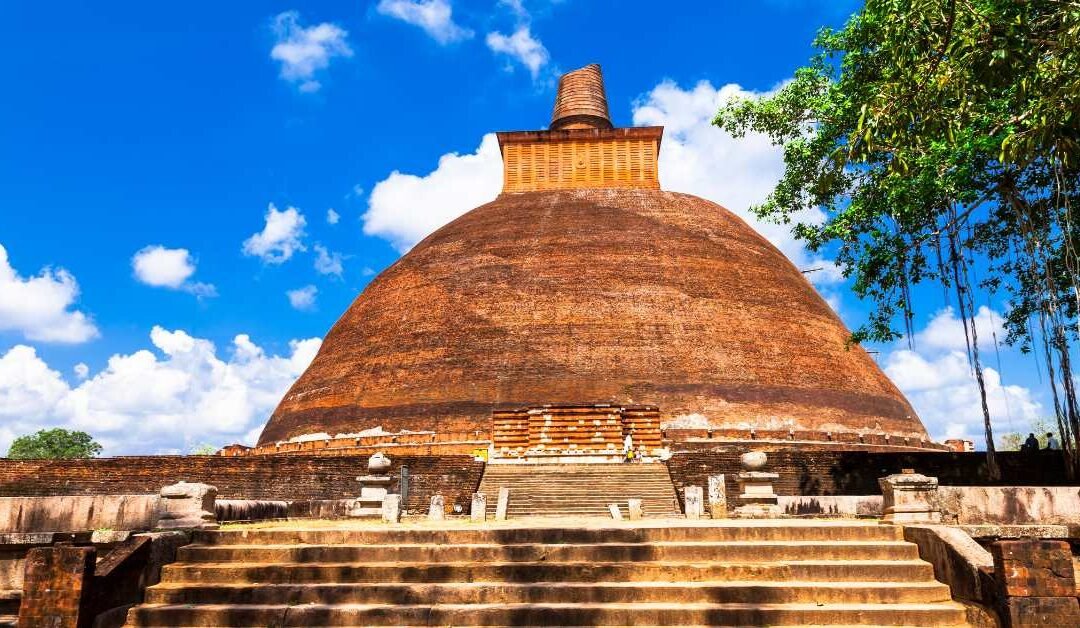
I’ll be honest with you. When I arrived at Thuparamaya, I wasn’t sure what to expect. I’d spent the previous day walking around the enormous stupas of Anuradhapura, the ones that look like small hills when you see them from the road and reveal themselves as genuine architectural wonders once you’re standing at their base. Those structures are hard to miss, hard to ignore, and hard to process. Thuparamaya, by contrast, is compact and quietly positioned within its own walled precinct. Nothing about its exterior shouts for attention.
And then you read the sign. Built in the third century BC. The first stupa ever constructed in Sri Lanka. The one that started everything else you’ve been looking at for the past two days.
I stood there for a moment, recalibrating. When most of us say something is ‘ancient,’ we mean it loosely. We mean Roman walls or medieval castles. Thuparamaya predates Roman Britain by three hundred years. It was built under orders from King Devanampiya Tissa, who commissioned it to enshrine the collarbone relic of the Buddha following the arrival of Buddhism on the island in the 3rd century BC. The monk who brought that faith to Sri Lanka was Mahinda, son of the great Indian emperor Ashoka, and this stupa was the direct consequence of that meeting. Two thousand three hundred years later, there were fresh flowers at its base when I visited. Someone had been there that morning. Possibly someone was there right now.
That’s the thing about Thuparamaya that gets you, once you slow down enough to let it. It’s not a ruin. It’s not a museum exhibit with a rope barrier. It’s a place of active, daily, sincere religious practice, and it has been for over two millennia without interruption. That kind of continuity is genuinely rare in the world, and it gives the place a quality that’s difficult to name but easy to feel.
Getting from Katunayake to Anuradhapura
The airport sits on the northwest coast. Anuradhapura is about 200 kilometres north of it, in the dry zone interior. Depending on traffic and your choice of transport, you’re looking at somewhere between three and a half and five hours of travel. That might sound like a lot, but this is the kind of journey that rewards patience rather than punishes it. The landscape genuinely changes as you move north: the humid, layered greenery of the coastal strip gradually loosens and opens out into the wider, drier, older-feeling terrain of the north central province.
A private car from the airport is the most flexible option, and it’s what I’d recommend if you’re travelling with luggage or want to stop along the way. The standard route runs via the A1 through Colombo and then north on the A9 through Kurunegala and Dambulla. If you’ve got an extra hour, Dambulla’s cave temple complex is an excellent stop and breaks the journey nicely. Book a driver through your accommodation or use PickMe or Uber from the airport, both of which operate reliably. Ask for someone who knows the north central roads if you can.
The train is my preferred option for this route. From Colombo Fort Station, which is about 45 minutes from the airport by taxi, the intercity express north takes around three and a half to four hours and passes through a landscape that gets progressively more open and atmospheric the further you go. The journey itself is genuinely pleasant. You get a feel for the country’s geography in a way that a car window doesn’t quite provide, and the train arrives at Anuradhapura station in the new town, from where a tuk-tuk to Thuparamaya takes about fifteen minutes.
Intercity buses from Colombo’s Bastian Mawatha terminal cover the route in around four hours on the express service and are air-conditioned and straightforward to use. Getting yourself to the terminal from the airport is the first step, which means a taxi to Colombo first. Once in Anuradhapura, the sacred zone is most comfortably explored by bicycle, which you can hire cheaply from shops near the archaeological zone entrances. The roads within the precinct are flat, quiet, and well-suited to cycling. Tuk-tuks are available if you’d rather not pedal.
What You’re Actually Looking At
Thuparamaya is a vatadage, which means the central stupa is surrounded by concentric rings of stone pillars that once held up a wooden roof. The pillars are still standing, at varying heights, in several rings around the dome, and walking in through them towards the stupa gives you a proper sense of moving through a designed sacred space rather than just approaching a large object. The architecture is intentional. You’re meant to feel the transition.
The stupa itself is modest in scale relative to the huge dagobas elsewhere in Anuradhapura, which are among the largest ancient structures ever built. Thuparamaya is more intimate, and that turns out to matter. The white dome has a bell-shaped elegance that the giant structures, for all their impressiveness, don’t quite have. When I visited, there were orange flowers scattered at its base, a few incense sticks still smoking in a holder near the railing, and two women in white sitting in quiet prayer nearby. Nobody was performing for anyone. They were just there.
The stupa you see today isn’t unchanged from the original. It’s been restored several times, most recently in the 1940s, and the current form reflects layers of renovation over centuries. This is worth knowing, because it’s true of virtually every ancient structure you’ll visit in Sri Lanka, and it doesn’t diminish anything. The site is original. The relic within is understood to remain in place. And the act of coming here, laying flowers, walking the circumambulation path clockwise, has been continuous since the third century BC. That’s the lineage that matters.
Go early in the morning if you can manage it. Seven o’clock at Thuparamaya, with the low light coming across the pillar rings and a handful of devotees moving quietly around the stupa, is one of the better hours I’ve spent in a long time of travelling around South Asia. The tourist buses haven’t arrived. The heat hasn’t arrived either. It’s just you, the stone, and the sound of birds in the trees behind the wall.
The Rest of Anuradhapura: Don’t Rush It
Thuparamaya sits within the sacred zone of Anuradhapura, which is vast and contains more significant sites than you can comfortably cover in a single day. Give it two days. Honestly, three is better, and the town is pleasant enough to warrant it.
The Sri Maha Bodhi is the other site in the sacred zone that I’d consider non-negotiable. It’s a fig tree, specifically a sapling from the original Bodhi tree under which the Buddha attained enlightenment, planted here in 288 BC. That makes it the oldest historically documented tree in the world. It’s tended constantly, supported by golden railings and attended by monks and pilgrims at all hours. Watching people pray to a tree that has been alive since before the Roman Empire was founded is one of those travel experiences that’s difficult to frame in a photograph but impossible to forget in person.
The Jetavanaramaya stupa is the one that will make you stop and genuinely recalibrate your sense of scale. When it was constructed in the 3rd century AD, it was the third-largest structure in the ancient world. Walking its perimeter takes a while. The Ruvanvelisaya Dagoba, closer to the town centre of the sacred zone, is the most classically beautiful of the large stupas and the one that photographs most easily, though no photograph does it proper justice.
The Isurumuniya Vihara, a rock temple cut into a granite outcrop at the edge of Tissa Wewa tank, is smaller and less visited and considerably more charming for it. The carved stone panel known as the Isurumuniya Lovers, a Gupta-influenced sculpture from around the 5th century AD, is housed in a small museum at the site and is one of the finest pieces of ancient art in the country. The setting, with the tank below and the carved rock faces glowing in the late afternoon light, is genuinely lovely.
Mihintale deserves a full half-day. It’s 13 kilometres east of Anuradhapura and is the hilltop site where Mahinda first met King Devanampiya Tissa, setting Buddhism’s arrival in motion. You climb 1,840 granite steps to reach the summit stupa, and the view from the top across the dry zone forest and the glinting reservoirs below is worth every step. It’s less crowded than the main sacred zone and feels wilder and more contemplative for it.
Practical Things Worth Knowing
Poya days are full moon days, which in Sri Lanka are public holidays and days of particularly intense Buddhist observance. If your visit coincides with one, the sacred zone fills with pilgrims from across the country, the temples are lit and decorated, and the atmosphere is transformed. Thuparamaya on a poya day is a religious gathering, not a heritage site visit, and the difference is palpable. It’s worth timing your trip around one if you can.
Dress respectfully. Covered shoulders and knees are required throughout the sacred zone, and shoes come off before entering any temple precinct. The stone paths can be hot in the midday sun, so keep that in mind if you’re visiting between April and September, when the dry zone heat is serious. Start your days at six or seven in the morning, see the main sites before noon, and retreat to your guesthouse during the two or three hottest afternoon hours. It’s not laziness. It’s basic practical sense.
The local restaurants in Anuradhapura’s new town are excellent and completely unpretentious. Ask what’s good that day rather than studying a menu at length. Dry zone rice and curry have their own character, with slightly different spice profiles and a wider use of dried fish and green lentils than you’ll find in the coastal south. Eat at the places with no English signs outside. Those are the ones doing it properly.
Where to Stay
The new town has a good range of guesthouses and small hotels at various comfort levels, and most are within cycling or tuk-tuk distance of the sacred zone. Family-run guesthouses are by far the best option for most travellers. They’re clean, warmly run, and the owners tend to be invaluable sources of practical information: when the sites are quietest, which roads to take by bicycle, whether the monkeys at a particular spot have been causing problems this week. That kind of local knowledge isn’t in any guidebook.
In Anuradhapura, the focus should be on your connection to the place, not boutique-hotel polish.
Lake House Home Stay: Rated exceptionally high by travellers, this is the epitome of the warm, family-run experience the blog praises. It’s simple, immaculately clean, and the hosts are known for exactly the kind of practical advice the author mentions—like telling you the best cycling routes to the Ruvanvelisaya Dagoba or warning you about the local monkeys. The food here often mirrors the “dry zone rice and curry” the blog celebrates, giving you a taste of authentic local flavour profiles.
Happy Haven Homestay: Located centrally in the new town but tucked away from the main noise, this property is famous for its exceptional hospitality. Staying here feels less like a hotel transaction and more like being welcomed into a Sri Lankan home. The hosts can easily help arrange the cheap bicycle hires the blog recommends, ensuring you are pedalling through the flat, quiet roads of the precinct just as the sun comes up.
CALMORA Home Stay: Featuring a beautiful garden terrace, this is a brilliant spot for that crucial afternoon retreat the blog advises. When the dry zone heat hits its peak between noon and 3 PM, having a quiet, family-run garden to return to is exactly what the author means by “basic practical sense.”
Arachchi Heritage: While slightly more contemporary than a basic guesthouse, it remains intimate with just two minimalist bedrooms. It overlooks the tranquil Tissa Wewa (the same tank where the Isurumuniya Vihara is located). It offers a refreshing courtyard pool, clean lines, and polished concrete floors. Most importantly, it’s quiet, respectful of its surroundings, and perfectly positioned for those early morning walks to the stupas before the tourist buses arrive.
Malwathu Oya Forest Garden: Providing beautiful garden views and a terrace, this property puts you in a central location with a deeply natural feel. It allows you to wake up with the birds and easily transition into the sacred zone. The natural setting aligns perfectly with the blog’s observation of the landscape transitioning into the “wider, drier, older-feeling terrain” of the north central province.
Villa DeLorenta: This is a highly-rated mid-range option that strikes the perfect balance. It doesn’t try too hard to be falsely luxurious (which the blog rightly points out is usually uninteresting). Instead, it offers solid comfort, air-conditioned rooms, and attached bathrooms. It’s an ideal base camp for retreating during the hottest hours of the day.
Miridiya Lake Resort: Situated near the Nuwarawewa Lake, this hotel offers a pool and a bit more infrastructure while remaining highly accessible. It’s a great option if you prefer a bit more space or are travelling with family. The lakeside setting is lovely in the late afternoon, mirroring the glowing light the author describes at the rock temples.
Monaara Leisure: Another excellent mid-range choice that provides the essential comforts needed after a long day of cycling through ancient ruins. It’s clean, reliable, and well-positioned in the new town, meaning you are just a short tuk-tuk ride away from both the sacred zone and the unpretentious local restaurants doing rice and curry the proper way.
Ulagalla Resort: If you are willing to break away from the “new town guesthouse” model, this eco-resort sits on 58 acres of forest and paddy fields. It respects the environment, offers private plunge pools, and even has an Elephant Conservation Centre. It’s a different kind of stay than what the blog strictly advocates, but it perfectly matches the author’s deep respect for the continuity and natural beauty of the dry zone.
The Reason to Come
Anuradhapura is full of impressive things. The scale of what was built here over a thousand years of continuous civilisation is genuinely hard to absorb on a single visit, and most people leave feeling they’ve only scratched the surface. Thuparamaya won’t necessarily be the most visually spectacular site you see in the sacred zone. It probably won’t be the one you photograph most.
But it’s the one I keep thinking about. Not because of what it looks like, but because of what it represents and how quietly it carries that weight. Every Buddhist temple you’ll ever visit in Sri Lanka traces its lineage back to this one spot. Every act of stupa-building on the island, every offering of flowers, every circumambulation on a full moon night, is in some sense a continuation of what started here in the third century BC. That’s not a claim most buildings can make.
I’m not a Buddhist. I’m not particularly religious in any direction. But I stood at Thuparamaya on a Tuesday morning in January, watching an elderly woman place a white lotus at the base of a stupa that was already ancient when Julius Caesar was a child, and I felt something that I’m going to describe simply as respect. For the continuity of it. For the human persistence of it. For the fact that some things, against all odds, just keep going.
Get there early. Move slowly. Let it take as long as it takes.
Anuradhapura, a city steeped in millennia of history, stands as a profound testament to Sri Lanka’s ancient heritage. Recognized globally as a UNESCO World Heritage Site, it is revered as a pivotal spiritual center, particularly for Buddhists. Its landscape is punctuated by awe-inspiring stupas and dagobas, which serve as enduring symbols of a rich past.1 This ancient city offers a rare blend of historical grandeur and an authentic, tranquil atmosphere, attracting not only devout pilgrims but also discerning travelers seeking deep cultural immersion.1
The primary identity of Anuradhapura is deeply rooted in its ancient ruins and spiritual calm, consistently described as “scenic, peaceful, and surreal”.1 This inherent tranquility might lead an observer to anticipate a non-existent or minimal evening entertainment scene. However, an examination of the local hospitality landscape reveals that while a bustling nightlife district, common in many international tourist destinations, is conspicuously absent 4, there are indeed establishments, predominantly integrated within larger hotels, that cater to evening leisure.
This presents a fascinating dynamic: how a city so deeply steeped in ancient history and spiritual reverence accommodates contemporary evening activities. This suggests a unique approach to nightlife, one that is often more subdued and integrated into the hospitality experience rather than a standalone, vibrant scene. This duality implies that Anuradhapura’s evening offerings are not centered on high-energy partying but rather on providing a relaxed winding down after a day of cultural exploration. It caters to a specific traveler demographic that values comfort and convenience within their accommodation, offering a quiet reprieve rather than a boisterous night out.
Unlike the more bustling tourist centers in Sri Lanka, such as the vibrant capital of Colombo or the lively southern beach towns, Anuradhapura’s evening scene is distinctly understated.4 The city’s nightlife is predominantly integrated within hotel properties, reflecting its overall “off-the-beaten-path vibe” despite its established tourism infrastructure.1 A consistent pattern emerges from available information: major travel platforms like Expedia and Trip.com predominantly list hotels with bars as the primary sources of evening entertainment in Anuradhapura.6
Expedia alone identifies 19 accommodations with on-site bars.6 This strong concentration within hotels is a critical indicator of the local entertainment landscape. While a few independent establishments are mentioned, detailed information about them is less readily available, and their offerings appear more general. The city’s primary appeal as a historical and religious pilgrimage site 1 naturally leads to hotels being the main providers of comprehensive amenities, including bars, for their guests. These guests are primarily visiting for cultural exploration and relaxation, making on-site hotel bars a convenient and comfortable option. This contrasts sharply with destinations where nightlife is a standalone industry with numerous independent venues.
The purpose of this comprehensive guide is to illuminate the available options for evening entertainment in Anuradhapura, manage expectations for visitors, and provide practical advice for travelers seeking to unwind and experience the city after sunset, thereby ensuring a memorable and culturally sensitive visit.
The Cultural and Regulatory Fabric of Anuradhapura’s Nightlife
Understanding the local cultural and legal framework is paramount for any visitor navigating Anuradhapura’s evening scene. Sri Lanka operates under specific regulations concerning alcohol, which are further influenced by deeply ingrained cultural norms.
Sri Lankan Alcohol Regulations: Legal Age, Purchasing, and Consumption Norms
The legal drinking age across Sri Lanka is 18 years.10 Alcoholic beverages can be purchased from various licensed outlets throughout the country. These include dedicated wine stores, hotel and restaurant bars, and certain supermarket chains that operate their own wine stores within their premises.10 Standard operating hours for these establishments vary: wine stores typically function from 9:00 AM to 9:00 PM, while restaurant bars are generally open from 11:00 AM to 11:00 PM. It is noteworthy that some establishments, particularly nightclubs, may extend their operating hours beyond these limits with pre-approved licenses from the excise department.4
A historical law technically prohibits women from purchasing alcohol; however, this regulation is largely unenforced, especially for female tourists, who are permitted to buy and consume alcohol without issues.4 This indicates a practical leniency for international visitors, contrasting with the more traditional stance for local women. Public consumption of alcohol is illegal in Sri Lanka, even though one might occasionally observe locals consuming beverages on beaches or by roadsides.11 Travelers are advised that most alcohol consumption should occur within the confines of hotel bars or private guesthouses to align with legal expectations and local customs.11 For international travelers, there are specific legal limits on the amount of alcohol that can be brought into Sri Lanka: 1.5 liters of hard liquor, 2 bottles (totaling 1.5 liters) of wine, and 4 beer cans.10
The detailed picture of both explicit legal regulations (drinking age, purchase points, operating hours) and subtle cultural norms (the Buddhist perspective on alcohol, the de facto allowance for female tourists to purchase alcohol despite an archaic law, and the illegality of public drinking) indicates that alcohol consumption in Sri Lanka, particularly in a culturally significant city like Anuradhapura, is not a free-for-all but rather operates within a specific societal framework. The mention of “cultural barriers” for local women buying alcohol 10 and Buddhism’s view of alcohol as a “sin” 10 strongly suggests that discretion and respect for local customs are paramount for visitors. For tourists, this means that while they are generally free to enjoy alcoholic beverages, they should exercise mindfulness regarding the local environment. Opting for hotel bars or private settings for consumption aligns with prevailing local norms and helps avoid any potential cultural misunderstandings or legal issues.
The Influence of Buddhism: Local Perceptions and Cultural Sensitivities
Given that Buddhism is the predominant religion in Sri Lanka, alcohol consumption is generally perceived as a sin for both men and women within the local cultural context.10 This deeply ingrained cultural perspective significantly contributes to the comparatively subdued nature of Anuradhapura’s nightlife, especially when contrasted with more hedonistic party destinations globally.1
Anuradhapura’s profound spiritual heritage 1 and the pervasive Buddhist principles regarding alcohol consumption 10 directly shape the city’s evening entertainment landscape. The explicit absence of a prominent “nightlife district” 4 and the overwhelming prevalence of hotel-based bars 6 strongly suggests that overt, boisterous, or party-centric nightlife is neither a cultural priority nor an expected feature. The city’s enduring “off-the-beaten-path vibe” 1 further reinforces this notion.
The evening scene is designed for relaxation and quiet enjoyment, not revelry. Travelers who arrive with expectations of a vibrant, party-heavy nightlife, similar to what might be found in other major tourist destinations, are likely to be disappointed. The city’s unique character necessitates a different appreciation for its evening offerings, guiding visitors to engage with the unique, more tranquil, and culturally integrated experiences that Anuradhapura genuinely provides.
Understanding “Dry Days”: Poya Holidays and Other Alcohol Restrictions
A crucial aspect of planning an evening out in Sri Lanka, and particularly in Anuradhapura, is understanding “dry days.” Alcohol sales are strictly prohibited on Poya days, which are full moon days and recognized as public holidays across the country.4 On these Poya days, all dedicated wine stores, taverns, and bars are legally mandated to close.11 Beyond Poya days, alcohol restrictions also apply on other significant religious holidays (such as Vesak and Christmas) and designated temperance days.4
During these dry periods, while public sales and serving are restricted, tourists staying in hotels may sometimes be able to purchase alcohol from their hotel’s mini-bar or through room service for private consumption.4 It is advisable for travelers to purchase any desired alcoholic beverages in advance if their stay coincides with a dry day. The consistent and explicit mention of “dry days” on Poya holidays and other religious festivals across multiple sources 4 is a critical piece of practical information for any traveler planning their visit to Anuradhapura.
This is not a minor inconvenience; it signifies a complete cessation of public alcohol sales and service. The direct advice to buy alcohol beforehand or to rely on hotel room service 4 is a direct, necessary consequence of this regulation. The deeply ingrained and strong Buddhist cultural influence in Sri Lanka directly underpins these alcohol restrictions on religious holidays. This cultural imperative has a tangible, direct impact on the availability of nightlife options for both locals and tourists.
Local Beverages to Explore: Arrack, Toddy, and Popular Beers
For those looking to sample local flavors, popular Sri Lankan alcoholic brands include the widely available Lion Lager and Three Coins beer.10 More potent options from local breweries include Lion Stout, a dense dark beer, and Lion Strong, an 8% ABV lager popular locally.11
Arrack, a distinctively Sri Lankan spirit, is distilled from toddy (fermented palm sap) and typically contains 30-40% alcohol.10 Popular brands such as DCSL Extra Special and Old Reserve are commonly enjoyed neat, mixed with Coca-Cola or soda, or with a dash of cold water.10 Toddy, known locally as “Raa,” is a traditional beverage tapped from the flower of the coconut palm. When fresh, it is non-alcoholic, but it ferments into a mildly alcoholic drink (around 4% ABV) reminiscent of cider.10 It is often sold informally in villages and can be challenging for non-Sinhala speakers to locate.11
While international brands like Heineken, Carlsberg, Rum, and Whisky are available, they tend to be significantly more expensive due to import duties and local taxation.10 Wine is less prevalent in Sri Lanka compared to European countries but can be found in some specialized liquor stores and in the more upscale three- to five-star hotels.10 A word of caution is necessary regarding “Kassippu,” an illicitly produced alcoholic drink. Its consumption is strongly discouraged due to severe health risks associated with its unregulated production.10
While international alcoholic brands are readily available, the information consistently highlights unique local options such as Arrack and Toddy.10 This is more than just a list of available drinks; it represents a genuine opportunity for cultural immersion. Encouraging travelers to try these indigenous beverages allows them to experience authentic Sri Lankan flavors and traditions, which aligns perfectly with the descriptive and experiential focus of travel. The explicit warning about “Kassippu” 10 is also a critical piece of information for traveler safety and responsible tourism. By guiding travelers towards local drinks, the overall travel experience is enhanced, offering a more nuanced and authentic taste of the destination beyond mainstream offerings. This contributes to a deeper understanding and appreciation of Sri Lankan culture.
Table 4: Sri Lankan Alcohol Regulations at a Glance
Lion Lager, Three Coins, Arrack (DCSL Extra Special, Old Reserve), Toddy (Raa) 10
Beverages to Avoid (Warning)
Kassippu (illicit alcohol due to severe health risks) 10
Premier Hotel Bars: Sanctuaries for Evening Relaxation
Anuradhapura’s most reliable and often most sophisticated evening experiences are found within its hotels, offering a blend of comfort, convenience, and quality that caters to the city’s primary visitor demographic.
Rajarata Hotel: The Sophisticated Escape Bar
The Rajarata Hotel stands as a highly-regarded 3.5-star property, consistently receiving excellent ratings across various platforms, including 8.0/10 “Very Good” from 113 reviews on Expedia 6, 8.2/10 from 51 reviews on Trip.com 7, and 7.9/10 “Very Good” from 395 reviews on Agoda.15 Tracing its history back to the 1970s, this meticulously refurbished establishment aims to marry the splendor of a bygone era with contemporary luxuries, all set within a serene two-acre area in the ancient city.16
The “Escape Bar” at Rajarata Hotel boasts an extensive selection, featuring a wide range of international and local brands of wine, beer, and spirits.17 For those seeking something more crafted, delicious cocktails and refreshing mocktails are served throughout the day upon request.17 Additionally, the hotel’s main dining venue, the “Tranquil Restaurant,” complements the bar offerings with its own generous selection of fine wines and foreign liqueurs.17
The Escape Bar is thoughtfully designed as an “ideal place to sit back and let the day fade into darkness as you throw back a few shots”.17 The hotel as a whole is characterized by a “serene ambiance” 15 and a “lively atmosphere” within its bar area 15, successfully combining modern comforts with traditional Sri Lankan charm.15 Kayak rates the property’s overall atmosphere at 8.0/10.19
General hotel reviews are overwhelmingly positive, frequently highlighting the exceptional cleanliness, the friendly and welcoming staff, comfortable rooms, and a particularly impressive swimming pool.15 The overall service quality receives high praise, with a rating of 8.329.15 While specific customer reviews directly pertaining to the Escape Bar are limited in the provided information, the consistently positive sentiment towards the hotel’s general service, ambiance, and dining suggests that the bar experience would align with these high standards, offering a pleasant and sophisticated environment for guests. The Rajarata Hotel consistently garners high ratings across multiple reputable travel platforms for various aspects including staff demeanor, cleanliness, and overall guest experience.6
The “Escape Bar” specifically advertises a “wide range of international and local brands” and “delicious cocktails” 17, indicating a diverse and well-curated beverage program. This collective evidence points to Rajarata as a highly reliable choice for a diverse selection of drinks within a comfortable, well-regarded, and sophisticated setting, appealing to both local and international palates. For discerning travelers seeking a dependable and well-rounded bar experience within a reputable hotel in Anuradhapura, the Rajarata Hotel, and particularly its Escape Bar, stands out as a premier recommendation, promising a refined atmosphere for unwinding after a day of exploration.
The Lake Forest Hotel: Lakeside Pavilion & Poolside Vibrancy
The Lake Forest Hotel consistently receives exceptional reviews, boasting “Very Good” ratings across platforms (8.6/10 on Trip.com from 64 reviews 7, 8.4/10 on Booking.com from 103 reviews 21, and a remarkable 9.2/10 “Wonderful” on Hotels.com from 56 reviews 22). Its prime location by Tissa Lake offers breathtaking panoramic views of ancient stupas and lush green forests, creating a serene backdrop for guests.23
The hotel’s “Lakeforest Pavilion” and poolside bar are the heart of its evening entertainment, regularly hosting vibrant cocktail parties that extend until midnight.24 These venues are known for serving “Finest drinks”.24 Additionally, the hotel offers enticing happy hour deals, including 50% off draft beer, 25% off bottled beer, and a $3 discount on cocktails and wines by the glass.27 The atmosphere at these venues is designed for enjoyment, allowing guests to “sway to old jazz tunes, mingle with the crowd, and enjoy a fun night out overlooking the gorgeous lake”.24 The overall hotel setting is described as serene, peaceful, and offering unparalleled views.23 The poolside bar, in particular, provides a relaxing and picturesque environment.24
Customer reviews consistently laud the hotel’s stunning location, magnificent lake views, impeccable service, and delicious food.7 Specific mentions related to the bar ambiance are positive, with guests highlighting “unforgettable nights” and the refreshing “cool breeze from the lake” 25, indicating a truly immersive and enjoyable evening experience. The Lake Forest Hotel distinguishes itself by offering more than just a bar; its “Lakeforest Pavilion” and poolside bar are explicitly framed as venues for “cocktail parties” accompanied by “old jazz tunes” and the promise of a “fun night out overlooking the gorgeous lake”.24
This narrative transcends simple beverage service, indicating a curated experience that leverages the hotel’s prime location and natural beauty. The emphasis on “finest drinks” and attractive happy hour promotions 27 further enhances its appeal as a destination for quality leisure. This establishment is exceptionally well-suited for travelers who prioritize an upscale, atmospheric, and scenic evening experience. It seamlessly combines relaxation with a touch of sophistication and the breathtaking beauty of Anuradhapura’s natural and historical landscape, appealing to those who value ambiance and views as much as the quality of their drinks.
Heritage Hotel: A Blend of Comfort and Charm
The Heritage Hotel is a well-regarded 3.0-star property with generally positive reviews (7.2/10 on Expedia from 66 reviews 6, 8.8/10 “Excellent” on Booking.com from 175 reviews 28, and 7.7/10 “Very Good” on Agoda from 661 reviews 29). Its central location within Anuradhapura, a UNESCO World Heritage Site, makes it a convenient base for exploration.30
The hotel features both a main bar and a poolside bar.28 The bar serves light snacks and a variety of beverages.30 Specific offerings mentioned include “Wine/champagne (additional charge),” “a variety of whiskeys and scotch,” and “renowned cocktails”.30 Notable spirit brands like Smirnoff, Keroff, and Roskaa Vodka are explicitly listed as available by the shot.33 The bar is described as offering a “cozy and relaxed atmosphere”.29 A guest review highlighted, “Loved having a drink at night at the poolbar they opened for us” 30, suggesting a flexible and personalized service. However, another review noted “No music in the sportsbar” 30, which could indicate a quieter, more subdued setting in specific bar areas, catering to different preferences. The hotel also provides a garden and a games room for additional entertainment options.29
General reviews for the Heritage Hotel are largely positive, frequently commending the friendly staff, delicious food, excellent swimming pool, and its advantageous location.6 Some guests specifically praised the “delicious meals, both at the well stocked buffets and when ordering ‘a la carte'”.28 While some older feedback mentioned minor concerns regarding cleanliness and maintenance 6, the overall sentiment points to a pleasant and comfortable stay, with the bar experience likely reflecting the hotel’s generally high service standards. The presence of both a main bar and a poolside bar at Heritage Hotel 29 immediately suggests a versatility in evening ambiance.
The explicit mention of “renowned cocktails” and a diverse selection of spirits, including specific vodka brands 33, indicates a more sophisticated and intentional beverage program than a basic hotel bar. The anecdote of the “poolside bar they opened for us” 30 strongly implies a highly service-oriented approach, where staff are attentive to guest needs. Conversely, the comment about “no music in the sportsbar” 30 suggests that the hotel deliberately offers different zones, some for lively interaction and others for quieter relaxation, catering to a broad spectrum of guest preferences. Heritage Hotel appears to be a highly versatile option for evening relaxation, capable of accommodating guests seeking either a tranquil drink by the pool or a more intimate setting, all underpinned by generally good service and a convenient central location. It is a solid choice for those who appreciate options within a single venue.
Hotel White House: The Pulse of Anuradhapura’s Nightlife
Hotel White House is presented as a 3.5-star property 6, uniquely positioned as the “first themed hotel in the sacred city of Anuradhapura”.34 It aims to embody luxury, glamour, and sophistication.34 While an older Expedia review gives it 4.0/10 based on a single review 6, more recent and numerous reviews on Booking.com rate it 7.9/10 “Good” (562 reviews 35) and Agoda rates it 7.9 “Very Good”.36
This hotel distinctly features a “nightclub” 8 and a “vibrant bar”.36 Guests are invited to “sip on your favorite cocktail as you dance the night away to the beats of our talented DJs” 36, clearly indicating a focus on energetic entertainment. A poolside bar is also available.36 The hotel also hosts special events like Christmas and New Year’s Eve Gala Dinners.40 The ambiance is described as “vibrant” and “energetic” 36, reflecting its commitment to providing a “brand new accommodation experience and VIP services”.34 The hotel boasts a wide array of entertainment facilities designed to make stays “truly unforgettable” 36, including a gym, spa, and garden.34
Reviews generally praise the “friendly, helpful staff and delicious foods”.35 Guests appreciate the pool, gym, and overall facilities.35 While some older feedback mentioned staff requiring multiple requests for basic items 6, Agoda highlights “Hygiene Plus” and various cleaning protocols 36, suggesting improvements or a focus on guest well-being. In contrast to the generally tranquil hotel bar scene in Anuradhapura, Hotel White House uniquely and explicitly markets itself with a “nightclub” featuring “DJs”.8 This is a significant differentiator, as such a dedicated nightlife venue is a rarity in a city predominantly known for its historical and spiritual significance.1
The “themed hotel” concept 34 further underscores a deliberate effort to carve out a distinct, perhaps more modern and lively, entertainment niche within the city. The mention of gala dinners 40 reinforces its capacity for larger, celebratory events. For travelers actively seeking a more dynamic, dance-oriented, and high-energy nightlife experience in Anuradhapura, Hotel White House appears to be the primary, if not sole, viable option. It caters to a specific segment of the market that desires a more contemporary and vibrant evening out, distinguishing itself from the city’s overall subdued character.
Hotel Lions Den & Lions D Restaurant Bar: A Social Gathering Spot
This establishment operates as a hotel with an integrated bar and restaurant. It garners a “Good” rating of 7.3/10 based on 4 reviews on Booking.com 9, and a higher 8.3/10 “Very Good” from 3 reviews on HotelIn.com and Kayak.41 Its location is conveniently close to the city center, approximately 0.8 miles away.9
The hotel features an on-site bar.9 While specific bar menus are not extensively detailed, “Wine/Champagne” is mentioned as an additional charge, and a “Snack bar” is listed among the amenities.9 The “Lions D Restaurant” on-site offers a diverse culinary experience, serving American, Chinese, Dutch, French, Indian, Thai, Australian, Local, Asian, European, and Grill/BBQ cuisines.9 The hotel boasts a “vibrant bar” designed for relaxation and unwinding.44 Beyond just drinks, it provides a range of entertainment facilities including a cozy shared lounge/TV area and karaoke 9, fostering a social environment. The overall aim is to be a “haven of comfort and culinary delights”.44 The restaurant’s ambiance is described as “Family-friendly,” “Traditional,” “Modern,” and “Romantic” 9, suggesting a versatile setting.
General customer reviews are positive, with the staff receiving a high rating of 8.7/10 and the location also scoring well at 8.7/10.9 Guests particularly appreciate the convenience of having an on-site restaurant and bar.43 The explicit emphasis on “karaoke” and the provision of a “shared lounge/TV area” 9 suggests that Hotel Lions Den & Lions D Restaurant Bar offers a more interactive and community-oriented nightlife experience. This goes beyond merely serving drinks, indicating a deliberate effort to foster social engagement and provide varied entertainment options. This caters to guests who are looking for more than just a quiet drink, but rather a space for socializing and light entertainment. This venue is particularly well-suited for travelers who enjoy a more social and engaging evening, perhaps with opportunities for group activities or shared entertainment, complementing the more relaxed or sophisticated bar scenes found elsewhere in Anuradhapura. It offers a convivial atmosphere distinct from other hotel options.
Panorama Rest Hotel: A Cozy Retreat with Live Entertainment
Panorama Rest Hotel is identified as a 1-star hotel 48, offering an idyllic escape with picturesque surroundings and warm hospitality. The hotel features a “vibrant bar” that boasts a “wide selection of beverages, from local favorites to international classics,” ensuring a diverse range of choices for every taste.48 The bar’s ambiance is described as “cozy”.48 Guests can comfortably “unwind as you watch live sports events or listen to the soothing tunes played by talented musicians” 48, suggesting a relaxed setting with background entertainment. The hotel also features a beautiful garden, offering a tranquil natural escape.48
The specific mention of “live sports events” and “talented musicians” 48 points to a distinct entertainment focus for Panorama Rest Hotel’s bar. This differentiates it from other hotel bars that might offer a more generic or purely conversational atmosphere. It caters to a specific preference for passive entertainment while enjoying a drink, without the intensity of a nightclub. This spot is ideal for travelers seeking a laid-back evening where they can enjoy a drink in a comfortable, cozy setting with some form of live or screened entertainment, rather than a high-energy party environment. It offers a quiet alternative for evening unwinding.
Other Notable Hotel Bars
Several other hotels in Anuradhapura and its broader district offer bar services, contributing to the overall evening landscape, though with varying degrees of detail available.
Cottage Tourist Rest is a 2.0-star property with a “Good” rating of 7.2/10 based on 5 reviews.6 It features a bar/lounge.8 A review describes it as a “silent place” 6, suggesting a very quiet, perhaps basic, bar experience.
Gamodh Citadel Resort, a 3.0-star property, is rated 7.6/10 “Good” from 12 reviews 6 and also features a bar/lounge.8
Hotel Alakamanda is identified as a hotel with both a restaurant and a bar.6
Avasta Resort is notable for having two restaurants and two bars 6 and is listed among the “Top 10 bars in Anuradhapura” as “Avasta resturant and bar”.50
Further afield, but sometimes listed under “Anuradhapura District,” are several prominent establishments. Cinnamon Lodge Habarana is a large, 40-year-old hotel featuring single-family villas, with a “Great” rating of 9.1/10 from 79 reviews.7 It includes a bar/lounge 8 and is noted for offering a bar with live music.51 It is important to note its location near Habarana, which is outside the immediate Anuradhapura city center.7 Similarly,
Habarana Village by Cinnamon, an eco-certified resort with a “Great” rating of 9.3/10 from 65 reviews 7, features both a bar/lounge and a poolside bar 8 and is also located near Habarana.7
Aliya Resort & Spa, a luxury resort, stands out for its extensive facilities, including a nightclub, four restaurants, and four bars/lounges.8 However, it is located in Avudangawa, which is further afield from Anuradhapura city.8
Amaara Forest Hotel Sigiriya is a resort featuring three restaurants and two bars/lounges 8, also located in Avudangawa.8 Lastly,
Camellia Resort and Spa includes an attached winery, a full-service spa, and a restaurant 8, situated in Avudangawa.8
The inclusion of these “other notable hotel bars” from Cinnamon Lodge, Habarana Village, Aliya Resort, Amaara Forest Hotel, and Camellia Resort reveals a crucial geographic distinction. These establishments are explicitly located in Habarana or Avudangawa 7, which, while part of the broader “Anuradhapura District” according to some travel sites 8, are not within Anuradhapura city itself. This geographical nuance is vital for travelers planning their evening activities, as it implies significant travel time and cost. The report must clearly differentiate between nightlife options available directly within Anuradhapura city and those that require travel to the wider district. This distinction is critical for managing traveler expectations regarding accessibility, convenience, and potential transportation costs for their evening plans. It highlights that while the district offers more varied and sometimes more luxurious options, they are not necessarily “Anuradhapura nightlife” in the immediate sense.
Table 1: Key Hotel Bars in Anuradhapura
Hotel Name
Bar Name (if distinct)
Key Beverage Offerings
Ambiance Highlights
Overall Hotel Rating
Notable Features
Rajarata Hotel
Escape Bar
International & local wines, beers, spirits; cocktails, mocktails
Sophisticated, tranquil, lively, ideal for unwinding
8.0/10 Very Good (Expedia), 8.2/10 (Trip.com), 7.9/10 (Agoda)
Poolside bar, serene gardens, gift shop
The Lake Forest Hotel
Lakeforest Pavilion & Poolside Bar
“Finest drinks”; cocktails, draft beer, bottled beer, wines by glass
Vibrant, old jazz tunes, lakeside views, fun night out, serene, peaceful
8.6/10 Very Good (Trip.com), 8.4/10 (Booking.com), 9.2/10 Wonderful (Hotels.com)
7.3/10 Good (Booking.com), 8.3/10 Very Good (HotelIn.com, Kayak)
Evening entertainment, bar crawls, bike tours
Panorama Rest Hotel
(Not specified)
Wide selection of local & international beverages
Cozy, live sports events, soothing tunes by musicians, tranquil garden
1-star property (Agoda)
Focus on relaxed entertainment, water sports facilities
Cottage Tourist Rest
Bar/Lounge
(Not specified)
Silent place
7.2/10 Good (Expedia)
Basic offerings
Gamodh Citadel Resort
Bar/Lounge
(Not specified)
(Not specified)
7.6/10 Good (Expedia)
(Not specified)
Hotel Alakamanda
(Not specified)
(Not specified)
(Not specified)
(Not specified)
Hotel with restaurant and bar
Avasta Resort
(Not specified)
(Not specified)
(Not specified)
(Not specified)
2 restaurants, 2 bars, listed among Top 10 bars
Note: Hotels located outside Anuradhapura city center (e.g., Cinnamon Lodge Habarana, Habarana Village by Cinnamon, Aliya Resort & Spa, Amaara Forest Hotel Sigiriya, Camellia Resort and Spa) are not included in this table, as they represent district-level offerings rather than immediate city nightlife.
Independent Pubs & Restaurants with Bar Service: Local Flavors
Beyond the hotel circuit, Anuradhapura offers a handful of independent establishments that provide a more local flavor, often integrating bar services within a broader restaurant setting. These venues may offer a different ambiance compared to the more tourist-centric hotel bars.
The Pub, Anuradhapura: A Quaint Establishment
“The Pub” is identified as either a 1-star hotel 52 or a guest house 53, and is noted as a property managed by a private host.54 Its location is somewhat inconsistently cited across sources, being either 4.7 miles 54 or 1.6 miles 56 from the center of Anuradhapura.
The establishment features an on-site restaurant and a coffee shop.52 While it is explicitly listed as having a “bar or restaurant” 53 and “bar” as an amenity 57, specific details regarding its alcoholic beverage menu are largely absent from most available information.55 Some menu snippets found for “The Pub” appear to be generic or from different “The Pub” locations 60, making it difficult to ascertain Anuradhapura-specific offerings. The Pub is described with a “charming” and “warm and inviting atmosphere”.52 It boasts a garden and a shared lounge/TV area, providing spaces for relaxation and socializing.52
Reviews are mixed and somewhat limited. Hotels.com shows a 4.0/10 rating based on a single review 59, with cleanliness and property conditions also rated 4.0/10, and staff and service at 6.0/10.57 Booking.com explicitly states “No review score yet”.55 Agoda notes that it welcomes children aged 3-12 free of charge 52, suggesting a family-friendly environment. The recurring mention of “The Pub” across various booking platforms 52 indicates its presence. However, the critical lack of specific details about its bar offerings (beyond a general “bar or restaurant”) and the absence of dedicated customer reviews for the bar service 55 are significant.
The menu snippets found 60 appear to be generic, likely from other “The Pub” locations, rather than specific to Anuradhapura. This highlights a common challenge when researching independent establishments: they often have less comprehensive and detailed online information compared to larger, more established hotels. Travelers seeking a very specific bar experience (e.g., craft beer selection, signature cocktails) at independent pubs in Anuradhapura may find limited pre-arrival information, necessitating on-site exploration. This also suggests that these venues might cater more to local tastes or a less demanding tourist segment.
Irish Pub at Seedevi Family Restaurant: A Welcoming Local Spot
The Irish Pub is noted as one of the properties of the Seedevi Family Restaurant, positioned as one of the “best pubs in Anuradhapura”.62 Seedevi Family Restaurant itself is a popular dining spot known for its blend of traditional and modern cooking methods, offering a friendly atmosphere and warm welcome, making it a favorite among local families and visitors.63
The Irish Pub operates with specific hours: it is open from 11:00 AM to 2:00 PM during the daytime and from 5:00 PM to 11:00 PM for those looking to enjoy the nightlife.62
The ambiance is characterized as “warm and welcoming,” creating a sense of comfort and conviviality, with friendly and attentive staff.62 The engaging and lively atmosphere encourages socializing and interaction among patrons.62 While the specific alcoholic beverage menu for the Irish Pub is not explicitly detailed in the provided information 62, the Seedevi Family Restaurant’s broader beverage menu includes various non-alcoholic options such as coffees, milkshakes, lassis, and fresh juices.65 The restaurant itself offers a wide range of traditional Sri Lankan and East Asian dishes.64
Customer reviews for Seedevi Family Restaurant, which encompasses the Irish Pub, are generally positive, highlighting the cozy and welcoming ambiance, good food at reasonable prices, and friendly staff.63 Some reviews specifically mention the “good atmosphere and ambience” and “friendly staff”.63 However, some critical feedback pointed to issues such as slow service, overpriced food, and an “unreasonable” 12% service charge.63 Despite these isolated concerns, the restaurant is highly recommended for its overall experience.63 The explicit identification of “Irish Pub” as part of Seedevi Family Restaurant 62 and its specific operating hours for “nightlife” 62 indicate a deliberate attempt to cater to evening patrons seeking a pub environment.
The emphasis on a “warm and welcoming atmosphere” that encourages “socializing and interaction” 62 suggests that this venue functions as an integrated dining and social hub rather than a standalone bar focused solely on drinks. This model is common in areas where dedicated nightlife districts are less prevalent, leveraging an existing restaurant’s infrastructure to provide an evening social space. For travelers seeking a convivial, locally integrated pub experience, particularly one that offers both dining and a relaxed drinking environment, the Irish Pub at Seedevi Family Restaurant appears to be a notable option. Its family-friendly restaurant base also implies a more inclusive atmosphere than a traditional bar.
A Taste of Anuradhapura: Your Local Bar & Restaurant
“A Taste of Anuradhapura: Your Local Bar & Restaurant” is described as a popular establishment perfect for tourists seeking relaxation and local cuisine.69 It holds a rating of 3.2.69
The establishment boasts a lively atmosphere, making it an ideal spot to relax after a day of exploring ancient ruins and sacred sites.69 Guests can indulge in a variety of dishes that showcase both local ingredients and international flavors.69 The menu features an array of appetizers, main courses, and refreshing beverages that cater to diverse palates.69 The bar is well-stocked with a selection of alcoholic and non-alcoholic drinks, including refreshing cocktails, local brews, and a selection of fine wines.69 Visitors can choose to sit indoors or enjoy the fresh air on the outdoor patio.69 The ambiance is enhanced by friendly staff who are eager to provide excellent service and share recommendations.69 The operating hours are consistently listed as Monday to Sunday, 10:00 AM to 12:00 AM, with a note that hours can extend during weekends for a more vibrant nightlife.69
While specific customer reviews are not provided, the establishment’s description as a “welcoming haven for tourists” 69 and its explicit mention of “local brews” and “fine wines” 70 suggest a focus on catering to international visitors while offering authentic local options. The consistent operating hours until midnight, with potential for extension on weekends 69, indicates a more dedicated evening focus compared to some other restaurant-bars. This establishment appears to be designed as a tourist-friendly local experience, providing a balance between authentic local cuisine and a comfortable setting for international visitors to unwind. Its emphasis on a “lively atmosphere” and extended hours suggests it might be one of the more dynamic independent options for evening entertainment in the city.
Other Independent Establishments
Beyond the more detailed independent venues, several other names appear in general listings of bars in Anuradhapura, though with minimal specific information regarding their offerings, ambiance, or customer reviews. These include:
Danawwa Restaurant & Juice Bar50
Bamboo restaurant juice bar anuradhapura.50 This establishment is noted for its “delicious, fresh and tasty” food, very reasonably priced, with a beautiful, cool, and calm garden. It also receives praise for quick service and large, delicious fruit juices.71
A general listing simply named “Bar”.50
Poshana Mandiraya Ayurvedic Hospital Anuradhapura50 – The inclusion of a hospital in a list of “bars” is likely a data anomaly or miscategorization, and it is highly improbable that this is a nightlife venue.
The limited information available for these additional independent venues, particularly the lack of specific bar details, customer reviews, or even clear identification as dedicated drinking establishments (with the exception of the potentially miscategorized hospital) highlights a broader characteristic of Anuradhapura’s nightlife. The depth of information available for independent venues is significantly less compared to hotel-based options.
This scarcity of detail suggests that standalone bars and pubs, if they exist outside of the hotel or restaurant-integrated model, are either very small, primarily cater to a local clientele with minimal online presence, or simply do not constitute a significant part of the city’s public nightlife landscape for tourists. This implies that travelers seeking a vibrant or diverse independent bar scene will find limited options and information, reinforcing the hotel-centric nature of evening entertainment in Anuradhapura.
Nightclubs and Dedicated Entertainment Venues: A Niche Offering
Anuradhapura, primarily known for its ancient historical and spiritual sites, does not possess a widespread, vibrant nightclub scene comparable to major metropolitan areas or international party destinations. However, a few establishments do offer dedicated entertainment experiences, albeit often integrated within larger hotel complexes.
Hotel White House: The Primary Nightclub Destination
As previously discussed, Hotel White House distinguishes itself by explicitly featuring a “nightclub” 8 and a “vibrant bar”.36 It invites guests to “sip on your favorite cocktail as you dance the night away to the beats of our talented DJs” 36, clearly indicating a focus on energetic, dance-oriented entertainment. The hotel is marketed as the “first themed hotel in the sacred city of Anuradhapura” 34, aiming to provide a luxurious, glamorous, and sophisticated experience with “VIP services”.34 It also hosts special events, such as Christmas and New Year’s Eve Gala Dinners.40
The unique position of Hotel White House in Anuradhapura’s nightlife is significant. In a city predominantly characterized by its tranquil historical sites and a hotel-centric bar scene, the explicit presence of a “nightclub” with DJs represents a rare offering. This suggests a deliberate strategy by Hotel White House to cater to a specific segment of travelers and locals seeking a more dynamic and contemporary evening experience that goes beyond a relaxed drink. Its ability to host larger events further solidifies its role as a key entertainment venue. For visitors desiring a high-energy, dance-focused nightlife in Anuradhapura, Hotel White House stands out as the most prominent, if not sole, dedicated option within the city proper.
Aliya Resort & Spa: District’s Luxury Nightlife
While not located within Anuradhapura city itself, Aliya Resort & Spa, situated in Avudangawa within the broader Anuradhapura District, is a luxury resort notable for its extensive facilities, which include a “nightclub,” four restaurants, and four bars/lounges.8 This establishment offers a more comprehensive and upscale entertainment experience, but its geographical distance from the city center is a crucial consideration for travelers.
The distinction between city-based and district-based nightlife is essential for managing traveler expectations regarding accessibility and convenience. While Aliya Resort & Spa offers a luxury nightclub experience, it is not readily accessible for a casual evening out from Anuradhapura city. Travelers seeking nightlife options should be aware that venues like Aliya Resort & Spa require planned transportation and a longer commute, differentiating them from the more immediate options available within Anuradhapura city. This highlights that while the district may offer more diverse or luxurious entertainment, it does not contribute to the immediate “Anuradhapura nightlife” in terms of walkability or short-distance travel.
The Broader Nightlife Landscape
Overall, Anuradhapura’s nightlife is not characterized by a vibrant, diverse array of standalone bars, pubs, or nightclubs. Instead, the evening entertainment scene is largely integrated within hotels, offering guests convenient and comfortable options for relaxation and socializing after a day of exploring the ancient city. The city’s profound spiritual and historical identity, coupled with local cultural sensitivities and alcohol regulations, shapes this subdued character.
Anuradhapura’s distinct nightlife identity is defined by its focus on tranquil, hotel-based relaxation rather than a bustling party scene. The scarcity of independent nightlife venues and the strong cultural emphasis on religious observances contribute to this unique profile. Travelers should approach Anuradhapura’s evenings with an appreciation for its calm, culturally sensitive atmosphere, where unwinding often means enjoying a quiet drink in a hotel bar, perhaps with some background music or a view, rather than seeking out loud, late-night revelry. The limited options for dedicated nightclubs further underscore this profile, making the few available venues, like Hotel White House, particularly noteworthy for those seeking a more energetic experience.
For travelers planning to experience Anuradhapura’s evening offerings, several practical considerations are essential to ensure a smooth and enjoyable visit.
Transportation and Accessibility
Within Anuradhapura city, transportation primarily relies on tuk-tuks, which are readily available. For hotel-based bars and restaurants, accessibility is generally straightforward, as these establishments are designed to cater to guests. However, for any venues located outside the immediate city center, such as those in Habarana or Avudangawa, the distance necessitates pre-arranged transportation, which can add to the cost and travel time.7 Travelers should factor in these logistics when planning their evening activities, especially if venturing beyond their immediate accommodation.
Safety and Local Etiquette
Anuradhapura is generally considered a peaceful city, aligning with its spiritual heritage. However, as with any travel destination, exercising general safety precautions is advisable. Visitors should be mindful of their belongings and avoid walking alone in dimly lit or unfamiliar areas at night. Adhering to local etiquette, particularly regarding alcohol consumption, is crucial. Public drinking is illegal 11, and while female tourists are generally permitted to purchase and consume alcohol, discretion, especially in public settings, is recommended given the cultural sensitivities surrounding alcohol in a predominantly Buddhist society.10 Respecting local customs contributes significantly to a positive and harmonious experience.
Best Times to Visit and Seasonal Influences
The best time to visit Anuradhapura, generally, is during the dry season, which spans from May to September, offering more comfortable weather for outdoor activities and exploration.49 However, the availability of nightlife options is more significantly impacted by “dry days,” particularly Poya (full moon) days and other major religious holidays.4 On these days, public sales and serving of alcohol are prohibited. Travelers should consult a Sri Lankan holiday calendar to identify these dry days and plan their alcohol purchases or evening activities accordingly, relying on hotel mini-bars or room service if necessary.4
Alternative Evening Activities: Cultural Immersion Beyond Bars
For those seeking evening experiences beyond traditional bars and pubs, Anuradhapura offers unique cultural immersion opportunities. The “Anuradhapura Cultural Dance Show & Food Fiesta,” held every Saturday evening at Kumbichchankulama Lake, provides an unforgettable cultural experience.72 This event features traditional dance shows with vibrant costumes and age-old stories, alongside authentic Sri Lankan food stalls offering spicy curries, street food, and sweet treats.72 Relaxing boat rides on the picturesque lake also offer tranquility amidst the festivities, catering to families and couples alike.72 These cultural events provide a distinct and enriching alternative to conventional nightlife, aligning with the city’s historical and spiritual essence.
Embracing Anuradhapura’s Unique Evening Charm
Anuradhapura, as a city deeply rooted in ancient history and spiritual tranquility, offers a unique and distinctly understated evening landscape. Unlike global party hubs, its nightlife is predominantly integrated within the hospitality sector, with hotel bars serving as the primary venues for relaxation and social engagement. Establishments such as the Rajarata Hotel’s Escape Bar, The Lake Forest Hotel’s Lakeside Pavilion, Heritage Hotel’s diverse bar offerings, and Hotel Lions Den & Lions D Restaurant Bar provide comfortable and often sophisticated environments for guests to unwind. Hotel White House stands out as the singular dedicated nightclub within the city, catering to those seeking a more energetic experience.
The cultural and regulatory framework, particularly the influence of Buddhism and the strict observance of “dry days” on Poya holidays, significantly shapes the availability and character of evening entertainment. This necessitates that visitors approach Anuradhapura’s nightlife with an understanding of local customs and a preparedness to adapt plans around religious observances. While independent pubs exist, detailed information about their specific offerings can be limited, suggesting a more local or less tourist-focused appeal.
Ultimately, Anuradhapura’s evening charm lies not in a bustling party scene, but in its serene ambiance, the convenience of hotel-based amenities, and unique cultural experiences like traditional dance shows. Travelers are encouraged to embrace this distinct character, appreciating the opportunity for quiet reflection, cultural immersion, and relaxed enjoyment after a day of exploring Sri Lanka’s ancient heartland.
Anuradhapura independent travel guide (2025): top things to do near you, popular tourism attractions, itinerary planning, accommodation, food, transportation, weather, and more – everything you need to know (updated July 2025) | Trip.com, accessed on July 26, 2025, https://www.trip.com/travel-guide/destination/anuradhapura-21486/
Sri Lanka is a beautiful island nation that is steeped in history and culture. One of the most important historical sites in Sri Lanka is Anuradhapura. This ancient city was the capital of Sri Lanka from the 4th century BCE until the 11th century CE. Anuradhapura is known for its magnificent temples, stupas, and other religious monuments. It is also home to the sacred Bodhi tree, which is one of the most revered Buddhist sites in the world. In this blog, we will explore Anuradhapura and the Bodhi tree in more detail.
The History of Anuradhapura
Anuradhapura was founded in the 4th century BCE by King Pandukabhaya. The city grew in importance and became the capital of Sri Lanka. It was also a major center of Buddhism, and many temples and stupas were built in the city.
Anuradhapura was invaded and destroyed several times over the centuries. However, it was always rebuilt and continued to be an important religious and cultural center. In the 11th century CE, the capital was moved to Polonnaruwa, and Anuradhapura was abandoned. It was rediscovered in the 19th century and has since been restored as a major historical site.
Exploring Anuradhapura
Anuradhapura is a sprawling city with many important historical sites. The most famous of these is the Sri Maha Bodhi, which we will explore in more detail later. However, there are many other temples and stupas worth visiting in Anuradhapura.
One of the most impressive sites in Anuradhapura is the Ruwanwelisaya stupa. This massive stupa was built in the 2nd century BCE and is one of the largest in Sri Lanka. It is surrounded by a wall with beautiful carvings and is said to contain relics of the Buddha.
Another important site is the Jetavanarama stupa. This stupa was built in the 3rd century CE and is even larger than the Ruwanwelisaya stupa. It is also surrounded by a wall with carvings, and there are many smaller stupas and temples in the area.
The Abhayagiri Monastery is another important site in Anuradhapura. This monastery was built in the 1st century BCE and was one of the largest monasteries in the world at the time. It was a major center of learning and was home to thousands of monks.
There are many other temples and stupas to explore in Anuradhapura, and it is worth taking the time to visit as many as possible. The city is also home to many beautiful parks and lakes, making it a pleasant place to spend a day or two.
The Sri Maha Bodhi
The Sri Maha Bodhi is the most important site in Anuradhapura and is one of the most revered Buddhist sites in the world. The Bodhi tree is said to be a descendant of the tree under which the Buddha attained enlightenment. The tree was brought to Sri Lanka in the 3rd century BCE by Sanghamitta, the daughter of Emperor Ashoka.
The Sri Maha Bodhi is located in the Mahamewna Gardens, which is a beautiful park with many other important historical sites. The tree is surrounded by a wall, and there is a small shrine nearby where visitors can make offerings and pray.
The Sri Maha Bodhi is a deeply spiritual and peaceful place. Many Buddhists visit the site to meditate and reflect. It is also a popular tourist destination, and visitors from all over the world come to see the sacred Bodhi tree.
When visiting the Sri Maha Bodhi, it is important to show respect for the sacred nature of the site. Visitors should dress modestly and remove their shoes before entering the area around the Bodhi tree. It is also important to be quiet and respectful, as many people come to the site to meditate and pray.
There are many rituals associated with the Sri Maha Bodhi. One of the most important is the lighting of oil lamps. Visitors can purchase small lamps and oil from vendors near the site and light them as an offering to the Buddha. This creates a beautiful and peaceful atmosphere around the Bodhi tree, especially in the evening.
Another important ritual is the offering of flowers. Visitors can purchase lotus flowers or other offerings from vendors and place them around the Bodhi tree as a symbol of respect and devotion.
The Sri Maha Bodhi is a deeply spiritual and meaningful site for Buddhists and non-Buddhists alike. It is a place of great beauty and tranquility, and a visit to Anuradhapura is not complete without experiencing the sacred Bodhi tree.
Conclusion
Anuradhapura is a fascinating historical site that is well worth a visit. It is a testament to the rich history and culture of Sri Lanka, and the many temples and stupas in the city are awe-inspiring. The Sri Maha Bodhi is a particularly important site, and visitors should take the time to experience the beauty and spirituality of this sacred tree.
A visit to Anuradhapura is a journey through time and a chance to connect with the deep spiritual roots of Sri Lanka. It is a reminder of the importance of respect for culture and tradition, and a testament to the enduring power of faith and devotion.