6-Day The Cardamom Hills: A Journey through Deniyaya and the Southern Highlands

6-Day The Cardamom Hills: A Journey through Deniyaya and the Southern Highlands

Most travellers who visit Sinharaja approach it from the north, through Kudawa, and leave the same way. The southern boundary of the rainforest, accessible through Deniyaya and the Rakwana hills, receives a fraction of that traffic and offers a completely different experience of the same ecosystem. Above the southern forest boundary, the land rises into a highland landscape of cardamom estates, mist-covered ridges, and small farming communities that have no particular relationship with tourism and conduct their agricultural lives with a self-sufficiency that the more visited parts of the hill country have largely traded away.

Six days in the southern highlands, moving between the forest edge and the cardamom hills and the spice village markets of the Rakwana interior, covers terrain that appears on most Sri Lanka maps as empty space between named destinations. That emptiness is the point.

Day 1 – The Road to Deniyaya

Deniyaya sits about five hours south of Colombo through the wet zone interior, the road climbing steadily from the coastal plain through rubber estates and then into the forested hills of the southern highland edge. The town itself is small and practical, its economy organised around the surrounding tea and cardamom estates and the timber trade that operates from the forest buffer zone.

Arrive in the afternoon and walk the Deniyaya market before the stalls close. The produce section reflects the southern highland economy honestly, cardamom pods sold by the kilo alongside pepper and cloves from the surrounding estate gardens. A kilo of green cardamom from a Deniyaya market stall costs around eight hundred rupees, which is roughly half the Colombo supermarket price and considerably fresher.

For dinner, Hotel Deniyaya on the main road serves a rice and curry from six in the evening with a rotating accompaniment selection that changes daily. The green bean curry here, made with beans from the surrounding gardens, appears most evenings and is prepared with a simplicity that suits the ingredient. For accommodation, Sinharaja Rest on the forest road offers mid-range rooms with good access to the southern forest trails and staff who can arrange guides for the following morning. For budget travellers, Green View Guest House in the town centre provides basic rooms at around two thousand rupees per night.

Day 2 – The Southern Sinharaja Trails

The southern boundary of Sinharaja is the less-used entry point to the forest, and the trails accessible from this side have a different character from the northern Kudawa circuit. The forest here is denser in places and the trail maintenance less systematic, which means the experience is more demanding and more rewarding in equal measure.

A licensed guide is essential from this entry point. Arrange through Sinharaja Rest the evening before, at around two thousand five hundred rupees for a full day in the forest. The guide’s knowledge of the southern trail system, which is less mapped and less predictable than the northern loop, is practically necessary rather than merely helpful.

The mixed feeding flocks that move through the Sinharaja canopy are as active on the southern trails as on the northern ones, and the endemic bird species that make this forest one of the most important birding sites in Asia are present throughout. The Sri Lanka blue magpie, the red-faced malkoha, the green-billed coucal moving through the lower vegetation with its particular unhurried confidence, these are the details that the southern trails deliver with the same reliability as the northern circuit and in considerably more solitude.

For lunch in the forest, bring food from Deniyaya. A packed meal eaten on a fallen log somewhere in the lower canopy, with the forest sounds as the only accompaniment, is one of those simple experiences that no restaurant can replicate. Return to Deniyaya by mid-afternoon and rest. The forest demands more energy than it appears to.

Days 3 and 4 – The Rakwana Hills and the Cardamom Estates

The Rakwana hills rise above Deniyaya in a series of mist-covered ridges that carry some of the finest cardamom growing land in Sri Lanka. The estates here are a mix of large commercial operations and small family plots, the cardamom growing in the forest shade under a canopy of jak and rubber trees that the estate farmers maintain specifically for the purpose.

Leave Deniyaya in the morning and take the Rakwana road into the hills. The road climbs steeply through the estate land, the cardamom plants visible on either side in the forest understorey, their long stems carrying the flower clusters that will become pods in the right season. The smell of a cardamom estate in the harvest period, green and intensely aromatic, fills the air for some distance around the plants and is one of those sensory experiences that attaches itself to the memory of a place permanently.

Several estate families along the Rakwana road welcome visitors for informal tours of their growing and harvesting operation. The harvesting is done entirely by hand, each pod picked individually from the stem at precisely the right stage of ripeness, a skill that takes years to develop and that experienced pickers perform with a speed that makes the selection process look effortless. Ask at your guesthouse about introductions to the estate families, which are invariably more productive than arriving unannounced.

For accommodation in the Rakwana area, Rakwana Green Hills Bungalow is a small, comfortable property on the ridge above the town with views across the surrounding estate landscape and a kitchen that serves a set dinner using ingredients from the surrounding gardens. For budget travellers, guesthouses in Rakwana town offer basic rooms at around one thousand eight hundred rupees per night.

On the second day in the Rakwana hills, take the estate roads on foot. The walking here has none of the infrastructure of a managed trekking route and all of the reward. The views from the upper ridges, across the southern highland landscape toward the flat coastal plain visible in the far distance, open and close with each turn of the path and have a quality that the more famous viewpoints of the hill country, surrounded by their car parks and tea shops, have largely lost.

For lunch on the ridge roads, the small estate canteens that serve the picking communities operate from early morning and accept visitors without ceremony. Plain tea and coconut biscuits at around one hundred rupees is the standard offering and the correct refreshment for a morning on the estate paths.

Day 5 – Bambarakanda from the South

The Bambarakanda Falls, at 263 metres the tallest waterfall in Sri Lanka, is most commonly approached from the Belihuloya side in the hill country north of Deniyaya. The southern approach, through the Rakwana highlands, is longer and considerably less travelled, arriving at the falls from above through forest that the northern trail does not pass through.

Arrange a guide from your Rakwana guesthouse for the southern trail at around one thousand five hundred rupees for the half-day walk. The trail climbs through the upper estate land before entering the forest proper, the vegetation changing as the altitude increases and the sound of the falls becoming audible well before the cascade comes into view. The falls from the southern approach are seen first from above, the full 263-metre drop visible below you before the trail descends to the pool at the base.

The pool beneath Bambarakanda is cold, clean, and deep enough to swim in, and in the dry season months between December and April the flow of the falls is sufficient to create a significant mist around the base that keeps the surrounding rock permanently wet and the vegetation immediately around the pool a deeper, more intense green than the forest further back. Spend an hour at the base before the return trail.

For lunch on the return to Rakwana, Hotel Green Valley on the main road serves a good rice and curry from eleven in the morning. The dhal preparation here is made fresh daily and the pol sambol is ground that morning, which are the two details that distinguish a good rice and curry from an adequate one anywhere in Sri Lanka.

Day 6 – The Village Markets and the Return

Use the final morning for the weekly Deniyaya Village Market, held on Wednesday mornings and drawing farmers from the surrounding highland communities and the forest buffer zone villages. The produce section is the honest economic summary of the southern highlands, cardamom and pepper and cloves alongside highland vegetables and the dried forest products that the buffer zone communities collect from the Sinharaja edge.

The spice sellers toward the rear of the market sell directly from the estate rather than through intermediaries, and the prices reflect that directness. A mixed bag of southern highland spices, cardamom, pepper, cloves, and dried ginger, costs about five hundred rupees and travels back to Colombo in a way that a bottle of wine or a tourist souvenir does not, carrying the smell of the estate roads and the forest edge in a form you can actually use.

The drive back to Colombo from Deniyaya takes around five hours via Ratnapura and the expressway. The road descends from the southern highlands through the rubber and tea country of the Sabaragamuwa foothills before the expressway takes over and the city assembles itself around the road in the early afternoon. The southern highlands behind you will have disappeared into their habitual mist cover by the time you reach the expressway, the Rakwana ridges invisible, the cardamom estates folded back into the cloud as though the last six days happened in a place that does not quite appear on ordinary maps.

Practical Notes

The best time for this route is between December and April when the southern highland trails are at their most accessible and the cardamom harvest season is approaching. The Sinharaja southern trails require a licensed guide and should not be attempted in wet conditions. The Bambarakanda southern approach is a half-day commitment and appropriate footwear is essential. The Wednesday Deniyaya market begins clearing by ten in the morning so arriving by eight gives the best experience. Carry cash throughout as ATM access in Rakwana and the surrounding area is limited.

6-Day The Ayurveda Trail: A Wellness Journey through Sri Lanka’s Healing Landscape

6-Day The Ayurveda Trail: A Wellness Journey through Sri Lanka’s Healing Landscape

Ayurveda has become one of the words most casually attached to Sri Lankan tourism, printed on resort spa menus alongside hot stone massage and aromatherapy facials as though it were simply another treatment on the list. It is not. Ayurveda is a complete medical system, over two thousand years old, built on diagnosis, constitution, and a structured course of treatment that a single ninety-minute massage cannot begin to represent. The confusion between the two, spa Ayurveda and clinical Ayurveda, is the first thing worth untangling before this journey begins.

This route moves through both worlds honestly: the doctor-led programme at Santani near Kandy, the traditional village practitioners around Galle who have treated the same families for generations, and the herbal gardens of the southern coast that supply the raw material for all of it. Six days is enough to understand the difference and, for those willing to commit to it, to feel the beginning of what a genuine treatment course produces.

Before You Go

The distinction that matters most is between a spa offering Ayurveda-branded treatments and a clinic offering an actual Ayurvedic programme. A real programme begins with a consultation by a qualified Ayurvedic physician, who assesses your dosha, or constitutional type, through pulse diagnosis and a detailed intake before prescribing a course of specific treatments, diet, and herbal medicine. A spa treatment skips this step entirely and applies a generic package regardless of who is receiving it. Neither is fraudulent, but only one is medicine.

A serious course typically runs a minimum of seven days and often longer, the body needing that time to respond to the panchakarma detoxification process that anchors most treatment programmes. Six days here is a genuine introduction rather than a full course, and anyone drawn to what they experience should plan a longer return.

Expect a restricted diet throughout, mild sedation from some of the oil treatments, and days that feel considerably quieter than a normal holiday. This is not a wellness break in the loose modern sense. It asks something of you in exchange for what it gives back.

Day 1 — Arriving at Santani

Santani, in the hills above Kandy near the village of Weliwita, is the most serious doctor-led Ayurvedic and wellness programme in Sri Lanka, built specifically around a resident physician team rather than a resort spa borrowing the vocabulary. Arrive in the early afternoon and allow the consultation to set the tone for everything that follows.

The initial consultation, conducted by one of the resident doctors, covers a detailed medical history, a pulse reading, and an assessment of your dosha balance, from which a personalised treatment plan for your stay is built. This is the point at which spa Ayurveda and clinical Ayurveda diverge most clearly. Nothing is prescribed before this conversation happens, and nothing that follows is generic.

The property itself, built from reclaimed timber across a forested hillside with views into the Knuckles range, uses architecture deliberately as part of the treatment, the sense of enclosure and quiet doing real work alongside the physical programme. Dinner on the first evening follows the dietary plan set by your consultation, typically a light, warming vegetarian meal designed to prepare the digestive system for the days ahead rather than to satisfy in the ordinary sense.

Day 2 and 3 — The Panchakarma Programme

The two full days at Santani follow the treatment plan set on arrival, typically a combination of oil massage, herbal steam treatment, and the specific panchakarma procedures indicated by your consultation, interspersed with yoga and meditation sessions timed around the body’s response to the treatments rather than a fixed resort schedule.

The oil massage, or abhyanga, performed by two therapists working in coordinated rhythm, uses herbal oils selected specifically for your dosha and prepared on-site rather than bought commercially, a detail that distinguishes the Santani kitchen-adjacent pharmacy from almost every resort spa on the island. The herbal steam treatment that typically follows opens the pores for the oils to continue working and leaves a physical calm that most guests describe as unlike anything a conventional massage produces.

Meals throughout these two days are prescribed rather than chosen, adjusted daily by the physician team based on how your body is responding to treatment. This is uncomfortable for some guests used to ordering freely and is, in fact, the entire point. Expect early nights. The treatments are genuinely tiring in a way that a normal holiday activity is not.

Day 4 — The Drive South and the Herbal Gardens

Leave Santani in the morning for the drive to the southern coast, a journey of around four hours that gives the body time to settle after two intensive treatment days. Break the drive at one of the herbal gardens near Bentota or Induruwa, working demonstration gardens that grow the raw plant material used across the island’s Ayurvedic pharmacy industry.

A guided walk through a garden such as this covers the cultivation of neem, gotukola, aloe, and the dozens of other plants that appear in Ayurvedic formulations, alongside a demonstration of oil pressing and herbal preparation that makes visible the agricultural foundation underneath every treatment you have received so far. Most gardens offer a small on-site shop selling oils and preparations at prices considerably lower than resort retail, though quality varies and a garden with a resident physician on staff is the more reliable purchase.

For accommodation on the southern coast, Barberyn Beach Ayurveda Resort in Weligama is the most established traditional Ayurvedic property in the south, its programme running for decades under continuous physician supervision and its architecture considerably plainer than Santani’s, a deliberate choice reflecting an older, less design-led approach to the same medical tradition.

Day 5 — The Village Practitioners of Galle

The villages around Galle maintain a tradition of family Ayurvedic practice that predates the resort industry by generations, small clinics run by practitioners whose training passed down through the family rather than through a formal institution, treating the local community for ordinary ailments rather than tourists seeking wellness experiences.

Visiting one of these practitioners, arranged through your accommodation or a local guide with genuine community connections, gives access to a version of Ayurveda considerably more modest and considerably more embedded than the resort programme, a small consultation room rather than a spa suite, and a pharmacy of jars and hand-labelled bottles rather than branded packaging. The conversation with a practitioner whose family has treated the same village for three generations, about what the tradition treats well and what it does not, and how it has adapted to the modern medical system around it, is one of the more genuinely illuminating exchanges available on this route.

For lunch in Galle, a simple rice and curry restaurant within the old fort walls, chosen for freshness rather than name, is the right register for a day that has been about tradition rather than luxury. For dinner, return to your southern coast accommodation and keep to the programme’s dietary guidance rather than treating the evening as a break from it.

Day 6 — Reflection and the Return

Use the final morning for a closing consultation with a physician at your southern coast property, a conversation that reviews what your body has done with the week’s treatments and gives guidance on continuing the practice at home, specific dietary adjustments, herbal supplements, and self-massage techniques that extend the programme beyond the stay itself.

The drive back to Colombo from the southern coast takes around two hours on the expressway. Most guests report a specific kind of tiredness on this final day, less the fatigue of exertion than the settling that follows genuine physical release, and it is worth building slack into the return journey rather than scheduling a tight flight connection on the same afternoon.

Practical Notes

A genuine Ayurvedic programme requires advance booking, often several weeks ahead for a physician-led property like Santani or Barberyn, since consultation slots and treatment planning cannot be arranged on arrival. Disclose all existing medical conditions and medications during the initial consultation without exception, since several common panchakarma treatments interact with prescription medicine. Alcohol is incompatible with the treatment programme and most properties request abstinence for the full stay. The best months for this route are November through April, avoiding the southern monsoon. Six days introduces the tradition; a genuine course runs fourteen to twenty-one days, and anyone affected by this route should plan accordingly on a return visit.

6-Day Sri Lanka on a Budget: An Honest Guide to Travelling Well for Less

6-Day Sri Lanka on a Budget: An Honest Guide to Travelling Well for Less

Budget travel writing about Sri Lanka rarely tells you what things actually cost or what choices are genuinely worth making. This post does. What follows is specific, honest, practical information that makes a budget Sri Lanka journey work well rather than merely work.

What a Realistic Budget Actually Looks Like in 2026

The genuine budget traveller, eating at local restaurants and using public transport, can manage on around two thousand five hundred to three thousand five hundred rupees per day excluding accommodation. Add another two thousand to three thousand for a basic private room.

The mid-budget traveller, wanting a private room and using a mix of transport options, runs at around five thousand to eight thousand rupees per day all in, the sweet spot where experience loss from the genuine budget is largely eliminated.

Sri Lanka is not Southeast Asia cheap, but it is considerably more affordable than its Indian Ocean neighbours and the value at budget levels is genuinely good rather than merely adequate.

Day 1 — Colombo Without Spending Much

Arrive in Colombo and take the public bus from the airport rather than a taxi. The 187 bus to Colombo Fort costs around one hundred and twenty rupees and takes ninety minutes. A taxi covers the same journey in forty-five minutes for around three thousand rupees. Over a seven-day journey, decisions like this one are what make the budget work.

For accommodation, Clock Inn Fort near the Fort railway station is the best value well-run option in the city, dormitory beds at around one thousand two hundred rupees and private rooms at around two thousand eight hundred. For breakfast, the small Muslim hotels around Pettah serve string hoppers or roti with coconut sambol and dhal for between one hundred and fifty and two hundred rupees. For lunch and dinner, rice and curry restaurants along Main Street serve a full meal with three accompaniments for around two hundred to two hundred and fifty rupees.

The Colombo day costs almost nothing. The Gangaramaya Temple charges around three hundred rupees. The National Museum five hundred rupees. The Fort district, Pettah market, and Galle Face Green are free.

Day 2 — The Cultural Triangle by Train and Bus

Take the early morning train from Colombo Fort to Dambulla. The second-class ticket costs around two hundred and fifty rupees, the journey around three hours. A tuk-tuk to the cave temples costs around three hundred rupees return.

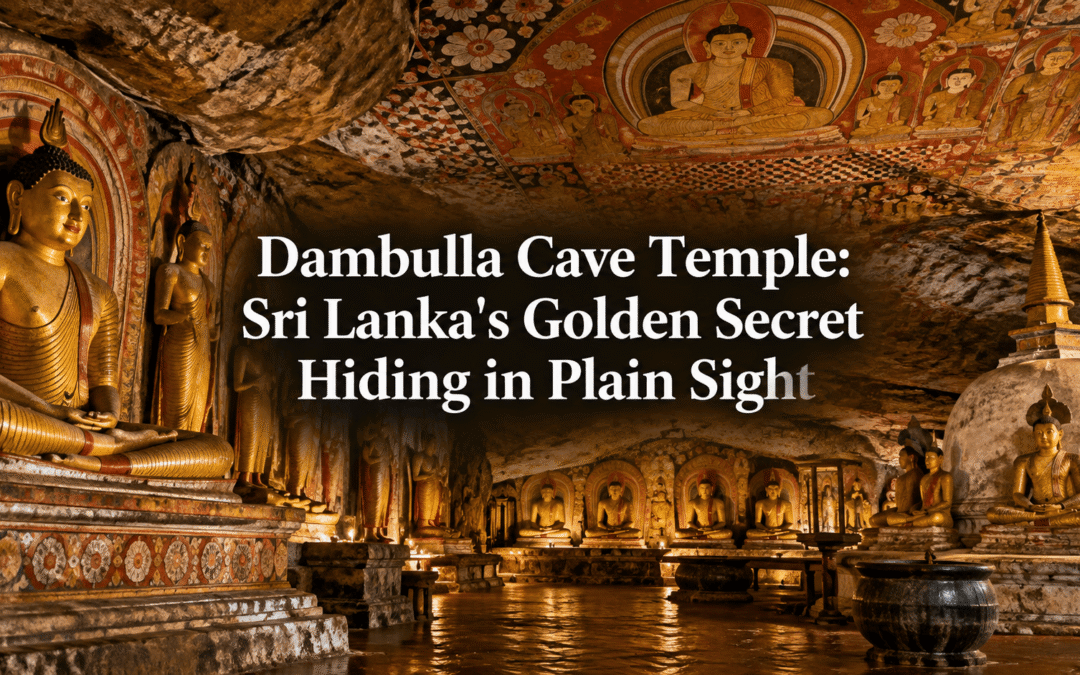
The Dambulla Cave Temples entrance fee is around fifteen hundred rupees, justified by what the caves contain. The paintings are genuinely extraordinary and the entrance fee is not negotiable.

Sigiriya costs significantly more at around forty-five US dollars at current rates. Sigiriya is extraordinary. If the budget can absorb it, go. If it cannot, Pidurangala Rock a fifteen-minute walk away costs around five hundred rupees and gives a better view of Sigiriya from outside than Sigiriya gives from the top.

For accommodation near Dambulla, Gimanhala Tourist Rest offers clean private rooms at around two thousand to two thousand five hundred rupees per night. For food, the local rice and curry restaurants along the Dambulla main road serve meals at the standard two hundred to two hundred and fifty rupee price point that holds true across most of the country outside the tourist restaurant scene.

Day 3 — Kandy by Bus

Take the public bus from Dambulla to Kandy, a two-hour journey costing approximately one hundred and fifty rupees. The Temple of the Tooth entrance for foreign visitors is around fifteen hundred rupees, worth paying for the evening puja experience. The Kandy Lake, surrounding streets, and market area are all free and constitute the majority of what makes the city worth a full day.

For accommodation, McLeod Inn near the lake offers private rooms at around two thousand five hundred rupees per night, the best value in the city. For food, the Kandy Muslim Hotel on Kotugodella Veediya serves a reliable rice and curry at two hundred rupees that the surrounding office worker population relies on daily.

Day 4 — The Hill Country Train on a Budget

The hill country train from Kandy to Ella is the most discussed transport experience in Sri Lanka and one the budget traveller can access at a fraction of the tourist price. A second-class reserved seat costs around nine hundred rupees. Book online through the Sri Lanka Railways website at least three days in advance. The seats sell out quickly during peak season.

Hangout Ella hostel offers dormitory beds at around one thousand to one thousand two hundred rupees and private rooms at around two thousand five hundred, the floor price in a town where the ceiling is considerably higher. The small rice and curry restaurants off the main tourist strip charge the standard two hundred to two hundred and fifty rupee price that applies across the rest of the country, while the tourist cafes on the main road charge three to five times that for roughly equivalent quality. Eating one street back saves between five hundred and one thousand rupees per meal.

Day 5 — The South Coast by Bus

The bus from Ella to the southern coast runs via Wellawaya and Matara, taking around four hours and costing approximately three hundred and fifty rupees. This is a long journey and it is honest to say so. The alternative is a private car at around eight thousand to ten thousand rupees. The bus is functional and the saving is real.

Guesthouses in Mirissa during peak season run at around three thousand to four thousand rupees for a basic private room. The Raja Bojun restaurant near the beach is a government-run establishment serving a full rice and curry at around two hundred and fifty rupees, one of the most consistent budget meals on the southern coast.

The whale watching boats off Mirissa cost around five thousand to six thousand rupees per person, representing two full days of budget for a genuine experience. The whales are real and the experience is genuinely extraordinary. If it is a priority, allocate the budget accordingly and eat at the cheaper end for the surrounding days.

Day 6 — Galle and the Fort

The bus from Mirissa to Galle takes around forty-five minutes and costs approximately fifty rupees. Galle Fort is entirely free to walk and the ramparts, Dutch architecture, and fort streets constitute a full morning of genuine interest at no cost beyond the bus fare.

The restaurants within the fort charge tourist prices without exception. The local rice and curry restaurants on the Galle main road outside the fort charge local prices without exception. The distance between them is a ten-minute walk that saves around eight hundred to one thousand rupees per meal.

For accommodation, guesthouses just outside the fort walls offer private rooms at around two thousand five hundred to three thousand rupees, considerably less than the boutique properties within the fort that charge ten times the price for the same number of hours of sleep.

Day 7 — The Return to Colombo

The expressway bus from Galle to Colombo costs around two hundred rupees and takes approximately two hours. The same journey by private car costs six thousand to eight thousand rupees. The saving is real and the bus is entirely adequate for the final leg.

The Honest Summary

A seven-day budget journey including accommodation, food, transport, and entrance fees comes to between twenty-five thousand and forty thousand rupees total. At the current exchange rate that is between seventy-five and one hundred and twenty US dollars for the full week. That is not backpacker mythology. The island is genuinely affordable at this level and the experience it delivers is not a compromise version of Sri Lanka. It is simply Sri Lanka, experienced at the pace and proximity that the budget approach naturally produces.

Practical Notes

Download the PickMe app before arriving in Colombo for affordable city transport. Keep cash in small denominations as many budget establishments do not accept cards. The Sri Lanka Railways online booking system works reliably for advance seat reservations. Establish tuk-tuk fares before getting in rather than after arriving. The budget circuit described above is best travelled between December and April when the western and southern coasts are at their most accessible and the hill country weather is at its most reliable.

6-Day Sri Lanka for the Solo Traveller: An Honest Journey from Colombo to the Hill Country

6-Day Sri Lanka for the Solo Traveller: An Honest Journey from Colombo to the Hill Country

There is a particular freedom in arriving at a Sri Lankan bus station alone with a bag that fits in the overhead rack and no one else’s preferences to consult. You can take the slow train instead of the express. You can stay an extra day in a town that everyone else moves through in an afternoon. You can eat dinner at the counter of a small hotel at seven in the evening and spend an hour talking to the owner about cricket without anyone waiting for you to finish.

Solo travel in Sri Lanka works. The island is compact, the public transport is functional and cheap, the guesthouses are full of other independent travellers, and the Sri Lankan instinct toward hospitality to a person travelling alone is genuine rather than performed. You are not going to spend your evenings staring at your phone in an empty restaurant. You are going to have conversations you did not plan and discover places that were not on any itinerary you found online.

This is an honest six-day route from Colombo through the hill country to the coast, written specifically for the solo traveller. It covers the social scenes, the budget realities, the safety landscape without exaggeration, and the specific pleasures that moving through this island alone produces that group travel simply cannot.

The Honest Safety Picture

Sri Lanka is a genuinely safe destination for solo travellers of all genders. Violent crime against tourists is rare. The risks are the ordinary ones of any unfamiliar environment, watching your belongings in crowded spaces, being alert to tuk-tuk drivers quoting tourist prices, and avoiding unlit beaches after dark in isolated coastal areas.

Solo female travellers find Sri Lanka considerably more manageable than many other South Asian destinations. The conservative social culture operates as a form of protection in public spaces, and harassment of foreign women, while not absent, is far less common here than in comparable regional destinations. Dress modestly when visiting temples and small towns, covering shoulders and knees, and your interactions with local communities will be considerably warmer for it.

Day 1 — Colombo Alone

Arrive in Colombo and resist the temptation to immediately move on. The city rewards the solo traveller because it is best explored on foot at the pace a single person sets without negotiation. The Fort district in the morning, the Pettah market before noon, and the Galle Face Green in the late afternoon make a full and genuinely interesting day.

For accommodation, Clock Inn Colombo near the Fort is a well-run hostel with a good common area and a location that makes the morning fort walk easy. For a private room at budget price, Ama Lanka Hostel in Wellawatte offers clean single rooms at around three thousand rupees per night with a friendly owner whose local knowledge is considerable.

For dinner, the rooftop bar at Sky Bar Colombo is a good first-night option because it is reliably populated by other independent travellers, making it a natural place to find conversation. The short eats are adequate and the Lion lager is cold.

Day 2 — The Train to Kandy

Take the train from Colombo Fort to Kandy. Buy a second-class reserved seat, costing around three hundred rupees, which guarantees your place on a busy service. The journey takes approximately two and a half hours, climbing through rubber estates before the landscape opens into the first highland views.

Kandy rewards the solo traveller because the city has a genuine daily rhythm that does not exist primarily for tourists. Walk the lake road in the morning. Eat lunch on Dalada Veediya for under two hundred rupees. Spend the afternoon at the Temple of the Tooth, arriving early for the evening puja rather than the midday rush.

For accommodation, McLeod Inn near the lake is a long-established budget guesthouse with clean rooms and a common area where solo travellers reliably congregate. At around two thousand five hundred rupees for a single room it represents the best value for location in the city. For mid-range comfort, Thilanka Hotel on the hillside has good views and a kitchen that handles Sri Lankan breakfast considerably better than the international option on the same menu.

Day 3 — Ella and the Social Scene

Take the hill country train from Kandy toward Ella. Book your seat in advance online through the Sri Lanka Railways website. The compartments naturally encourage conversation, the views are a shared experience that creates easy common ground with whoever is sitting nearby, and the nine-hour journey gives you time to find where other travellers are heading and what they have found.

Ella is the hub of the hill country solo travel scene in a way that no other town quite matches. The mix of long-stay digital nomads, backpackers, and independent travellers of every age creates a social atmosphere that is easy to enter alone and easy to navigate on your own terms.

Hangout Ella is the most socially active hostel in town, the common area populated through the evening with travellers comparing notes on the surrounding trails. For a private room with a social atmosphere, Amba Estate a short tuk-tuk from the main street offers beautiful accommodation and a genuinely communal breakfast table. The Ella Rock hike is best done with whoever you meet the evening before, the early start creating the kind of shared experience that solo travel regularly produces.

For dinner, Cafe Chill on the main road is the default evening gathering point for Ella’s independent traveller community and the correct first-night dinner choice.

Day 4 — The Freedom of the Slow Day

This day is left deliberately open because the specific pleasure of solo travel in Sri Lanka is the freedom to respond to what the previous days have produced. If you met someone on the train whose plans for Horton Plains sound more interesting than your own, go with them. If the guesthouse owner mentioned a waterfall that is not in any guidebook, find a tuk-tuk and go. If the most appealing thing is to sit on the veranda with a pot of tea and read for four hours, that is available too.

A practical framework for the day: the Nine Arches Bridge before nine in the morning, Little Adam’s Peak before noon, and the afternoon at whichever surrounding tea estate feels right when you set off. A tuk-tuk for the full day costs around two thousand five hundred rupees, which is a reasonable price for the flexibility it provides.

Day 5 — Galle and the Fort

Take the bus from Ella toward Colombo and connect south to Galle, or hire a car for the day and drive the hill country road to the coast directly. Galle’s fort is the most socially navigable stop on the southern coast for solo travellers, the compact walled area genuinely walkable and the cafe and restaurant scene within the fort offering good options at every price point.

Pedlar’s Inn inside the fort is a comfortable mid-range guesthouse with a good breakfast. For budget accommodation, the small guesthouses along Lighthouse Street offer clean rooms at around two thousand five hundred rupees in a location that puts everything within a ten-minute walk.

The fort in the evening, when the day visitors have left and the light goes golden on the Dutch walls, is specifically good solo traveller territory. Walk the full circuit of the ramparts. Eat dinner at The Fort Printers for a mid-range treat. Take a drink to the Galle Face viewpoint as the sun sets over the Indian Ocean.

Day 6 — The Return

The expressway from Galle to Colombo takes ninety minutes. Use the remaining time before your flight for what the first day did not cover. Barefoot Gallery cafe on Galle Road is the right place for a last Sri Lankan lunch and the Dutch Hospital shopping precinct handles whatever you kept putting off buying.

The honest budget summary: solo travellers managing on guesthouses, local food, and public transport cover daily expenses at around three thousand to four thousand rupees per day excluding accommodation. Add two thousand to three thousand for a private guesthouse room. Mid-range solo travel runs at around eight thousand to twelve thousand rupees per day all in. Neither figure requires compromise on the experience the island offers.

Practical Notes

Keep a small amount of cash separate from your main wallet. Use the PickMe app in Colombo and Kandy rather than negotiating tuk-tuk fares at the vehicle. A local SIM from Dialog or Mobitel at the airport costs around one thousand five hundred rupees and covers data needs throughout the journey. Train tickets for the hill country line should be booked at least three days in advance online. The best solo travel months are December through April when the main circuits are most accessible and the social scenes in the hill country towns most active.

6-Day Sri Lanka Beyond the Tourist Trail: Why Everyone Stops at Ella and Where to Go Instead

6-Day Sri Lanka Beyond the Tourist Trail: Why Everyone Stops at Ella and Where to Go Instead

There is a version of Sri Lanka that most people visit. Colombo to Kandy to Nuwara Eliya to Ella to Yala to Galle, with Sigiriya inserted in the middle and the Nine Arches Bridge photographed from the same viewpoint that everyone photographs it from. This is not a bad version of Sri Lanka. The standard circuit exists because the places on it are extraordinary.

But there is a second version, running parallel to the first, that most travellers never find. This post is a direct comparison between the two, written for the traveller who has either done the standard circuit already or who wants a different version of this island entirely. Each section makes a specific, honest case for the lesser-known alternative.

Why Madulsima instead of Nuwara Eliya

Nuwara Eliya is the hill country’s most famous town and one of its most crowded. The colonial post office, racecourse, and strawberry farms are genuinely charming, and the Grand Hotel dining room is worth having once. But in peak season the narrow roads are congested and the guesthouses priced to reflect demand the town struggles to accommodate gracefully.

Madulsima sits forty minutes from Badulla in the eastern Uva highlands, above the cloud line, where the mist is genuine rather than scenic and the tea estates roll across the ridges without a tour bus in sight. Waking before six and walking the estate rows before a single other visitor has stirred is the version of hill country tea estate life that Nuwara Eliya no longer reliably provides.

If you want colonial architecture and reliable restaurant options, Nuwara Eliya delivers. If you want the tea country itself without the town wrapped around it, Madulsima is the better answer.

Why Batticaloa instead of Trincomalee

Trincomalee is the east coast’s most accessible and most visited city, and its credentials are genuine. The harbour is extraordinary, the Koneswaram Temple dramatic, and Nilaveli among the finest beaches in Sri Lanka.

Batticaloa, two hours south along the coast, is a genuinely extraordinary destination that almost nobody visits. The lagoon city built on islands, the Dutch fort sitting at the lagoon entrance since 1628, the Tamil Hindu temple culture of the surrounding villages, the singing fish phenomenon that occurs on certain full moon nights and has been documented since the 17th century without being satisfactorily explained. These are not consolation prizes for missing Trincomalee. They are a different and richer version of the east coast.

If your priority is comfort and easy beach access, go to Trincomalee. If your priority is depth and a city that has not yet organised itself around visitors, go to Batticaloa.

Why Wellawaya instead of Ella

Ella is the hill country’s most popular town and one of the most visited destinations in Sri Lanka. The view from Little Adam’s Peak is genuinely beautiful. The Nine Arches Bridge is genuinely impressive. The restaurants are reliably good and the social atmosphere makes it an easy place to spend several days.

It is also, in peak season, extremely crowded. The main street between nine and four operates at a density of visitor traffic that makes being in Ella feel less like discovering a hill country town and more like attending a large outdoor event in a hill country setting.

Wellawaya sits at the base of the Ella escarpment where the highlands drop into the dry zone interior. It is a small working border town with a surrounding landscape that includes the Buduruwagala rock temple with its seven colossal carved figures, the Diyaluma Falls from their most dramatic southern approach, and the transition zone between two completely different Sri Lankan ecosystems. Almost nobody stops here.

Ella gives you a well-developed social scene, reliable food, and significant company. Wellawaya gives you a gateway into a landscape the standard circuit ignores, at prices that reflect a town that has not yet adjusted to tourism demand.

Why Puttalam instead of Negombo

Negombo is the west coast’s most visited town north of Colombo, its airport position making it a natural first or last stop. The fish market, Dutch canal, Catholic churches, and lagoon boat trips are all genuine and worth doing.

Puttalam sits forty kilometres further north at the southern end of the vast Puttalam Lagoon, in a Muslim-majority trading town whose character reflects centuries of Arab and Malay commercial influence in its food, architecture, and particular way of organising community life around the water. The lagoon system behind the town stretches fifty kilometres inland, its mangrove channels, salt flats, and flamingo grounds constituting one of the most biologically significant and least visited wetland ecosystems on the west coast.

If you want easy airport access and a well-developed beach scene, Negombo is the answer. If you want the west coast fishing and trading culture in a form not yet modified by tourism, Puttalam is where it is.

Why Ritigala instead of Dambulla

Dambulla’s cave temples are among the finest in Sri Lanka. The painted interiors, with hundreds of Buddha images and frescoes still vivid after fifteen centuries, are a genuine masterpiece of Buddhist art.

Ritigala, about forty kilometres west of Habarana in the dry zone forest, is what the pamsukulika forest-dwelling monastic tradition produced. No decorative programme, no image houses. Instead, meditation platforms and walking paths of a community that organised its entire built environment around contemplation, now sitting in a forest allowed to reclaim the ruins across centuries.

Dambulla shows you Buddhist art. Ritigala shows you Buddhist practice. Both are worth understanding. The choice depends on whether you find the art or the discipline the more affecting entry point.

The Honest Recommendation

The standard circuit is standard because it is genuinely good. But the parallel circuit described above, Madulsima instead of Nuwara Eliya, Batticaloa instead of Trincomalee, Wellawaya instead of Ella, Puttalam instead of Negombo, Ritigala instead of Dambulla, offers a version of Sri Lanka that is equally rich and considerably more your own.

The infrastructure is thinner. The guesthouses are simpler. Restaurant options are fewer. These are real trade-offs worth knowing in advance. What the alternative gives you in return is the particular quality of experience that comes from arriving somewhere that has not yet decided what it is for visitors, which is, in the end, the most honest version of any place you can find.

Practical Notes

The alternative circuit is best travelled between December and April when road conditions across all regions mentioned are at their most reliable. A hired car with driver is considerably more practical than public transport given the distances involved and limited connectivity between some sites. Book accommodation in advance even at simpler guesthouses, as room counts in less-visited towns are low. Carry cash throughout as ATM access in Wellawaya, Puttalam, and the areas around Ritigala and Madulsima is limited to main town centres.