The Sea of Milk: A Morning at Kandy Lake

The Sea of Milk: A Morning at Kandy Lake

I found the lake by accident. I’d meant to go straight to the Temple of the Tooth, which is what everyone does, and instead I came around a bend in the road and the water was just there, flat and silver in the early light, the surrounding hills doubled perfectly in its surface. A cormorant sat on a low branch at the water’s edge, quite still, as if it had been posed for a photograph. I forgot about the temple entirely for a while.

Kandy Lake, known in Sinhala as Kiri Muhuda, which translates as the Sea of Milk, sits at the very centre of Sri Lanka’s cultural capital. Built in 1807 by King Sri Wickrama Rajasinghe, the last monarch of the ancient Kandyan kingdom, it was created by flooding a stretch of paddy fields called Tigolwela that lay in front of the Temple of the Tooth. The king’s architect, Deveda Moolacharya, dammed the land from both ends, leaving a small island in the middle that would become the subject of centuries of rumour and legend. The lake is entirely man-made and it doesn’t look it, which is probably the greatest compliment you can pay any feat of engineering.

A Kingdom’s Last Flourish

King Sri Wickrama Rajasinghe was not, by most historical accounts, a gentle ruler. His subjects reportedly resented the labour he demanded for his grand construction projects, including this lake. Yet there’s an irony in how the legacy turned out. His kingdom lasted fewer than a decade after the lake was completed. The British captured Kandy in 1815, deposed the king, and ended a line of Sinhalese monarchy that had resisted Portuguese, Dutch, and British colonisation for more than two centuries. What they couldn’t undo was the lake.

They repurposed it, of course. The small island at its centre, originally built as a summer retreat for the queen and the ladies of the court, was converted into an ammunition store and ringed with a fortress-style parapet. The elegant Queen’s Bathing Pavilion, a structure that sat partially submerged at the lake’s edge and served the king’s wives and concubines, was given an additional storey and turned into a library, then later a police post, which is what it remains today. It’s still worth pausing at, not despite its awkward history but because of it. The colonial additions sit a bit uneasily on the original Kandyan stonework, and somehow that tension makes the whole thing more interesting.

The most poignant detail belongs to the Walakulu Bamma, or Cloud Wall, the ornate parapet wall the king was building around the lake’s perimeter when the British arrived. It was never finished. The triangular openings in the wall were designed to hold oil lamps during festivals, and the sections that were completed still do their job beautifully during Esala Perahera each year. But the wall simply stops, mid-construction, where history interrupted it. That unfinished edge, running along the southern bank, says more about the end of a kingdom than any museum exhibit could.

What to See at and Around the Lake

The lake’s perimeter path runs for roughly 3.5 kilometres and it’s one of those rare urban walks that genuinely earns the word pleasant. The route takes you past ancient Nuga trees and tall palms, through patches of shade that feel meaningful in a Sri Lankan afternoon, and around to viewpoints where the Temple of the Tooth reflects off the water with the kind of symmetry that makes you question whether anything this composed can be real. The path is used by joggers and monks and schoolchildren and tourists in roughly equal measure. I like that about it.

The island at the centre, now called the Diyathilaka Mandapaya, is visible from most points on the walk and sits surrounded by palms behind its British-added wall. You can’t visit it directly, but it’s more atmospheric seen from a distance. The legend of the secret tunnel connecting it to the royal palace has never been confirmed, but nobody’s entirely disproved it either, which is how good legends survive. Birdwatchers will want to slow down along the northern bank: Indian cormorants, white egrets, pelicans, and the occasional painted stork have all been recorded here, and monitor lizards move through the shallows with the particular confidence of creatures that have been in Sri Lanka longer than anyone else.

The Temple of the Tooth (Sri Dalada Maligawa) is the lake’s most significant neighbour and really cannot be skipped. This UNESCO World Heritage Site houses a relic believed to be the sacred tooth of the Buddha, and its importance to Sri Lankan Buddhism is difficult to overstate. Dress modestly, remove shoes before entering, and try to arrive for one of the daily puja ceremonies, when the inner shrine is briefly opened to pilgrims. The sound of drums and the thick scent of incense in that moment is quite unlike anything else.

Above the lake, reached by a short uphill walk from the northern bank, is Udawattakele Forest Reserve. It’s a forest sanctuary that once served as the royal pleasure garden for Kandyan kings, and it’s still lush enough to feel genuinely wild. Trails wind through tall canopy cover, past streams and viewpoints and an old hermitage that dates to the colonial period. Macaques swing overhead, and on a quiet morning, when the mist is still sitting in the valleys below, the reserve has an atmosphere that the city can’t touch.

What to Do

Beyond the walk and the birdwatching, the lake itself offers traditional paddleboat rides from the small pier near the Queens Hotel. It’s a slow, unhurried way to see things from the water, and recommended at dusk when the hills around the city turn purple and the temple’s gilded roof catches the last of the light. Local children tend to gather near the water to feed the fish, which is a ritual apparently so universal across cultures that it requires no explanation.

If your visit coincides with the Esala Perahera festival, typically held in late July or August, you’ll witness something genuinely extraordinary. The procession passes near the lakeside, featuring dozens of magnificently dressed elephants, traditional Kandyan dancers, fire performers, and drummers in a procession that stretches for hours. The Cloud Wall’s lamp-holes are lit for the occasion, and the effect on the waterfront is exactly as theatrical as you’d expect from a festival that’s been running continuously for centuries.

Peradeniya Botanical Gardens, about five kilometres west of the lake, is worth a half-day excursion. One of Asia’s finest botanical collections, it was established on royal grounds and contains over 4,000 plant species, including a remarkable orchid house and a cannonball tree that blooms year-round. The avenue of royal palms leading into the garden is enough reason to go on its own.

Where to Stay

For sheer proximity and a very specific kind of colonial atmosphere, Queens Hotel is the obvious choice. It sits directly on the lakefront, its grand 19th-century facade looking out over the water and across to the temple. The building has hosted everyone from British governors to passing dignitaries, and the high-ceilinged rooms and wide verandas retain a faded grandeur that feels entirely appropriate for Kandy. Having breakfast with a lake view here is a pleasure that justifies the location.

Up on the Kandy hillside, the Amaya Hills resort offers panoramic views over the city and lake from a properly elevated position. The road up is vertiginous, the kind of Sri Lankan hillside driving that makes you trust the driver completely after approximately one minute, but the view from the top is worth every hairpin bend. It’s well-positioned if you’re planning a longer stay and want to use Kandy as a base for exploring the wider highlands.

For something more intimate, there are several well-regarded guesthouses in the residential streets above the lake. The Kandy House, an 18th-century Kandyan manor property a short drive from the centre, is often cited as one of the finest small hotels in Sri Lanka. It has the feel of a place where time moves differently. The rooms open onto a courtyard garden, the pool is carved stone, and the cooking is excellent. Worth it if you can get a room.

Getting There from Katunayake Airport

Kandy is about 100 kilometres from Bandaranaike International Airport at Katunayake, but road distance and journey time are two different things in Sri Lanka. The route climbs steadily into the hill country, and the roads, while scenic, don’t reward impatience. Allow between two and three hours depending on your chosen method and the time of day you’re travelling.

By Private Taxi or Pre-Arranged Transfer

The most comfortable and direct option. The official taxi counter in the arrivals hall at Katunayake is the safest way to book, and the journey takes roughly two to two and a half hours under normal conditions. Many drivers are happy to stop en route, and if you time your arrival right, a detour through Pinnawala to see the Elephant Orphanage makes for a fine way to ease yourself into the country. Pre-arranged private transfers offer the added benefit of a driver holding your name at arrivals, which is always reassuring after a long flight.

By Train via Colombo Fort

This is the most rewarding option if you have time and patience. From the airport, take the 187 express bus to Colombo Fort Railway Station, which takes about 45 minutes on the expressway. From Fort Station, trains to Kandy run roughly every two hours throughout the day, with the last departure around late afternoon. The journey takes two and a half to three hours and rises through remarkable countryside as it climbs into the hills, past terraced fields, rubber estates, and the edges of cloud forest. Book a reserved seat in advance if you can, especially at weekends, and book first class if you want a guaranteed window. The last train of the day from Colombo to Kandy departs before 6pm, so plan accordingly.

By Bus

Direct buses to Kandy depart from the Katunayake bus terminal, a short tuk-tuk ride from the arrivals building. The total journey including the transfer can take around five hours, depending on connections and traffic through Colombo. Intercity air-conditioned coaches from Colombo’s Bastian Mawatha Bus Terminal are a step up in comfort and run regularly throughout the day, taking around three to four hours. Buses are best tackled with modest luggage, a window seat, and a willingness to accept that the schedule is a suggestion rather than a promise.

A Few Practical Notes

The lake path is at its best in the early morning, before 8am if possible, when the air is cooler and the light is low and the cormorants are still out. Evenings are lovely too, particularly the stretch near Queens Hotel where locals gather to sit and talk. The midday heat is less forgiving, so plan heavy walking before 10am or after 4pm. The best months to visit are January through April, when the central highlands are dry and the skies tend to be clear. The Esala Perahera falls in July or August and draws enormous crowds, which is either a reason to go or a reason to avoid, depending on your temperament.

If you’re visiting the temple, dress accordingly: covered shoulders and legs are required. Many visitors carry a light scarf or sarong for exactly this reason. The temple also has a dress code around footwear, so shoes that slip off easily save a lot of fuss.

Why Kandy Lake Stays With You

Sri Lanka has more dramatic landscapes than Kandy. It has livelier cities and more remote corners and beaches that are genuinely jaw-dropping. But Kandy Lake has something that those places don’t, which is a kind of layered ordinariness. It’s a place where history and daily life share the same footpath. Where monks in saffron robes walk the same circuit as teenagers with earphones. Where a relic believed to determine the governance of an entire country sits in a gilded temple reflected in man-made water, and nobody finds that particularly strange.

The king who built this lake lost his kingdom three years later. The wall he designed was never finished. The island in the middle has been a royal retreat, an ammunition store, and a source of persistent rumour for two centuries. And yet the lake itself endures, unhurried and reflective, doing exactly what it was always meant to do: making the city look more beautiful than it otherwise would.

The cormorant was still there when I finally left, three hours after I’d arrived. Unmoved. Unimpressed. Utterly at home.

Discovering Colombo’s Lotus Tower: A Modern Marvel in the Heart of Sri Lanka

Discovering Colombo’s Lotus Tower: A Modern Marvel in the Heart of Sri Lanka

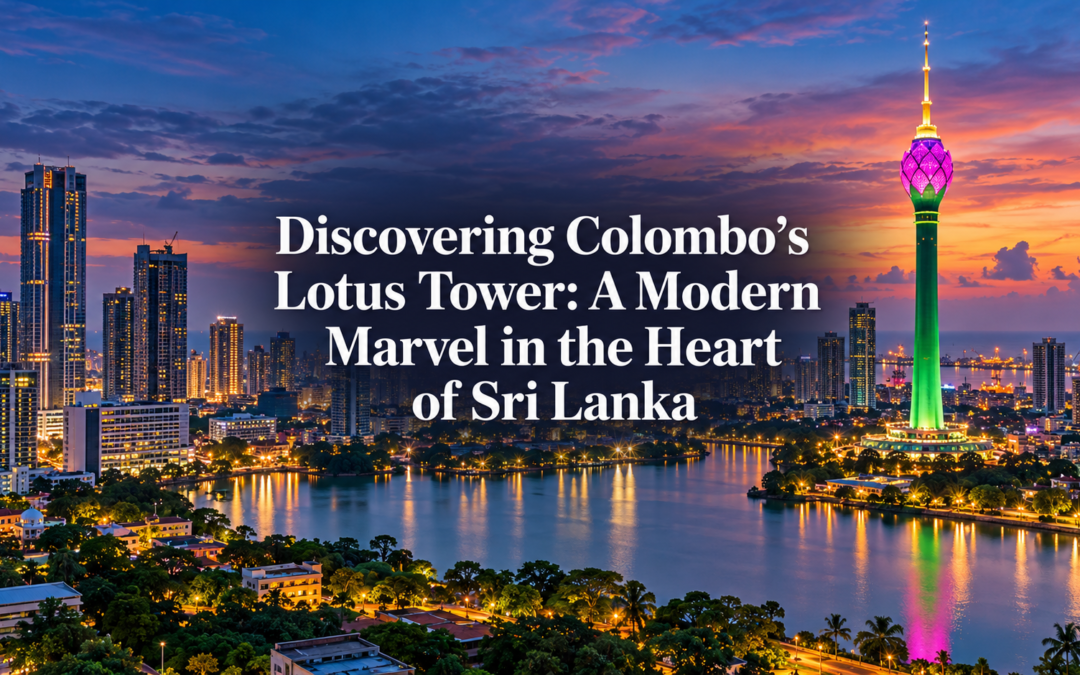
If you’ve ever thought Colombo was just about traffic jams and office buildings, think again. Towering over the city like a sentinel, the Colombo Lotus Tower is not just another skyscraper; it’s a spectacle that blends modern engineering with the grace of Sri Lankan design. At 350 meters, it’s the tallest structure in South Asia, and yes, it’s impossible to miss. Whether you’re a traveler, a photographer, or just someone who loves a bit of architectural drama, this tower has something for everyone.

Getting There from Katunayake Airport

Arriving from the Katunayake International Airport, which is roughly 40 kilometers from central Colombo, is easier than it seems. If you prefer comfort, a private taxi or a ride-hailing app will get you straight to the city in about 45 minutes to an hour, depending on traffic. For those feeling adventurous, the public bus system is an option, though it’s a slower ride and requires a bit of patience. Colombo’s train network also runs from Negombo near the airport to Fort Station in the heart of the city, offering a scenic glimpse of suburban life along the way.

Once in the city, the tower sits in the heart of Colombo 1, the central business district. From Fort Station, a short tuk-tuk ride or even a brisk walk takes you right to the tower’s base.

What to Do at the Lotus Tower

First off, you’ll want to take in the panoramic views. The observation deck is an absolute treat. On a clear day, you can see the Indian Ocean stretching into the horizon, the bustling streets of Colombo, and the lush greenery beyond. The experience is almost meditative, a rare moment of calm amidst a hectic city.

The tower is more than just a viewpoint. It houses a variety of attractions under one lotus-shaped roof. There’s a revolving restaurant that lets you dine while the city slowly spins beneath you. Imagine enjoying a traditional Sri Lankan curry while watching the sun set over the ocean—it’s a memory you won’t easily forget.

For those interested in culture, the Lotus Tower also features exhibition spaces that highlight Sri Lanka’s rich heritage. Temporary exhibits, art installations, and interactive displays often rotate through, giving visitors a fresh experience each time.

Capturing the Perfect Photo

Photographers, listen up. The tower’s unique lotus-inspired design is a marvel from every angle. Daytime shots against a bright blue sky are striking, but the real magic happens at night. The tower lights up in a dazzling display, reflecting in the nearby Beira Lake and creating a perfect mirror image. It’s one of those sights that make you want to pull out your camera, even if you swore you’d just enjoy the view.

If you’re feeling creative, wander around the base. The surrounding gardens and fountains make for excellent foregrounds, turning a simple photo into something cinematic.

Nearby Attractions

Since you’re already in central Colombo, there’s no shortage of things to do after visiting the tower. A short walk or tuk-tuk ride will take you to Galle Face Green, a wide-open space by the sea where locals fly kites, jog, and savour street food. For a touch of history, the Colombo National Museum isn’t too far, and it’s perfect for a lazy afternoon of exploring artefacts and colonial architecture.

Shopping enthusiasts can wander through the Dutch Hospital Shopping Precinct, where boutique stores, cafes, and eateries offer a pleasant mix of modern and traditional experiences. And if you’re in the mood for a sunset stroll, the Beira Lake area nearby provides a peaceful escape from the city buzz.

Where to Stay

Colombo has accommodation options to suit every type of traveller. If you want to be close to the Lotus Tower and other central attractions, consider staying in Colombo 1 or 2. Hotels range from luxury stays with rooftop pools and city views to charming boutique hotels that offer personalised service and a homely feel.

For those who prefer a quieter environment, the areas of Cinnamon Gardens or Kollupitiya offer a more residential feel while still being a short drive from the tower. Many hotels here offer easy access to restaurants, cafes, and shops, making it convenient to explore the city on foot or by tuk-tuk.

Food and Local Flavors

Colombo’s food scene is as diverse as the city itself. Near the Lotus Tower, you’ll find everything from local street food stalls to high-end restaurants. Don’t miss trying hoppers, string hoppers, and kottu roti. For dessert, coconut-based sweets are a must. And of course, Sri Lankan tea is everywhere—perfect for a mid-afternoon pick-me-up.

Practical Tips

The best time to visit the Lotus Tower is during clear weather to enjoy unobstructed views. Early morning or late afternoon visits can give you the advantage of cooler temperatures and softer light for photography. While there, take your time. It’s easy to get caught up in the height and the views, but the tower’s design, gardens, and surrounding areas deserve just as much attention.

Safety is straightforward: the tower is well-maintained and supervised. Shoes are fine to wear, though comfortable walking shoes are recommended if you plan to explore the base gardens and surrounding areas.

Wrapping Up

The Colombo Lotus Tower is more than just a building; it’s an experience. It captures the spirit of modern Sri Lanka while paying homage to its natural beauty and cultural depth. Whether you’re visiting for the views, the food, the photography, or simply to marvel at human ingenuity, the tower has a way of making you feel like you’re standing at the edge of something bigger than yourself.

So, next time you’re in Sri Lanka, make sure Colombo is more than just a stopover. Let the Lotus Tower be your first taste of what the city has to offer. Take a deep breath, look out over the sprawling city below, and let the journey begin.

The Coastal Sun & Surf Trail: A 6 Day Escape to Sri Lanka’s Southern Soul

The Coastal Sun & Surf Trail: A 6 Day Escape to Sri Lanka’s Southern Soul

There is a specific kind of magic that happens on the southern coast of Sri Lanka. It’s in the way the salt air begins to stick to your skin the moment you leave the Colombo city limits, and how the road starts to hug the shoreline so closely that you can practically feel the spray from the Indian Ocean.

If the hills are about introspection and tea, the south is about movement. It’s about the rhythm of the tides, the “thwack” of a cricket bat on the sand, and the slow, deliberate art of doing absolutely nothing. For this six-day trail, we’re steering clear of the over developed tourist traps and focusing on the spots that still have a bit of soul left in them.

Day 1: The Walled Secrets of Galle Fort

We’re starting in Galle, but not the sprawling, noisy city. We’re heading straight through the gate of the Dutch Fort.

Stepping into the Fort is like stepping out of time. It’s a bit of a colonial ghost town that’s been brought back to life by artists, chefs, and shopkeepers. The streets are laid out in a perfect grid, lined with houses that have thick white walls and internal courtyards designed to keep the tropical heat at bay.

After you’ve checked into a boutique guest house the kind where the floor tiles are cold underfoot and the ceilings are high enough to let the sea breeze circulate head out for a wander. Don’t look at a map. Just walk. You’ll find tiny jewelry shops where old men still cut sapphires by hand, and galleries filled with vibrant local art.

As the afternoon heat begins to fade, join the locals on the Ramparts. This is the Fort’s social heart. You’ll see teenagers jumping off the high walls into the sea, families sharing bags of spicy snacks, and the lighthouse standing guard over it all. The sunset here isn’t just a daily event; it’s a performance. The sky goes through a dozen shades of orange and pink before finally settling into a deep, moody blue. Find a spot on the grass, listen to the waves hit the stones, and just breathe.

Day 2: The Blue Horizon of Mirissa

From Galle, it’s a short, breezy hop east to Mirissa. Most people come here for one thing: the whales.

You’ll need an early start about 6:30 AM at the harbour. Being out on the open ocean as the sun comes up is a pretty special experience. When a Blue Whale breaks the surface, it’s not just the size that hits you; it’s the sound. That massive, echoing blow as it clears its lungs is something you’ll feel in your bones. It’s architecture on a biological scale the largest creature to ever live, just a few meters from your boat.

Once you’re back on dry land, take a nap. You’ve earned it. In the late afternoon, walk over to Coconut Tree Hill. It’s a little red earthed promontory covered in perfectly spaced palm trees. Also, it’s become a bit of an Instagram cliché, but when you’re actually standing there, looking out over the bay as the surf rolls in, you realize why. It’s genuinely stunning.

Finish your day at a beach shack with your feet in the sand. Order the grilled prawns usually caught that morning and a cold Lion lager. This is the “surf” part of the trail, and Mirissa does it with a very relaxed, easy going charm.

Day 3: The Jungle Fringed Curve of Hiriketiya

We’re heading further south now, to a place that feels a bit more “off grid.” Hiriketiya (or “Hiri” to the regulars) is a horseshoe shaped bay where the jungle grows right down to the high tide mark.

The architecture here is all about “Tropical Modernism.” The cafes and guesthouses are open air, built with raw concrete and reclaimed timber, designed to let the outside in. It’s a place for digital nomads and surf bums, and the energy is infectious.

Even if you’ve never touched a surfboard in your life, this is the place to try. The bay is protected, meaning the waves are consistent and gentle enough for beginners, while the outer point keeps the pros happy. There’s no ego here. You’ll see people of all ages and skill levels just having a go. After an hour or two in the water, head to one of the cafes like Dotsor Verse and grab a coffee. The mix of people here is brilliant; you’ll meet travellers from every corner of the globe, all unified by the fact that they’ve found this little slice of paradise and don’t really want to leave.

Day 4: Temples and Blowholes

By Day 4, you might have a bit of “beach fatigue,” so let’s head inland for a few hours.

Take a tuk tuk to the Wewurukannala Vihara in Dikwella. It’s home to a 160 foot seated Buddha, and it’s a fascinating bit of religious architecture. To get to the statue, you have to walk through a “tunnel of hell,” lined with life sized figures depicting what happens to those who lose their way. it’s a bit macabre, but it’s an incredibly vivid part of local folklore.

Next, head to the Hummanaya Blowhole. It’s the second largest in the world. On a day with a bit of swell, the water is forced through a narrow fissure in the rocks and shoots up to 30 metres into the air with a roar that sounds like a jet engine.

Spend the rest of the day back in Hiriketiya. The beauty of this itinerary is that we’ve built in “rest” as a priority. Find a hammock, get a book, and just listen to the wind in the palms. It’s the kind of afternoon that recharges your batteries in a way that a spa day never could.

Day 5: The Lively Shores of Unawatuna

As we start to loop back toward Colombo, we’ll stop at Unawatuna. It’s a bit busier than Hiri, but it has a great energy.

In the morning, take the short trek through the scrub forest to Jungle Beach. It’s a hidden cove that feels much wilder than the main beach. The water is calm and clear, perfect for a bit of snorkeling. You’ll see parrotfish and maybe even a sea turtle if you’re lucky.

Unawatuna is the place for a bit of a “final night” celebration. The main beach is lined with restaurants that put their tables out on the sand at night. The vibe is lively, the music is good, and the seafood is world class. It’s a bit more social and upbeat, which is a nice way to end the trip before you head back to the “real world.”

Day 6: The Peace of the Pagoda

On your final morning, head up to the Japanese Peace Pagoda. It sits on a hill overlooking the entire Galle coastline. It’s a stark, brilliant white stupa that offers a sense of absolute calm. Looking out over the ocean, you can see the Galle Fort in the distance, marking where you started your journey.

It’s a great spot for a bit of reflection. You’ve seen the colonial history, the marine giants of the deep, and the slow paced surf culture of the south.On the drive back to Colombo, stop in Koggala to see the stilt fishermen. While it’s become a bit of a staged photo op these days, the sheer balance and patience required to fish from a single pole in the crashing surf is a reminder of how the people here have always worked with the ocean, not against it.

Under the Branches of Time: A Journey to Anuradhapura’s Jaya Sri Maha Bodhi

Under the Branches of Time: A Journey to Anuradhapura’s Jaya Sri Maha Bodhi

I arrived in Anuradhapura with dust on my shoes, heat on my skin, and a strange sense that I was about to meet something very old—and very alive.

Sri Lanka has no shortage of sacred places, but Jaya Sri Maha Bodhi isn’t just sacred in the way temples and stupas are sacred. This is a living being. A tree. And not just any tree—the oldest historically documented tree in the world, grown from a cutting of the very Bodhi tree under which Siddhartha Gautama attained enlightenment over 2,300 years ago.

Standing beneath its branches felt less like visiting a monument and more like being quietly accepted into a story that began long before me—and will continue long after I leave.

Meeting the Sacred Bo Tree

Jaya Sri Maha Bodhi sits at the heart of Anuradhapura’s Sacred City, surrounded by white walls, prayer flags, and a constant flow of pilgrims moving barefoot across cool stone paths.

The tree itself rises gently, protected by golden railings and layers of care built up over centuries. Its leaves tremble constantly, even when the air feels still, as if whispering secrets to one another. Offerings of lotus flowers, jasmine, and oil lamps circle the base. The scent of incense hangs in the air—not overpowering, just enough to remind you to slow down.

I watched families kneel together, monks recite prayers in low rhythmic chants, and solo travelers sit quietly with eyes closed. No one rushes here. You don’t come to Jaya Sri Maha Bodhi to see it. You come to be with it.

This tree arrived in Sri Lanka in the 3rd century BCE, carried from India by Sanghamitta Theri, daughter of Emperor Ashoka. Since then, it has survived invasions, storms, colonial rule, and time itself. The sense of continuity is overwhelming in the best possible way.

How to Experience the Site Respectfully

First things first: dress modestly. Shoulders and knees covered, shoes removed before entering sacred areas. You’ll notice vendors nearby offering flowers—locals typically bring white or pale blossoms as offerings.

I found the best time to visit was early morning, just after sunrise. The light is soft, the air cooler, and the crowds quieter. Evening is beautiful too, especially when lamps are lit and the site glows with a gentle golden warmth.

Take your time walking the terraces. Sit if you feel called to. Photography is allowed in many areas, but this is one place where putting the camera down feels like the right choice.

What Else to See Nearby

The beauty of visiting Jaya Sri Maha Bodhi is that it’s woven into a much larger sacred landscape.

Ruwanwelisaya Stupa

A short walk away, this massive white stupa rises like a full moon from the earth. It’s one of the most revered Buddhist structures in the country, and walking its perimeter at dusk—with hundreds of pilgrims circling in quiet devotion—is unforgettable.

Sri Maha Bodhi Museum

If you want context, this small but thoughtful museum explains the history of the Bodhi tree, ancient Anuradhapura, and the rituals that have protected the tree for centuries.

Isurumuniya Temple

Carved into rock and shaded by trees, Isurumuniya feels intimate compared to the grand stupas. Look for the famous stone carvings and spend a moment by the lotus pond out front.

Abhayagiri Monastery Ruins

Wandering through these ruins feels like stepping into an open-air history book. Crumbling stone, moonstones, and guard stones tell stories without words.

What to Do in Anuradhapura (Beyond the Sights)

Walk or Cycle the Sacred City

Anuradhapura is sprawling, and the best way to absorb it is slowly. Renting a bicycle lets you drift between ancient sites, stop when something catches your eye, and feel the rhythm of the place.

Join the Pilgrims

Even as a visitor, you’re welcome to walk alongside devotees during pooja times. You don’t need to know the chants—just follow the pace, observe, and be present.

Watch the Light Change

This might sound simple, but sitting somewhere quiet as the sun shifts across stone and tree leaves is one of the most grounding experiences here.

Where to Stay in Anuradhapura

Anuradhapura has a calm, lived-in feel, and accommodations tend to reflect that.

Near the Sacred City

Staying close to the ancient sites means early morning walks without transport and peaceful evenings when the crowds thin out.

Boutique Heritage Stays

Some restored colonial-era homes and small heritage hotels offer character, gardens, and a deeper sense of place.

Guesthouses and Eco-Lodges

Family-run guesthouses are common and welcoming. Many are set slightly outside the city, surrounded by trees and birdsong—perfect if you like quiet mornings.

Wherever you stay, expect warm hospitality and hosts who are genuinely proud of their city.

Getting There from Katunayake Airport

Traveling from Bandaranaike International Airport (Katunayake) to Anuradhapura is straightforward, with several options depending on your pace and comfort preference.

By Private Car or Taxi

This is the most direct and flexible option. The journey takes you north through changing landscapes—coastal towns fading into dry-zone plains, dotted with tanks and palms.

By Train

From the airport, head to Colombo Fort Railway Station. Trains to Anuradhapura are scenic and relaxed, offering a glimpse of everyday Sri Lankan life. From Anuradhapura station, it’s a short tuk-tuk or taxi ride to the Sacred City.

By Bus

Buses run regularly from Colombo to Anuradhapura. While slower, they’re an authentic way to travel and connect you with the rhythm of local life.

Whichever way you go, consider arriving earlier in the day to settle in before exploring.

When to Go

Anuradhapura is warm year-round, but early mornings and evenings are the most comfortable. Religious holidays and full moon days (Poya) bring larger crowds and a deeply spiritual atmosphere.

If you enjoy quiet reflection, choose a weekday morning. If you want to witness devotion in full flow, visit on a Poya day and let the energy carry you.

A Personal Moment Under the Bodhi Tree

Before leaving, I sat on the stone steps facing Jaya Sri Maha Bodhi and watched a single leaf fall.

It drifted slowly, catching the light, landing without a sound.

I thought about how many people had sat in that same place—kings, monks, farmers, pilgrims, travelers—each carrying hopes, grief, gratitude, or questions. And how the tree had simply stood there, offering shade without judgment.

In a world obsessed with movement and novelty, Jaya Sri Maha Bodhi teaches something radical: that endurance can be gentle, and that stillness can change everything.

I left Anuradhapura quietly, not feeling like I’d seen a destination—but like I’d been briefly rooted somewhere deeper.

And long after the dust was gone from my shoes, the feeling stayed.

The Forgotten Kingdom of Yapahuwa

The Forgotten Kingdom of Yapahuwa

I didn’t plan for Yapahuwa. In fact, it happened because I woke up too early, missed a bus, and decided to take a road at random. That’s how some of my favorite places reveal themselves—quietly, stubbornly, with the gentle confidence of ancient kingdoms that know exactly how extraordinary they are.

Yapahuwa was the second capital of medieval Sri Lanka, briefly home to the Sacred Tooth Relic, and today, it sits halfway between nowhere and memory—an enormous granite rock rising from the dry zone plains like a misplaced fortress. Most tourists never hear of it. Even many Sri Lankans haven’t visited. That made it perfect for me.

This is the story of how I spent a day wandering the forgotten kingdom—and why you should too.

Getting There: From Katunayake Airport to the Lost Kingdom

I landed at Katunayake Airport with a light backpack, a half-formed itinerary, and an appetite for adventure. Yapahuwa isn’t on the common tourist loop (Colombo–Kandy–Ella–Sigiriya), but getting there isn’t hard once you know your options.

Option 1: By Private Taxi (Fastest, Easiest)

You can book a taxi directly from the airport counters, or arrange one through PickMe or Uber depending on availability.

It’s the most comfortable option, especially if you’re tired from a long flight. The drive takes only a few hours, and you’ll reach the rock fortress early—before the sun turns into a molten dragon and the granite begins radiating heat like a stove.

Option 2: Train (The Most Charming)

From the airport, catch a ride to Negombo or Colombo Fort, then take a train heading toward Maho or Anuradhapura. Get off at Maho Junction. Yapahuwa is a short tuk-tuk ride from there.

The journey isn’t rushed; it’s the kind where you put your head by the window and watch village life drift past like a soft, unedited film.

Option 3: Bus (Budget Backpacker Style)

From the Katunayake Bus Station, hop on a bus to Kurunegala. At the Kurunegala stand, switch to a bus heading toward Maho or Galgamuwa and get off at Yapahuwa Junction.

Expect loud Sinhala music, spontaneous conversations, and some of the best people-watching you’ll ever experience in Sri Lanka.

Where to Stay Near Yapahuwa

Yapahuwa isn’t a tourist city, and that’s part of its charm. There are no towering luxury hotels—just peaceful, warm guesthouses and resorts surrounded by trees, farms, and unhurried silence.

Yapahuwa Paradise Resort

I stayed here, and the experience felt like stepping into an old, slow, peaceful film.

Why stay: Spacious rooms, a pool, quiet gardens.

Best part: The staff know exactly when the light on the fortress turns golden and will tell you when to go.

Sen Sa Family Guesthouse

A simple, cozy stay run by a local family.

  • Why stay: Home-cooked curries, friendly hosts, a taste of village life.
  • Perfect for: Solo travelers, culture-lovers, and anyone who prefers human warmth over hotel polish.

Yapahuwa Nature Resort

Ideal for travelers who want to wake up to birds and sunrise views.

  • Why stay: Cabana-style rooms and nature all around.
  • Bonus: You’ll hear birdcall before you open your eyes.

My First Glimpse of the Forgotten Kingdom

As you approach Yapahuwa, the rock reveals itself slowly—a stubborn, ancient mass of granite rising above the dry plains. At its base lies a grassy courtyard, a moat long emptied of water, and the ruins of the old palace complex. Everything feels warm—not just from the sun, but from the weight of old stories that seem to cling to the air.

Walking through the entrance, I swear I could almost hear clashing swords, merchants calling out prices, and monks chanting. Maybe it was the wind. Maybe it was memory.

What to See in Yapahuwa

1. The Grand Stairway (The Icon of Yapahuwa)

This is the famous sight—the one every camera tries and fails to fully capture. The staircase is monumental and unexpectedly steep, as though designed to test anyone daring enough to climb it.

Two magnificent guardian lions flank the upper landing. Their stone jaws are parted, almost ready to speak. At the top lies the platform where the Sacred Tooth Relic was once enshrined.

I stood there imagining kings, monks, warriors, and ancient footsteps echoing beneath mine. The breeze carried the scent of dry grass and time-worn stone.

2. The Temple Ruins

Beyond the staircase lie the remnants of a royal temple that once overlooked the entire kingdom.

  • Intricate carvings.
  • Graceful stone balustrades.
  • Window-like frames opening to endless sky.

Though in ruins, the artistry is still alive—and stunning.

3. The Summit of the Rock

If you continue climbing, a narrow path leads to the true top of the rock.

At the summit:

  • You get a full-circle view of green paddy fields, villages, and woodland patches.
  • The wind is so strong it almost feels like the hill is breathing.
  • You feel very small and very free.

I sat there with my legs dangling over the edge, watching birds glide below me. Time seemed to slow down just for that moment.

4. The Lower Ruins and Museum

Before leaving, wander the moat area and stop by the small museum. Inside are fragments of Yapahuwa’s past—old weapons, stone carvings, pottery, and pieces of the old palace.

It’s not large, but it feels personal, as though someone has gathered pieces of a story and arranged them carefully for you to read.

Things to Do Around Yapahuwa

1. Explore the Village on Foot

Just beyond the fortress, a red-soil road winds past mango trees and quiet village homes. I walked this road at dusk, and the silence felt like a soft blanket.

A grandmother on a verandah gave me a smile so warm I still think of it. If you like photography, this village is a dream.

2. Eat a Local “Bath Packet” Lunch

Small shops sell rice packets wrapped in polythene or banana leaf—rice with curries, sambol, and sometimes a fried cutlet.

Humble, hearty, and absolutely perfect after climbing ancient stone steps.

3. Visit the Tonigala Stone Inscription

A short drive away lies one of the largest and most impressive ancient inscriptions in the country. It’s a reminder of the precision and intelligence of early Sri Lankan civilization.

4. Birdwatching at Sunrise

Yapahuwa’s surrounding forest is alive with colour and sound—bee-eaters, egrets, parakeets, drongos, and the occasional eagle.

Wake early and you’ll be greeted by one of the most musical mornings in the dry zone.

Best Time to Visit

Early mornings are perfect for exploring the rock—the light is soft, the air is cool, and the climb is gentle. Afternoons can be fiercely hot, so it’s best to avoid them if you can.

Golden hour near sunset turns the fortress into a glowing sculpture, especially beautiful for photos.

Clear skies are most common in the first half of the year, but Yapahuwa’s beauty doesn’t really depend on weather; it depends on curiosity.

What Makes Yapahuwa Special?

Yapahuwa is raw, real, and unpolished. It isn’t crowded or loud. No vendors chase you and there are no tour buses block the entrance. Moreover, no glossy brochures advertise it.

Instead, you get stone.

Wind.

Silence.

And stories that cling to the rock like moss.

Unlike Sigiriya, which dazzles, Yapahuwa whispers. It’s a place you feel more than you photograph, a place where history sits patiently instead of performing.

My Final Thoughts

When I think of Sri Lanka, I think of beaches, mountains, tea fields, and bustling cities. But Yapahuwa is different. It doesn’t demand your attention—it rewards your curiosity.

If you want to step off the polished tourist path or if you want to climb stairs carved by ancient hands…

Also, if you want to hear the wind whisper through forgotten ruins…

Then Yapahuwa is waiting for you—calm, ancient, and patient as always.

And maybe, just maybe, it will change the way you travel.

The Border Villages of Wilpattu: Life Between Jungle and Civilisation

The Border Villages of Wilpattu: Life Between Jungle and Civilisation

There’s a particular kind of silence that greets you in the border villages of Wilpattu. It’s not the silence of emptiness, it’s the silence of things listening. The trees at the edge of the park press right up against the road, and somewhere beyond them, leopards are doing whatever leopards do when no one’s watching. You stand there with your morning tea, the mist still hanging low, and you think: how on earth did I not know this place existed?

I’d spent years hearing about Sri Lanka’s beaches, its tea country, its ancient cities. Wilpattu National Park, the largest and arguably most atmospheric wildlife reserve on the island, had been on my radar vaguely, as a destination for day-trippers from Colombo. But the villages that cling to its borders? Nobody mentioned those. And that, it turns out, is precisely what makes them special.

These are communities that have learned to live alongside the wild. Not in a romanticised, documentary-voiceover kind of way, but practically, daily, with all the complexity that entails. Farmers whose paddy fields abut elephant corridors. Fishermen who share the villus  (the natural lakes inside the park) with crocodiles and painted storks. It’s the kind of place that quietly rearranges your sense of what’s normal.

Getting There from Katunayake Airport

Bandaranaike International Airport in Katunayake sits about 30 kilometres north of Colombo, and the border villages of Wilpattu are roughly 130 kilometres further north along the coast road. It’s a manageable journey, and you’ve got a few decent options depending on how much you want to immerse yourself from the off.

The most straightforward is a private car hire. You can arrange this through your accommodation, or with one of the many drivers who congregate outside the arrivals hall. The drive up the A3 coastal highway takes around two and a half to three hours, and it’s a genuinely lovely introduction to the island: fishing villages, coconut groves, the occasional burst of ocean on your left. Ask your driver to take the road through Puttalam if you’re not in a rush. The lagoon there is something else.

If you’re travelling on a tighter budget, the intercity bus from Colombo’s Bastian Mawatha terminal to Mannar passes through Puttalam and onwards towards the park edges. You’ll need to get yourself to Colombo first. A taxi or the express bus from the airport does that job. From Puttalam, local buses and three-wheelers (tuk-tuks) ferry people into the smaller villages near Wilpattu’s southern and eastern borders. It’s slower and a little more faffy to navigate, but honestly, that’s half the fun. You’ll meet people you wouldn’t otherwise.

A third option worth considering is hiring a motorbike once you’re in the region. Roads around Wilpattu’s buffer zone are largely smooth tarmac with occasional sandy stretches, and exploring on two wheels means you can stop wherever you like, at a roadside jak fruit seller, a temple festival you heard from three villages over, a stretch of mangrove that catches the afternoon light just right.

What to See

The park itself is the obvious draw, and it earns every bit of that attention. Wilpattu is famous for its villus. Natural, rainfall-fed lakes scattered across a landscape of dense scrub jungle and open plains. Unlike Yala, which can feel almost theme-park-ish in the high season with its convoys of jeeps, Wilpattu has a quality of genuine wildness. You might not see anything for an hour, and then a sloth bear lumbers across the track in front of you and the whole world stops for a moment.

Leopards are here, and Wilpattu has one of the healthiest populations in Sri Lanka, though sightings aren’t guaranteed. Elephants drift through seasonally. Sri Lankan spotted deer are everywhere, as are water buffalo, mugger crocodiles lazing on the villus’ banks, and an astonishing variety of waterbirds. I saw painted storks, purple herons, and a flock of lesser flamingos that appeared so suddenly and so improbably pink against the grey morning sky that I actually laughed out loud.

But look beyond the park gates too. The village of Hunuwilgama, on the park’s eastern periphery, is one of those settlements where history and the present blur pleasantly together. Ancient Buddhist ruins sit in the scrub just outside people’s garden walls. The Kali Kovil temple near Marichchukkade is a vivid, fragrant contrast: saffron and incense and painted deities, a reminder that this region has always been plural in its worship and its culture.

The coastline near Palavi, just west of the park, is almost unknown to tourists. There’s a long, windswept beach where fishing catamarans are hauled up at dawn, and the water is the shade of blue that makes you wonder if it’s been touched up. It hasn’t. Come at sunrise if you can.

What to Do

Safari jeep rides into Wilpattu are the main activity, and rightly so. Guides based in the buffer zone villages, men who’ve grown up tracking these roads and know individual animals by their movement patterns, offer something quite different from the polished tour-operator experiences you’ll find in Colombo brochures. These are conversations as much as they are tours. Ask questions. Let the guide decide the pace.

Birdwatching is genuinely world-class here, particularly between November and April when migratory species arrive from Central Asia and Siberia. If you’ve got binoculars, bring them. If you haven’t, don’t worry. Some of the birds are so bold about their presence that optical aids feel almost superfluous.

Village walks arranged through local guesthouses give you a different kind of access. You’ll visit home gardens where villagers cultivate a staggering diversity of plants: medicinal herbs, spices, vegetables, alongside their paddies. If you’re lucky, someone will invite you in for a meal. Sri Lankan hospitality in rural areas operates at a level that puts most of the world to shame. Say yes. Eat everything.

For something more active, cycling the back roads between villages is enormously satisfying. The terrain is flat, the roads are quiet, and the scenery shifts from jungle edge to paddy field to lagoon with a pleasing regularity. A few guesthouses have bicycles available, or you can ask around. Things are generally arrangeable in these parts if you’re patient and friendly about it.

Night skies out here are extraordinary. Far from Colombo’s light pollution, you’ll see the Milky Way on clear nights with a clarity that feels almost unfair. Sit outside after dinner and just look up. It costs nothing and it’s one of the finest things this part of the world has to offer.

Where to Stay

Accommodation in the Wilpattu border villages ranges from simple family-run guesthouses to a handful of small eco-lodges that sit right on the park boundary. Don’t come expecting boutique hotel polish, that’s not what this place is, and that’s entirely the point.

The area around Hunuwilgama and the villages south of the main Wilpattu entrance has seen a quiet growth in homestay accommodation over recent years. These are typically simple rooms in family homes, with meals cooked by the household and a level of personal attention that’s impossible to replicate at scale. You’ll eat rice and curry for breakfast, lunch, and dinner, and you will not once feel short-changed by that arrangement.

For those wanting a bit more comfort, and a more deliberate focus on the wildlife experience, there are several eco-camp style lodges operating near the park’s southern entrance. These typically offer safari packages, naturalist guides, and open-sided dining areas where you eat to the sound of the jungle doing its thing at dusk. Some have small plunge pools. Mosquito nets are universally provided and universally necessary.

Puttalam, about 25 kilometres south, is the nearest proper town if you need a base with more facilities. It’s a working fishing and trading town on a vast lagoon, with a scrappy, unpretentious energy that I find rather appealing. There are decent guesthouses and a few small hotels here, and you can make day trips into the Wilpattu buffer zone from there without any trouble.

Book ahead where you can, particularly between December and March, which is peak season for both wildlife and visitor numbers. Outside of that window, you’ll often find you can turn up and find something, but it’s worth confirming, because the border villages are small and beds are finite.

A Few Things Worth Knowing

The villages around Wilpattu are predominantly Muslim, with Tamil and Sinhalese communities present too. A demographic mix that reflects the region’s complex history, including the displacement of many families during the civil war and their gradual return since 2009. People are open about this history if you ask respectfully. It’s worth understanding, because it explains a lot about both the landscape, much of which was abandoned and has since been reclaimed by jungle, and the particular resilience of the communities you’ll meet.

Dress modestly when visiting villages and temples. This is straightforward courtesy, and it’s noticed and appreciated. A light long-sleeved shirt and loose trousers are practical for other reasons too: the mosquitoes in the evening are enthusiastic, and the scrub jungle has thorns that seem personally motivated.

Bring cash. ATMs exist in Puttalam but are less common in the smaller settlements. The economy here is almost entirely cash-based, and having small notes makes everything considerably easier.

Most importantly: slow down. The border villages of Wilpattu don’t reward the kind of travel where you tick experiences off a list and move on by noon. They reward patience. Sit on a veranda. Watch the birds. Let a conversation run long. The jungle isn’t going anywhere, and neither, for a little while, should you.

I left Wilpattu’s border villages feeling like I’d found one of those rare places that hasn’t quite been discovered yet. Which means, of course, that I’m contributing to its discovery by writing this. There’s an irony in that I can’t entirely resolve. But the people here are building a future from tourism, slowly and on their own terms, and if you come with curiosity and care, you’ll be welcomed into something genuinely extraordinary: a life lived at the edge of the wild, where the jungle is both neighbour and provider, and the everyday carries a kind of drama that most of us have long since designed out of our lives.