There’s a moment — and if you’ve felt it, you’ll know exactly what I mean — when you’re standing at the edge of something so vast and so still that your brain genuinely struggles to process it. I had that moment on a cold Tuesday morning in October, wrapped in a jumper I’d borrowed from the B&B, staring out across a valley that seemed to go on forever. The mist was sitting low in the gum trees far below. Everything smelled of eucalyptus. And honestly? I just stood there. Didn’t take a photo. Didn’t say a word.
That place was the Blue Mountains — and it quietly rearranged something in me that day.
Located roughly 90 minutes west of Sydney in New South Wales, the Blue Mountains is one of those destinations that photographs simply cannot prepare you for. You’ve seen the images, no doubt. The Three Sisters rock formation, those ancient sandstone cliffs, the haze draped over the valley like a watercolour wash someone forgot to finish. But seeing it in person is a different thing entirely. The scale of it. The silence. It genuinely stops you mid-thought.
More Than Just a View
Here’s the thing the glossy travel brochures tend to miss: the Blue Mountains isn’t just scenery. Yes, the views are extraordinary — the kind that make you quietly wonder how somewhere this dramatic exists just a short train ride from one of the world’s great cities. But what makes this region truly special is everything layered beneath the surface.
Ancient Aboriginal history. Cool-climate gardens. Charming little villages with proper bakeries and bookshops. Some of the finest walking trails in the whole of Australia. All of it wrapped inside a UNESCO World Heritage-listed area covering over a million hectares of bush, cliff, and canyon.
And that blue haze? Not fog. It’s a fine mist of eucalyptus oil, released by millions of gum trees into the air below. On a bright afternoon, it turns the entire valley a soft, almost surreal shade of blue. I remember thinking it looked like the landscape was dreaming. Strange and completely beautiful.
The Three Sisters: Worth Every Cliché
I’ll be upfront — when a fellow traveller told me the Three Sisters lookout was “a bit touristy,” I nearly skipped it. That would have been a colossal mistake.
Yes, Echo Point in Katoomba gets busy. Yes, there will be other tourists with cameras and matching luggage sets. But the Three Sisters — three distinct sandstone pinnacles rising dramatically from the Jamison Valley floor — are genuinely staggering. Full stop.
What makes the visit land even harder is the story behind them. The Gundungurra people’s Dreaming story tells of three sisters transformed to stone by a witch doctor to protect them from a Bunyip. The spell was never undone. Learning that before you arrive changes the whole experience. You stop looking at rock formations and start looking at something with deep human meaning.
Go at sunrise if you can. The light turns everything gold, the valley sits in a thick quiet, and you’ll have the lookout mostly to yourself. It’s the kind of morning that stays with you.
Getting There: Simpler Than You’d Expect
One of the Blue Mountains’ great underrated qualities is how easy it is to reach, particularly from Sydney. The train from Central Station to Katoomba runs regularly throughout the day, takes about two hours, and costs very little. It’s one of the more scenic rail journeys you’ll find in Australia — you watch the suburbs gradually thin out as the ranges begin to rise around you. No car, no stress.
That said, having your own wheels does open things up. The Great Western Highway winds through the mountains, and driving it gives you the freedom to pull over at any lookout on a whim, take the long way through Blackheath, or wander down to the quieter village of Mount Victoria without watching the clock. If you’re already hiring a car in Sydney, the drive is well worth building into your plans.
For first-time visitors without a car, the Blue Mountains Explorer Bus is a hop-on, hop-off service that connects the main towns and key sights. It’s particularly good if you want a bit of orientation before you commit to exploring on foot.
Where to Stay and What to Eat
Katoomba is the main hub and caters to every budget, from heritage guesthouses with creaky floorboards and four-poster beds to snug boutique hotels with fireplaces and cliff-top views. Leura, just five minutes down the road, is quieter and has one of the loveliest main streets you’ll wander down — lined with tea shops, antique dealers, and independent boutiques. Perfect for a slow morning when you’ve got nowhere particular to be.
Food in the mountains is genuinely good, which surprises a lot of people. Silks Brasserie in Leura has been a local institution for years and earns every bit of its reputation. Leura Garage does weekend brunch in a converted mechanic’s workshop, which sounds unlikely but works brilliantly. And on a cold, drizzly evening — which you may well get, this being the mountains — there is absolutely nothing better than a bowl of something warming in a tucked-away café with rain on the windows.
Walks, Waterfalls, and the Odd Wombat
If your legs are up for it, this region rewards walkers enormously. The Grand Canyon Track near Blackheath is one of the best half-day walks in New South Wales — not the Grand Canyon in Arizona, just to be clear, but a lush, narrow gorge full of ferns, mossy boulders, and hidden waterfalls that feels almost prehistoric. The National Pass walk takes you along cliff ledges with views that’ll make you slightly lightheaded in the best way.
Keep your eyes open throughout. Wallabies are common and remarkably unbothered by people. Lyrebirds — those extraordinary mimics that can imitate a camera shutter, a chainsaw, or another bird with equal ease — are occasionally spotted in the undergrowth. And at dusk, if you’re in the right spot, you might catch a wombat trundling purposefully across a trail as if it has a very important appointment somewhere.
Wildlife spotting never really gets old in Australia. But there’s something about a wallaby grazing calmly on a cliff-top lookout with a thousand-metre drop behind it that is particularly, wonderfully absurd.
Why the Blue Mountains Belongs on Your List
I’ve been lucky enough to travel to a lot of places. And I’ve come to believe that the truly memorable ones aren’t always the most remote or the most expensive — they’re the ones that make you feel something you didn’t see coming.
The Blue Mountains did that for me on that cold October morning. And it’s done it every single time I’ve gone back since.
Whether you’ve got a full weekend or just one day to spare, make the trip. Take the train from Sydney, walk to the edge of that valley, breathe in the eucalyptus air, and let the place do what it does. Don’t rush it. Don’t spend the whole time looking at your phone screen.
It’s one of those rare spots in the world that asks nothing of you except to simply show up and pay attention.
Sydney has no shortage of things to shout about. The Harbour Bridge, the Opera House, that ridiculous blue sky that seems almost too perfect to be real. But ask any seasoned traveller where they actually spent most of their time, and a good number of them will give you the same answer. It’s not the CBD. It’s not Darling Harbour. It’s a stretch of golden sand about eight kilometres east of the city centre, where the Pacific rolls in with remarkable consistency and the locals look like they’ve genuinely never had a bad day in their lives.
That place, of course, is Bondi Beach.
And here’s the thing — most visitors show up, have a swim, maybe grab an overpriced flat white on Campbell Parade, take a photo for the socials, and leave thinking they’ve seen it. They haven’t. Not even close. Bondi is the kind of place that reveals itself slowly, to people who actually bother to look. So if you’re planning a trip and want to experience something beyond the postcard version, here are ten things worth doing that have absolutely nothing to do with catching a wave.
1. Walk the Bondi to Coogee Coastal Path
Honestly, this might be one of the finest walks in the whole of Australia. The six-kilometre trail hugs the clifftops southward from Bondi all the way to Coogee, passing through Tamarama, Bronte, Clovelly, and Gordons Bay along the way. The ocean views are extraordinary — proper stop-in-your-tracks stuff — and each little beach you drop down to has its own personality. Tamarama is small and dramatic. Bronte is family-friendly and charming. Set aside a solid two to three hours, wear shoes you can actually walk in, and do not rush this one.
2. Visit the Bondi Icebergs Pool
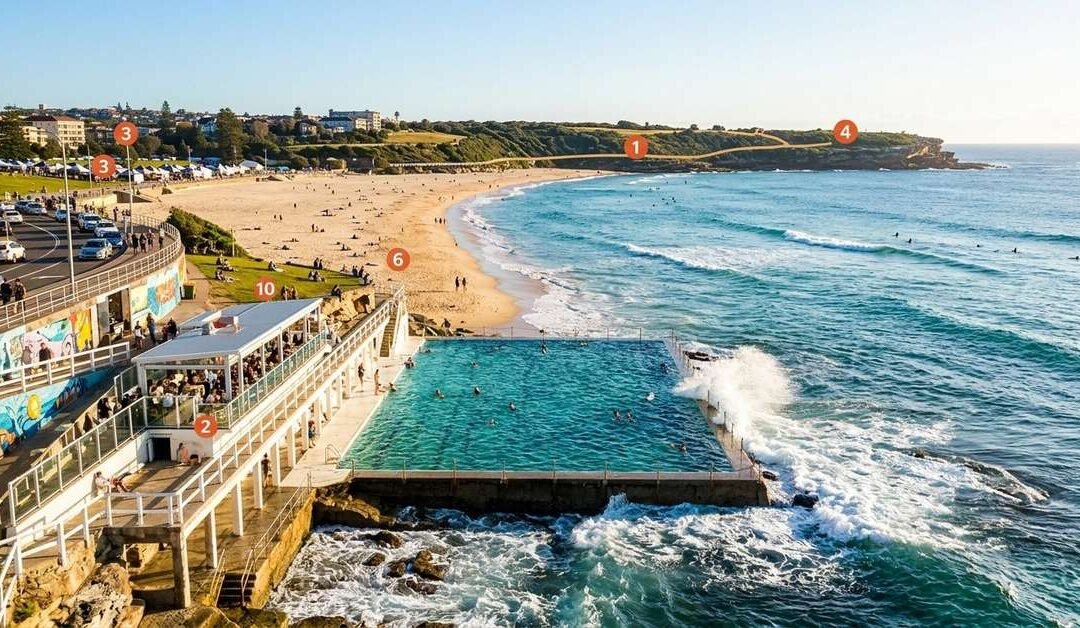
You’ve probably already seen the photos. The famous ocean pool perched right at the southern edge of the rocks, with waves crashing spectacularly over the side whenever the swell picks up. What a lot of visitors don’t realise is that the Icebergs complex also houses a genuinely excellent restaurant and bar on the upper level, with floor-to-ceiling windows looking directly out over the beach. Whether you come to swim laps in the pool or simply to sit with a cold drink and watch the ocean do its thing, it’s worth every single minute. Go late afternoon when the light on the water turns golden.
3. Explore the Sunday Markets
Every Sunday, the Bondi Markets are set up inside the grounds of Bondi Beach Public School on Campbell Parade. And unlike a lot of markets that feel like they’re performing for tourists, this one feels genuinely local. You’ll find racks of vintage clothing, handmade jewellery, independent skincare brands, ceramics, and food stalls that actually deliver on flavour. The crowd is a good mix of backpackers, long-term residents, and visiting families. Get there before noon if you want the best picks — by early afternoon, the good stuff tends to walk.
4. Watch the Sunrise from the North Bondi Headland
Set your alarm. Yes, really. This is one of those travel experiences that sounds like a cliché right up until the moment you actually do it, at which point you completely understand why everyone mentions it. The headland at the northern end of the beach gives you an unobstructed, wide-open view straight out over the Pacific. On a clear morning — which in Sydney is most mornings — the colours are something else entirely. Deep orange bleeding into pink, the ocean going from dark grey to bright blue in the space of twenty minutes. Bring a thermos of tea or coffee, sit somewhere on the rocks, and just let it happen.
5. Eat Your Way Along Hall Street
Campbell Parade gets all the attention because it faces the beach, but Hall Street — which runs parallel to the shore a few blocks back — is honestly where the better food is hiding. Think neighbourhood cafes with genuinely good espresso and no queue out the door, no-frills Thai and Japanese restaurants that locals are quietly territorial about, and a couple of bakeries producing croissants and sourdough that you will absolutely think about for weeks after you’ve left. Less touristy, considerably more delicious. Do yourself a favour.
6. Discover the Street Art Scene
Walk the backstreets of Bondi — particularly the laneways running behind the main strip and up toward North Bondi — and you’ll find large-scale murals covering entire building walls. Some are commissioned pieces by well-known local artists; others are smaller, more understated works tucked into places you’d only find if you were actively looking. None of it is particularly advertised. There’s no map or guided trail for most of it. It’s just there, layered into the fabric of the suburb, which somehow makes it better.
7. Take a Surf Lesson (Even If You’re Certain You’ll Be Terrible)
Look, this one technically involves the surf. But hear me out — taking a beginner lesson is a completely different experience from simply watching others. Several surf schools operate directly on the beach, with Let’s Go Surfing being one of the longest-running and most reputable. A two-hour beginner session will leave you sunburned, physically exhausted, and grinning in a way that’s genuinely difficult to explain to anyone who wasn’t there. You probably won’t stand up cleanly. Most people don’t. But you’ll have an absolute crack at it, and that counts for plenty.
8. Spend Time at Sculpture by the Sea (If Your Timing Lines Up)
Every October and November, the clifftop walk between Bondi and Tamarama transforms into a free, open-air sculpture exhibition. Over a hundred works from artists across Australia and around the world are installed along the path for roughly three weeks, drawing enormous crowds but somehow still feeling spacious and unhurried. It’s one of the country’s most popular outdoor arts events. If your trip doesn’t fall in that window, the walk is still very much worth doing — but if you can time it right, Sculpture by the Sea turns an already beautiful walk into something genuinely memorable.
9. Swim at Mackenzies Bay
Most visitors head straight to the main beach and never venture further. But tucked just beyond the southern headland, about fifteen minutes on foot from the main strip, sits Mackenzies Bay — a small, sheltered cove that sees a fraction of the crowds. The water is calmer here, the rock formations are dramatic, and on a weekday morning you may well have the place almost entirely to yourself. It’s the kind of spot that feels like a reward for mild effort, which is really the best kind of discovery.
10. Simply Sit and Watch the Place Do Its Thing
This sounds almost too simple for a list. But there is something genuinely compelling about finding a good elevated spot — the grassy bank above the sand, the steps near the pavilion, a table outside one of the Campbell Parade cafes — and just watching Bondi go about its day. The lifeguards running their early morning drills with quiet professionalism. The bodyboarders who appear to be there at literally every hour. The dog walkers, the joggers, the elderly couples who’ve clearly been sharing the same bench for twenty years. Bondi has an energy that’s oddly difficult to put into words. Sit with it long enough and it starts to make complete sense.
Wrapping Up at Bondi Beach
There’s a reason people keep returning to Bondi Beach long after the novelty of that first view has faded. It’s layered in a way that genuinely rewards curiosity and a slower pace. The surf is spectacular, no question — but it tends to be the coastal walk at golden hour, the unexpected market find, the coffee shop that quietly becomes your regular spot by day three, that leaves the deeper impression.
There’s a moment — and I promise you’ll know exactly when it happens — where you round a corner somewhere near Circular Quay and it just appears. No warning. No build-up. Just those iconic white shells rising against the blue of Sydney Harbour like something that shouldn’t exist but somehow does. I’ve travelled to a lot of places. Seen a lot of famous landmarks. And honestly? Most of them are a little underwhelming in person. This one isn’t.
The first time I stood in front of the Sydney Opera House, I genuinely didn’t know what to do with myself. It’s one of those buildings that feels almost too beautiful to be real — like a postcard you accidentally walked into. But here’s the thing: just looking at it from the outside is only scratching the surface. If you’re visiting Sydney, you owe it to yourself to go deeper. Way deeper.
Here’s how to actually do it right.
Start With the Harbour Bridge Walk (Yes, Before You Go Inside)
Okay, hear me out. Before you even step through the doors, walk across to the Harbour Bridge side and look back. That view — the Opera House with the city skyline behind it, the ferries cutting across the water — it’s the one that’ll live in your phone camera roll forever.
Early morning is the sweet spot. Before 8 a.m., the tourist crowds are thin, the light is soft and golden, and you might even catch the reflections shimmering on the harbour. I walked this stretch at sunrise once and genuinely had it almost to myself. Worth every early alarm.
Take a Guided Tour (Don’t Skip This)
Look, I know tours can feel like homework. But the guided tours inside the Sydney Opera House are genuinely fascinating — not in a boring, textbook way. In a “wait, they almost built this completely differently?” kind of way.
The Opera House Tour runs about an hour and takes you through the main performance halls, backstage areas, and some of the less-seen corners of the building. You learn about the Danish architect Jørn Utzon, who won the design competition in 1957 and then — in one of architecture’s great dramatic exits — resigned before the building was finished and never returned to see it completed. That story alone is worth the ticket price.
If you want to go even further, the Backstage Tour starts at 7 a.m. and gives you access to areas the regular public never sees. Rehearsal rooms, the Green Room, the loading docks where entire stage sets come in. It’s a bit pricier, but if you’re a theatre nerd (or even mildly curious), it’s a completely different experience.
Catch a Live Performance
This is the one I push hardest on. And I’ll tell you why.
You can look at a million photos of the Sydney Opera House. You can read every Wikipedia article ever written about it. But sitting inside one of those concert halls — the acoustics wrapping around you, the curved timber walls overhead — that’s something you truly can’t replicate from the outside.
The Concert Hall is the largest venue inside and hosts everything from symphony orchestras to international pop acts. The Joan Sutherland Theatre (named after Australia’s most celebrated opera singer) is where the big opera and ballet productions run. And there are smaller, more intimate spaces too, like the Studio and the Playhouse, where experimental and contemporary performances happen regularly.
You don’t have to be a classical music lover to enjoy this. They programme jazz nights, comedy shows, film screenings — honestly, there’s almost always something on that fits different tastes. Check the official Sydney Opera House website before you book your trip and see what lines up with your dates. Some shows sell out months in advance.
Eat at the Opera Bar
Right at the base of the Opera House, facing the harbour, is the Opera Bar. And it might have the best location of any bar in the world. Full stop.
Pull up a seat on the outdoor terrace, order a glass of something cold, and just… sit there for a while. Watch the ferries, the and the Harbour Bridge. Watch other tourists have the same stunned expression you probably had an hour ago. It’s one of those rare spots where the setting does all the work and you just have to show up.
The food is solid — nothing life-changing, but very decent Australian fare. It’s the setting that makes it memorable. Sunset here is particularly special. The sky turns all shades of orange and pink, the lights on the bridge come up, and the whole harbour starts to glow.
Walk the Monumental Steps and Explore the Forecourt
People rush past this part and I never understand why.
The sandstone steps that lead up to the main entrance — known as the Monumental Steps — are actually a destination on their own. Street performers set up here on weekends. Families spread out on the steps. Local artists sometimes sketch from the forecourt. It has this easy, unhurried energy that feels very Sydney.
There’s also an outdoor cinema series called Open Air Cinema that runs in the summer months (January through February in Australia). They set up a floating screen on the harbour, just in front of the Opera House. Watching a film under the stars with that building lit up behind you is a pretty hard experience to top.
Join a First Nations Cultural Experience
This one surprised me in the best way.
The Sydney Opera House sits on the land of the Gadigal people of the Eora Nation. And over the past few years, there’s been a real effort to weave Indigenous history and storytelling into the visitor experience. The Badu Gili projection show (the name means “water light” in the Gadigal language) runs most evenings on the sails of the Opera House and tells stories through stunning Indigenous artwork. It’s free. It runs for about five minutes. And it’s genuinely moving.
There are also cultural tours and performances that run throughout the year celebrating First Nations artists. If one of these coincides with your visit, go. It adds a whole layer of meaning to a place you thought you already understood.
Practical Tips Before You Go
A few things I wish someone had told me earlier:
Getting there is easy. Ferries run directly to Circular Quay from several points around the harbour — taking a ferry is honestly the best arrival experience. Trains and buses also stop nearby.
Wear comfortable shoes. There’s a lot of walking and those sandstone steps are uneven in places.
Book performance tickets and the Backstage Tour well ahead of time. Both sell out, especially during peak tourist season (December through February).
And if you can, stay at least half a day. You’ll want more time than you think.
Final Thoughts on the Sydney Opera House
Here’s what I keep coming back to: most famous buildings are symbols. You see them, you get it, you move on. But the Sydney Opera House is different. It’s a living, breathing cultural venue that’s been performing, creating, and evolving for over 50 years. And it’s not a monument to something that happened. It’s a place where things are still happening — every single night.
That’s what makes it worth more than just a photo. Go inside. Sit in one of those halls. Let the acoustics do something to you.
You came all the way to Sydney. Don’t just look at it through a camera screen.
The call of the open road, the allure of the untamed wilderness – a 4WD adventure from Darwin to Broome promises an unforgettable journey through the heart of the Australian Outback. This iconic route, stretching across the Top End of the Northern Territory and into the rugged Kimberley region of Western Australia, offers a chance to witness dramatic landscapes, connect with ancient cultures, and experience the raw thrill of off-road exploration.
From cascading waterfalls and lush monsoon forests to vast savannah plains and ancient gorges, this expedition is a sensory feast, inviting travelers to disconnect from the everyday and immerse themselves in the grandeur of nature. This article serves as your comprehensive guide to planning this epic outback trip, providing essential information and inspiration for an adventure of a lifetime.
Charting the Course: Mapping the Ultimate Darwin to Broome 4WD Route
The journey from Darwin to Broome covers a significant geographical expanse, transitioning from the tropical north to the point where the Australian desert meets the sea.1 The route primarily traverses two major regions: the Top End of the Northern Territory, characterized by its monsoonal climate and diverse ecosystems, and the Kimberley region of Western Australia, renowned for its ancient landscapes, rugged gorges, and rich Indigenous heritage. Along this path, several key towns serve as crucial stops for travelers, offering opportunities for rest, resupply, and exploration.
These include Katherine, approximately three hours south of Darwin, marking the gateway to Nitmiluk National Park; Kununurra, the first major town in Western Australia after crossing the border, acting as the eastern gateway to the Kimberley; Derby, the oldest town in the Kimberley and the western access point to the Gibb River Road; and finally, Broome, the pearling town on the coast that marks the culmination of this incredible adventure.1 Smaller but equally significant locations punctuate the route, each offering unique experiences or essential services: Adelaide River and Pine Creek in the Top End, Edith Falls (Leliyn) within Nitmiluk National Park, Timber Creek just before the WA border, Halls Creek and Fitzroy Crossing in the heart of the Kimberley, and Willare Bridge en route to Derby.1
Travelers planning this journey have two primary route options. The most direct and time-efficient path is via the Great Northern Highway (National Route 1), which stretches over 3,204 kilometers and typically requires around 19.5 hours of driving time. This route is fully sealed and suitable for 2WD vehicles, offering a more straightforward passage between Darwin and Broome.2 However, for those seeking a quintessential 4WD adventure and a more immersive experience of the outback’s rugged beauty, the famed Gibb River Road presents an alternative.
This approximately 660km unsealed track winds through the heart of the Kimberley, renowned for its breathtaking gorges, challenging river crossings, and remote landscapes, exclusively requiring a well-equipped 4WD vehicle.1 While the Great Northern Highway offers convenience, the Gibb River Road delves deeper into the untamed heart of the Kimberley, promising a more challenging and ultimately more rewarding off-road journey.6 This article will primarily focus on the 4WD adventure, detailing a route that predominantly utilizes the Gibb River Road for an immersive outback experience, with connecting sections on the Great Northern Highway to reach Darwin and Broome.7
The Top End Beckons: Darwin to Katherine
The journey south from Darwin offers a captivating introduction to the Top End’s unique landscapes, with the first major highlight being Litchfield National Park, located approximately 115km south of Darwin.1 To truly appreciate the park’s beauty and diversity, an allocation of 2-3 days is highly recommended.1 Litchfield presents a gentler introduction to the outback compared to the Kimberley, with well-maintained roads leading to numerous easily accessible natural wonders. Key attractions include a variety of cascading waterfalls, such as the iconic Florence Falls, the multi-tiered Wangi Falls, and Tolmer Falls, known for its spectacular views from the lookout.1
Travelers can also enjoy refreshing swims in the natural rock pools of Buley Rockhole or the serene waters of Walker Creek campsites.1 A unique natural phenomenon within the park is the fascinating magnetic termite mounds, standing as tall, otherworldly structures.8 For those wishing to immerse themselves in the park’s natural beauty overnight, 2WD-accessible campgrounds are available, including Florence Falls and Walker Creek campsites.7
Continuing south, the small historic township of Pine Creek offers a glimpse into the region’s gold mining past and serves as a convenient midway stop between Litchfield and Katherine.1 Mayse’s Café in Pine Creek is a popular spot to grab a bite to eat, stretch your legs, and perhaps chat with locals, soaking in the town’s laid-back atmosphere.7 These smaller towns along the Stuart Highway provide valuable insights into the pioneering history that shaped the region beyond its natural attractions.
A short detour off the Stuart Highway leads to Edith Falls (Leliyn), a beautiful waterfall cascading into a pandanus-fringed pool, located on the western side of Nitmiluk National Park.1 This serene oasis offers a welcome opportunity for a refreshing swim in its cool waters.1 Access to Edith Falls requires payment of the standard entry fees for Nitmiluk National Park.7 These natural swimming spots are essential for travelers to cool down and rejuvenate during the often hot outback journey.
The next major stop is Katherine, affectionately known as “K-Town,” situated approximately three hours south of Darwin along the Stuart Highway and serving as the gateway to the renowned Nitmiluk National Park.1 The centerpiece of the park is the majestic Katherine Gorge, carved by the Katherine River through ancient sandstone cliffs.1 There are numerous ways to experience the beauty of the gorge: join a scenic cruise that navigates through the towering rock formations, take a refreshing dip in the designated swimming areas, hire a canoe to paddle along the tranquil waters, or opt for a breathtaking helicopter flight for a bird’s-eye view of the intricate gorge system.1
For those interested in the cultural significance of the area, engaging with a local Indigenous guide for a presentation on the rich Jawoyn culture is a highly recommended experience.1 Nitmiluk National Park also offers various accommodation options to suit different preferences, including powered caravan sites, comfortable cabins, and permanent tents, allowing visitors to extend their stay and fully immerse themselves in the park’s ambiance.1 Additionally, the nearby Katherine Hot Springs provides another opportunity to relax and soak in the naturally heated thermal pools.7 Katherine and Nitmiluk National Park together offer a compelling blend of awe-inspiring natural beauty and rich Indigenous cultural experiences, marking a significant transition into the heart of the Australian Outback.
Accommodation and dining options in the Katherine region are readily available to cater to travelers. Katherine boasts a selection of hotels, motels, and caravan parks offering a range of amenities and price points. While specific recommendations will follow further research, snippets 1 and 7 indicate the presence of these facilities. Similarly, Katherine offers various dining options, including restaurants and cafes, providing opportunities to refuel and enjoy local cuisine.
Crossing into the Kimberley: Katherine to Kununurra
The drive from Katherine into Western Australia via the scenic Victoria Highway is a journey that typically consumes most of the day, emphasizing the importance of an early start and ensuring your vehicle is well-prepared with ample petrol and water.1 Approximately two hours before reaching the Northern Territory – Western Australia border, travelers will encounter Timber Creek, a small outback town offering a chance to stretch your legs on its Heritage Trail and perhaps grab lunch.1 As you approach the border, just before crossing into Western Australia, Keep River National Park presents a fascinating stop.
This often-overlooked park is home to ancient Aboriginal rock art sites and striking sandstone structures that bear a resemblance to the famous Bungle Bungle Range.1 Crossing the state border signifies a distinct shift in the journey, as you enter the vast and rugged Kimberley region of Western Australia.1 It’s crucial to be aware of strict quarantine laws that prohibit carrying fresh food across the border, making it necessary to stock up on supplies in Kununurra, your first major stop in WA.1
Continuing west along the Victoria Highway, you’ll eventually reach Lake Argyle, the largest man-made lake in the Southern Hemisphere, situated about 75 kilometers south of Kununurra.1 An unexpected highlight here is the infinity pool at Discovery Parks – Lake Argyle, which offers breathtaking views over the expansive lake.1 For those with more time, an optional scenic cruise on Lake Argyle provides opportunities to spot crocodiles, wallabies, and a variety of rare birds against the backdrop of the lake’s picturesque mountain island scenery.4 Lake Argyle presents a surprising and welcome oasis in the outback, offering unique accommodation and recreational activities, including fishing for the prized barramundi in the Ord River.7
Finally, you’ll arrive in Kununurra, the first major town in Western Australia and a vital gateway to the Kimberley region.1 Kununurra itself offers attractions like the tranquil Lily Creek Lagoon, where you might spot the unique “Sleeping Buddha” rock formation, and Mirima National Park, often called the “mini Bungle Bungles” due to its spectacular walks amidst sandstone formations.7 Given the quarantine restrictions, Kununurra is the essential place to stock up on all necessary supplies before venturing further into the Kimberley.1 This town serves as a crucial resupply point and a central base for exploring the eastern part of the Kimberley before embarking on the iconic Gibb River Road.
Kununurra offers a range of accommodation options to suit various needs and budgets. Some popular choices include Hotel Kununurra 10, Kununurra Country Club Resort 10, The Cambridge Kununurra 10, Lily Lagoon Resort 10, The Kimberley Grande 10, and Discovery Parks – Lake Kununurra.11 For those traveling with caravans or camping gear, options like Kimberleyland Waterfront Holiday Park 12, Ivanhoe Village Caravan Resort 12, and Town Caravan Park & Villas 15 provide suitable facilities.
Dining in Kununurra is also well-catered for, with options like Kelly’s Bar & Grill at Kununurra Country Club Resort 22, The PumpHouse Kununurra offering culinary flair with lake views 25, and various cafes such as Kimberley Cafe and Ivanhoe Cafe.26 For a more casual pub atmosphere, Gullivers Tavern is a popular choice.29
Accommodation in Kununurra
Price Range (Approx. per night)
Description
Hotel Kununurra
$100 – $250
Central location, pool, restaurant, airport shuttle
Kununurra Country Club Resort
$225 – $300
Central, pool, gardens, near shops
The Cambridge Kununurra
$230 – $500
Modern rooms, restaurant, close to town center
Lily Lagoon Resort
$140 – $210
Lakeside location, pool, restaurant, caravan sites
The Kimberley Grande
$170 – $300
Central location, pool, restaurant, airport transfers
Discovery Parks – Lake Kununurra
$90 – $220
Lakeside, pool, cabins, caravan and camping sites
Kimberleyland Waterfront Holiday Park
$85 – $225
Central waterfront location, cabins, caravan and camping, cafe
Ivanhoe Village Caravan Resort
$30 – $390
Central, cabins, caravan and camping sites, pool
Town Caravan Park & Villas
$155 – $235
Secure location, villas, caravan and camping, pool, pet-friendly
Embarking on the Gibb River Road: Kununurra to Derby
The true 4WD adventure begins as you leave Kununurra and venture onto the legendary Gibb River Road, a roughly 660km unsealed track that carves through the heart of the Kimberley.1 The first major stop along this iconic route is El Questro Wilderness Park, located about 100km west of Kununurra.4 This vast, nearly 1-million-acre property offers a diverse range of landscapes and experiences, requiring at least a couple of days to explore properly.34 Key natural attractions within El Questro include the challenging 1.6km (one way) hike to Emma Gorge, rewarded by a pristine waterfall and a refreshing turquoise waterhole fed by a thermal spring.7 The serene Zebedee Springs offers a relaxing soak in natural thermal pools nestled amidst lush Livistona and Pandanus palms, open to the public from 7 am to noon.7
A tranquil cruise through the 3km-long Chamberlain Gorge provides a different perspective, with towering red cliffs and opportunities to spot local wildlife like rock wallabies and freshwater crocodiles.34 Finally, the crossing of the iconic Pentecost River, while requiring caution due to potential water depth and the presence of saltwater crocodiles, offers excellent barramundi fishing and stunning photographic opportunities with the Cockburn Ranges as a backdrop.34 El Questro offers a variety of activities, including guided hikes, horseback riding, barramundi fishing tours, and scenic helicopter flights over the park’s gorges and waterfalls.1 Accommodation options cater to all tastes, from the luxurious El Questro Homestead perched atop a cliff overlooking Chamberlain Gorge to the safari-style tented cabins at Emma Gorge Resort and the comfortable bungalows and camping facilities at El Questro Station.34 Dining options are available at Emma’s Restaurant at Emma Gorge and the Steakhouse Restaurant and Swinging Arm Bar at El Questro Station.34
Continuing along the Gibb River Road for approximately 120km from Kununurra, travelers will reach Home Valley Station (also known as HV8), a sprawling 3.5-million-acre working cattle station, Indigenous training facility, and tourist resort nestled at the foot of the majestic Cockburn Range.1 This station, owned by the Indigenous Land Corporation (ILC) on behalf of the Balanggarra people, offers a unique blend of cultural immersion and outback hospitality.54 Key attractions include the Cockburn Ranges Lookout, providing panoramic views of the dramatic landscape, the serene Bindoola Creek, and opportunities for barramundi fishing in the Pentecost River.1
Home Valley Station offers a range of accommodation options, from luxurious Riverside Suites overlooking Bindoola Creek to comfortable Homestead Deluxe Rooms, safari-style Eco Tents, and two campgrounds (Homestead Camp and River Bush Camp).61 Guests can enjoy quality Australian bush tucker, cold beer, and often live entertainment at the famous Dusty’s Bar & Grill.53 Notably, some scenes from the movie “Australia” starring Hugh Jackman and Nicole Kidman were filmed in this area.54
Just a short drive west of Home Valley Station lies the iconic Pentecost River crossing, a major and often photographed landmark on the Gibb River Road.46 While renowned as an excellent spot for barramundi fishing, travelers must exercise extreme caution due to the presence of saltwater crocodiles, making swimming highly dangerous.46 The crossing offers stunning panoramic views towards the Cockburn Ranges, particularly breathtaking at sunrise or sunset, making it a must-do photo opportunity.47 The river’s depth and flow are highly seasonal, with the crossing often challenging early in the dry season but becoming easier later in the year.47
Continuing west for approximately 77km from Home Valley Station 69, Ellenbrae Station presents a charming stop. This 1-million-acre cattle station is renowned for its warm hospitality and, in particular, its delicious homemade scones served with fresh cream and jam.1 Overnight guests can enjoy a dip in the station’s swimming holes and choose to stay in the campground or rustic Stockmans Cabins.1 Day visitors are welcome to relax in the homestead gardens and savor those legendary scones with a cup of tea or coffee.71 Ellenbrae also provides a water fill-up point for travelers and may offer tyre repair services.69
About 78-86km west of Ellenbrae Station 69 lies Mount Barnett Roadhouse, a vital mid-way point on the Gibb River Road.1 This roadhouse is essential for refueling (diesel and unleaded available), stocking up on basic supplies, and obtaining information about the road ahead. More importantly, it serves as the gateway to the magnificent Manning Gorge, located approximately 7km off the roadhouse.1 Reaching Manning Gorge involves a scenic but moderately challenging 3-hour 76 return hike, which includes crossing the Manning River (either by swimming or using provided floats). The reward is a stunning waterfall cascading into a large rock pool, perfect for a refreshing swim, and the chance to view ancient Aboriginal Bradshaw and Wandjina rock art on the gorge walls.1 Basic camping facilities are available at Manning Gorge Campground, with fees payable at the Mount Barnett Roadhouse (no bookings taken).77
Approximately 126km west of Mount Barnett Roadhouse 71 and 30km off the Gibb River Road via the 4WD-only Silent Grove Road lies Dalmanyi (Bell Gorge), one of the most iconic and picturesque gorges in the Kimberley.1 Bell Gorge is renowned for its dramatic cascading waterfalls flowing over a horseshoe-shaped rock wall into a large, clear pool, creating an idyllic setting for swimming and photography.73 The 2km return walk from the carpark (via Silent Grove Road) to the gorge is rated as Class 4, involving a steep initial descent and some rock scrambling.80 Accommodation options near Bell Gorge include Silent Grove Campground (basic facilities, bookings essential), APT Bell Gorge Wilderness Lodge (luxury tented cabins with meals included), and Imintji Campground (Indigenous-owned, near Imintji Community).79
Located 29km along Silent Grove Road from the Gibb River Road turnoff 147, Dulundi (Silent Grove) Campground provides a convenient base for exploring Dalmanyi (Bell Gorge), which is about 11km further northwest.79 The campground offers flush toilets and showers (generator and non-generator areas, no powered sites), and bookings are essential, particularly during the peak season from June to October.82
Continuing west along the Gibb River Road, travelers will reach Bandilngan (Windjana Gorge) National Park, approximately 146km west of Derby.1 This stunning gorge, carved by the Lennard River through the 375-million-year-old Devonian reef system of the Napier Range, features towering walls up to 100 meters high and deep freshwater pools.1 Windjana Gorge is home to an abundance of freshwater crocodiles and holds great cultural significance for the local Bunuba people, as the traditional land and the base for Jandamarra, a legendary Bunuba leader who led resistance against European settlers in the 1890s.73 An easy 3.5-kilometer walking trail winds through the gorge, offering opportunities to see fossilized marine life and various bird species.1 The Windjana Gorge Camp within the National Park provides both powered and unpowered campsites with necessary facilities.1
The final major attraction along the Gibb River Road before reaching Derby is Dimalurru (Tunnel Creek) National Park, located about 38km southeast of Windjana Gorge.92 This unique park features a 750-meter-long natural tunnel carved by Tunnel Creek through the Napier Range, representing Western Australia’s oldest cave system.4 Exploring the tunnel involves wading through pools of cold water and requires a reliable torch and sturdy footwear. The cave is home to fascinating formations, various bat species, and freshwater crocodiles.91 Tunnel Creek also holds historical significance as a hideout for Jandamarra.4 It is a day-use area only with limited facilities, and camping is not permitted; the nearest campground is at Windjana Gorge.93
Accommodation and dining options along the Gibb River Road are varied, ranging from basic campsites at gorges like Manning Gorge and Silent Grove to comfortable station stays at Ellenbrae, Mount Elizabeth, and Home Valley, and more luxurious wilderness lodges such as APT Bell Gorge Wilderness Lodge and Mount Hart Wilderness Lodge.71 Roadhouses like Mount Barnett and Drysdale River Station are crucial for refueling and obtaining basic supplies and takeaway meals.74 Booking accommodation in advance is highly recommended, especially during the peak tourist season.101
The Final Leg: Derby to Broome
As the Gibb River Road adventure concludes, the final leg of the journey takes you from Derby to Broome, a distance of approximately 221km (2.5 hours drive) via a sealed road.73 Derby, the first town settled in the Kimberley, offers a fascinating blend of natural phenomena and rich history.73 A must-see is the Derby Jetty, where you can witness the dramatic tidal changes, the highest in Australia, and enjoy breathtaking sunsets over King Sound.73
Another significant landmark is the Boab Prison Tree (Kununudj), a massive ancient boab with a hollow trunk, holding cultural importance for the local Nyikina and Warrwa people and linked to the early settlement of Derby (though its use as a prison is debated).73 Visitors should also make time to explore the Mowanjum Aboriginal Art and Culture Centre, located near Derby, to view and purchase artworks by the traditional custodians of Wandjina law.1 For those interested in local history, the self-guided Pigeon Heritage Trail explores the story of the legendary Bunuba warrior Jandamarra.102
A visit to the Mowanjum Aboriginal Art and Culture Centre, situated about 10km southeast of Derby, offers a valuable opportunity to connect with the Indigenous heritage of the region.1 At the centre, visitors can view and purchase authentic artworks created by artists from the Worrorra, Ngarinyin, and Wunumbal tribes, the custodians of the sacred Wandjina law and iconography.1 The Mowanjum Museum provides an immersive and interactive experience, showcasing important pieces from their collection and the significant Selsmark Collection of dance totems and costumes.104
The final destination, Broome, is a vibrant and laid-back town where the red sands of the outback meet the turquoise waters of the Indian Ocean.1 Broome is famous for Cable Beach, a stunning stretch of pristine white sand perfect for relaxation, sunset camel rides, and exploring the local markets.2 The town boasts a unique blend of cultures, reflected in its diverse community and attractions.103
Broome offers a wide array of accommodation options, including luxurious resorts like Cable Beach Club Resort & Spa 108 and The Pearle of Cable Beach 108, along with comfortable hotels such as Moonlight Bay Suites 108 and Oaks Broome Hotel 108, as well as caravan parks like RAC Cable Beach Holiday Park.108 Dining in Broome is a treat, with numerous restaurants and cafes to choose from, including Matso’s Brewery 113, The Bay Club at Mangrove Hotel 113, and Papa Fuego.113
Planning Your 4WD Outback Adventure: Essential Guide
Undertaking a 4WD adventure from Darwin to Broome requires careful planning, and one of the most crucial aspects is choosing the right time of year. The dry season, which typically runs from May to October, is widely considered the best time to travel through this region.2 During these months, the weather is generally milder, with daytime temperatures ranging from 20°C to 30°C, and humidity levels are lower, making for more comfortable driving and camping conditions.119 Additionally, the risk of flooding is significantly reduced, ensuring better accessibility to roads and attractions, including the Gibb River Road and its numerous river crossings.67
Traveling early in the dry season (April-May) offers the advantage of witnessing waterfalls in their full glory and the landscape still lush and green from the preceding wet season, although some river crossings might still present a challenge due to higher water levels.2 It is strongly advised to avoid traveling during the wet season, which typically lasts from November to April, as heavy rainfall can lead to widespread flooding, road closures, and extremely high humidity, making travel uncomfortable and potentially dangerous.3
Preparing your vehicle and packing essential supplies are also paramount for a successful and safe outback journey. A reliable 4WD vehicle with high ground clearance is essential, especially if you plan to drive the Gibb River Road.3 Key supplies to include are at least two spare tyres (consider carrying three for very remote sections), a comprehensive tyre repair kit and a portable air compressor to adjust tyre pressures for different road conditions.3 Vehicle recovery gear such as snatch straps, shackles, and a shovel are crucial in case your vehicle gets bogged or stranded.126 A well-stocked first aid kit is non-negotiable for handling any minor injuries or emergencies.101 Given the hot climate, carrying ample drinking water is vital – aim for a minimum of 5-7 liters per person per day, plus an additional emergency supply.3
Pack sufficient non-perishable food for the duration of your trip, keeping in mind the limited availability of supplies in remote areas.3 Plan your fuel stops meticulously, as fuel stations can be few and far between, especially along the Gibb River Road, and consider carrying extra fuel in jerry cans.3 For navigation, bring detailed paper maps and a reliable GPS device, and consider downloading offline maps on your phone or tablet.126 A satellite phone or satellite communicator is highly recommended for remote areas where mobile phone coverage is unavailable.4 Other essential items include insect repellent, high-factor sunscreen, a wide-brimmed hat, sturdy and comfortable footwear, and a reliable torch or headlamp.3 Finally, don’t forget to research and pack any necessary National Parks Passes and other permits required for accessing certain areas.3
Safety should be a top priority when undertaking an outback adventure. Drive cautiously, especially on unsealed roads, and adjust your speed according to the road conditions. Be particularly vigilant during dawn and dusk, as wildlife, such as kangaroos and cattle, are often active and can pose a significant hazard.67 Water crossings require extreme caution; always check the water depth and flow before attempting to cross, and proceed slowly in four-wheel drive mode if you deem it safe.67 Be aware of the presence of both freshwater and saltwater crocodiles in the waterways, and never assume a waterhole is safe for swimming unless advised by locals.7 Given the remoteness of the journey, mobile phone service can be unreliable or non-existent in many areas, making a satellite phone or communicator a vital safety tool.4 It’s always a good practice to inform a trusted person about your detailed travel itinerary and expected return time, and to check in with them regularly during your trip.67
Access to certain areas along the Darwin to Broome route requires permits and passes. A Western Australia Parks Pass is needed for entry into several National Parks, including Windjana Gorge and Tunnel Creek National Parks; these can often be purchased online, at visitor centers, or sometimes at the park entrance itself.3 Specific permits are required for El Questro Wilderness Park, with options for day or week passes available for purchase at the station township or Emma Gorge.36 For accessing the Mitchell Plateau and Mitchell Falls, an Uunguu Visitor Pass is necessary.94 Additionally, many gorges and station stays along the Gibb River Road may have their own entry fees or camping charges that are payable on-site.77 If you plan to visit any Aboriginal communities, such as those on the Dampier Peninsula, it’s essential to research and obtain the required entry permits beforehand.103
From Darwin’s Top End to Broome’s Coast: An Unforgettable Outback Odyssey
The 4WD adventure from Darwin to Broome is more than just a road trip; it’s an odyssey through the heart of Australia’s captivating Outback. From the tropical allure of Darwin and the Top End’s cascading waterfalls to the rugged grandeur of the Kimberley’s ancient gorges and the coastal charm of Broome, this journey offers an unparalleled tapestry of landscapes and experiences. The thrill of navigating unsealed tracks, the awe-inspiring beauty of remote natural wonders, the connection with ancient Indigenous cultures, and the simple pleasure of camping under a star-studded sky – these are the indelible memories that await those who answer the call of the Outback. With careful planning and a spirit of adventure, this Darwin to Broome expedition promises to be an unforgettable exploration of one of the world’s last great wilderness areas.
Australia Satellite: Premier Satellite Communication Solutions Across Australia – Australia Satellite, accessed on April 4, 2025, https://www.australiasatellite.com/
Australia’s vast interior beckons with the promise of adventure, cultural immersion, and breathtaking natural wonders. An overland journey from the sophisticated southern city of Adelaide to the tropical northern hub of Darwin, with a crucial stop at the iconic Uluru, stands as one of the continent’s most unforgettable road trips. This guide will navigate you through the planning stages and the journey itself, highlighting must-see attractions, comfortable accommodations, and delicious dining options that await at each significant point along this epic route.
Part 1: Planning Your Epic Journey
Popular Overland Routes and Itineraries: Finding the Perfect Fit
The backbone of this remarkable adventure is the Stuart Highway, a legendary north-south artery stretching from Darwin through the heart of Australia to Port Augusta and Adelaide.1 This fully sealed road makes the journey accessible to standard two-wheel-drive vehicles.2 While the sheer distance of approximately 3,028 kilometers 3 or 3,030 km 1 might seem daunting, the drive itself, totaling around 31 hours without stops 1, is best savored over a more extended period to truly appreciate the diverse landscapes and experiences on offer.
Travelers contemplating this route will find a range of suggested durations, reflecting different priorities and available time. A fast-paced itinerary could see you reaching Darwin in as little as 7 to 8 days 2, focusing on hitting the major landmarks. However, to truly immerse oneself in the beauty and culture of the regions traversed, a more relaxed pace of 14 days 2 or even an extensive 21 days 4 is highly recommended. The significant difference in these suggested timeframes underscores the variety of experiences available. Opting for a shorter trip necessitates longer driving days to cover the vast distances between key attractions. Conversely, a longer journey allows for more in-depth exploration, including opportunities for hiking, engaging with local cultures, and simply soaking in the unique atmosphere of each location.
Several popular itinerary options emerge from common travel patterns:
The 8-Day Whirlwind: This itinerary prioritizes seeing the main highlights in a relatively short timeframe. Starting in Adelaide, travelers typically head to the Flinders Ranges, then onward to the opal mining town of Coober Pedy. The journey continues to the awe-inspiring Uluru, followed by Alice Springs, Tennant Creek, and finally Katherine, before reaching the tropical city of Darwin.3 This route is ideal for those with limited time who want to experience the iconic sights.
The Balanced 14-Day Explorer: Building upon the 8-day route, this option allows for a more leisurely pace at each stop. It often includes a highly recommended detour to Kings Canyon (Watarrka National Park) between Uluru and Alice Springs, providing an opportunity to explore another spectacular natural wonder of the Red Centre.3 This duration strikes a balance between seeing the key attractions and having time to enjoy them.
The Comprehensive 21-Day “Explorer Way”: This extended itinerary, sometimes referred to as the “Explorer Way,” offers the most in-depth experience.4 Beginning in Adelaide, it meticulously explores the Red Centre, including ample time at Uluru and Kata Tjuta. It also incorporates visits to Kings Canyon, the West MacDonnell Ranges near Alice Springs, the relaxing Mataranka Thermal Pool, the stunning Katherine (Nitmiluk National Park), and even extends into the wonders of Kakadu National Park near Darwin. This option is perfect for travelers with ample time who wish to fully immerse themselves in the diverse landscapes and cultures along the route. The inclusion of Kakadu and Litchfield National Parks in this longer itinerary demonstrates that the journey from Adelaide to Darwin can serve as the foundation for a much broader exploration of the Northern Territory’s natural treasures. Darwin, in this context, becomes a gateway to even more adventures in the Top End.
For those seeking an alternative to driving, or perhaps a combination of travel modes, it is worth noting the existence of the legendary Ghan railway.7 This iconic train journey travels between Adelaide and Darwin, offering a luxurious and all-inclusive experience of the Australian interior. While this guide primarily focuses on a self-drive adventure, the Ghan provides a valuable option for travelers who might prefer the comfort and curated experience of train travel for part or all of this iconic route.
Understanding Driving Times and Distances
While the direct distance between Adelaide and Darwin is approximately 3,000 km, equating to about 31 hours of continuous driving 1, these figures represent the absolute minimum. The actual time spent on the road will vary significantly depending on the chosen itinerary and the number of stops made for sightseeing, rest, and overnight stays.3 It is crucial to understand that the suggested durations of 7 to 21 days factor in these essential breaks and opportunities for exploration. Travelers should budget considerably more time than just the raw driving hours to fully appreciate the journey, with recommendations leaning towards at least 14 days 3 for a balanced experience and up to 21 days 4 for a more comprehensive exploration.
Attempting to cover excessive distances in a single day, particularly in the remote outback, is strongly discouraged.1 The vastness of the landscape and the potential for fatigue necessitate realistic daily driving targets. Planning each day’s drive with designated stops for meals, attractions, and rest is essential for a safe and enjoyable trip.
For environmentally conscious travelers, it is encouraging to note the increasing availability of electric vehicle (EV) chargers along the Adelaide to Darwin route.3 Notably, a charging station is located in Yulara, the resort town near Uluru, making this iconic landmark accessible to EV owners. This developing infrastructure indicates a growing feasibility for sustainable travel options across the Australian outback.
To provide a clearer overview of the different itinerary options, the following table summarizes the key routes discussed:
Route Name
Key Stops
Estimated Total Driving Time (Hours)
Recommended Minimum Duration (Days)
8-Day Highlights
Adelaide, Flinders Ranges, Coober Pedy, Uluru, Alice Springs, Tennant Creek, Katherine, Darwin
~41.5
8
14-Day Explorer
Adelaide, Flinders Ranges, Coober Pedy, Uluru, Kings Canyon, Alice Springs, Tennant Creek, Katherine, Darwin
~45.5
14
21-Day “Explorer Way”
Adelaide, Flinders Ranges, Coober Pedy, Uluru, Kings Canyon, West MacDonnell Ranges, Alice Springs, Devils Marbles, Mataranka, Katherine, Kakadu, Darwin
~50+
21
This table offers a comparative snapshot, allowing potential travelers to quickly gauge the time commitment and key destinations associated with each popular itinerary.
Part 2: Adelaide – Your Southern Starting Point
Must-See Attractions in Adelaide: Setting the Adventure Tone
Adelaide, the sophisticated capital of South Australia, serves as the perfect launchpad for your outback odyssey. Often referred to as the “Gateway to the Outback” 9, this vibrant city is renowned for its lively festival scene, expansive parklands, and a thriving culture of food and wine.9 Before embarking on the long drive north, dedicating a day or two to explore Adelaide’s charms will not only provide a pleasant start to your adventure but also offer opportunities to stock up on essentials.
Begin your exploration in the heart of the city, the Adelaide CBD, where you can wander through the pedestrian-friendly Rundle Mall, browsing a diverse range of shops and boutiques.1 For a tranquil escape from the urban bustle, head to the Adelaide Botanic Garden.1 This 50-hectare oasis in the city’s heart showcases meticulously maintained landscapes and an impressive collection of plants from Australia and around the world.12 The serene environment offers a calming contrast to the rugged desert landscapes that lie ahead.
Food lovers should not miss the Adelaide Central Market.1 A historic and bustling hub with over 70 traders, the market offers a tantalizing array of fresh produce, gourmet delights, and international cuisines.13 This is an ideal place to sample local flavors and gather provisions for your road trip. For a change of pace, take a short tram ride to Glenelg Beach 1, where you can enjoy the South Australian coastline before venturing inland.
Sports enthusiasts and those seeking panoramic city views should visit the iconic Adelaide Oval.11 Considered one of Australia’s most picturesque sporting venues, it also offers the thrilling RoofClimb experience, providing unparalleled 360-degree vistas of Adelaide, from the coastline to the hills.11 For a dose of culture, explore the Art Gallery of South Australia and the South Australian Museum 10, home to impressive collections of art, history, and natural heritage. To gain insights into the rich cultural history of Australia’s Indigenous peoples, a visit to the Tandanya National Aboriginal Cultural Institute is highly recommended.11 Finally, for a relaxing perspective of the city, consider a leisurely sightseeing cruise along the River Torrens on one of the historic Popeye boats.14
For those with a penchant for fine wines, Adelaide’s strategic location provides easy access to world-renowned wine regions such as the Barossa Valley, McLaren Vale, and the Adelaide Hills.11 A pre-trip or post-trip visit to these regions offers a delightful opportunity to indulge in wine tasting and explore picturesque vineyards.
Accommodation in Adelaide: From City Chic to Budget-Friendly Stays
Adelaide offers a diverse range of accommodation options to suit every traveler’s needs and budget.17
For those seeking luxury, Adelaide boasts several exceptional hotels. Eos by SkyCity offers a modern and opulent experience with an outdoor pool, a luxurious spa, and signature dining venues.17 The Oval Hotel at Adelaide Oval provides a unique stay with premium boutique accommodations and stunning views overlooking the iconic sporting ground.15 The Playford Adelaide – MGallery is an award-winning 5-star boutique hotel in the heart of the city, featuring a heated pool and sauna.17 The Mayfair Hotel, housed in a heritage-listed building, exudes art deco elegance and features a popular rooftop bar.17 Sofitel Adelaide offers a touch of French sophistication with stylish rooms, a gourmet French restaurant, and chic bars in a central location.17 The InterContinental Adelaide, situated on the banks of the River Torrens, provides premium accommodations and award-winning dining options.18 For a luxurious retreat just outside the city, Mount Lofty House & Estate Adelaide Hills offers breathtaking views and a tranquil setting in the wine region.17 The variety within the luxury segment, from unique locations to hillside escapes, caters to different preferences among high-end travelers.
Mid-range options offering comfort and convenience include Pullman Adelaide 18, Adelaide Marriott Hotel 17, Hotel Grand Chancellor Adelaide 18, and Majestic Roof Garden Hotel.18
Travelers on a budget will find several excellent options. Adelaide Riviera Hotel offers well-situated and reasonably priced accommodations.23 Hotel Metropolitan provides basic but comfortable rooms.22 Adelaide Paringa offers another budget-friendly choice in the CBD.22 Hostels like Tequila Sunrise Hostel Adelaide and YHA Adelaide Central provide affordable dorm-style accommodations for backpackers and solo travelers.23 The availability of these budget-conscious options ensures that Adelaide is an accessible starting point for a wide range of travelers.
For families, Adelaide offers several hotels with amenities catering to children. Adina Apartment Hotel Adelaide Treasury provides spacious apartment-style accommodations.28 Majestic Old Lion Apartments in North Adelaide offer self-contained apartments in a great location.19 Oaks Glenelg Plaza Pier Suites boasts an indoor pool and spacious suites near the beach.28 The Retreat at West Beach Parks offers holiday park-style accommodation with an outdoor pool and other family-friendly facilities.31 Even some mid-range hotels like Hotel Grand Chancellor Adelaide offer family-friendly amenities.18 The presence of these apartment-style hotels and holiday parks highlights the suitability of Adelaide as a starting point for families embarking on this long road trip.
Dining in Adelaide: A Taste of South Australia
Adelaide’s culinary scene is as diverse as its landscape, offering a plethora of dining options to satisfy every palate and budget.38
For a fine dining experience, consider Africola, known for its bold and exciting South African-inspired cuisine.39 Fugazzi offers popular Italian dishes, especially its renowned gnocchi fritto.39 Penfolds Magill Estate Restaurant provides an exceptional dining experience with contemporary Australian cuisine and iconic wine pairings, all set against the backdrop of its historic vineyard.39 Dining at Penfolds offers a unique opportunity to combine a world-class meal with the heritage of one of Australia’s most celebrated wineries. Osteria Oggi is a stylish Italian restaurant in the CBD, celebrated for its fresh pasta and modern interpretations of Italian classics.43 Lenzerheide Restaurant has been a stalwart of Adelaide’s fine dining scene for many years, offering elegant meals in a refined setting.46
For casual dining, Golden Boy is a popular choice for its delicious Thai-fusion and pan-Asian flavors served in a vibrant atmosphere.39 Peel St offers modern fusion cuisine with an emphasis on shared plates and seasonal ingredients.41 Station Road Adelaide provides a more recent addition to the dining scene, promising French-inspired cuisine with a modern Australian twist.41 Market & Meander, located in the CBD, focuses on modern Italian dishes crafted with fresh, locally sourced ingredients.48 Gondola Gondola serves flavorful South-East Asian cuisine accompanied by enticing cocktails in a lively setting.40 Melt CBD is a favorite for its tapas and delicious pizzas in the heart of the city.40
Travelers looking for budget-friendly eats will find numerous options within the Adelaide Central Market 1, offering a wide variety of affordable and tasty meals. Additionally, many cafes and pubs throughout the city provide budget-conscious dining options.49 The sheer diversity of Adelaide’s dining scene ensures that travelers of all budgets and culinary preferences will find something to enjoy before their outback adventure truly begins.
Part 3: Heading North – Adelaide to the Majestic Flinders Ranges
Scenic Drives and Points of Interest
The initial leg of your overland adventure takes you north from Adelaide towards the ancient and majestic Flinders Ranges.3 As you leave the city behind, the landscape gradually transitions from the familiar greenery of agricultural land to the more rugged and dramatic terrain that characterizes the Flinders.
Consider taking the Princes Highway north from Adelaide.5 A worthwhile detour for wine enthusiasts is the picturesque Clare Valley, renowned for its charming vineyards and boutique wineries.5 Spending a few hours or even a day exploring the Clare Valley offers an early taste of South Australia’s acclaimed wine regions. Continuing north, you might pass through Port Pirie, where a stop at the Port Pirie Regional Art Gallery could provide a cultural interlude.5
A significant stop before entering the heart of the Flinders Ranges is Port Augusta.2 Situated at the head of Spencer Gulf, Port Augusta serves as a crucial gateway to the Outback. It is highly recommended to visit the Wadlata Outback Centre in Port Augusta.2 This excellent facility offers an immersive introduction to the vast landscapes, history, and ecology of the Australian Outback, providing valuable context for the journey ahead. Port Augusta’s role as a transition point is significant, offering resources and information for travelers as they prepare to venture into the more remote parts of their trip.
As you drive further north, the Flinders Ranges themselves will begin to dominate the horizon. This ancient mountain range boasts dramatic scenery, with rugged gorges, towering peaks, and unique wildlife.9 The Ikara-Flinders Ranges National Park is the centerpiece of the region, offering a wealth of attractions.61
Key attractions within the Flinders Ranges that should be on your itinerary include:
Wilpena Pound (Ikara): This breathtaking natural amphitheatre is the iconic landmark of the Flinders Ranges.2 Offering numerous hiking trails to suit various fitness levels, Wilpena Pound provides stunning panoramic views of the surrounding landscape. For a truly unforgettable experience, consider taking a scenic flight to fully appreciate the scale and grandeur of this natural wonder.11
Brachina Gorge and Bunyeroo Gorge: These spectacular gorges showcase the rugged beauty and geological history of the Flinders Ranges.3 Keep an eye out for the elusive Yellow-footed Rock Wallabies that inhabit these areas.62
Aboriginal Rock Art Sites: The Flinders Ranges hold significant cultural importance to the Adnyamathanha people and are home to numerous ancient Aboriginal rock art sites. Exploring these sites offers a profound connection to the land and its traditional custodians.3
Mount Remarkable National Park: Located near the town of Melrose, this park offers diverse landscapes, including forests, gorges, and waterfalls, with various hiking trails available.64
Pichi Richi Railway: Step back in time with a ride on the Pichi Richi Railway, a historic steam train that winds its way through the stunning gorges and valleys of the southern Flinders Ranges.2
Arkaroola Wilderness Sanctuary: For those venturing to the far northern reaches of the Flinders, Arkaroola offers a unique experience with its dramatic granite peaks, deep gorges, and natural waterholes, accessible through guided 4WD tours.60
Accommodation in the Flinders Ranges: Embracing the Outback
The Flinders Ranges offer a range of accommodation options that allow you to immerse yourself in the outback experience.4
Wilpena Pound Resort, located within the heart of the Ikara-Flinders Ranges National Park, provides a variety of choices, from camping and caravan sites for the budget-conscious to comfortable hotel rooms and luxurious Ikara Safari Tents, offering a glamping experience with stunning views.4
Rawnsley Park Station, a working sheep station nestled at the foot of Wilpena Pound, offers a range of accommodations, including eco-villas with breathtaking views and well-equipped camping facilities.60
For a quintessential outback pub experience, consider a stay at the Prairie Hotel in Parachilna.60 This iconic hotel offers comfortable rooms and is renowned for its unique “feral food” dining experience.
Skytrek Willow Springs Station provides a more rustic and secluded station stay experience with self-contained accommodation and access to walking trails on the property.68
In the charming town of Melrose, the Jacka Brothers Brewery Guesthouse offers a boutique bed and breakfast experience in a historic setting.64
Budget-friendly options can be found in the town of Hawker, a convenient base for exploring the southern Flinders, with accommodations like Hawker Holiday Cabins and Hawker Caravan Park.69
Flinders Ranges Dining: Fueling Your Exploration
Dining options in the Flinders Ranges reflect the region’s outback charm and increasing focus on local produce.64
The Woolshed Restaurant at Rawnsley Park Station emphasizes the use of local ingredients, including lamb from their own station, to create hearty and delicious meals with magnificent views of Wilpena Pound.64
A truly unique culinary experience awaits at the Prairie Hotel in Parachilna.60 Their famous “feral food” menu features innovative dishes made with native Australian meats such as kangaroo, emu, and camel. This is a dining destination worth seeking out for a taste of the outback.
In the small town of Hawker, Flinders Food Co offers a surprisingly modern cafe experience with excellent coffee, delicious brunch options, and a selection of local beers and ciders, often incorporating native ingredients into their menu.64
For craft beer enthusiasts, Jacka Brothers Brewery in Melrose provides a great spot to enjoy locally brewed beers along with classic pub fare.64
Finally, in the former railway hub of Quorn, the Quandong Cafe offers a charming experience with a menu featuring the native quandong fruit in various forms, from milkshakes to pies.73
Part 4: Into the Underground – Flinders Ranges to Coober Pedy
The Unique Landscape and Attractions of Coober Pedy
The drive north from the Flinders Ranges towards Coober Pedy marks a significant shift in the landscape, as you venture deeper into the arid heart of South Australia.5 The terrain becomes increasingly desolate, yet possesses a stark and captivating beauty.
Consider a stop at Woomera, a town with a remarkable history rooted in Australia’s military and space exploration endeavors.2 Here, you can explore an outdoor Missile Park and learn about the pivotal role this area played in Australia’s past.
Continuing north, you will eventually reach the extraordinary town of Coober Pedy.2 Known as the “Opal Capital of the World,” Coober Pedy is famous for its unique underground living. Due to the extreme desert heat, a significant portion of the town’s residents live in “dugouts” – homes, shops, and even hotels built below the surface to maintain a comfortable temperature.2
Coober Pedy offers a wealth of fascinating underground attractions to explore 5:
Underground Homes: Take a tour of a traditional underground home, such as Faye’s Underground Display Home, to experience firsthand the unique lifestyle adapted to the harsh desert environment.79
Opal Mines and Museums: Delve into the history of opal mining at the Umoona Opal Mine & Museum, which also houses an Aboriginal interpretive centre and displays fossils from the region’s ancient inland sea.5 Explore the Old Timers Mine to see an original opal mine from 1916.79 For a hands-on experience, consider a “noodling” session to try your luck at finding your own opal.82
Underground Churches: Visit the remarkable Serbian Orthodox Church, an underground marvel with a striking scalloped ceiling and rock-carved sculptures.5 Also explore the Catacomb Church, built in the shape of a cross entirely underground 79, and St Peter & Paul’s Catholic Church, the first underground church in Coober Pedy.79
The Breakaways Conservation Park: A short drive north of Coober Pedy, this stunning conservation park features striking sandstone tablelands that glow in vibrant hues, especially at sunrise and sunset.5 Note that permits are required to enter.78
Josephine’s Gallery and Kangaroo Orphanage: Immerse yourself in a rare Aboriginal art gallery while also meeting orphaned kangaroos and other rescued wildlife.2
The Big Winch: Climb to the top of this iconic structure, offering 360-degree views of Coober Pedy and the surrounding opal fields.78
The Dog Fence: Witness a section of the world’s longest fence, originally built to keep dingoes out of sheep grazing areas.80
Moon Plain: Explore the otherworldly, barren landscape known as the Moon Plain, located near Coober Pedy and often used as a filming location for its lunar-like appearance.80
Coober Pedy Golf Club: Experience the unique challenge of playing golf on a course with no grass.79
Sleeping Beneath the Surface: Underground Accommodation
A quintessential Coober Pedy experience is spending a night (or more) in an underground hotel or dugout.2 These subterranean accommodations offer a naturally cool and quiet environment, providing a welcome escape from the harsh desert climate.
Consider these underground accommodation options 4:
Desert Cave Hotel: As the only international underground hotel, it offers a unique experience with both underground and above-ground rooms, along with amenities like a pool and an underground bar.83
The Underground Motel: A well-regarded option offering comfortable and well-appointed underground rooms, complete with a garden and barbecue facilities.83
Radeka Downunder Underground Motel: Centrally located, this motel provides underground rooms along with a fully equipped communal kitchen and coin-operated laundry.84
Coober Pedy Experience Motel (Comfort Inn): Offers a distinctive stay entirely underground, carved out from an original opal mine, filled with natural history and wonder.5
Mud Hut Motel: While built above ground, this motel utilizes rammed earth construction, providing excellent insulation against the heat, and offers a range of room types.83
Lookout Cave Underground Motel: Situated above Coober Pedy, this motel offers both underground rooms and apartments, some with impressive views.83
Dug Out B&B: For a more luxurious underground experience, this bed and breakfast is located a short drive from town and offers beautifully appointed rooms carved into the sandstone hills, boasting stunning desert views.83
Underground Bed & Breakfast: This highly-rated option provides tourists with a comfortable and unique underground living experience.84
For travelers who prefer more traditional accommodations, above-ground options like the Opal Inn Hotel, Motel, Caravan Park and BIG4 Stuart Range Outback Resort are also available.84
Dining in Coober Pedy: Outback Flavors
Despite its remote location, Coober Pedy offers a variety of dining options reflecting its unique outback character.80
The Outback Bar & Grill is a popular choice, serving pub classics, char-grilled meats, and offering grab-and-go options for those on a tight schedule.74 John’s Pizza Bar & Restaurant provides a casual setting for pizzas and other cafe-style meals.74 The Crystal Cafe, located underground, offers a light buffet or a la carte breakfast and a delicious lunch menu.74 For meals with a view, head to the Big Winch 360 Cafe & Wine Bar, perched atop the Big Winch complex.89 Oliver Street Cafe serves up burgers, seafood, yiros, and other casual fare.80 The Italo Australian Miners Club offers a social atmosphere and meals.74 The Opal Inn Bistro, located within the Opal Inn Hotel, provides a range of dining options.89 Additionally, the Coober Pedy RSL (Returned & Services League) often serves meals on Sundays.89
Part 5: The Road to the Red Centre – Coober Pedy to Uluru
Key Stops and Scenic Views Along the Way
The drive northwest from Coober Pedy towards Yulara, the resort town near Uluru, is a journey through the heart of the Australian Outback, characterized by vast, seemingly endless horizons and the iconic red earth.3 This leg of the trip marks your passage towards the spiritual and geographical center of the continent.
A common and highly recommended stop along this route is the Erldunda Roadhouse.1 Located near the intersection of the Stuart Highway and the Lasseter Highway (the road leading to Uluru), Erldunda provides essential services such as fuel, food, and accommodation. It also marks the point where you officially cross the border from South Australia into the Northern Territory for many travelers.
As you continue towards Uluru, be prepared to witness the stark and captivating beauty of the Australian Outback.1 The landscape is characterized by its immense scale, with seemingly endless stretches of red sand and sparse, resilient vegetation. Take advantage of roadside rest areas to stretch your legs, absorb the silence, and marvel at the sheer vastness of the surroundings. Keep a watchful eye out for native wildlife such as kangaroos and emus, which are often spotted grazing along the roadside, particularly during the cooler parts of the day.3
Accommodation Near Uluru: Your Base for Exploration
Yulara, also known as Ayers Rock Resort, is the primary accommodation hub for visitors to Uluru-Kata Tjuta National Park.3 Situated just a short drive from both Uluru and Kata Tjuta, this purpose-built resort town offers a range of accommodation options to suit various budgets and travel styles.3
Luxury travelers can indulge in the elegant Sails in the Desert. The Desert Gardens Hotel offers premium accommodations with beautiful gardens. For a boutique experience, consider The Lost Camel Hotel. Families or those seeking more space might opt for the self-contained Emu Walk Apartments. Budget-conscious travelers will find comfortable options at the Outback Pioneer Hotel & Lodge, which offers both hotel rooms and dorm-style accommodations. Finally, for those who prefer to camp or travel with a caravan, the Ayers Rock Campground provides well-equipped facilities.3 The comprehensive range of choices at Ayers Rock Resort ensures that most travelers will find an accommodation option that meets their needs and preferences.
Dining Options Around Uluru
Ayers Rock Resort also offers a diverse array of dining experiences, ensuring that visitors have ample choices for meals throughout their stay.6
For a truly unforgettable experience, consider the Sounds of Silence, an iconic outdoor dining experience under the stars, complete with Indigenous cultural performances. Tali Wiru offers an exclusive fine dining experience also set under the breathtaking outback night sky. More casual restaurant options include Arnguli Grill and Ilkari Restaurant. For quick and easy meals, the resort offers the Outback Pioneer Kitchen, Outback Pioneer BBQ & Bar, Kulata Academy Cafe, and Ininti Cafe. Bars and lounges such as the Walpa Lobby Bar provide a place to relax and enjoy a drink. Additionally, takeaway options are available for those on the go. The wide variety of dining choices within the resort caters to different tastes and budgets, enhancing the overall visitor experience in this remote location.
Part 6: Experiencing the Heart of Australia – Uluru-Kata Tjuta National Park
Uluru (Ayers Rock): A Cultural Icon
Uluru, also known as Ayers Rock, stands as a powerful symbol of Australia and holds profound cultural and spiritual significance for the Anangu people, the Traditional Owners of this land.3 It is not merely a geological wonder but a living cultural landscape. To truly appreciate Uluru, understanding its deep connection to the Anangu people is paramount.
Embark on the Mala Walk, a ranger-guided tour that provides invaluable insights into traditional Anangu culture, the rich history of rock art found around the base of Uluru, and the ongoing management of the park.4 A visit to the Cultural Centre, located near the entrance to the park, is also highly recommended. Here, you can delve deeper into Anangu culture, learn about the significance of the National Park, and view Indigenous art and artifacts.4 It is essential to remember that Uluru is a sacred site, and visitors are urged to respect the cultural protocols of the Anangu people.
One of the most captivating experiences at Uluru is witnessing the sunrise and sunset. As the sun’s rays paint the sky, the monolith undergoes a breathtaking transformation, shifting through a spectrum of vibrant colors. Designated viewing platforms around Uluru offer the best vantage points for these magical moments.1 For a more immersive experience, undertake the Uluru Base Walk, a 10-kilometer trail that encircles the entire rock. This walk allows you to discover hidden waterholes, pockets of lush woodlands, and numerous ancient rock art sites, offering a unique perspective of this iconic landmark.4
Kata Tjuta (The Olgas): Ancient Majesty
Located approximately 30 kilometers west of Uluru lies Kata Tjuta, also known as The Olgas.5 This collection of 36 majestic domed rock formations presents a different, yet equally awe-inspiring, spectacle. Like Uluru, Kata Tjuta holds deep cultural significance for the Anangu people.
A must-do activity at Kata Tjuta is the Valley of the Winds walk.1 This challenging but incredibly rewarding 7.4-kilometer loop trail winds through the valleys between the towering domes, offering breathtaking panoramic views of the unique geological formations and the surrounding landscape. While Uluru stands as a solitary giant, Kata Tjuta’s cluster of domes creates a sense of ancient majesty and a contrasting beauty that is equally captivating.
Walking Trails and Viewing Platforms: Immersing Yourself in the Landscape
Uluru-Kata Tjuta National Park offers a network of well-maintained walking trails and strategically placed viewing platforms that allow visitors to fully immerse themselves in the landscape.4
Around Uluru, popular trails include the easy 2-kilometer Mala Walk, the gentle 1-kilometer Mutitjulu Waterhole Walk, the moderate 4-kilometer Lungkata Walk (return), and the full 10-kilometer Base Walk (moderate). At Kata Tjuta, the challenging 7.4-kilometer Valley of the Winds Walk and the easier 2.6-kilometer Walpa Gorge Walk (return) are highly recommended.
For optimal views of Uluru at sunrise and sunset, head to the designated viewing areas, which are well signposted within the park. Various lookouts along the Valley of the Winds walk at Kata Tjuta offer stunning perspectives of the domes. Remember to carry an adequate supply of water, wear sunscreen and a hat, and avoid strenuous hikes during the hottest parts of the day, especially during the summer months, when temperatures can soar.4
Guided Tours and Cultural Experiences: Connecting with the Land
To gain a deeper understanding of the cultural significance and history of Uluru and Kata Tjuta, joining a guided tour led by an Aboriginal guide is highly recommended.5 These tours offer invaluable insights into the Anangu people’s connection to the land, their traditions, and their stories associated with these sacred sites.
Consider participating in cultural experiences such as the Maruku Arts cultural experience, where you can learn about traditional Aboriginal art forms and perhaps even try your hand at creating your own piece.63 Additionally, the free presentations held daily at the Cultural Centre provide an excellent opportunity to learn more about Anangu culture and the ongoing efforts in managing the National Park.4
Scenic Flights: A Bird’s-Eye View
For a truly unique perspective of Uluru and Kata Tjuta, consider taking a scenic flight.62 Both helicopter and fixed-wing flight options are available, offering different durations and vantage points. From the air, you can fully appreciate the immense scale of Uluru as a single monolith rising from the desert plain, as well as the breathtaking panorama of Kata Tjuta’s many domes. A scenic flight provides an unforgettable way to witness the vastness and beauty of this iconic Australian landscape.
Part 7: Continuing Your Northern Passage – Uluru to Alice Springs
Attractions and Landmarks in Alice Springs
The journey north from Yulara to Alice Springs covers approximately 465 kilometers and takes around 5 hours of driving.2 Alice Springs, the largest town in Central Australia, serves as a vital hub in the Red Centre and offers a range of attractions that showcase the region’s unique character.4
Key attractions in and around Alice Springs include the Alice Springs Desert Park, where you can discover the diverse flora and fauna of the Australian desert. The Royal Flying Doctor Service Alice Springs Tourist Facility provides a fascinating look into the crucial role of the RFDS in providing healthcare to remote communities. Get up close with Australian reptiles at the Alice Springs Reptile Centre. Explore Aboriginal art galleries, museums, and the Central Australian Aviation Museum at the Araluen Cultural Precinct.
A must-do is a day trip to the West MacDonnell Ranges National Park (Tjoritja).4 This stunning area boasts dramatic gorges like Simpsons Gap and Standley Chasm, refreshing waterholes such as Ellery Creek Big Hole, and unique landscapes like Palm Valley, home to ancient cycads. Consider spending more than just a day here to fully appreciate its beauty.2 The East MacDonnell Ranges also offer beautiful scenery and attractions like Emily Gap and Trephina Gorge. Visit the historic Alice Springs Telegraph Station, the site of the first European settlement in the area.77 For panoramic views of Alice Springs and the surrounding landscape, climb to the top of Anzac Hill. Travelers taking the 2WD route north along State Route 6 might consider a detour to Hermannsburg, a small Aboriginal community with a rich history.2
Accommodation in Alice Springs: Comfort in the Centre
Alice Springs offers a variety of accommodation options to suit different budgets and preferences. These include well-known hotel chains, locally owned hotels and motels, as well as budget-friendly hostels and caravan parks. Options range from comfortable and convenient stays in the heart of town to resorts offering a wider range of amenities.
Alice Springs Dining: A Taste of the Territory
Alice Springs boasts a diverse dining scene, with numerous restaurants, cafes, and pubs. Visitors will find options for trying local specialties such as kangaroo and barramundi, as well as restaurants serving a range of international cuisines. From casual cafes perfect for breakfast or lunch to more formal dining establishments ideal for dinner, Alice Springs offers something for every taste.
Part 8: Exploring the Outback’s Wonders – Alice Springs to Tennant Creek
Points of Interest and Natural Beauty
The drive north from Alice Springs to Tennant Creek covers approximately 500 kilometers along the Stuart Highway and takes around 5 hours.2 A significant and visually stunning stop along this route is Karlu Karlu / Devils Marbles Conservation Reserve.1 These striking, precariously balanced granite boulders are a truly remarkable geological formation and hold deep cultural significance for the Traditional Owners. Allow at least 30 minutes to 1-2 hours to explore this fascinating site.1 The Devils Marbles offer a unique opportunity to witness the vastness and raw beauty of the central Australian landscape.
The driving distance between the Devils Marbles and Tennant Creek is relatively short, approximately 100 kilometers, taking about an hour.1
Accommodation Options in Tennant Creek
Tennant Creek, a small town that serves as a regional center, offers a range of accommodation options, primarily consisting of hotels and motels.3 These provide comfortable and convenient lodging for travelers breaking their journey north.
Dining Choices
Tennant Creek offers a selection of restaurants and roadhouses that cater to travelers passing through. Expect typical outback fare, providing hearty meals to fuel your onward journey.
Part 9: Journeying Through the Top End – Tennant Creek to Katherine
Discovering Katherine Gorge (Nitmiluk National Park) and Beyond
The drive north from Tennant Creek to Katherine marks a transition towards the tropical climate of the Northern Territory’s Top End.3 Katherine is located approximately 670 kilometers from Tennant Creek, a drive of around 7 hours.3
A major highlight of this region is Nitmiluk National Park, home to the magnificent Katherine Gorge.3 This stunning series of 13 sandstone gorges, carved by the Katherine River, offers incredible opportunities for exploration. Consider taking a scenic cruise through the gorge system, paddling a canoe or kayak along the tranquil waters, or hiking along the clifftops for breathtaking views.4 Pre-booking gorge cruises is advisable, especially during peak season.
Within Nitmiluk National Park, you’ll also find Edith Falls (Leliyn), another beautiful spot featuring natural swimming pools and cascading waterfalls, perfect for a refreshing break.6
A short drive south of Katherine, near Mataranka, lies the relaxing Mataranka Thermal Pool (Bitter Springs).4 Take a dip in the naturally warm, spring-fed waters surrounded by lush tropical vegetation for a soothing interlude.
Further south, near the turn-off towards Uluru, you’ll find Daly Waters Pub.6 This historic and quirky outback pub is famous for the countless pieces of memorabilia left behind by travelers over the years. It’s a fantastic place to stop for a meal, a drink, or even an overnight stay to soak in the unique atmosphere.6
Accommodation in Katherine: Gateway to the Gorges
Katherine, often referred to as the gateway to Nitmiluk National Park, offers a range of accommodation options, including hotels, motels, and caravan parks.2 These provide comfortable bases for exploring the region’s natural wonders.
Katherine Dining: Local Fare
Katherine offers a selection of restaurants and cafes, serving a mix of local Australian cuisine and international flavors. You’ll find options ranging from casual eateries to more formal dining establishments.
Part 10: Darwin – Your Tropical Northern Destination
Must-See Attractions in Darwin: Where the Outback Meets the Tropics
Your overland adventure culminates in Darwin, the vibrant, multicultural capital of the Northern Territory.6 Here, the rugged outback landscape gives way to a tropical climate and a relaxed, laid-back atmosphere.2 Darwin offers a fascinating blend of natural beauty, history, and cultural experiences.
Key attractions to explore in Darwin include the Mindil Beach Sunset Market, a must-do experience held on Thursday and Sunday evenings during the dry season, featuring a wide array of food stalls, arts and crafts, and spectacular sunset views over the Arafura Sea.2 Immerse yourself in the region’s art, history, and natural sciences at the Museum and Art Gallery of the Northern Territory.4 Enjoy a swim or simply relax by the Darwin Waterfront Lagoon, a popular recreational area. Wander through the lush George Brown Darwin Botanic Gardens, showcasing a diverse collection of tropical flora.4 Explore East Point Reserve, offering scenic views, historical World War II sites, and a mangrove boardwalk.4 For a taste of local life, visit the Parap Market, a bustling Saturday morning market with a wide variety of food and goods.4 For a unique wildlife encounter, head to Crocosaurus Cove to get up close with saltwater crocodiles, including the daring “Cage of Death” experience. History buffs can explore the World War II tunnels, a reminder of Darwin’s wartime past.
Darwin also serves as a gateway to other incredible natural attractions in the Top End, such as Kakadu National Park and Litchfield National Park, both well worth considering for an extension to your adventure.2
Accommodation in Darwin: From Waterfront Luxury to City Comfort
Darwin offers a range of accommodation options to suit various budgets and preferences. You’ll find luxury hotels and resorts along the waterfront, as well as comfortable mid-range hotels and budget-friendly options in the city center.
Darwin’s Diverse Culinary Scene
Darwin’s culinary scene is as diverse as its population, with strong multicultural influences, particularly Asian cuisine.6 You’ll find a wide variety of popular restaurants serving fresh seafood, Asian fusion dishes, and modern Australian cuisine, reflecting the city’s tropical location and cultural mix.
Part 11: Essential Tips for Your Adelaide to Darwin Overland Adventure
Best Time to Travel: Weather Considerations
The optimal time to undertake the Adelaide to Darwin overland adventure is generally during the dry season in the Northern Territory, which runs from April to October.1 During these months, you can expect warm, sunny days and cooler, more comfortable nights in the Top End. The wet season (November to March) in the Northern Territory brings high humidity, heavy rainfall, and potential road closures, making driving less enjoyable and sometimes hazardous. While the southern parts of the journey (South Australia) are generally pleasant during these months, the extreme heat of summer in the outback regions should also be considered. The shoulder seasons of spring and autumn can offer a good balance of pleasant weather throughout the entire route.
What to Pack: Preparing for the Outback
Packing appropriately for this long overland journey is crucial. Essential items include an ample supply of water, high-factor sunscreen, a wide-brimmed hat, effective insect repellent, sturdy and comfortable walking shoes, lightweight and breathable clothing suitable for warm weather, and layers for cooler evenings. A basic first-aid kit is also a must. Given the remote nature of some sections, it’s wise to carry a physical map as mobile phone reception can be unreliable. For added safety and preparedness, especially when traversing very remote areas, consider carrying a full jerry can of fuel and extra water.4
Safety on the Road: Driving in Remote Areas
Driving in the Australian outback requires caution and awareness. It is strongly advised to avoid driving at night due to the increased risk of encountering wildlife, such as kangaroos and cattle, on the roads.4 Be extremely cautious of road trains, which are very long trucks that require ample space for overtaking.1 Plan your daily drives carefully, paying close attention to the vast distances between towns and service stations, and ensure you have sufficient fuel and supplies.1 Always prioritize rest stops to avoid driver fatigue.
Vehicle Preparation: Ensuring a Smooth Trip
Before embarking on this long journey, ensure your vehicle is in good working order. This includes checking tire pressure and condition, fluid levels (oil, water, brake fluid), and overall vehicle maintenance. While a four-wheel-drive vehicle is not strictly necessary as the majority of the route follows the sealed Stuart Highway 2, consider the type of vehicle if you plan on undertaking any significant side trips on unsealed or more challenging roads.
National Park Entry Fees and Permits
Be aware that entry fees apply for some national parks along the route, most notably Uluru-Kata Tjuta National Park and potentially Nitmiluk National Park (Katherine Gorge). It is recommended to check the websites of these parks for current fee structures and any requirements for permits related to specific activities or areas within the parks.
Memories of a Lifetime – Your Outback Adventure Awaits
The overland adventure from Adelaide to Darwin via the majestic Uluru is more than just a road trip; it’s an unforgettable journey through the heart of Australia, offering a tapestry of diverse landscapes, rich cultural encounters, and awe-inspiring natural wonders. From the sophisticated charm of Adelaide to the spiritual heart of Uluru and the tropical allure of Darwin, each leg of this epic passage promises unique experiences and lasting memories. Embrace the open road, immerse yourself in the beauty of the outback, and prepare for an adventure that will stay with you long after you’ve reached your final destination.
Embarking on a road trip across the vast and varied landscapes between Perth and Adelaide presents an unparalleled opportunity for adventure, particularly for those who embrace the freedom of camping. Imagine waking to the sound of waves crashing on pristine beaches or the quiet stillness of the outback, all while carrying your home on wheels. This guide is designed to equip you with the knowledge needed to plan an unforgettable camping journey, traversing the iconic routes that connect these two vibrant Australian cities. Whether you are drawn to the dramatic coastlines and lush forests of the south or the stark, majestic beauty of the Nullarbor Plain, this guide will illuminate the path to your perfect Perth to Adelaide camping adventure.
Choosing Your Path: Common and Scenic Routes
The journey between Perth and Adelaide offers two primary routes, each with its own distinct character and appeal: the classic inland crossing and the more scenic coastal exploration 1. Understanding the nuances of each will allow you to select the path that best aligns with your travel style and interests.
The Classic Nullarbor Crossing (Inland Route) stands as the most direct path, primarily following the Eyre Highway across the famed Nullarbor Plain 2. This route delivers an authentic outback experience, characterized by seemingly endless stretches of road, including the renowned 90 Mile Straight 1. Travelers are immediately struck by the sheer scale of the landscape, an expansive openness that defines the Australian interior 1. While the initial novelty of the vast emptiness is captivating, the journey can become monotonous for some, with long driving days being a common feature 1. However, this route offers the unique opportunity to traverse the Nullarbor, a bucket-list experience for many road trippers.
Notable stops along this route provide glimpses into the region’s history and unique environment. These include Merredin, home to the Merredin Railway Station Museum and showcasing silo art and the intriguing Wave Rock 1; Kalgoorlie, a city steeped in gold mining history and the site of the impressive Super Pit 1; Norseman, the eastern gateway to Western Australia and the starting point for the Nullarbor crossing 1; Balladonia, featuring the Balladonia Hotel Motel and a museum detailing the area’s pioneering days and even a Skylab crash landing 2; Cocklebiddy, known for its extensive cave systems and proximity to the Eyre Bird Observatory 1; Eucla, offering views of the Great Australian Bight and the ruins of an old telegraph station 1; Border Village, marking the state border between Western Australia and South Australia 1; the iconic Nullarbor Roadhouse; Ceduna, famous for its oysters and the Head of the Bight, a prime whale watching location 1; and finally, Port Augusta, the gateway to the South Australian outback with attractions like the Wadlata Outback Centre and the Australian Arid Lands Botanic Garden 1.
The inland route, therefore, caters to those seeking the quintessential outback drive and are prepared for extended periods of remote travel, with the vast landscape itself being a primary draw 1. For those seeking a more visually diverse and engaging journey, the Scenic Coastal Route via the South West presents an attractive alternative 1. This option veers south from Perth, winding through the renowned Margaret River region and along the picturesque south coast of Western Australia before eventually turning east towards Adelaide 1. This route is characterized by a rich tapestry of landscapes, including stunning beaches, towering forests, acclaimed wineries, and dramatic coastal cliffs 1. The journey is a sensory experience, passing through famous stretches of sandy beaches, lush rainforests, and regions celebrated for their culinary offerings 1.
Notable stops along this route include Yalgorup National Park, known for its unique thrombolites 5; Bunbury, where you can swim with dolphins 5; Busselton, featuring its iconic long pier 5; the Margaret River region, a haven for wine lovers with numerous wineries, fascinating caves like Lake Cave and Jewel Cave, and beautiful beaches and lighthouses; Pemberton, famous for its towering karri forests and opportunities to climb the Gloucester and Dave Evans Bicentennial Trees, as well as the unique Yeagerup Dunes 5; Denmark, home to the breathtaking Valley of the Giants Tree Top Walk, the tranquil Greens Pool, and the striking Elephant Rocks 5; Albany, rich in history with the National Anzac Centre and offering stunning natural beauty in Torndirrup National Park 5; Bremer Bay, providing opportunities for snorkeling, diving, swimming with wild dolphins, and exploring the diverse Fitzgerald River National Park 5; and Esperance, boasting the incredibly white sands of Lucky Bay, the scenic Cape Le Grand National Park, the stunning Great Ocean Drive, and the intriguing Lake Hillier, often referred to as the Pink Lake 5.
From Esperance, travelers would typically head north to connect with Norseman and the Eyre Highway to continue their journey towards Adelaide. This coastal route appeals to those who prefer a more varied and visually stimulating drive, with ample opportunities for outdoor activities, relaxation in charming towns, and indulging in local food and wine 1. The suggested timeframe for this route is often longer, indicating a journey best savored at a more leisurely pace, allowing for deeper exploration of each captivating region 3.
To further illustrate the key differences between these two compelling options, the following table provides a comparative overview:
Feature
Classic Nullarbor Crossing (Inland)
Scenic Coastal Route (South West)
Approx. Distance
~2700-2800 km
~3100-3500 km
Approx. Driving Time
28-30 hours (direct)
37-38 hours (direct)
Suggested Duration
5-7 days
8-16+ days
Primary Scenery
Vast outback, Nullarbor Plain, outback towns
Coastline, forests, wineries, beaches, national parks
Key Attractions
Super Pit, Bunda Cliffs, Head of Bight, outback museums
Margaret River, Valley of Giants, Lucky Bay, coastal national parks
Varied landscapes; more frequent stops; potentially longer travel time
This comparison highlights the fundamental choices travelers face: the allure of the iconic outback crossing versus the appeal of diverse coastal scenery and attractions. The inland route offers a more direct and perhaps more challenging drive, emphasizing the vastness of the Australian landscape. In contrast, the coastal route provides a richer tapestry of experiences, encouraging a slower pace and a deeper engagement with the natural and cultural highlights of Western Australia’s south coast.
Home on the Road: Campgrounds and Caravan Parks Along the Way
Finding the perfect place to rest and rejuvenate is a key part of any camping road trip. Fortunately, both the inland and coastal routes from Perth to Adelaide offer a variety of campgrounds and caravan parks. This section provides a geographically organized guide to some notable options along the way.
Coastal Route Campgrounds: Beginning the journey south of Perth, Yalgorup National Park5 offers a natural start. Further south, the Bunbury and Busselton areas boast numerous holiday parks, including Discovery Holiday Parks, Perth 2, and a wide array of options in Busselton such as Busselton Jetty Tourist Park and BIG4 Breeze Holiday Park Busselton 6, as well as RAC Busselton Holiday Park 7, reflecting the region’s popularity with tourists. The renowned Margaret River region is a haven for campers, with choices like Fair Harvest Retreat Margaret River 8, known for its eco-friendly ethos, Turner Holiday Park 9, situated by the Blackwood River, RAC Margaret River Nature Park 10, offering powered sites in a central location, and Margaret River Tourist Park 11, providing a range of accommodation and pet-friendly camping. Moving east, Pemberton provides forest camping experiences at RAC Karri Valley Resort 12 and Big Brook Arboretum Campground 13, with camping also mentioned within the Pemberton Forests & Yeagerup Dunes 5.
The charming town of Denmark offers campgrounds like Sunset on the Hill 14, providing a rural escape, Parry Beach Campground 15, a volunteer-managed option near the beach, and Nutkin Lodge Peaceful Bay 14, close to Peaceful Bay. Albany presents options such as Cosy Corner East and Torbay Inlet (Floodgates) 18, both council-managed for more affordable camping, Albany Happy Days Caravan Park 19, with a variety of facilities, and Kalgan Lookout 20, offering scenic views. Continuing east to Bremer Bay, travelers can find resort-style camping at Bremer Bay Beaches Resort and Tourist Park and Bremer Bay Caravan Park 21, as well as more rustic bush camping at Four Mile Campground within Fitzgerald River National Park 21. Finally, Esperance, a major camping destination, offers a plethora of choices including Esperance Bay Holiday Park and RAC Esperance Holiday Park 24, both well-located with amenities, and the iconic campgrounds within Cape Le Grand National Park, such as Lucky Bay and Le Grand Beach 26, for which bookings are essential. The Shire of Esperance also operates an Overflow Campground during peak season 24.
Inland Route Campgrounds: Heading inland from Perth, Toodyay offers Toodyay Caravan Park, located by the Avon River, and Toodyay Holiday Park & Chalets, nestled in natural bushland 30. Northam provides Northam Caravan Park and free, limited-stay RV parking for self-contained vehicles 32. Merredin features the Merredin Tourist Park, offering various site types 35. In Southern Cross, travelers can find the Southern Cross Caravan Park & Sandalwood Motor Lodge, providing both caravan sites and motel rooms 38. Coolgardie offers free 48-hour camping for self-contained vehicles and conservation park camping at Wallaroo Rock and Rowles Lagoon 40.
The larger town of Kalgoorlie presents a range of options including Discovery Parks, BIG4 Acclaim Prospector Holiday Park, and Kalgoorlie Caravan Park, along with a free 72-hour rest stop for self-contained RVs 43. As the gateway to the Nullarbor, Norseman features Acclaim Gateway Tourist Park 46. Crossing the Nullarbor Plain, camping is primarily found at roadhouses like Border Village and Nullarbor Roadhouse, as well as basic rest areas. Eucla Caravan Park 49 is a significant stop on the Western Australian side. Camping is prohibited within Nullarbor National Park in South Australia, with the exception of Koonalda Homestead 51. Ceduna, a welcome sight after the Nullarbor, offers Ceduna Shelly Beach Caravan Park and BIG4 Ceduna Tourist Park 53. Further east, Wudinna provides camping at the Wudinna Showgrounds and Wattle Grove Rock Campground 56. Finally, near Adelaide, Port Augusta offers Spear Creek Holiday Park and Catninga Camps & Accommodation 58.
Booking procedures and fees vary considerably between these campgrounds and caravan parks. While online booking is increasingly common, particularly for national park sites and popular holiday parks, some smaller or more remote locations may operate on a first-come-first-served basis or require phone or email bookings. Fees are influenced by factors such as the type of site (powered or unpowered), the number of occupants, the time of year (peak or off-peak seasons), and the amenities offered. As a general guide, unpowered sites may range from $30 to $50 per night, while powered sites could cost between $40 and $70 or more. It is always advisable to check the specific website of each campground or contact them directly for the most current information on booking procedures and applicable fees, as these details can change.
Navigating the Rules: Permits and Passes for Camping
Camping in national parks and protected areas in both Western Australia and South Australia often requires permits and the payment of fees. It is crucial to research these requirements before your trip to ensure compliance.
In Western Australia, many national parks require the payment of park entry fees, typically around $17 per vehicle per day for a standard vehicle 60. Options for holiday and annual passes are also available 60. In addition to park entry fees, camping usually incurs a per-person, per-night fee, ranging from approximately $10 to over $20 depending on the facilities provided at the campground 64. Booking for some campgrounds, especially those in popular coastal parks, is essential and can be done online through the Park Stay WA website 60. For specific parks along the coastal route: Yalgorup National Park does not have an entry fee 66, but camping fees apply, and Martins Tank campground requires online booking 66.
Greater Beedelup National Park requires park entry fees 67, and camping fees also apply, with Belvidere campground operating on a non-bookable basis 68. D’Entrecasteaux National Park also requires park entry fees 69 and camping fees, with some campgrounds like Black Point being bookable online 70 and others like Crystal Springs operating on a first-come-first-served basis 71. Cape Le Grand National Park necessitates both park entry fees 72 and camping fees, with bookings essential for the popular Lucky Bay and Le Grand Beach campgrounds 73. For the inland route, Goldfields Woodlands National Park does not have a park entry fee 74, but camping fees are applicable, and Boondi Rock campground requires online booking 74.
In South Australia, a vehicle entry fee applies to most national parks, typically starting around $10.90 per vehicle per day 76. Multi-park passes offer value for money for those planning to visit several parks 78. Camping fees are generally charged per night per campsite, with prices starting from approximately $21.60 76. A key difference in South Australia is the mandatory online booking system for all national park campgrounds through the SA National Parks and Wildlife Service website 79.
For specific parks: Lincoln National Park requires a vehicle entry fee 76 and camping fees, with all camping needing to be booked online 76. Coffin Bay National Park also requires a vehicle entry fee 77 and camping fees, with permits needing to be purchased before arrival, which means booking online 77. Nullarbor National Park has free vehicle entry 51, but camping is prohibited in most areas. Accommodation is available at Koonalda Homestead, which requires online booking and incurs fees 51. It is also important to note that the Yalata Indigenous Protected Area, located along the Nullarbor, requires a separate permit for entry and camping 83.
For the most accurate and up-to-date information on permits, fees, and booking procedures, please refer to the official websites of the respective parks and wildlife services:
Unforgettable Stops: Key Attractions and Points of Interest
Both the coastal and inland routes offer a wealth of attractions that promise to enrich your camping road trip. Planning time to explore these points of interest is highly recommended.
Coastal Route Attractions: The journey south from Perth is punctuated by the unique thrombolites at Yalgorup National Park and the opportunity to interact with dolphins in Bunbury 5. Busselton’s iconic jetty provides stunning views and a chance for a stroll 5. The Margaret River region is a treasure trove of experiences, from indulging in wine tasting at world-renowned wineries to exploring the captivating limestone caves like Lake Cave 85) and Jewel Cave 86), and relaxing on its beautiful beaches. The Cape Leeuwin Lighthouse marks the meeting point of two oceans. Further east, Pemberton invites exploration of its towering forests, including the chance to climb the Gloucester Tree and Dave Evans Bicentennial Tree, and to witness the beauty of Beedelup Falls.
Denmark offers the unforgettable Valley of the Giants Tree Top Walk 87), where you can stroll among the canopy of ancient tingle trees, as well as the picturesque Greens Pool and the striking Elephant Rocks. Albany boasts historical significance at the National Anzac Centre and natural beauty at Torndirrup National Park, featuring the dramatic formations of The Gap and Natural Bridge. Bremer Bay provides opportunities for snorkeling, diving, and seasonal whale watching (May to September) 3 along its stunning beaches and within the diverse Fitzgerald River National Park. Finally, Esperance is home to the incredibly white sands of Lucky Bay, where kangaroos are often seen basking in the sun 89, the breathtaking scenery of Cape Le Grand National Park, and the panoramic views along the Great Ocean Drive 1. The intriguing Lake Hillier, or Pink Lake, offers a unique photo opportunity.
Inland Route Attractions: Heading inland, a stop at Wave Rock near Hyden 92) is a must to witness this remarkable geological formation. Kalgoorlie, a city built on gold, offers tours of the massive Super Pit 94) and insights into the region’s mining history at Hannan’s North Tourist Mine. The vast Nullarbor Plain itself is an attraction, with the iconic 90 Mile Straight and the dramatic Bunda Cliffs providing photo opportunities 1. The Head of the Bight Visitor Centre 95) offers exceptional land-based whale watching during the migration season (May to October) 1. A detour south to the Eyre Peninsula reveals coastal gems like Streaky Bay, known for its sea lion encounters and the Yanerbie Sand Dunes, Coffin Bay National Park, famous for its pristine beaches and oyster farms, and Lincoln National Park, offering sand dunes and coastal hiking trails. Approaching Adelaide, Port Augusta serves as a gateway to the outback with attractions like the Wadlata Outback Centre, the Australian Arid Lands Botanic Garden, and the scenic Mount Remarkable National Park.
Life on the Road: Practical Tips for Australian Campers
Undertaking a long camping road trip in Australia requires careful consideration of practicalities to ensure a safe and enjoyable journey.
Water and Food Supplies: Carrying an ample supply of water is paramount, especially when venturing into remote areas where refill opportunities may be limited 96. It is advisable to carry at least 10-20 liters of water per person in sturdy jugs 96. Stocking up on non-perishable food items in larger towns before heading into more isolated stretches, like the Nullarbor, can help manage costs and ensure you have adequate provisions 98. Bringing a portable cooler or fridge is highly recommended for keeping perishable food and drinks fresh 96. Campers should also plan their cooking arrangements, whether using portable gas stoves or taking advantage of camp kitchens often found at caravan parks 99.
Waste Disposal: For those traveling in campervans, understanding the difference between greywater (wastewater from sinks and showers) and blackwater (toilet waste) is essential 100. Both types of waste must be disposed of responsibly at designated dump points, which can be located using apps like WikiCamps Australia, CamperMate, and Sanidumps Australia 3. It is crucial to adhere to “Leave No Trace” principles and avoid dumping waste in natural waterways or undesignated areas 99. Tent campers should utilize rubbish bins provided at campgrounds or ensure they carry all their waste out with them for proper disposal.
Safety Precautions: Driving long distances requires prioritizing safety. Always drive on the left-hand side of the road 104, adhere to posted speed limits, and take regular breaks to avoid fatigue, ideally every two hours 104. Be particularly vigilant for wildlife, which is most active at dawn and dusk; avoiding driving at night in remote areas is strongly recommended 3. It is also important to carry a valid driver’s license 104. When encountering wildlife, slow down and avoid sudden swerving 105. For personal safety, carry a well-stocked first-aid kit 96, ensure your mobile phone is charged, and inform someone of your travel itinerary 104. For very remote areas, consider carrying a satellite phone or UHF radio for emergency communication 83. Always secure your belongings and be aware of your surroundings, following any specific rules at campgrounds.
Communication in Remote Areas: Travelers should be prepared for limited or no mobile phone coverage in certain parts of the journey, especially across the Nullarbor Plain 110. Downloading offline maps and essential travel information before departure is highly advisable 97. In case of emergencies in areas without phone reception, having a satellite phone or UHF radio can be a crucial safety measure 83.
Mapping Your Journey: Driving Time and Distance
Planning your daily driving distances is essential for a comfortable road trip. The Coastal Route from Perth to Adelaide covers approximately 3150-3500 km with a total direct driving time of around 37-38 hours 1. However, to fully experience the scenic stops, a suggested duration of 8-16 or more days is recommended. For instance, the Perth to Esperance leg, rich in attractions, could easily take 8 days 5. Daily segments might include: Perth to Margaret River 5), Margaret River to Pemberton 5), Pemberton to Denmark 5), Denmark to Albany 5), Albany to Bremer Bay 5), Bremer Bay to Esperance 5), followed by the Nullarbor crossing and onward to Adelaide.
The Inland Route is shorter, covering approximately 2700-2800 km with a direct driving time of around 28-30 hours 1. A suggested duration of 5-7 days allows for stops along the way. Daily segments might include: Perth to Merredin 2), Merredin to Kalgoorlie 2), Kalgoorlie to Balladonia 2), Balladonia to Cocklebiddy 2), Cocklebiddy to Border Village 2), Border Village to Nullarbor Roadhouse 2), Nullarbor Roadhouse to Ceduna 2), Ceduna to Wudinna 2), Wudinna to Port Augusta 2), and Port Augusta to Adelaide 2).
These times and distances are estimates and can vary based on your individual pace, the number and duration of stops, and prevailing road conditions. It is always wise to factor in extra time for unexpected delays or spontaneous sightseeing opportunities.
Your Mobile Abode: Considerations for Camping Vehicles
Choosing the right camping vehicle is crucial for the comfort and success of your road trip. Campervans offer the significant advantage of combining transportation and accommodation, providing flexibility to stay at various campsites, including free camping spots if the van is self-contained 98. Many campervans come equipped with essential amenities like kitchens and beds 98. One-way rentals are also readily available, offering greater flexibility in planning your journey 98. However, campervan hire can be more expensive than simply using a car and tent, and larger vehicles might face restrictions at certain campsites or on specific roads. Managing grey and black water waste is also a necessary consideration for campervan travelers 100. Campervans are generally well-suited for both the coastal and inland routes, providing a comfortable and convenient travel option.
Trailers, or caravans, offer a more spacious living environment compared to campervans 113. A key benefit is the ability to detach the trailer at a campsite, allowing for easier exploration of the surrounding area with the towing vehicle 113. Caravans are often more affordable to purchase than campervans 113. However, they require a vehicle with adequate towing capacity and can be more challenging to maneuver and park, especially for those with limited experience 113. Some campgrounds may have restrictions on the size of trailers they can accommodate. While potentially suitable for both routes, towing a trailer across the long and sometimes remote stretches of the Nullarbor requires a reliable towing vehicle and careful driving.
Tents represent the most budget-friendly camping option. They are lightweight and easily transported in a regular car 1, offering a more traditional camping experience. However, tent camping involves the daily task of setting up and packing down the tent and provides less protection from the elements and insects. Tent campers rely on campground facilities for cooking, showers, and toilets. While suitable for both routes, tent camping on the Nullarbor requires careful planning of campsite locations and consideration of potentially harsh weather conditions.
The optimal choice of camping vehicle ultimately depends on your budget, desired level of comfort, travel style (whether you prefer to move frequently or stay longer in one place), and your experience with towing or managing campervan systems.
When to Go: Best Time of Year for Your Camping Trip
The timing of your Perth to Adelaide camping road trip can significantly impact your experience due to the diverse climates encountered along the way. Summer (December to February) can bring extreme heat, particularly when crossing the Nullarbor Plain, where temperatures can soar to 50°C 3. Unless you are very comfortable in hot conditions, summer is generally not the ideal time for this trip. Autumn (March to May) offers milder temperatures, making it a more comfortable time to travel, although rain can be more common during these months 115. Winter (June to August) brings cooler temperatures, which can be quite cold in the southern regions of Western Australia. However, winter is the prime time for whale watching along the Great Australian Bight 3. Spring (September to November) is often considered an ideal time for this road trip, with pleasant temperatures and the added beauty of wildflowers blooming in Western Australia 3.
It is also important to be aware of potential seasonal closures or restrictions. For example, Bettys Beach near Albany has camping closures during the professional salmon fishing season from mid-February to the end of April 15. National park websites should always be checked for any specific campground closures or restrictions that might be in place. Road closures due to weather events, such as flooding, can also occur, particularly in remote areas 116. Checking websites like Main Roads WA and the SA Outback Roads Report before and during your trip is recommended.
Generally, spring and autumn offer the most favorable weather for a Perth to Adelaide camping adventure, allowing you to avoid the extremes of summer and enjoy comfortable conditions for driving and camping. However, if witnessing the majestic Southern Right Whales is a priority, then a winter journey might be the perfect choice.
Your Perth to Adelaide Camping Adventure Awaits
The open road beckons, promising an unforgettable journey from the vibrant city of Perth to the cultural heart of Adelaide. Whether you choose the classic outback crossing or the scenic coastal route, a camping adventure offers a unique and immersive way to experience the diverse beauty of Australia. By carefully planning your route, selecting the right camping vehicle, and preparing for the practicalities of life on the road, you are well on your way to creating memories that will last a lifetime. So pack your bags, secure your permits, and get ready to discover the wonders that await on your Perth to Adelaide camping road trip.